




Propane's Promise
Heavy-duty trucks running on the same stuff as your backyard grill
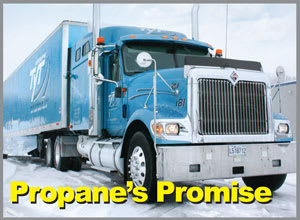
TYT Group of Drummondville, Quebec, is using propane in two of its Cummins engines. One upside of using propane is the broad availability of the fuel.
Heavy-duty trucks running on the same stuff as your backyard grill?
The idea is not new, and there have been propane-converted vehicles on the road for years. Furthermore, propane's advantages are clear: It's cleaner than diesel, and cheaper -- about half the price, actually. (At the time of this writing, propane was selling for between $2.27 and $2.46 a gallon.) This price differential has remained consistent over the past decade.
Until now, propane engines were not suited to heavy-duty commercial operation. However, a new Quebec company, BL Energie has a new technological approach that could turn the tide.
BL Energie has imported from Holland a solution that converts trucks so they can operate on a 70-to-30 mix of diesel and propane, and BL claims that the overall saving in fuel cost can easily reach the 15% mark.
The system was first installed in buses and, more recently, in two Class 8 trucks belonging to TYT Group of Drummondville, Quebec. The results are encouraging.
Yvon Boisclair is president of the 3-year-old BL. In 2009, he approached Douglas Labelle, a program officer in Quebec's Transportation Department of Natural Resources and Wildlife. (As one industry insider put it, Labelle is like Quebec's EPA man on the street, deciding whether emission technologies are worth investing in or not.)
Labelle was seduced because of the impressive results from fleets in Europe, but he asked Boisclair to broaden his offer to include financing.
The project also qualified for the program Technoclimat, which funds the demonstration of green technology to reduce emissions of greenhouse gases, obtaining financial assistance of $598,600. Technoclimat supports the first 40 installations and BL must in turn demonstrate the effectiveness of its system.
"We are still at a preliminary stage, but the tests are going well. Vehicles currently in operation will provide a good baseline and in six months, there has been no problem," Labelle says.
Another important player in the project is Superior Propane. Rick Leroux, director general for Quebec, believes that propane is undergoing a revival.
"The technology of propane injectors did not follow the same speed as the engine injection systems. Today, developments in injector technology and partnerships with engine manufacturers in Europe mean that the use of propane in vehicles is becoming very interesting in terms of profitability," he says.
Growing Pains
Propane-powered vehicles failed in the 1980s and '90s mainly because the injector technology was inadequate for commercial heavy-duty work. The old propane engines required long warm-up periods. The inclusion of an electronic control unit is key to the new technology. Before, the system sprayed propane even if the right temperature was not achieved. The new systems have an electronic module that tells the system to start injecting propane only when the right temperature is achieved.
Technically, a drop of liquid propane occupies 270 times the Âvolume of the droplet spray, explains Jean-Claude McNicoll, regional account manager, Superior Propane. Result: too much liquid and not enough air arrived in the engine, ensuring that it did not start, like a flooded engine.
With the newer technology, the engine starts right away on diesel and propane does not get injected until the temperature's high enough. "The onboard computer with the new technology measures the temperature of the coolant flowing through the engine and, as long as the system has not reached between 45 and 50 degrees Celsius (113 and 122 degrees Fahrenheit), it will not allow spraying propane," McNicoll says.
Savings of 15% for TYT
Last Spring, Drummondville-QC-based Group TYT installed a first set of BL Energie Conversion units on two of its Internationals, powered by Cummins engines.
"We knew propane was being used in Europe but not yet in Canada," recalls TYT President Patrick Turcotte. "Our research had been conclusive and we knew [bus operator] Orleans Express had experimented with the technology. So we decided to try it too."
BL Energie installed the first propane converter on the TYT truck in February, 2011, and a second in November.
TYT started measuring results in August and used a sample of four months, projected over several years, to compare propane against diesel.
The results, Turcotte says, "are great."
"In fact, consumption in liters is about the same-sometimes propane is slightly higher -but the price makes all the difference."
Turcotte believes that the financial gains are around 15%, and he thinks the whole conversion will pay for itself in less than two years, given current fuel prices.
Conversion to propane involves adding a tank, propane injectors, and a control module, which altogether adds about 275 pounds to the truck, Turcotte says. (The trucks can also run completely on diesel if there's no propane available.)
Apart from one fuel leak that was quickly resolved by BL Energie before there was any downtime, TYT reports no damage.
TYT drivers fill up from propane tanks installed in the company's yard and Turcotte estimates a 57-gallon tankful can run from 375 to 435 miles. Also, he says, propane is widely available at truck stops across Canada.
The actual fill-up can be more time consuming than a diesel fill-up, depending on the location of the propane pumps. In some cases, the driver might actually have to unhitch a trailer to access the pump.
Turcotte says he plans to convert 10 more trucks in the short term. "Right now, we installed the system on engines that are no longer covered by warranty, but we want to check all the potential implications concerning guarantees."
Turcotte says he does not believe that propane will compete with natural gas. At the moment the two technologies do not suit the same applications.
This article originally appeared in Today's Trucking. Used with permission.
More Fuel Smarts

Record Diesel Prices Squeeze Trucking Fleets
Average U.S. diesel prices have climbed to nearly $6 a gallon, surpassing the 2022 record as tight refinery capacity and Middle East disruptions keep fuel costs elevated.
Read More →
How Fuel Delivery Shapes Engine Performance
Fuel delivery depends on more than what happens at the injector. For fleet, maintenance and technical professionals, looking at the full path from pump to injector can provide useful context for understanding engine performance.
Read More →
East Coast Port Launches $45M Electric Truck Push
The Port Authority of New York and New Jersey announced millions in incentives for zero-emission drayage trucks, yard tractors, and new charging hubs near the port.
Read More →

California Bill Could Shed Light on Electric Truck Prices
Why do battery-electric Class 8 trucks remain so expensive? A California bill headed to Gov. Gavin Newsom would give fleets and state agencies more visibility into what manufacturers charge.
Read More →
Detroit Opens Orders for EPA 2027 Engines
Detroit isn’t starting from scratch to meet EPA 2027 diesel emissions standards. Its Gen 6 DD13 and DD15 engines keep much of today’s platform while updating the fuel and aftertreatment systems.
Read More →
Zero-Emission Truck Corridor Planned for West Coast
California, Oregon, Washington, British Columbia and Baja California are coordinating plans for truck charging and hydrogen fueling from Canada to Mexico.
Read More →
A Closer Look at Kenworth’s Electric T880E Vocational Truck [Video]
Learn more about Kenworth's T880E battery-electric vocational truck at the Paccar Technical Center, including its range, applications, upfitting considerations, and PTO options, in this HDT Spotlight video.
Read More →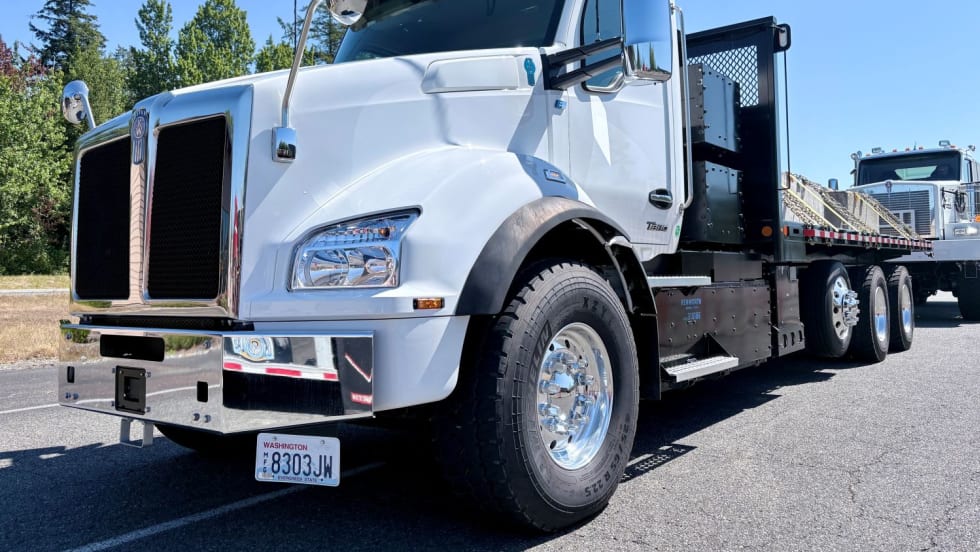
Kenworth T880E Brings EV Power to Vocational Trucks
A closer look at the Kenworth T880E’s range, charging, powertrain and upfit options — and where fleets are showing the most interest.
Read More →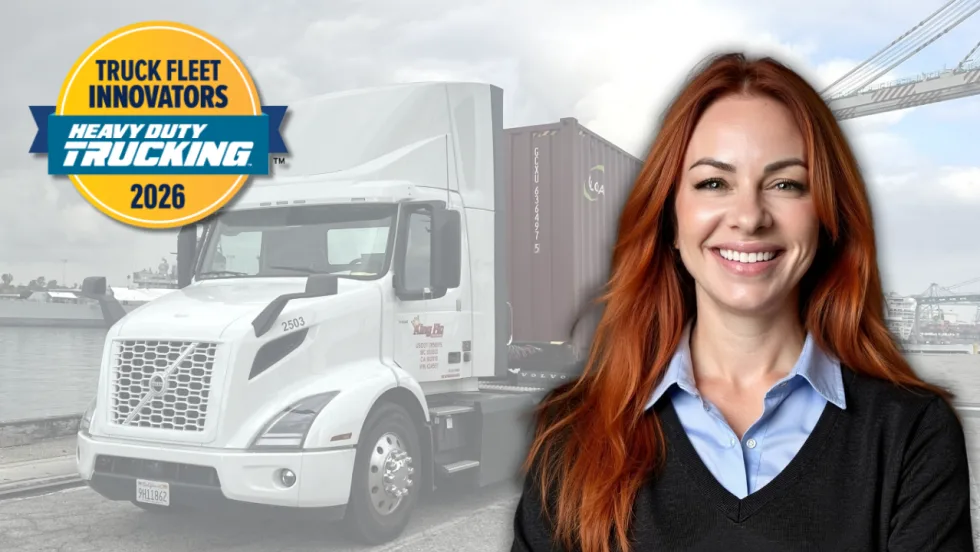
Jennie Abarca Is Proving Electric Trucks Can Do the Job
HDT Truck Fleet Innovator Jennie Abarca is building confidence in fleet electrification one load at a time while openly sharing the challenges she encounters along the way as a small-fleet owner.
Read More →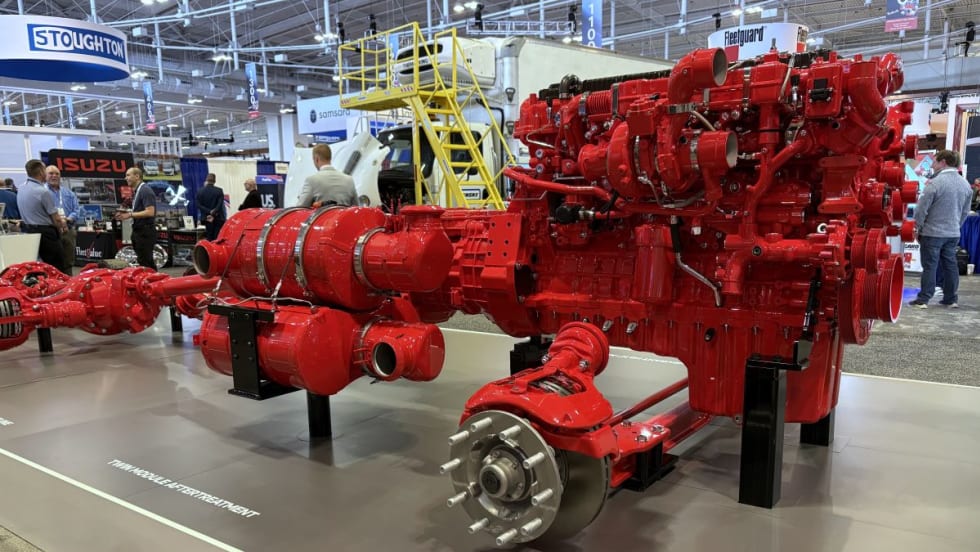
Cummins Adjusts 2027 Engine Rollout After EPA Proposal
The engine maker will gradually introduce its new Model Year 2027 diesel engines while continuing to offer current models during the transition, citing the EPA's proposed emissions rule changes.
Read More →