




New Oil Category Will Help Meet Fuel Economy/GHG Emissions Regs
By January of 2016, you'll see a new API diesel engine oil classification, designed to help meet federal greenhouse gas/fuel economy standards. In fact, you may, for the first time, see two separate categories

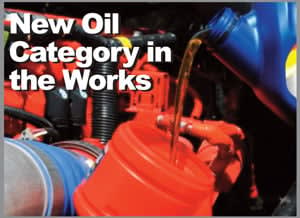
By January of 2016, you'll see a new API diesel engine oil classification, designed to help meet federal greenhouse gas/fuel economy standards. In fact, you may, for the first time, see two separate categories.
About a year ago, the American Petroleum Institute formed a team to develop a new API oil-service category, to replace the current CJ-4. And for the first time, there will be two standards, one for new engines, the other for older engines.
The main driver behind engine makers asking for the new category is the federal government's new fuel economy regulations for commercial trucks.
"One of the ways we know we can get improved fuel economy and lower CO2 emissions is going with a lower viscosity," explained Dan Arcy, global OEM technical manager for Shell during a recent Shell Technology Forum for customers. "But the real key here is, there can be no compromise in the durability of the engine."
Arcy is heading up the committee that's developing the new oil category, currently referred to as PC-11, for proposed category 11.
In addition to the GHG/mpg drivers for the new category, there are some other reasons for a new category. Since the current one was developed and put in place in 2006, Arcy explained, there have been a lot of changes in engine hardware, including types of injection systems, increased combustion temperatures and pressures, even the metallurgy and coatings used.
Plus, parts for the engines used for some of the current industry-standard tests will no longer be available by 2016.
The new category, Arcy said, should lead to improvements in oxidation stability, shear stability, scuffing/adhesive wear, aeration and compatibility with biodiesel blends (see more below.)
"I think more significantly, the Engine Manufacturers Association recommended it be split into two subcategories - one that retains the higher viscosity grades we see now, and one of a lower viscosity, a thinner oil, to achieve that better fuel economy."
The key to the new oil category is something calls HTHS, or high temperature/high shear viscosity - the ability of the oil to maintain its thickness under high-temperature/high-shear conditions.
Arcy explained that when we use language such as "SAE 40" or "SAE 30" to talk about the thickness, or viscosity, of the oil, that actually represents the thickness of that oil at 100 degrees C, or 212 degrees F. If the oil's thickness at that temperature falls into a certain range, it's an SAE 30; if it's in a different range, it's SAE 40. For HTHS oils, the oil viscosity is measured at 150 degrees C, or just over 300 degrees F. Under those conditions, most 15W40 oils are going to be thinner.
Right now, the CJ-4 category requires a score of at least 3.5. Shell's Rotella 15w40 is around 4.2. "We know that we get a fuel economy advantage moving down to about 3.5," Arcy explained. So for the new category, we're proposing we put the number down around 2.9 minimum HTHS, which is in the SAE 30 range. But those will probably not be backwards-compatible. Oils with a higher HTHS number will still be usable in older engines. Oils meeting lower HTHS numbers will be in the new fuel-efficient oil category.
What happens is that you can't just look to the viscosity rating, Arcy said. You could have two oils that were both SAE 10w-30, but one might be blended to meet the lower HTHS numbers and therefore offer higher fuel efficiency, while the other might be blended to work in older engines with a higher HTHS number - in other words, one is at the bottom of the HTHS viscosity number range for a 10w-30 and the other is at the top of that range.
Of course, having two different standards raises a host of other questions the committee is grappling with. For instance, do you come up with two completely different category names, like CK4 and CL4? Or do you use some sort of sub-category designation, such as CK4 and CH4-HT (for high-temp)? Look for a decision on that sometime in 2013.
"I know nobody in here wants to carry two oils," Arcy said, "but for some of the newer engines, that may be necessary."
The backwards-compatible-category oils may not see gains in fuel economy, but they will benefit from a host of other improvements being planned for the new category, Arcy said.
- Oxidation stability: The ability of the lubricant to resist oxidation, which is a reaction between oxygen and the lubricant that can cause acidic compounds to form in the oil. "For next-generation engines, EMA has said theirs going to be an increase in engine operating temperature up to 10 degrees," Arcy said. For every 10 degree increase in engine heat, he said, you double the rate of oxidation.
- Shear stability: Lubricant engineers use long-chain polymers in the oil to get the multi-viscosity qualities needed. Under high-stress conditions, those polymers can be broken down, or "sheared," which can lead to a drop in viscosity. "Some oils are seeing greater shear than engine makers would like," Arcy said, "shearing down to the lower end of the grade or even shearing out of grade." So the committee will look at the test used for shearing to make sure it's representative of what's going on in the field and see if any test changes are needed.
- Compatibility with biodiesel blends: The U.S. mandates that a certain amount of biodiesel needs to be used, and those standards are increasing with time. Although Arcy said he's not currently seeing much in the way of problems with lubricants and biodiesel, because the amount of biodiesel will increase in the future, it's something the committee wants to be sure of.
- Scuffing/adhesive wear: "This is kind of new," Arcy said. "This is actual metal-to-metal contact where metal surfaces could weld together then tear apart." Current standards, he said, look at abrasive wear caused by contaminants or soot in the oil. "Since we're looking at going lower in viscosity, we want to make sure engines are protected."
- Aeration: This is air that stays entrained within the lubricant - and air is not a good lubricant. The oil should get that air to the top of the oil, where it shows up as foam. You want those air bubbles to come to the top of the sump and pop instead of being in the lubricant.
Related Story:
12/20/2011 New Oil Category in the Works for Next Round of Engine Technology
More Maintenance

Color Match Smarter: Tools That Restore & Perform
For fleet managers and collision repair professionals keeping heavy-duty trucks on the road, getting the color right the first time isn't just about appearance — it's about efficiency, turnaround time, and bottom-line results. Discover how today's digital color tools are transforming the repair process from guesswork to precision.
Read More →
Wrong Repair Prompts Recall of Freightliner, Western Star 4x2 Trucks
DTNA is recalling more than 2,400 trucks that received an incompatible software fix instead of the hardware repair required to address brake valve corrosion.
Read More →
Truck Drivers Need More Than Another Alert
Fleets have more visibility into truck health, safety events, and driver activity than ever. The next challenge is turning all that information into useful guidance for the person who has to decide what to do next.
Read More →
The Maintenance Checks Trucking Fleets Should Prioritize Before Fall Freight Picks Up
Making it through August isn’t the same as being ready for the next several months of operation. Find out what systems may have suffered from summer heat and need to be checked out before fall.
Read More →
What Three Fleets Are Doing Differently When Buying Truck Parts in 2026
With freight improving but costs still climbing, fleet maintenance executives explain how they're balancing price, quality, and supplier relationships.
Read More →
Paccar Recalls 2027 Trucks Built This Summer for Possible Electrical Problem
The nearly 6,000 Kenworth and Peterbilt trucks in the recall could potentially lose engine power, among other things.
Read More →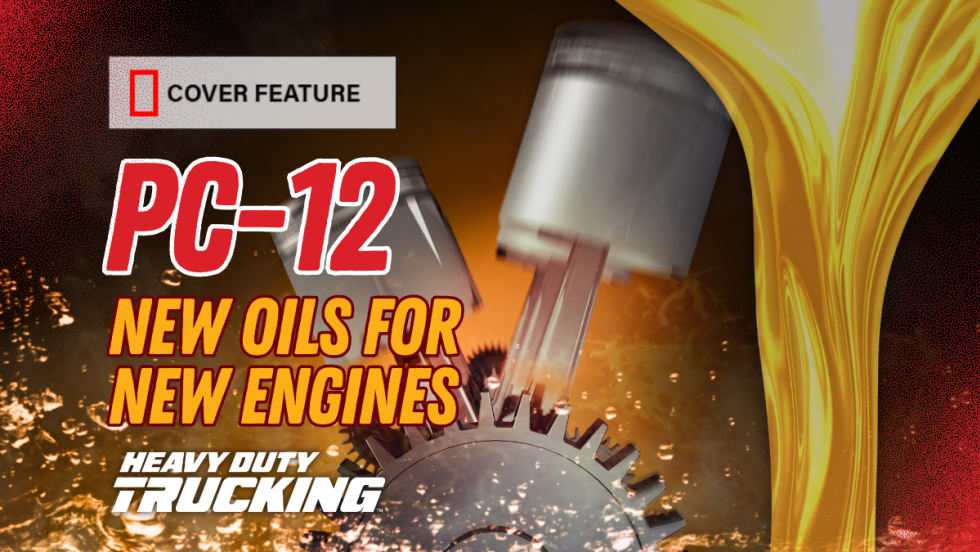
Will API PC-12 Oil Change Trucking Fleet Maintenance?
The new API PC-12 heavy-duty engine oil category reflects the changing demands of modern diesel engines. But fleets like Foodliner are looking to getting their own data before making decisions on adopting the new oils and questions such as extending oil drain intervals.
Read More →
Brake Safety Week to Focus on Drums and Rotors
Commercial vehicle inspectors are focusing on truck brakes during CVSA's Brake Safety Week, August 23-29.
Read More →Possible Battery-Cable Fires Prompt Recall of 15,000+ International MV and HV Trucks
On the recalled vehicles, manufacturing variations can cause the battery interconnect cable to contact the auxiliary stud and hold down the bracket.
Read More →
Rush, MCT Team Up to Grow Refrigeration Service Network
The joint venture will operate MCT's network of Carrier Transicold dealerships and mobile service locations, with the companies promising greater service capacity and uptime for refrigerated fleets.
Read More →