




Lead Weights On The Way Out
An estimated 2,000 tons of lead tire weights are lost from vehicles each year
An estimated 2,000 tons of lead tire weights are lost from vehicles each year.
The weights fly off car and truck wheels and wind up in the environment, solid, or are ground into dust that makes its way into our respiratory tracts. Exposure to lead has been linked to a variety of health concerns including reproductive problems and nervous system disorders, so the Environmental Protection Agency is now pursuing a ban on the manufacture and distribution of lead tire weights.
While that initiative has yet to take shape, several states have already imposed bans on lead tire weights, fishing weights and other lead products. Those states include California, Minnesota, Washington, Vermont, Maine, New York, and most recently, Illinois. Maryland, Rhode Island, and Wisconsin have proposed similar legislation.
Zinc was considered as an alternative, but it's expensive and carries its own environmental baggage. Reports coming from Europe where lead bans have been in place for some time suggest steel weights are not a satisfactory alternative, either. Corrosion, we hear, causes the weights to separate from the wheel with alarming frequency - adding another maintenance item to an already long corrosion-related list.
Alternatives to lead weight are proving to be expensive. The increased cost of a lead substitute could be a factor in leveling the playing field between the lead-weight approach and the more costly dynamic balancing products, such as internal balancing compounds and external balancing rings - or it could knock wheel balancing off the radar screen altogether.
From the November 2010 issue of Heavy Duty Trucking magazine.
More Equipment

ZF Expands Commercial Vehicle Push in North America
ZF is expanding its North American commercial-vehicle presence with new transmission applications, electrification, trailer technology and autonomous-driving systems.
Read More →
Tesla Wants a Self-Driving Semi. Are Cameras Enough?
Could Tesla’s camera-only autonomous driving technology work on an 80,000-pound Semi? In this commentary, HDT's Deborah Lockridge takes a look at Tesla, Cybercab, and how autonomous trucks see the road.
Read More →
Kodiak: Driverless Long-Haul Truck Launch on Track for 2026
Kodiak AI says its driverless long-haul safety case is 93% complete and it remains on track to begin commercial operations by year-end 2026.
Read More →
What DOT’s Automated Vehicle Strategy Means for Trucking
The U.S. Department of Transportation issued a new automated-vehicle strategy that outlines plans for driverless-truck regulations, cross-state freight corridors, and federal safety standards.
Read More →
East Coast Port Launches $45M Electric Truck Push
The Port Authority of New York and New Jersey announced millions in incentives for zero-emission drayage trucks, yard tractors, and new charging hubs near the port.
Read More →
PlusAI Going Public to Fund Autonomous Truck Launch
A SPAC deal could provide PlusAI with up to $300 million as it works toward a 2027 commercial launch of factory-built autonomous trucks.
Read More →
NHTSA Moves to Rewrite Truck Fuel-Economy Rules
The National Highway Traffic Safety Administration says it lacks authority to regulate medium- and heavy-duty truck engines separately from complete vehicles, but the existing standards have not yet been eliminated.
Read More →
Detroit Opens Orders for EPA 2027 Engines
Detroit isn’t starting from scratch to meet EPA 2027 diesel emissions standards. Its Gen 6 DD13 and DD15 engines keep much of today’s platform while updating the fuel and aftertreatment systems.
Read More →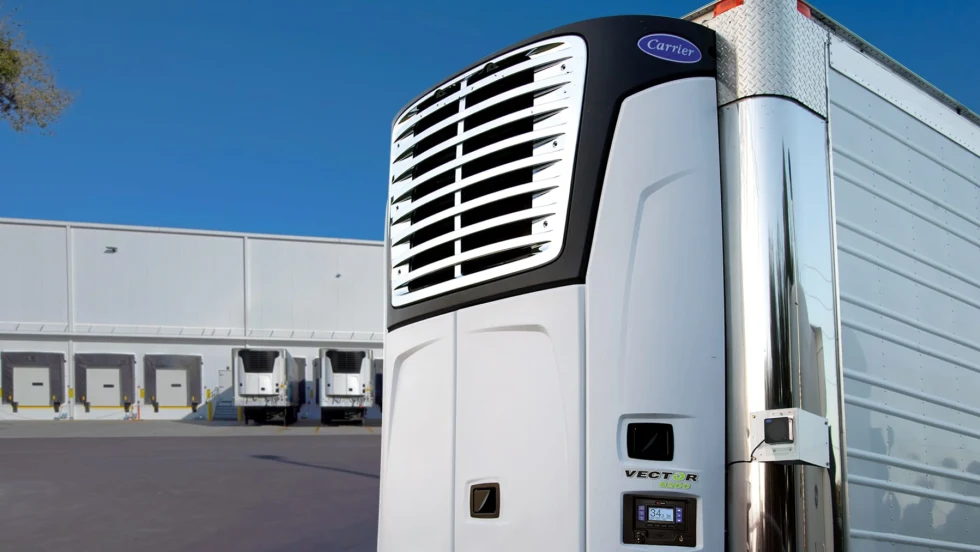
Carrier Transicold Adds All-Electric TRU for Stationary Cold Storage
Carrier Transicold’s new Vector 8200 all-electric transport refrigeration unit gives fleets a diesel-free option for temporary refrigerated and frozen trailer storage.
Read More →
A Closer Look at Kenworth’s Electric T880E Vocational Truck [Video]
Learn more about Kenworth's T880E battery-electric vocational truck at the Paccar Technical Center, including its range, applications, upfitting considerations, and PTO options, in this HDT Spotlight video.
Read More →