





Related: Different Ways to Color Diesel Green
Is Displacement on Demand Coming to Heavy-Duty Diesel Engines?
Displacement on demand, also known as cylinder deactivation technology, is likely to be a critical component for meeting the EPA’s next round of stringent emissions regulations for trucking manufacturers.
September 13, 2018
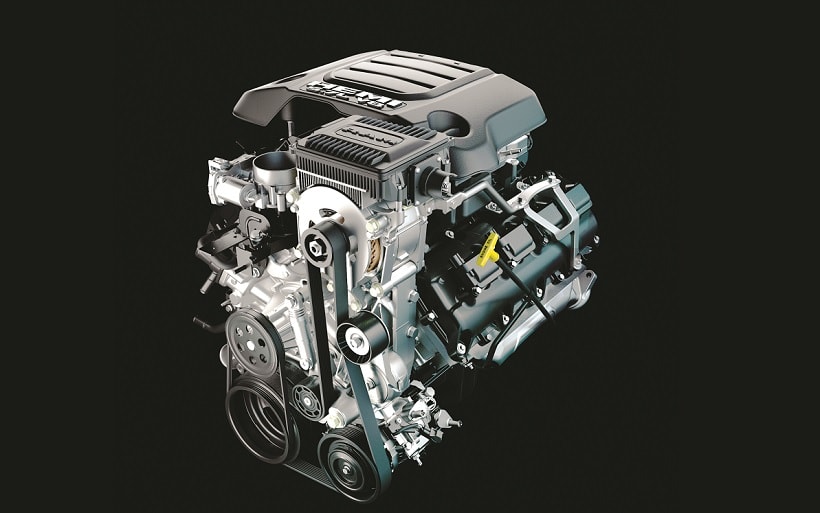
Displacement on demand has been a fuel-saving technology for light-duty gasoline engines for several years now. The technology also holds promise for diesel engines – but in a slightly different way.
Photo: Ram Truck
4 min to read
I was riding with a friend in his new Ram pickup truck on the highway as he gushed about how much he loved the truck’s Multi Displacement System (MDS) mode. This computer-controlled cylinder deactivation feature shuts down half of a V-8 engine’s active cylinders in sequence as the need for the horsepower they generate (and the corresponding fuel they use) diminish as the truck reaches highway speeds. “This works so well,” he said. “Do they use it on the big trucks you write about?”
After staring at him blankly for a moment, I was forced to admit I didn’t know. The idea had never crossed my mind. But I resolved to find out.
I reached out to all the truck and diesel engine manufacturers, who, one by one, told me they weren’t interested in discussing this technology at the moment. Those responses made my ears perk up. If you get a bunch of those in a row, it’s usually a pretty good sign they’re working on the technology and don’t want to tip off their competitors.
But finally, a company did want to talk about displacement on demand in diesel engines. Jim McCarthy, chief engineer for Eaton, is the company’s resident expert on advanced diesel engine technology, and he told me right off the bat I was more right than I knew.
“Absolutely we’re going to see displacement on demand for diesels,” he said. “In fact, that technology is going to be critical for helping OEMs meet the next round of federal emissions regulations due to hit the commercial vehicle industry, which require a 25% reduction of carbon emissions from diesel engines by 2027.”
But, McCarthy said, there was a little bit of a catch. While the primary benefit of displacement on demand technology for gasoline engines is in terms of fuel economy, the main benefit for diesel engines would be in getting exhaust temperatures up faster to allow selective catalytic reduction exhaust treatment systems to kick in earlier.
“There are fuel economy benefits for diesel trucks with deactivated cylinders at highway speeds,” McCarthy explained. “But, at least early on, the benefits the technology gives in terms of reducing diesel exhaust emissions at low speeds will be the biggest benefit for both OEMs and fleets as these new standards take effect.”
Here’s the basic problem as McCarthy explained it to me: SCR systems are wonderfully effective at cutting nitrogen oxide (NOx) emissions in diesel exhaust — provided they are operating at the correct temperature, usually starting around 250 degrees Celsius, or about 480 degrees Fahrenheit. But it takes time for diesel engines to get up to those temperatures and allow the SCR system to go to work. McCarthy said a freshly started diesel truck at idle usually has an engine temperature of around 110 degrees Celsius, or 230 Fahrenheit, which is too cold to do the vehicle’s SCR system any good.
However, McCarthy said, a diesel engine fitted with a cylinder deactivation system would actually work opposite of a similarly-equipped gasoline engine, in that it would deactivate extra cylinders at low vehicle speeds.
“It sounds counter-intuitive,” McCarthy admitted. “But here’s the advantage: With, say, three cylinders deactivated, a diesel engine has to work much harder to get a heavy load moving. And, as a consequence, that engine will heat up much faster than one with all six cylinders turning, allowing the truck’s SCR system, in turn, to get to work cleaning up diesel exhaust much sooner.”
As the exhaust aftertreatment system reaches its optimal operating temperatures, the vehicle’s computer could bring additional cylinders online to help get the truck up to speed as quickly as possible.
Given that diesel trucks today pollute the most at low speed, McCarthy said the impact on emissions offered by variable displacement technology could, in theory, be effective enough to allow next-generation diesel engines to meet the next round of emissions standards all by themselves — or with the addition of a light (or “mild”) hybrid drivetrain with a small electric motor to provide additional torque to offset the deactivated cylinders.
There are significant fuel economy benefits for displacement on demand in diesel engines as well, McCarthy said. Once a truck reaches highway speeds, the same advantages that make displacement on demand so successful in gasoline engines would come into play for diesel trucks.
“Once a truck is at cruise speeds, we believe cylinder deactivation could give fleets a 40% boost in fuel economy in that specific operating mode,” McCarthy said. “And I think that number could be boosted even more with smart variable displacement systems that are fully integrated into intelligent and smart cruise control systems. Today, for example, a smart cruise system simply shifts the transmission into Neutral to save fuel while coasting down a grade. With smart cylinder technology, you’d not only shift the transmission into Neutral, you’d also shut down all the engine cylinders to eliminate any parasitic horsepower loss, then bring the cylinders back on line as the grade flattens out and the engine’s need for additional horsepower increases. And you could add all the cylinders at once, or bring them online in sequence, depending on the situation.”
It’s heady stuff. But displacement on demand appears to solve a lot of problems for OEMs and fleets alike. It seems likely that we’ll start seeing this technology appearing on heavy diesel engines sometime in the near future.
Subscribe to Our Newsletter
More Fuel Smarts

How Volvo Updated Its D13 for EPA 2027 [Watch]
Volvo’s updated D13 promises lower emissions without sacrificing performance or fuel economy. Take a closer look at what changed inside the engine in this HDT Spotlight video.
Read More →
Diesel Price Spike Shortens Payback for Natural Gas Trucks, Report Says
Energy Vision estimates fleets could recover the higher purchase price of an RNG-fueled Class 8 tractor in 1.3 to 2.8 years under current fuel-price scenarios.
Read More →
Calstart Becomes Catalyst Mobility, Reflecting Broader Focus
Calstart is now Catalyst Mobility, reflecting the nonprofit’s growing national role in clean transportation, including zero-emission trucks, infrastructure and incentive programs.
Read More →

Record Diesel Prices Squeeze Trucking Fleets
Average U.S. diesel prices have climbed to nearly $6 a gallon, surpassing the 2022 record as tight refinery capacity and Middle East disruptions keep fuel costs elevated.
Read More →
Sponsored•September 9, 2026
How Fuel Delivery Shapes Engine Performance
Fuel delivery depends on more than what happens at the injector. For fleet, maintenance and technical professionals, looking at the full path from pump to injector can provide useful context for understanding engine performance.
Read More →
East Coast Port Launches $45M Electric Truck Push
The Port Authority of New York and New Jersey announced millions in incentives for zero-emission drayage trucks, yard tractors, and new charging hubs near the port.
Read More →
California Bill Could Shed Light on Electric Truck Prices
Why do battery-electric Class 8 trucks remain so expensive? A California bill headed to Gov. Gavin Newsom would give fleets and state agencies more visibility into what manufacturers charge.
Read More →
Detroit Opens Orders for EPA 2027 Engines
Detroit isn’t starting from scratch to meet EPA 2027 diesel emissions standards. Its Gen 6 DD13 and DD15 engines keep much of today’s platform while updating the fuel and aftertreatment systems.
Read More →
Zero-Emission Truck Corridor Planned for West Coast
California, Oregon, Washington, British Columbia and Baja California are coordinating plans for truck charging and hydrogen fueling from Canada to Mexico.
Read More →
A Closer Look at Kenworth’s Electric T880E Vocational Truck [Video]
Learn more about Kenworth's T880E battery-electric vocational truck at the Paccar Technical Center, including its range, applications, upfitting considerations, and PTO options, in this HDT Spotlight video.
Read More →