





Learn more about hydrogen fuel cells and how they work:
In Pursuit of Green Hydrogen for Trucking
If hydrogen fuel-cell trucks are truly part of the answer for a zero-emissions future, the upstream process of producing and transporting that hydrogen fuel also needs to be “green.”
August 19, 2021
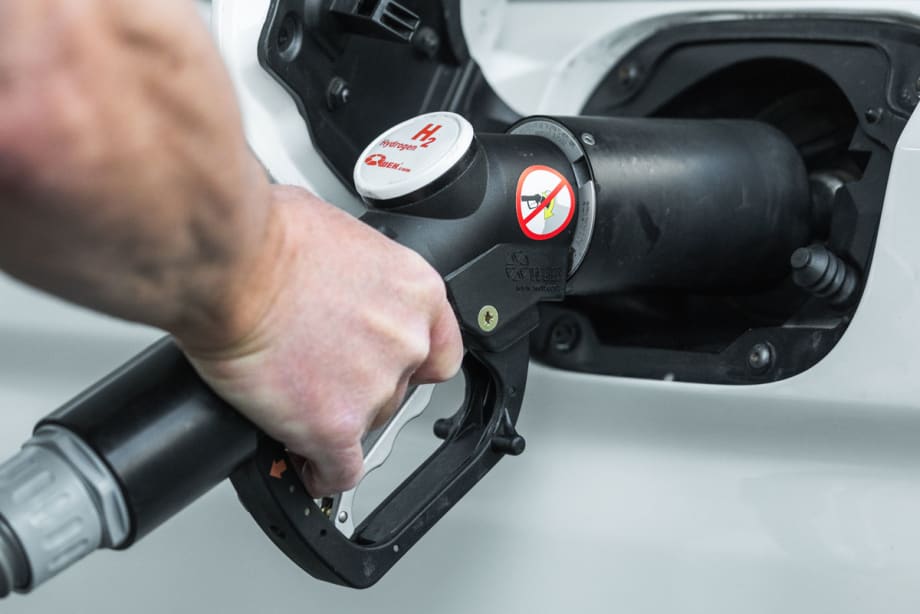
Will the hydrogen going into fuel-cell-electric trucks be as green as the vehicles themselves?
Photo: Nikola
5 min to read
As the world looks to decarbonize the transport sector, hydrogen is seen as one of the answers to the question of how to power trucks and other vehicles without harmful greenhouse gas emissions. But for a true zero-emissions future, the upstream process of producing and transporting that hydrogen fuel also needs to be “green.”
Although hydrogen is one of the most abundant elements on earth, it doesn’t exist in a way that it can be collected for fuel. The challenge is to produce hydrogen using methods that are environmentally friendly.
In fact, the North American Council for Freight Efficiency has concluded that one of the biggest questions for the adoption of fuel-cell trucks is the source of hydrogen. “It's about the creation and the distribution of the hydrogen and other factors around the availability of renewable energy,” explains NACFE Executive Director Mike Roeth.
Currently, most hydrogen is made from natural gas and is widely used in oil refining and fertilizer production. The most common way hydrogen is currently produced is through steam-methane reforming, a high-carbon production process that leads to this kind of hydrogen being known as black or gray hydrogen. More than 95% of hydrogen production today comes from SMR processes, according to NACFE in a report released late last year, Making Sense of Heavy-Duty Hydrogen Fuel Tractors. But it’s not very “green.”
A Rainbow of Hydrogen
In addition to black/gray hydrogen, the report identified a spectrum of hydrogen colors denoting different production methods:
Brown: Hydrogen extracted from fossil fuels, usually coal, using gasification
White: Hydrogen produced as a byproduct of industrial processes
Blue: Gray/black or brown hydrogen with CO2 sequestered or repurposed
Yellow: Hydrogen produced by electrolysis using grid electricity
Pink/purple/red: Hydrogen produced by electrolysis using nuclear power
Turquoise: Hydrogen produced by the thermal splitting of methane. Instead of producing CO2, this method produces solid carbon.
Green: Hydrogen produced by electrolysis of water, using electricity from renewable sources such as hydropower, wind, or solar, producing zero carbon emissions. (The Renewable Hydrogen Alliance calls this “renewable hydrogen.”)
Obviously green hydrogen is the best option for zero-emissions efforts, but NACFE cautions that “purists pushing green hydrogen as a goal should accept that some compromise is needed to allow alternatives in the 'how' of getting to net-zero emissions.
"Governments, advocacy groups, companies, fleets and the public need to come to agreement that either 'net zero' is the goal or 'zero' is the goal, because these are significantly different for hydrogen,” explains the report. “Net zero allows for innovations in a number of energy streams to provide hydrogen in ways that do not let emissions into the environment. True-zero emissions, on the other hand, forces unrealistically rapid growth on solar, wind and hydro to carry the massive electrical load needed for a hydrogen future."
However, Patrick Molloy, a contributor to the NACFE report, says the capital cost of the electrolyzers that separate hydrogen and oxygen from water is declining and the machines are becoming more efficient, which will make available much larger volumes of renewable energy.
“We now have a pathway to green hydrogen,” Molloy says. “We won't go from zero to 20 gigawatts of electrolyzers [overnight], but there are reasons to be optimistic and confident that we have a pathway to the transition.”
Hyzon Motors also sees a path. “It is our view that, just like renewable electricity is now the cheapest way to make power, green hydrogen will become the most cost-effective way to make hydrogen,” says Hyzon Motors CEO Craig Knight. “It will be the most cost-effective path to supply fuel to vehicles.”
Working Toward Greener Hydrogen
In fact, there are plenty of companies working to make readily available green hydrogen fuel a reality.
For instance, big oil companies such as Chevron, BP and Shell are pursuing multimillion-dollar hydrogen projects, often with government support, to create hydrogen made using renewable energy.
“There are massive investments needed by the energy companies,” says Martin Daum, chief at Daimler Truck. “But once they are done, they will scale easily, supporting hundreds of thousands of trucks and ultimately millions.”
There are other companies working on producing renewable hydrogen, as well.
For instance, Hyzon is collaborating with RenewH2, a U.S.-based sustainable hydrogen producer, to supply liquid hydrogen. RenewH2 plans to reform biogenic methane gas to generate hydrogen. The hydrogen would then be liquefied and delivered to hydrogen fueling stations developed in collaboration with Hyzon.
And through a joint venture with renewable fuel company Raven SR, Hyzon plans to build up to 100 hydrogen production hubs globally that will turn organic waste into locally produced, renewable hydrogen. The first hub is planned to be built at a landfill in the San Francisco area and is expected to be commissioned in 2022.
Nikola recently acquired a stake in the Wabash Valley Resources clean hydrogen project in Indiana. The project plans to use solid waste byproducts such as petroleum coke combined with biomass to produce clean and sustainable hydrogen. As part of the agreement, Nikola gets up to 20% of the clean gaseous hydrogen produced at the facility, which could provide Nikola with approximately 50 tons of hydrogen per day following completion of the plant.
Nikola’s long-term vision is to use renewable power (such as solar power or hydro) for onsite production of “green” hydrogen via electrolysis.
H2: More Than Trucking
Volvo Group Chief Technology Officer Lars Stenqvist believes the growth of green hydrogen will be driven by more than just trucking. He predicts the industry will be only a small part of the demand for green hydrogen in the future — less than 10% of total hydrogen consumption, he says. That demand will drive more investments in producing green hydrogen.
“The big hydrogen consumers will be the steel industry, the concrete and cement industry, chemical producers and aviation,” he says. “That means there will be a lot of green hydrogen available in society at a very attractive price point.”
Subscribe to Our Newsletter
More Fuel Smarts

Wex Adds Cardless Fuel Payments for Over-the-Road Customers
A new fuel card feature for Wex customers offers convenience and security.
Read More →
New California Law Could Shed Light on Electric Truck Prices
Why do battery-electric Class 8 trucks remain so expensive? A California bill signed by Gov. Gavin Newsom would give fleets and state agencies more visibility into what manufacturers charge.
Read More →
How Volvo Updated Its D13 for EPA 2027 [Watch]
Volvo’s updated D13 promises lower emissions without sacrificing performance or fuel economy. Take a closer look at what changed inside the engine in this HDT Spotlight video.
Read More →

Diesel Price Spike Shortens Payback for Natural Gas Trucks, Report Says
Energy Vision estimates fleets could recover the higher purchase price of an RNG-fueled Class 8 tractor in 1.3 to 2.8 years under current fuel-price scenarios.
Read More →
Calstart Becomes Catalyst Mobility, Reflecting Broader Focus
Calstart is now Catalyst Mobility, reflecting the nonprofit’s growing national role in clean transportation, including zero-emission trucks, infrastructure and incentive programs.
Read More →
Record Diesel Prices Squeeze Trucking Fleets
Average U.S. diesel prices have climbed to nearly $6 a gallon, surpassing the 2022 record as tight refinery capacity and Middle East disruptions keep fuel costs elevated.
Read More →
Sponsored•September 9, 2026
How Fuel Delivery Shapes Engine Performance
Fuel delivery depends on more than what happens at the injector. For fleet, maintenance and technical professionals, looking at the full path from pump to injector can provide useful context for understanding engine performance.
Read More →
East Coast Port Launches $45M Electric Truck Push
The Port Authority of New York and New Jersey announced millions in incentives for zero-emission drayage trucks, yard tractors, and new charging hubs near the port.
Read More →
Detroit Opens Orders for EPA 2027 Engines
Detroit isn’t starting from scratch to meet EPA 2027 diesel emissions standards. Its Gen 6 DD13 and DD15 engines keep much of today’s platform while updating the fuel and aftertreatment systems.
Read More →
Zero-Emission Truck Corridor Planned for West Coast
California, Oregon, Washington, British Columbia and Baja California are coordinating plans for truck charging and hydrogen fueling from Canada to Mexico.
Read More →