




How Superior Bulk Logistics Saved Hundreds of Thousands on Warranty Costs
When Superior Bulk Logistics implemented the warranty management function of its fleet maintenance software, it was expecting to save $500,000 in the first year. By May, it was already more than halfway there.


Superior now can track which makes of truck and which specs cost the most in maintenance.
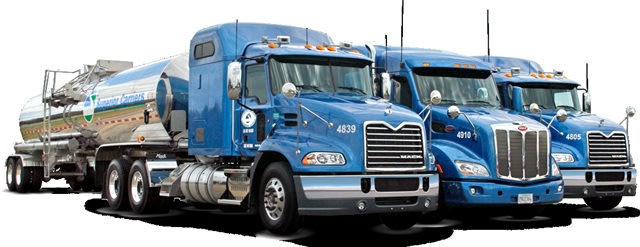
Superior now can track which makes of truck and which specs cost the most in maintenance.
When Superior Bulk Logistics implemented the warranty management function of its fleet maintenance software, it was expecting to save $500,000 in the first year. By May, it was already more than halfway there.
The Oak Brook, Ill., carrier is among the largest bulk carriers in North America, with two divisions – Superior Carriers, which handles primarily chemical products, and Carry Transit, which focuses on food grade and pharmaceutical products.
The company does all its own preventive maintenance work and "running repairs" such as brakes, lights and tires, but lets dealers handle major engine and component work and most warranty work. The company currently runs International, Kenworth, Mack, Peterbilt and Volvo trucks.
The warranty recovery is the latest phase in a project that started in 2010, when the company first started implementing TMT Fleet Maintenance software. Previously, it was using a primarily manual system in the 36 shops to manage a fleet that today consists of more than 900 trucks and more than 2,100 trailers.

The implementation team at Superior, from left to right: Brad McDonald, Dave Culhane, Pame Hammond, Donna Hudson and Ken Shafer.
"We initially purchased it to get us out of a 100% manual process," explains Donna Hudson, accounting manager. Technicians filled out repair orders by hand, documenting every part used and the price paid for the part, as well as their labor time. Clerks would key in the information from those orders into a system built on an AS 400 mainframe. Parts inventories were also taken manually.
The goal was to eliminate that error-prone and time-consuming data entry by using handheld scanners and UPC codes to track parts inventory and usage.
"When a mechanic puts in a repair order, it relieves the appropriate inventory account," Hudson explains. "When performing physical inventories, TMT generates a count list, a mechanic counts parts and enters quantities, and TMT identifies discrepancies."
Hudson explains that the company did not attempt to put a dollar value on whether it saved or lost money on the initial deployment. The company simply realized it was something that needed to be done and it would result in savings in the long term.
"We knew it was really to get us up to snuff and get us some capabilities to have analytics on what was being done in our maintenance department, what kind of repairs were being performed and the associated costs."
Ken Shafer, director of maintenance and tank cleaning for the Superior Carriers division, said one of the big benefits was getting more of a handle on the parts inventory. "Now we had an actual part count rather than just a dollar value, so it was more efficient."
Phil Bonnes, director of maintenance for Carry Transit, agreed. And with a better handle on the inventory, "it allowed us to start disposing of parts that weren't used on a regular basis."
Another important advantage is the ability to compare the pricing of a part against other vendors to help make sure they're getting the best price possible.
Among the many reports offered by the system are cost per mile, Shafer says, which can be broken down by truck model, by truck year, by terminal, etc.
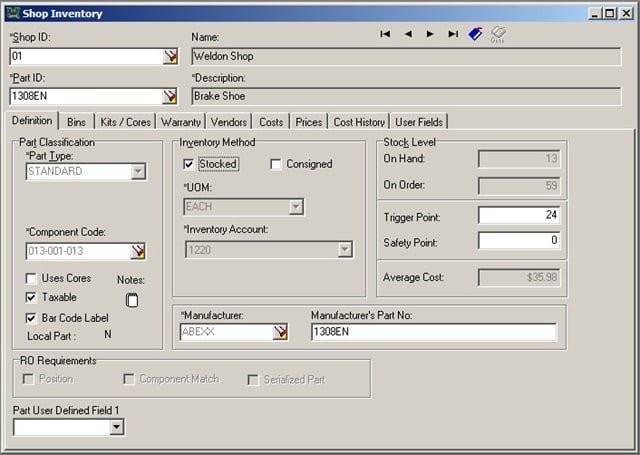
"We're comparing the cost per mile from one year make to the next year make and can see where the drop-off starts to happen – where maintenance costs increase," he says.
Bonnes notes the reports also allow them to compare different brands. "You can see for different makes of trucks running in the same type of operation if the cost of maintenance and parts is higher for one or the other."
The next step
The real payoff, however, has come in warranty management.
"We were having a lot of equipment failures," Hudson explains. "We were consulting with the OEMs on them and often if we put them into the [dealer] shops we would get the repairs done at zero value, but that was not being done consistently. So we needed a way to make sure we were not incurring maintenance costs when in fact things could be covered under warranty."
So in early 2013, TMW assigned industry and product expert Dave McLaughlin to guide Superior Bulk Logistics through the process of taking TMT Fleet Maintenance to the next level in their operation.
“They needed to know how to set up warranty management functions in the software so they could automatically track and recover warranty for in-house and outside repairs, and new and replacement parts,” McLaughlin explains. “Together, we built a year’s worth of information in the software, part by part, for all original equipment, extended and replacement part warranties on tractors, trailers and more than 1,000 active components.”
The software uses the Vehicle Maintenance Reporting Standards (VMRS) coding system developed by the Technology & Maintenance Council of the American Trucking Associations. So that meant establishing correct VMRS codes for all parts used at Superior.
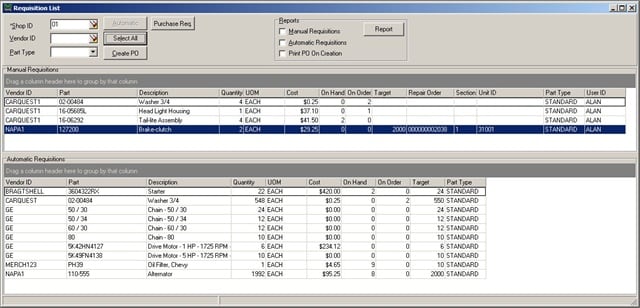
VMRS codes helped make sure parts replaced by outside service providers would be flagged for warranty coverage with the same transparency as parts used internally by Superior Bulk Logistics shops.
Previously the company was only using the first three digits of the VMRS to indicate the type of repair being done – 013 was a brake repair, 017 was tires, etc.
"What is being done in the TMT system is the full usage of the VMRS system for parts," Hudson explains, "in which every unique part has a unique VMRS."
However, the technicians "don't have to memorize anything," says Bonnes. "If the mechanic is not sure, he hits an F key that brings up options. He types in a description and it brings up the code."
Now, the TMT software alerts a mechanic if a potential repair should be done as a warranty repair. "The mechanic on the floor can see what the warranty coverage is, or if that same repair was already done in a certain period of time," Shafer explains. "Then we can make a decision – that truck is under warranty so let's get it to a dealer, or if it's out of warranty, let's go ahead and fix it."
Implementation
Hudson notes that before they implemented this system, "we were not able to determine the value of our warranty coverage." But in the first full month they had the warranty management capability, Superior recovered $60,000 in warranty costs, according to Hudson. "January through May, we have recovered more than $300,000 in warranty, which is a very good thing."
Beyond the benefit of recouping covered costs was the issue of extended warranty packages. They needed to know if they should be buying them, and the only way to determine if they were making the right call was to have information on warranty claims for tractors, trailers, systems and components.
Implementing all this was a "humongous" amount of work, Hudson says. An entire team of people from the equipment and the accounting/operations side worked together with TMW to get it all set up.
One change is that technicians now must do more of their own computer work. "We had to do some training to get our older mechanics to use a computer who never really used one before, so there was kind of a learning curve there," Bonnes says.
The company started off by installing the system at two terminals as a test, Bonnes explains. The team spent time going through the parts rooms, entering the inventory and equipment information into the software, putting bar codes on parts, and creating files for all the components with the warranty information for each.
"It was a lot of research finding the information we needed to enter," he says.
If they had it to do over again, Shafer and Bonnes agree they would take the implementation a little slower.
"Take your time, don't try to do the whole company at once," Bonnes advises other companies embarking on this type of project. "Break it into steps and make sure it's running smoothly before you move into the next area."
"Let it run in a couple of terminals and work the bugs out first," Shafer adds.
One of the things they had to do was go back into the system to de-activate the VMRS codes they were not using, such as those related to school buses.
"Be sure things are set up correctly the first time," Shafer recommends, and suggests asking the software company who else is using the software and getting their advice.
In the future, Shafer says, they are looking at the possibility of tying the system into its telematics and communication system and having information from service providers such as dealers and truckstops flow straight into the system when repairs are done.
More Maintenance
Wrong Repair Prompts Recall of Freightliner, Western Star 4x2 Trucks
DTNA is recalling more than 2,400 trucks that received an incompatible software fix instead of the hardware repair required to address brake valve corrosion.
Read More →
Truck Drivers Need More Than Another Alert
Fleets have more visibility into truck health, safety events, and driver activity than ever. The next challenge is turning all that information into useful guidance for the person who has to decide what to do next.
Read More →
The Maintenance Checks Trucking Fleets Should Prioritize Before Fall Freight Picks Up
Making it through August isn’t the same as being ready for the next several months of operation. Find out what systems may have suffered from summer heat and need to be checked out before fall.
Read More →
What Three Fleets Are Doing Differently When Buying Truck Parts in 2026
With freight improving but costs still climbing, fleet maintenance executives explain how they're balancing price, quality, and supplier relationships.
Read More →
Paccar Recalls 2027 Trucks Built This Summer for Possible Electrical Problem
The nearly 6,000 Kenworth and Peterbilt trucks in the recall could potentially lose engine power, among other things.
Read More →
Will API PC-12 Oil Change Trucking Fleet Maintenance?
The new API PC-12 heavy-duty engine oil category reflects the changing demands of modern diesel engines. But fleets like Foodliner are looking to getting their own data before making decisions on adopting the new oils and questions such as extending oil drain intervals.
Read More →
Brake Safety Week to Focus on Drums and Rotors
Commercial vehicle inspectors are focusing on truck brakes during CVSA's Brake Safety Week, August 23-29.
Read More →Possible Battery-Cable Fires Prompt Recall of 15,000+ International MV and HV Trucks
On the recalled vehicles, manufacturing variations can cause the battery interconnect cable to contact the auxiliary stud and hold down the bracket.
Read More →
Rush, MCT Team Up to Grow Refrigeration Service Network
The joint venture will operate MCT's network of Carrier Transicold dealerships and mobile service locations, with the companies promising greater service capacity and uptime for refrigerated fleets.
Read More →
ConMet Expands Aftermarket Brake Drum Lineup With TruCast
A new heavy-duty truck brake drum option in the aftermarket gives customers more flexibility within the ConMet product family.
Read More →