




How Data Helps Minimize Tire Cost Per Mile
Maintenance software and mobile apps can help trucking fleets reduce tire costs and add to the bottom line.

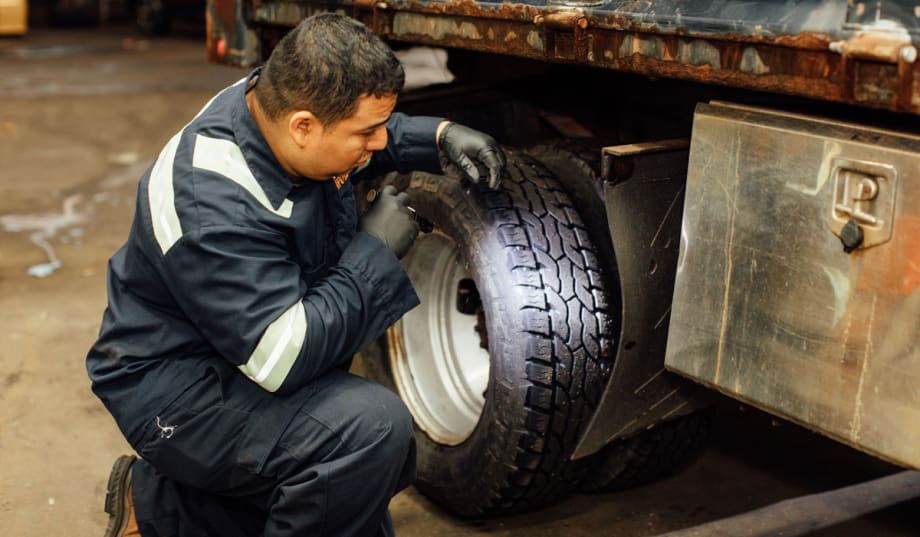
Digital tire management systems can help fleets reduce overall tire costs by ensuring timely tire maintenance.
Photo: Fleetio
Tires account for about 1% of the total cost-per-mile for operating a truck, according to data from the National Private Truck Council and the American Trucking Research Institute. That works out to about 4-5 cents per mile. That means tires can rank as the third or fourth highest line item in terms of cost per mile.
Controlling this expense essentially comes down to some fairly basic elements: selecting the right tires for the application, maintaining proper inflation levels, vehicle and axle alignment, and tire/wheel assembly maintenance.
Basic, however, doesn’t mean it’s easy to stay on top of it all. Technology such as maintenance management software and automated vehicle inspection mobile apps can play an important role in all these areas, from helping fleets choose the right tires for their operation to monitoring inflation pressures and vehicle performance characteristics.
Some of this technology is built into the various trucking maintenance management systems fleets now use, as well as in on-board sensors and monitoring systems that track tire inflation pressure and temperature along with vehicle performance (alignment, brake temperatures, etc.) In addition, stand-alone tire monitoring systems are available that can help reduce tire cost per mile.
The main thing these systems have in common is offering fleets a way to use the data generated by monitoring systems, mobile digital inspection forms, and trend reports, which allows them to “proactively address tire issues and increase technician productivity” and reduce replacement costs, according to Justin Cocchiola, senior marketing manager for B2B mobility solutions at Bridgestone Americas.
Tools to Gather Tire Data
Truck maintenance management systems typically include modules that can combine data collected from many sources for a detailed look at tire performance. Dave Walters, senior solutions engineer at Trimble Transportation, explains that Trimble’s TMT Fleet Maintenance application “allows fleets to create tire configurations for each vehicle type,” including the number of axles per vehicle and number of tires on each wheel end.
Since technicians and drivers record tire tread depth and air pressure during each routine inspection, the system ends up with multiple measurements throughout the life of that tire. From that data, the system can measure miles per 1/32 of tread wear.
That information allows fleets to “forecast future tire replacements and use this data to validate tire specifications,” Walter says. That in turn gives fleets the information needed to evaluate which tires work best in their operation in terms of manufacturers, tread components, retread options and serviceability. Using this information to make the proper purchasing decisions means “fleets can maximize their investments in tires.”
Another example is Fleetio’s fleet management software, which provides tools for managers, technicians and drivers for tire management. The software uses custom tire inspection forms and the data these collect to set tire replacement interval schedules and monitor tire policies with tools inside Fleetio, according to Ashlee Biggs, Fleetio’s head of product marketing.
“Our data integration partners bring more detailed insights into the platform,” Biggs added. For instance, the company recently launched a data integration relationship with Revvo Technologies, which has an application focused on tire performance and behavior. Revvo provides automated tire inspection and data collection, which gives fleet managers remote visibility into the condition of the tires in use in their fleet. This data is imported into Fleetio’s system for consolidated reporting, including trend reports.
Lauren Yeoman, product marketing manager with Whip Around, says its fleet maintenance software includes customizable inspection forms that can collect information such as tread depth, inflation pressure and tire damage. The app connects drivers with the shop in real time, which allows for replacement and/or repairs to be documented and scheduled quickly.
Equipped with this data, fleet and maintenance managers can evaluate trends, such as which tires perform better in certain applications, longevity, and overall tire costs.
As a mobile app, Whip Around integrates with various fleet management software such as Verizon Connect, Samsara, Geotab and Motive. This integration automates mileage and location tracking of vehicles, which gives fleet managers data on such items as roads travelled, distances, tire rotation, braking, cornering and tire pressure.
Tire Vendors and Tire Management Programs
While TMS and maintenance software play a large role in helping fleets manage tire costs, fleets also can look to their tire vendor. Most major tire manufacturers offer tire management programs.
Bridgestone’s Cocchiola says IntelliTire, the company’s advanced tire monitoring service, can track tire pressure and temperature “in real time or when a vehicle is within range of a yard-based router.”
As with other monitoring systems, this information helps reduce tire maintenance-related downtime and emergency roadside calls. In turn, fleets also get a payback by “protecting one of the fleet’s most valuable and reusable assets, a tire casing,” Cocchiola says.

Digital driver inspection forms collect tire data on tread depth, tire pressure, damage and other items over the life of a tire, which gives fleets a wealth of trend and operation data.
Photo: Fleetio
The IntelliTire module can be accessed through Bridgestone’s asset management platform, Toolbox. With a Toolbox account, fleets have access to all the data IntelliTire collects. Managers can set alerts when problems are identified. Users have access to fleet data through various devices such as Android, iOS and their desktops.
Bridgestone, of course, is not the only company offering such programs. Other examples include Goodyear Tire Management and Michelin Tire Care. Ask your tire supplier(s) what they offer.
In addition, the makers of tire pressure management and monitoring systems are increasingly offering fleets real-time data and analytics to help them manage their tire program.
Similarly, Michelin Corp.’s TireCare service offers digital inspection tools that “help fleets better adhere to their prescribed pressure maintenance practices,” said Karl Remec, global BSM, services, at Michelin. The company’s SMART retread analytics tool helps fleets with “data analysis to make changes to their tire maintenance programs to extend the life of their tires and casings,” he added.
Measuring ROI of Tire Monitoring Systems and Other Tire Tech
According to Fleetio’s Biggs, fleets can measure return on investment on this technology by looking at time saved using digital inspections and savings on maintenance and unexpected downtime by closely monitoring tire performance.
Yeoman says the biggest ROI from automated tire management systems comes from fuel cost savings. Proper inflation and maintenance can improve vehicle miles per gallon considering that 20-30% of vehicle fuel consumption is tire related, she says.
Cocchiola says the payback entails knowing more about your fleet.
“As we like to say, with knowledge comes power,” he says. “The highest ROI comes when a fleet effectively utilizes its tire performance information and adapts it to the KPIs they are already tracking, such as downtime, emergency roadside calls, damaged tire casings, fuel economy, etc.”
He also agrees that properly inflated tires provide an important payback — but not only in monetary terms. “Proactively tracking tire pressure can lead to increased safety and fuel economy for a fleet,” Cocchiola says.
He cited NHTSA data showing that vehicles driving on under-inflated tires are three times more likely to be involved in a crash compared to vehicles with proper inflation.
As for fuel economy, he says, estimates suggest under-inflated tires can make a vehicle 3% less fuel-efficient. If applied to a Class 8 sleeper truck, that can pencil out to about $2,500 per vehicle in annual fuel costs. That metric shows all fleets can make a sound case for incorporating automated tire management systems. As Cocchiola notes, “the larger the fleet, the greater the payback.”
The bottom line: Accurate, automated real-time tire inspection data, coupled with trend and cost reporting by tire type, tire manufacturer and application, can add significantly to the bottom line and increase safety to boot.
This article was published in the October 2022 issue of Heavy Duty Trucking.
More Equipment

How Volvo Updated Its D13 for EPA 2027 [Watch]
Volvo’s updated D13 promises lower emissions without sacrificing performance or fuel economy. Take a closer look at what changed inside the engine in this HDT Spotlight video.
Read More →
Michelin Tire Improves Efficiency and Durability for Regional Fleets
The Michelin X Multi Energy D2 is a regional haul drive tire engineered to help fleets improve fuel efficiency, durability and traction in demanding stop-and-go operations.
Read More →
ZF Expands Commercial Vehicle Push in North America
ZF is expanding its North American commercial-vehicle presence with new transmission applications, electrification, trailer technology and autonomous-driving systems.
Read More →
Tesla Wants a Self-Driving Semi. Are Cameras Enough?
Could Tesla’s camera-only autonomous driving technology work on an 80,000-pound Semi? In this commentary, HDT's Deborah Lockridge takes a look at Tesla, Cybercab, and how autonomous trucks see the road.
Read More →
Kodiak: Driverless Long-Haul Truck Launch on Track for 2026
Kodiak AI says its driverless long-haul safety case is 93% complete and it remains on track to begin commercial operations by year-end 2026.
Read More →
What DOT’s Automated Vehicle Strategy Means for Trucking
The U.S. Department of Transportation issued a new automated-vehicle strategy that outlines plans for driverless-truck regulations, cross-state freight corridors, and federal safety standards.
Read More →
East Coast Port Launches $45M Electric Truck Push
The Port Authority of New York and New Jersey announced millions in incentives for zero-emission drayage trucks, yard tractors, and new charging hubs near the port.
Read More →
PlusAI Going Public to Fund Autonomous Truck Launch
A SPAC deal could provide PlusAI with up to $300 million as it works toward a 2027 commercial launch of factory-built autonomous trucks.
Read More →
NHTSA Moves to Rewrite Truck Fuel-Economy Rules
The National Highway Traffic Safety Administration says it lacks authority to regulate medium- and heavy-duty truck engines separately from complete vehicles, but the existing standards have not yet been eliminated.
Read More →
Detroit Opens Orders for EPA 2027 Engines
Detroit isn’t starting from scratch to meet EPA 2027 diesel emissions standards. Its Gen 6 DD13 and DD15 engines keep much of today’s platform while updating the fuel and aftertreatment systems.
Read More →