HDT's editors reflect on what event, person, trend, or company was in our headlines the most and had the greatest impact on our fleet readers this year.
It wasn’t hard for our team to agree on the COVID-19 pandemic as our first HDT Newsmaker of the Year.
Ad Loading...
In this new yearly feature, HDT's editors weill reflect on what event, person, trend, or company was in our headlines the most and had the greatest impact on our fleet readers this year.
Even before we dug into our web traffic statistics, there was little doubt that the novel coronavirus was the story we had covered the most, that our audience had consumed the most content about, and that had the most profound effects on the trucking industry.
Ad Loading...
Our first story came in early March, “Trucking Prepares as First Effects of Coronavirus Hit Port Trucking Hardest.” As China battled the virus, container imports coming into the West Coast ports were down significantly. Our reporting at the time concluded by saying, “It remains to be seen just how severe any economic lag will be – and how deeply into the North American interior the disease and its associated economic impact will reach."
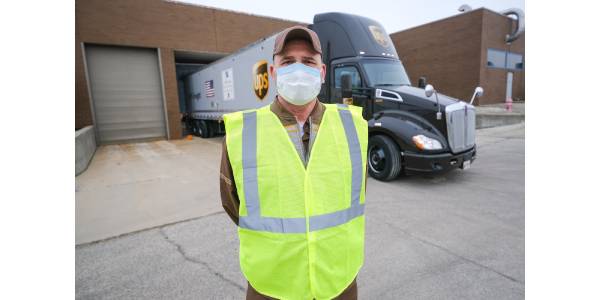
America's truck drivers have been a key part of the logistics challenge posed by the COVID-19 pandemic, delivering everything from urgent medical supplies to toilet paper.
Photo: UPS
Just a couple of weeks later, it was starting to become clear that the impact would be profound. The Federal Motor Carrier Safety Administration issued its first-ever nationwide emergency relief exemption, for fleets hauling coronavirus relief supplies, including food and other supplies for emergency restocking of stores, as panic-buying led to shortages of toilet paper, meat, hand sanitizer, and other supplies. That exemption, with some changes on what freight is exempt, is still in effect today and recently was extended until the end of February.
Since those first couple of articles, we’ve run hundreds of stories, webinars, podcasts, blogs, and more on the impact of the novel coronavirus on trucking.
As the country started shutting down in mid-March, we started reaching out to fleets to find out how they were being affected. We reported on the cancellation and postponement of industry events, including our own. We started a special page devoted to COVID-19 resources, such as government exemptions and deadline extensions and advice from the Centers for Disease Control and Prevention. We shared in the country’s appreciation for an army of truck drivers, out there delivering needed goods, facing possible infection with bandanas for masks and homemade hand sanitizer, unable to have a hot sit-down meal as restaurants were closed down by shelter-in-place orders. A series of fleet surveys allowed us to report on and track how the industry was being affected.
We put together webinars offering insight from fleets, economic experts, regulatory experts, and more. Our May cover story featured stories from fleets about how they were dealing with the pandemic. We heard about challenges in finding hand sanitizer, setting up procedures for what sick drivers needed to do, preventing virus spread in maintenance shops, and dealing with surging freight – or pivoting when business all but disappeared.
Ad Loading...
Special-report episodes of the HDT Talks Trucking podcast interviewed drivers about their experiences on the road during the height of the pandemic in the spring, and one couple’s story of contracting COVID-19 on the road.
The COVID shutdowns wreaked havoc on the economy and many trucking fleets felt the pinch – although that impact varied greatly depending on the freight hauled. Truck makers offered special financing. The CARES Act and PPP loans helped some fleets.
By June, states were reopening their economies and trucking freight and conditions were looking better. But life was still far from normal. Supply chains were scrambled, leading to skyrocketing spot rates by the end of the summer.
As the pandemic has continued, the industry has innovated and made changes that will likely last well beyond this crisis. Trucking companies have used technology to allow people to work at home, to do remote driver training, to create a more touchless environment for drivers with electronic bills of lading and other paperless options. Fleets are handling much of the onboarding of new drivers virtually, and finding it more efficient and effective.
As we near the end of 2020, COVID-19 cases, hospitalizations, and deaths are surging. We’ve been writing about the importance for fleets and drivers not to let their guard down in protecting themselves and others, about the upcoming logistics challenge of distributing COVID-19 vaccines, and where, as “essential workers,” truckers will be in line when it comes to getting those vaccines.
The Runners Up
We identified three other major ongoing stories this year we wanted to give honorable Newsmaker mention:
◆ Autonomous technology
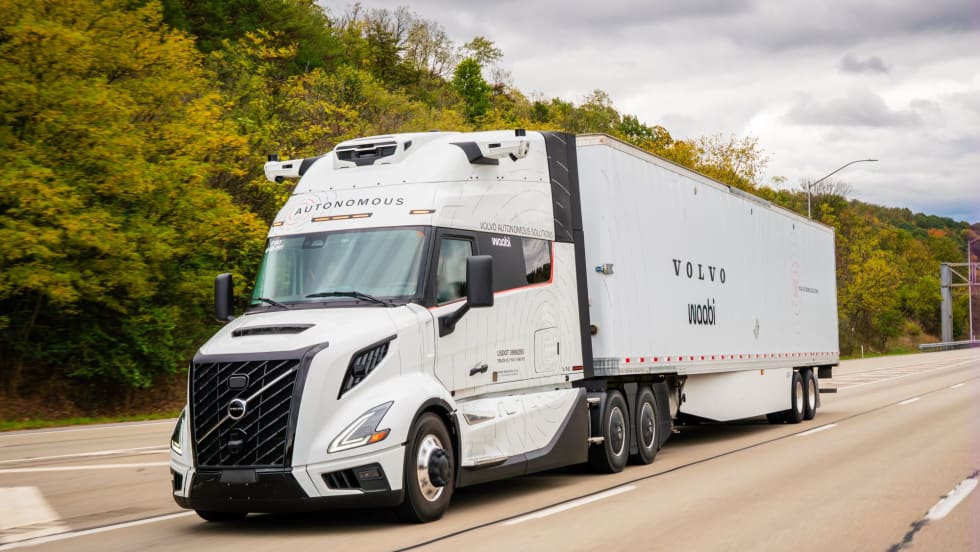
We’ve seen autonomous tech morph this year away from breathless mainstream-media headlines about “driverless trucks” to a more realistic, measured approach that focuses on safety. Truck makers and technology companies are teaming up to develop and test robotic drivers and system approaches that will work in real-world fleet operations.
◆ Electrification
Both battery-electric and hydrogen fuel-cell developments have made frequent appearances in our headlines this year, with the former being more near-term. As with autonomous technology, partnerships and leveraging global economies of scale are key in these efforts.
◆ New hours-of-service rules
Ever since mandatory electronic logging devices created a zero-tolerance environment for driving even a second beyond federal hours-of-service limits, the trucking industry has been asking for changes in HOS rules to make them more flexible. New rules announced in June that went into effect in late September finally provided that flexibility. The industry is still learning how best to take advantage of those changes.
Freight demand remains sluggish, but rising costs and tougher enforcement have taken enough capacity out of the market to change the outlook for motor carriers.
PrePass Intelligence helps fleets measure bypass savings, flag potential toll overcharges, and spot suspicious transactions by combining data from separate systems.
New tools automate follow-up on fleet data, from maintenance work orders to driver alerts, with two-way voice conversations planned for later this year.
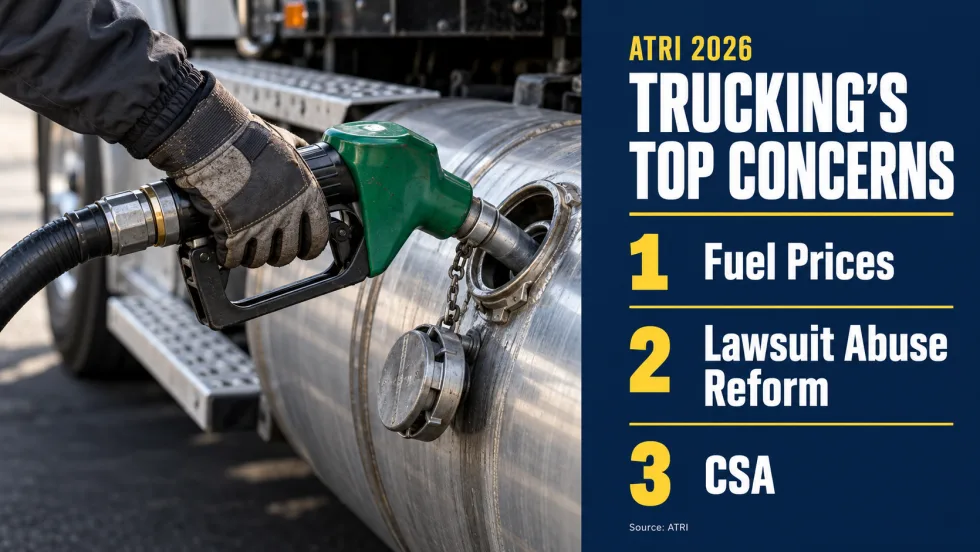
ATRI’s annual survey finds cautious optimism about freight, but diesel costs, litigation, and insurance continue to squeeze fleets. Drivers have different priorities on several issues.
Just a few more days to nominate accomplished trucking fleet professionals under 40 who are making an impact and helping lead the industry forward for the HDT Emerging Leaders award. Deadline extended to October 20!
Incoming President and CEO Mark Colson’s record in Alabama offers clues about his priorities and approach following Chris Spear’s abrupt departure as the head of the American Trucking Associations.