





Related: Trucking Prepares as First Effects of Coronavirus Hit Port Trucking Hardest
Trucking on the Front Line in Fight Against COVID-19
As an increasingly aware United States mobilizes to contain the spread the new coronavirus that causes COVID-19, the trucking industry is uniquely positioned to help in the containment effort – or to spreading the disease.
March 12, 2020

The trucking industry is dealing with COVID-19, from keeping drivers healthy to meeting spikes in demand for certain freight movements.
Photo: Getty Images
6 min to read
As an increasingly aware United States mobilizes to contain the spread the new coronavirus that causes COVID-19, the trucking industry is uniquely positioned to help in the containment effort – or further accelerate the spread of the pandemic.
As the importance of containing the virus hits home, many fleets are stepping up to educate drivers on being safe, while scrambling to meet the run on consumer items that is happening in some areas of the country as people try to prepare for a worst-case scenario.
“The coronavirus has definitely thrown us a huge curve ball. We are seeing some crazy spikes right now with our customers that are shipping paper products, water, and even beer,” Olivia Young, director of marketing and national sales manager for Navajo Express, Denver, Colorado, told HDT in an interview. "[We have to figure out] where do we need to adjust our capacity? Where do we need to find more volume? Who can I reach out to [in order] to find that extra volume? Who can I reach out to to maybe shift some lanes around? So that way we're making sure we're taking care of all of our partners.... Where will it shift over the next couple months? And, you know, I don't think anybody knows.”
As far as driver information and education goes, Young said Navajo has used its in-cab ELD/telematics system to send daily tips to drivers, and also has a document available on its app, with advice such as frequent hand-washing and staying in the truck as much as possible. For drivers who come in to the terminal, they offer tissues, Clorox wipes and other items they may need. “So we’re trying to make sure we keep them safe, and just staying on top of it, staying aware of it,” she adds.
A spokesman for Bulldog Hiway Express told HDT that the company is “monitoring the coronavirus situation daily. We have distributed the recommended personal hygiene practices as outlined by the CDC to all employees. We have established and tested our functional capability to operate our business remotely should that need present itself. We have communicated with customers to understand their protocol for drivers doing business at their facilities. All non-essential business travel has been stopped."
Jay Mathewson, fleet manager at Ben E. Keith Foods, a Texas-based food and beverage distribution fleet, told HDT that as a broad band food distributor, it is seeing a huge upswing in all disinfectant products and paper products from toilet paper and paper towels, hand sanitizer, disinfectant wipes, and so on. “Right now,” he said, “our numbers are not being affected, but with the cancellations of large events I am sure it will start to, and if people start staying home it will affect our business.”
Mathewson said Ben E. Keith has advised its drivers to wear sanitary gloves, and it has issued all employees hand sanitizer. Furthermore, he said, the company has told employees to stay home if they feel sick and not come to work.
“I will say that I personally think everyone should try and look at this with some common sense and not blow it out of proportion,” Mathewson said. “If you look at the number of confirmed cases and deaths from this virus worldwide, it is far less than what the flu does every year. The amount of people that also have recovered from it percentage wise is far greater than the number of people that haven’t recovered.”
However, health officials say it's important to slow the spread of the disease to avoid overwhelming medical facilities. In Italy, where the disease spread rapidly, health officials report doctors having to make excruciating choices over which patients are put on ventilators. People with other life-threatening illnesses also are affected with hospitals are overwhelmed with COVID-19 patients.
COVID-19 101
The COVID-19 outbreak began in China. Its preferred host organism is bats – an animal it does relatively little harm to when present – somewhat like the common cold in humans. But sometimes, when a virus jumps from one host organism to another, it mutates into a more harmful infection.
You may have heard that COVID-19 is simply a much more aggressive version of the influenza virus, which flares up annually all over the planet. Like influenza, COVID-19 is caused by a virus. But they are completely different illnesses. And because your body has been exposed to the flu at some point in your life, your immune system already recognizes it as a harmful pathogen and has some immunities already in place – which can be boosted with a flu vaccination. But you have no immunity built up against this new virus, and a flu vaccination is useless.
According to Anthony Fauci, director of the National Institute of Allergy and Infectious Diseases, who testified on the severity of COVID-19 before Congress on March 11, the Coronavirus has a person-to-person infection rate double that of influenza and has a mortality rate that is 10 times worse. People infected with the disease may be contagious for days before they show any signs of the illness at all.
In his congressional testimony, Fauci noted that most healthy adults recover from COVID-19 after an illness period of approximately two weeks. However, he said, any person with a compromised immune system, as well as infants and the elderly, are particularly susceptible to the virus. In many of those instances, contracting the disease can be fatal.
All of these reasons are why President Trump, in his Oval Office speech on March 11, stressed how important it is for all Americans to be watchful for potentially ill people and do whatever they can on a personal level to help contain the spread of the disease. After that speech, announcements started flooding in on March 12 of large gatherings from sports events to Broadway shows to the Mid-America Trucking Show being cancelled or postponed.
Soap, Water, Sanitizer, and Mindfulness of Others
To help minimize your risk of contracting COVID-19 and spreading it to others, you first need to understand what to look for. According to Dr. Fauci, the disease is primarily respiratory in nature, so be on the lookout for anyone coughing or sneezing, or who looks feverish.
COVID-19 is primarily spread through airborne droplets of moisture – usually emitted when an infected person coughs or sneezes. While you can breath these droplets in and become infected that way, you can also become infected by touching surfaces contaminated with these droplets and them touching your mouth, nose or eyes with your hands.
The good news is that the virus has an oil-based enzyme that serves as its outer protective barrier that can be obliterated by common, everyday soap and warm water. So, your first line of defense against COVID-19 is to wash your hands for at least 20 seconds, using ample amounts of soap, any time you’ve been around large groups of people or in areas where you feel someone may have contaminated surface areas around you. Failing the availability of soap and water, hand sanitizing lotions and fluids with at least 60% alcohol will work, according to the CDC.
Regardless of which cleaning/sanitation method you use, make a mental effort to limit any hand contact with your eyes, ears and mouth – especially if you have been in a suspect area and cannot quickly clean and sanitize your hands, fingers and face.
In addition, health officials recommend avoiding large gatherings and staying away from other people as much as possible in order to limit the chance of infection by people unaware that they are carrying the virus.
Editor in Chief Deborah Lockridge and Managing Editor Stephane Babcock contributed to this story.
More Fleet Management

Motive Adds AI Agents for Fleet Operations
New tools automate follow-up on fleet data, from maintenance work orders to driver alerts, with two-way voice conversations planned for later this year.
Read More →
Can You Beat Our Trucking Trivia Challenge?
Test your truck knowledge with 19 trivia questions from Heavy Duty Trucking Exchange. Can you keep up with the fleet pros?
Read More →
BeyondTrucks Adds Rules Checks to Dispatch
New Compatibility Engine checks driver qualifications, equipment requirements and fleet policies before loads are dispatched.
Read More →
Diesel Prices Hijack Trucking’s Worry List
ATRI’s annual survey finds cautious optimism about freight, but diesel costs, litigation, and insurance continue to squeeze fleets. Drivers have different priorities on several issues.
Read More →
Nomination Deadline Extended for HDT Emerging Leaders
Just a few more days to nominate accomplished trucking fleet professionals under 40 who are making an impact and helping lead the industry forward for the HDT Emerging Leaders award. Deadline extended to October 20!
Read More →
What Will ATA’s New Leader Bring to Trucking's Table?
Incoming President and CEO Mark Colson’s record in Alabama offers clues about his priorities and approach following Chris Spear’s abrupt departure as the head of the American Trucking Associations.
Read More →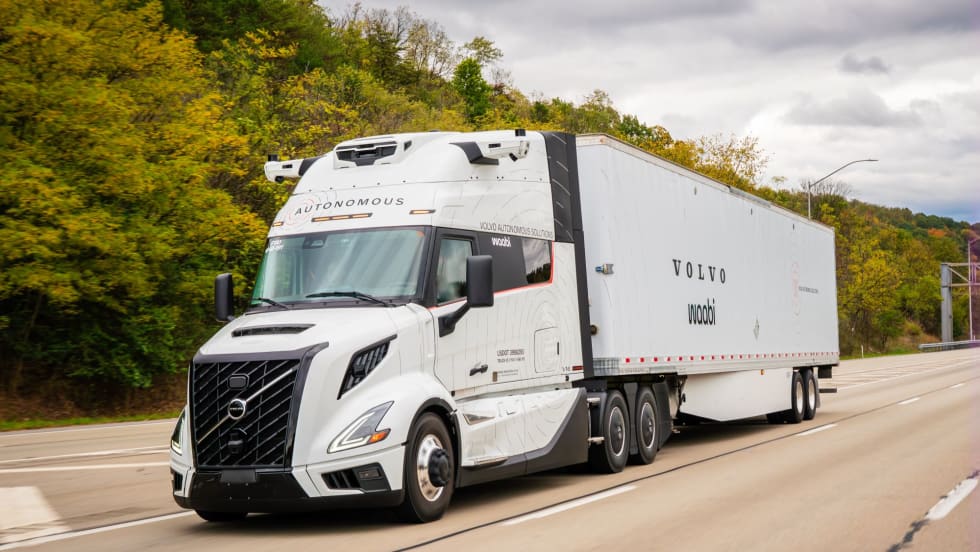
Volvo, Waabi Start Commercial Autonomous Operations in Texas
Volvo VNL Autonomous trucks, powered by the Waabi Driver, are hauling freight directly to third-party facilities for a customer in Texas.
Read More →
Samsara Launches Custom AI Agent Builder
Agent Studio lets fleets create AI tools for hours-of-service monitoring, reporting and driver support, including agents that communicate by phone.
Read More →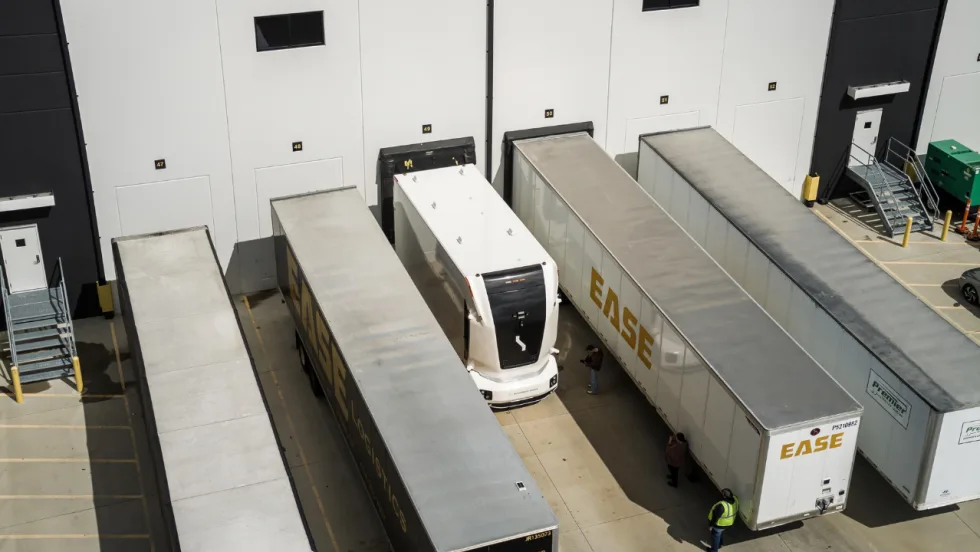
Einride Driverless Electric Trucks Begin Daily Freight Operations in Ohio
Two cabless electric trucks are hauling freight between EASE Logistics facilities in Marysville, Ohio, as part of a multi-state truck automation project.
Read More →
Geotab Links Fleet Card to Vehicle Data
The new card combines fuel discounts with telematics-based purchase controls. Geotab’s analysis also points to potential savings from choosing lower-priced fuel stops.
Read More →