




GHG Phase 2: Weighing the Devil in the Details
Agencies contend the program will provide $230 billion in net benefits to society, including benefits to our climate and the public health of Americans but the trucking industry must still deal with those costs, as well as ones the agencies might not have taken into account.


Phase 2 of the federal government’s greenhouse gas and fuel economy regulations for medium- and heavy-duty trucks arrived last month.
Released jointly by The White House, the Environmental Protection Agency and the National Highway Traffic Safety Administration, they present the North American trucking industry with an environmental and technological to-do list that will keep OEMs, technology suppliers, and fleets busy for the next decade.
The GHG Phase 1 rules were finalized in 2007, hard on the heels of the implementation of EPA diesel exhaust emissions regulations that drastically reduced the amount of nitrous oxides (NOx) and particulate matter emitted by diesel engines. The threat of global climate change (see box on page 50) prompted a shift in focus at the federal level to reducing greenhouse gas emissions in trucks by improving fuel economy.
California, however, still wants to cut more NOx emissions from diesel exhaust, something truck and engine makers say will be difficult to do while improving fuel economy. The EPA announced it will work with the California Air Resources Board to evaluate future emissions standards with an eye toward further reducing NOx.
Building on Phase 1, EPA says the GHG Phase 2 final rules are designed to promote a new generation of cleaner, more fuel-efficient trucks by “encouraging the wider application of currently available technologies and the development of new and advanced cost-effective technologies through model year 2027.”
The final vehicle and engine performance standards were developed with input from the automotive and trucking industries, environmental groups, labor unions and other concerned parties. They will cover semi-trucks, large pickups and vans, and all types of buses and work trucks for model years 2021-2027.
According to government officials, the new standards will result in significant GHG emissions reductions and fuel efficiency improvements across all of these vehicle types. For example, when the standards are fully phased in, tractors in a tractor-trailer combination are expected to achieve up to 25% lower carbon dioxide emissions and fuel consumption than an equivalent tractor in 2018.
Overall, the agency says, GHG Phases 1 and 2 will lower CO2 emissions by approximately 1.1 billion metric tons, save vehicle owners fuel costs of about $170 billion, and reduce oil consumption by up to 2 billion barrels over the lifetime of the vehicles sold under the program. The agencies contend the program will provide $230 billion in net benefits to society, including benefits to our climate and the public health of Americans, and that these benefits outweigh costs by about an 8-to-1 ratio.
But the trucking industry must still deal with those costs, as well as ones the agencies might not have taken into account.
Phase 2 highlights
The CO2 and fuel consumption standards for Class 7 and 8 combination tractors and engines start in model year 2021, increase incrementally in model year 2024, and phase in completely by model year 2027. The standards differ by vehicle weight class, roof height, and cab type (sleeper or day). The fully phased-in standards will achieve up to 25% lower CO2 emissions and fuel consumption compared to the Phase 1 standards.
There are also separate engine standards. For diesel engines, new standards begin in model year 2021 and phase in to model year 2027, with interim standards in model year 2024. The final diesel engine standards will reduce CO2 emissions and fuel consumption by up to 5% for tractor engines and up to 4% for vocational engines compared to Phase 1.
The rule also requires a 16 to 19% efficiency improvement for vocational vehicles and 16% for heavy-duty pickup trucks and vans.
The final rule has more ambitious efficiency goals than the proposed rule unveiled last year, but a phased-in approach should help prevent sticker shock and forced adoption of not-quite-ready-for-prime-time technologies.
Key changes in Phase 2 GHG rules compared to the proposal include:
10% more GHG and fuel consumption reductions;
More robust compliance provisions, including improved test procedures, enhanced enforcement audits, and protection against defeat devices;
More stringent diesel engine standards;
An improved vocational vehicle program with a regulatory structure better tailored to match the right technology for the job;
Maintaining the structure and incremental phase-in of the proposed standards, allowing manufacturers to choose their own technology mix and giving them the lead time needed to ensure those technologies are reliable and durable.
Increased flexibility to minimize impacts on small businesses.
Reactions to the final rule vary. OEMs and technology suppliers are, predictably, generally upbeat and confident they can meet Phase 2 targets in the allotted timeframe, while fleet executives are wearily resigned to the whole business. And some in the industry believe there are better ways to go about reducing GHG emissions from trucks.
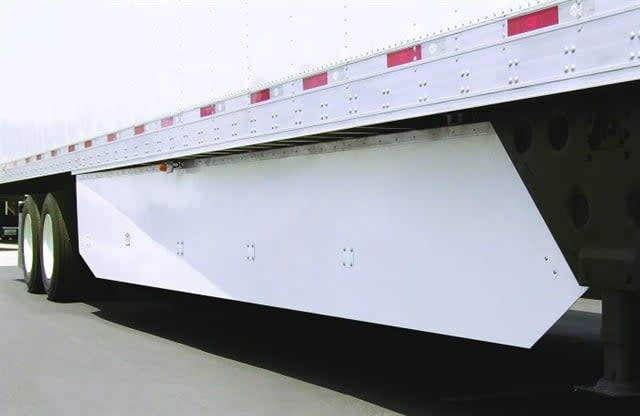
Phase 2 includes standards for trailers used with heavy-duty combination tractors. When fully phased in by 2027, trailer standards are expected to achieve up to 9% lower CO2 emissions and fuel consumption compared to an average model year 2017 trailer.
Proven and untested technologies
There are some 1,700 pages in the official government rules detailing GHG Phase 2. So, it will be some time before the trucking industry has a complete picture of everything they entail.
Glen Kedzie, American Trucking Associations vice president for energy and its environmental counsel, said the broad scope of GHG 2 was pretty much set in stone. It’s the details buried in the ruling that will determine how difficult – and costly – these regulations will may ultimately prove to be.
The association is pleased that the rules stuck to the original, proposed extended compliance period, which will give all involved parties more time to meet the new standards. During the comment and public hearing period, some environmental interests pushed for a faster adoption timeline.
But Kedzie cautioned that when broken down, GHG 2 means four new target standards for trailers, three for engines, and three for vehicles. “That’s a lot of new stuff,” he said. “And the bottom line is we can expect vehicle efficiency to go up. But so will associated costs for fleets.”
One big change in Phase 2 is that it includes trailers. The trailer standards will have staggered effective dates, with EPA regulations taking effect in the 2018 model year and NHTSA standards in 2021. OEMs can get credits for early and voluntary participation. And since many trailer manufacturers are small businesses, the program includes provisions to make it easier for them to comply.
“The overall trend for the past few years has been toward increased aerodynamic fairings on the sides, as well as ‘boat tail’ type devices at the rear of trailers,” Kedzie said. “That trend will be accelerated, as will more aggressive development of the next generation of low-rolling resistance tires and their increased use on tractor-trailers.”
Another positive, according to Mihai Dorobantu, director of technology planning and government affairs for the Eaton Vehicle Group, is that the new rules give OEMs and component/technology providers multiple pathways to compliance.
Nic Lutsey, program director with the International Council for Clean Transportation, noted that the regulations will drive fuel-saving technologies into the market that ICCT research has shown can increase typical highway fuel economy from 6 to 7 mpg today up to above 8 mpg and deliver payback periods within two years.
“There are a lot of available and ready-to-be-deployed technologies, and this regulation ensures that the most cost-effective of those technologies see more widespread use,” Lutsey said.
Dorobantu, for instance, cited advances in “smart” automated manual transmissions and integrated engine-transmission packages.
However, he said, pressure will be on OEMs to put together significant technology packages to comply with the standards while minimizing additional costs, weight and complexity. And while building on existing technology can help, there are new technologies that have to be implemented as well – with waste heat recovery systems and hybrid drivetrains standing out.
Looking at the numbers, Kedzie predicted that a new, GHG-compliant tractor in 2027 will cost $15,119 more than a truck does today (in 2013 dollars).
“Fleets may want to mitigate that cost increase by going to OEMs and asking them to build a truck without waste heat recovery or hybrid drivetrains,” he noted. “And although the OEMs can technically do that under the regulations thanks to average emissions performance based on model year builds and banked credits for early compliance, it’s not really in their best interest to do so. Because for every ‘inefficient’ truck they build and sell, the next one has to be super-efficient to maintain their mandated compliance averages.”
Ken Calhoun, vice president of customer relations at Truck Centers of Arkansas and a member of ATA’s Technology & Maintenance Council’s board of directors, thinks the new standards will prove to be difficult to achieve and frets that costs will balloon for all aspects of fleet management. He said many of the technologies highlighted by GHG Phase 2 were pioneered on the recent joint government-industry SuperTruck project. But many of those systems, like waste heat recovery and hybrid drivetrains, were deemed far too expensive to put into production based on their nominal fuel economy returns.
“Most of us in trucking have made a career out of adaptation to new technologies,” he said. “The good old days of who can build a better mousetrap to gain market share and succeed have long since been replaced by who can meet the standards and build in some degree of reliability. There have been some pretty disastrous experiments along the way.”
Calhoun said that once again, fleets will be the ultimate adjudicator of the new technologies required by GHG regulations.
“The testing will happen in real world application, and we will learn the hard way what works and what doesn’t in the repair facilities rather than the labs,” he said. “I’m just hoping that all of these projected cost savings aren’t immediately gobbled up in maintenance costs, lost utilization, and reduced resale value. At the end of the day, protecting our environment and reducing our dependence on foreign oil are good things, important things, but they will be, as they have been, very challenging for us all.”
A different tree to climb?
Kevin Tomlinson, director of maintenance at Ohio-based South Shore Transportation and TMC immediate past chairman, thinks that ultimately, there are better, more common-sense ways to meet GHG emissions targets.
“I think the levels outlined in Phase 2 are a little high,” he said. “Although I’m assuming they’re do-able given that we received 10 years to give it a try. On the other hand, this industry has spent a lot of money over the past 10 years in terms of repair and downtime costs. And we have no idea that the next 10 years will bring. It’s been challenging to say the least.”
Tomlinson said he finds himself wondering if there isn’t a better way. “Smaller engines burn less fuel and emit fewer emissions,” he noted. “So why not concentrate on proven technologies like increased turbocharger efficiencies and build smaller, more powerful engines?”
It’s a sentiment ATA’s Kedzie shares. “We’ve reached the point where EPA has gathered all low-hanging fruit off the tree,” he said. “And now we’re going up to get the higher-hanging fruit, which is much harder to get to. And I wonder if maybe we’d be better off finding another tree with low-hanging fruit on it.”
What Kedzie is talking about is upgrading the nation’s roadways and transportation network with dedicated freight corridors and truck-platooning lanes. He’s also referring to deploying modern vehicle-to-vehicle and vehicle-to-infrastructure communication systems and even autonomous trucks that can curtail traffic congestion and boost freight efficiency.
“If we get a GHG Phase 3 proposal, we’re really going to be pushing the envelope,” he said. “We’re already in uncharted waters. And things are quickly getting so complex that only the largest fleets have the resources and staff to deal with all the changes. So I’m afraid that these new rules will prove to be even more bad news for owner-operators and small fleets in this country.”
More Fuel Smarts

How GP Transco Builds Fuel Savings a Fraction at a Time
Aerodynamic specs, solar panels, and driver incentives help GP Transco turn small efficiency gains into savings it can reinvest in its people.
Read More →
Trucking’s Diesel Squeeze Isn’t Letting Up
With diesel topping $6 a gallon nationally, ATA's Bob Costello explains why fleets should prepare for continued pressure at the pump.
Read More →
FlowBelow Redesigns Trailer AeroSlider to Cut Fuel Use
The lighter trailer aerodynamic system installs in less than 45 minutes, according to the company, with potential payback in under a year depending on fuel prices and trailer mileage.
Read More →
Why Diesel Price Relief Efforts May Fall Short
Diesel prices have eased from September’s record high, but doubts about additional Russian supply and limits on dyed-diesel tax relief mean trucking fleets still face expensive fuel. And prices could go higher.
Read More →
Why Small Fuel Savings Matter in Trucking
Can better fuel economy help pay for driver raises? In this podcast, GP Transco explains how small efficiency gains create room to reinvest in its people.
Read More →
How GP Transco Cuts Trucking Fuel Costs, a Tenth of a Gallon at a Time
What’s another tenth of a mile per gallon worth? GP Transco shares how equipment upgrades and driver coaching turn small gains into meaningful fuel savings.
Read More →
Electric Yard Tractors Move Beyond Pilots
Operating-cost savings have overtaken sustainability goals as the leading reason surveyed fleets are adopting battery-electric terminal tractors, according to new NACFE research.
Read More →
Geotab Links Fleet Card to Vehicle Data
The new card combines fuel discounts with telematics-based purchase controls. Geotab’s analysis also points to potential savings from choosing lower-priced fuel stops.
Read More →
Fleet Economics Shape Electric Truck Outlook
ACT Research expects costs, charging infrastructure, and technology improvements to drive zero-emission commercial vehicle adoption as federal regulations and incentives retreat.
Read More →
Wex Adds Cardless Fuel Payments for Over-the-Road Customers
A new fuel card feature for Wex customers offers convenience and security.
Read More →