




Getting Around Tarping
It takes special people to be flatbedders. Tarping, however, is usually not on their list of favorite activities. A single tarpaulin can weigh 65 to 100 pounds or more. It must be half thrown and half dragged over the load, spread evenly with corners properly folded and tucked in, and the whole piece of slippery fabric secured with straps and bungies.

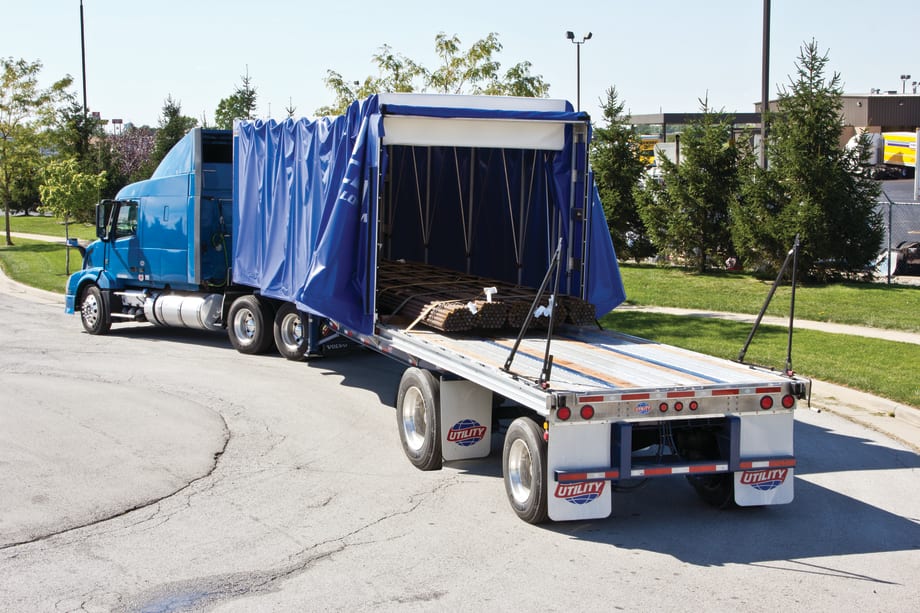
Rolling tarp systems, like TarpStop’s FasTrack, protect loads but can be opened or closed in a couple of minutes.
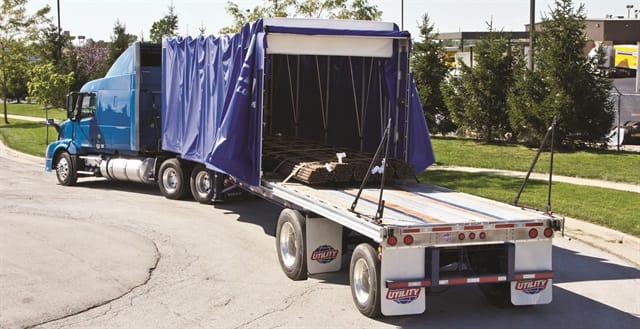
Rolling tarp systems, like TarpStop’s FasTrack, protect loads but can be opened or closed in a couple of minutes.
It takes special people to be flatbedders. Tarping, however, is usually not on their list of favorite activities.
A single tarpaulin can weigh 65 to 100 pounds or more. It must be half thrown and half dragged over the load, spread evenly with corners properly folded and tucked in, and the whole piece of slippery fabric secured with straps and bungies. While on the deck and atop the load, drivers can slip and stumble, and sometimes fall off the trailer. Even without falls, the process can cause sprains and strains.
At the very least the task takes time — usually an hour and sometimes several hours — often in bad weather, and gets harder as a guy gets older.
But as anybody who's observed flatbed rigs on the open road knows, there are several ways around manual tarping.
Side kits
The least costly option is a side kit. It has square panels, usually measuring 4x4 feet, with wood or metal stakes that slide into pockets on the flatbed trailer’s edges. Panels, once made of heavy plywood, now are made of lightweight composites with aluminum stakes.
Rounded metal bows slip into pockets near each panel's top and loop crossways over the trailer, forming a curved frame over which to lay a tarp. The tarp is rolled away so side panels can be removed, allowing loading from the top, sides or rear.
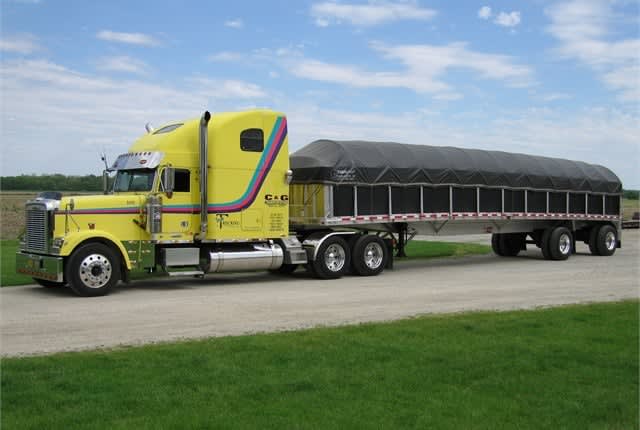
A side kit consists of lightweight composite panels and metal roof bows covered by a long tarpaulin. Some of those pieces must be handled for loading and unloading, but individual tarping of cargo is eliminated.
The tarp is tied to a front bulkhead and to the sides, and generally stays in place even when the trailer is empty. Or the driver can remove the pieces and stow them in underbody racks, in cabinet-type bulkheads, or in the tractor's cab guard (also known as the “headache rack"). A side kit weighs 800 to 900 pounds and costs about $3,300.
When in place, a side-kitted trailer looks a bit like an old covered wagon from pioneer days. It eliminates individual tarping of a load and saves some time. However, handling the tarp is still laborious, requiring throwing the heavy fabric over the bows and reaching up to drag it into place. This is hard on drivers’ arms and shoulders, and sometimes results in disabling, painful injuries to a rotator cuff, says Ken Westhke, co-owner of TarpStop LLC. His company is among those that make side kits and another, quicker alternative, the rolling tarp.
Rolling tarp
The name of TarpStop's rolling tarp system, FasTrack, partly describes it. Like competitors’ products, it has a metal framework that supports a tarpaulin that forms sides and a top over a trailer's bed. The structure's attached to a forward bulkhead and to a rear frame. Some have a fold-down curtain at the rear.
The vertical frames are mounted on wheels that roll in tracks, allowing the entire structure to be moved forward or rearward, tarp and all, like an accordion.
Working from the trailer's deck or alongside on the ground, one person can fold or deploy the system in a couple of minutes. Part of closing it involves stretching the fabric tight with winch-type tensioners built into the sides at the front or back.
The tracks and vertical members are slightly cantilevered outside a trailer's edges, so loads as wide as the trailer’s bed can be hauled. That the structures protrude to either side is OK under federal width laws because the systems are considered safety devices, says Jeff Boyd, director of sales at Aero Industries, maker of the Conestoga 2 and Conestoga XP systems.
A rolling tarp completely eliminates the handling of individual tarps and reduces the need to climb onto and off of a trailer, making injuries less likely. Some fleets are equipping a portion of their trailers with rolling tarps and assigning those to older drivers, says Tim Demonte, business development manager at Quick Draw Tarpaulin Systems.
One drawback is that rolling tarps cannot accommodate over-width loads. Theoretically the system could be rolled all the way forward and tied against the bulkhead's corners so it's out of the way. But this would have to be done carefully or the structure could be damaged by wind, so Aero, for one, does not recommend it, Boyd says.
Another downside is weight and cost. A rolling tarp system weighs 1,500 to 2,000 pounds, depending on a trailer's length and a system's make and model, and costs $13,000 to $15,000. Even with discounts for volume purchases, those penalties explain why they are on a minority of flatbeds — perhaps 25%, says Westhke at TarpStop.
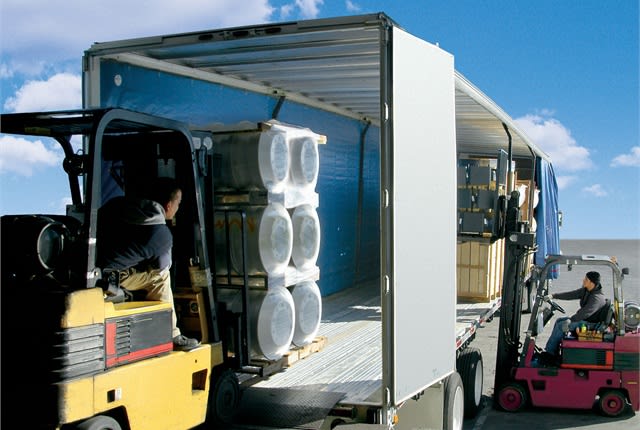
Utility’s Tautliner offers the protection of a van with cargo access from the sides as well as through rear doors. Heavy fabric side curtains can support the weight of a shifting load, though federal regs now require cargo to be tied down.
The curtain-sider
Expensive cars, auto parts and lumber are among the many cargoes protected by another device, the curtain-side. These are common in Europe, where factories seldom have loading docks.
Utility Trailer Manufacturing brought these systems to the U.S. with its Tautliner. Its fabric sides accordion-fold to allow access to loads over the trailer's sides and rear. It has a permanent top, so loads can't be placed or lifted by overhead cranes. However, the top offers better protection and supports the curtains with tracks built into its edges.
Rear doors are like those on a van, and the front wall is of sheet-and-post construction with a plywood liner for part of its height, sometimes reinforced with a 12-inch-high hardwood band.
The top is usually sheet aluminum with steel framing, and rests on vertical “lift-out” posts, where one or more can be removed to make loading and unloading easier. Posts are placed in pockets along the trailer's edges or, if the customer wants, in the center.
They must be in place so the roof is supported while the trailer travels down the road.
A Tautliner can be applied to a straight truck body as well as a trailer. Utility integrates it with its trailers’ superstructures rather than just adding the product's sides and top, say Ed Chambless, Utility's flatbed and Tautliner specialist, and Larry Roland, director of marketing.
A major feature of a curtain-side is that it can bear much or all of a load's weight, helping to keep the load in the trailer in rollover accidents.
A curtain-side usually lasts five to eight years before it comes back for replacement, and the superstructure lasts a few years more, Roland and Chambless say. Depending on options, a Tautliner trailer weighs 4,000 to 5,000 pounds more than a bare flatbed and costs $17,000 to $20,000 extra. For that the owner gains operational flexibility over a van and added driver safety compared to an open flatbed. And drivers can drive, rather than wrestle with tarps.
More Equipment
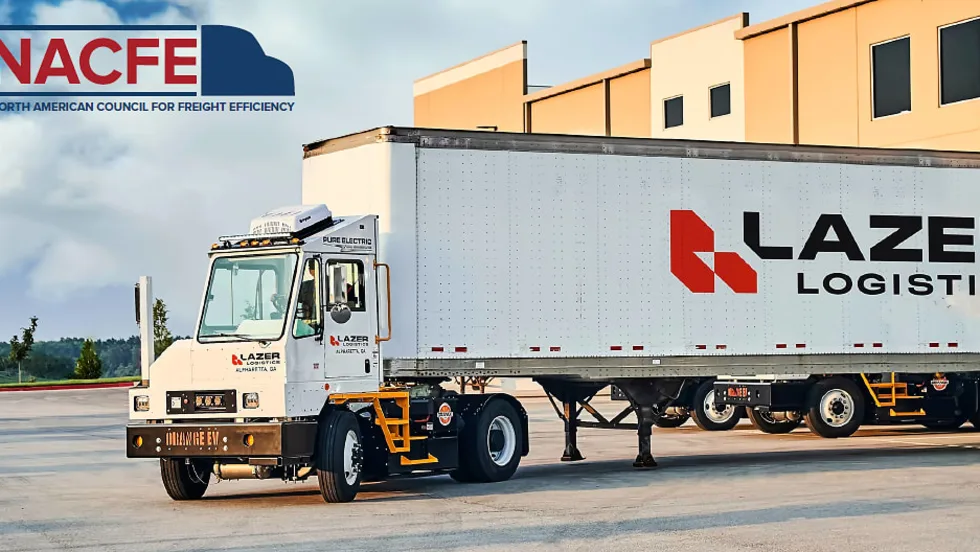
Electric Yard Tractors Move Beyond Pilots
Operating-cost savings have overtaken sustainability goals as the leading reason surveyed fleets are adopting battery-electric terminal tractors, according to new NACFE research.
Read More →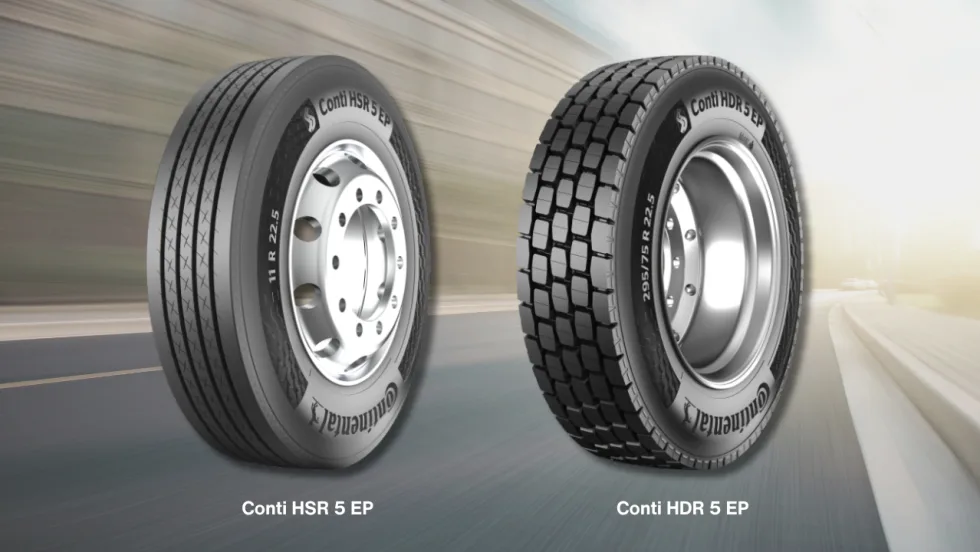
Continental Introduces New Regional Truck Tires
Continental says its new Generation 5 steer and drive tires for regional operations offer longer tread life, with estimated mileage gains of 22% and 19%, respectively.
Read More →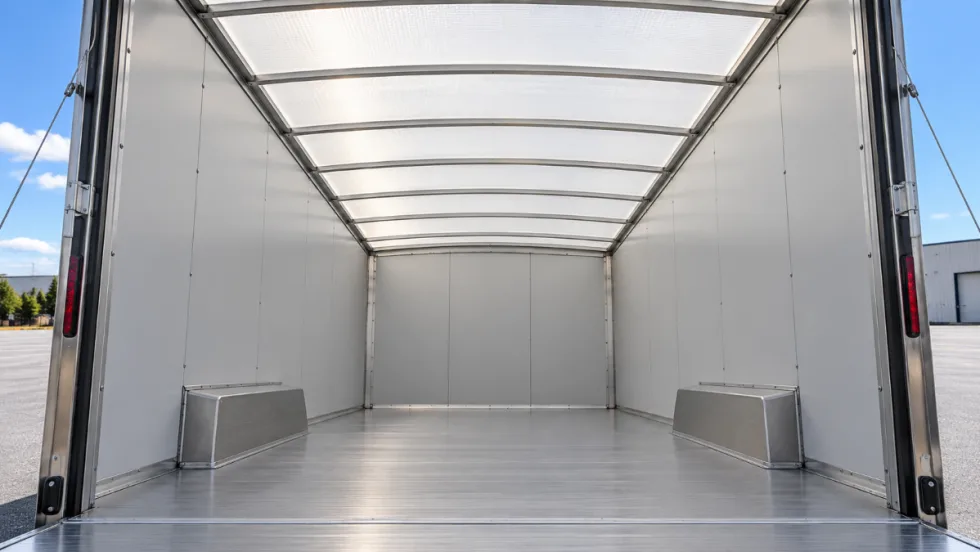
Tekmodo Introduces CargoBright Brand for Translucent Trailer Roofs
CargoBright is designed to diffuse daylight across the cargo area while performing as a working vehicle roof.
Read More →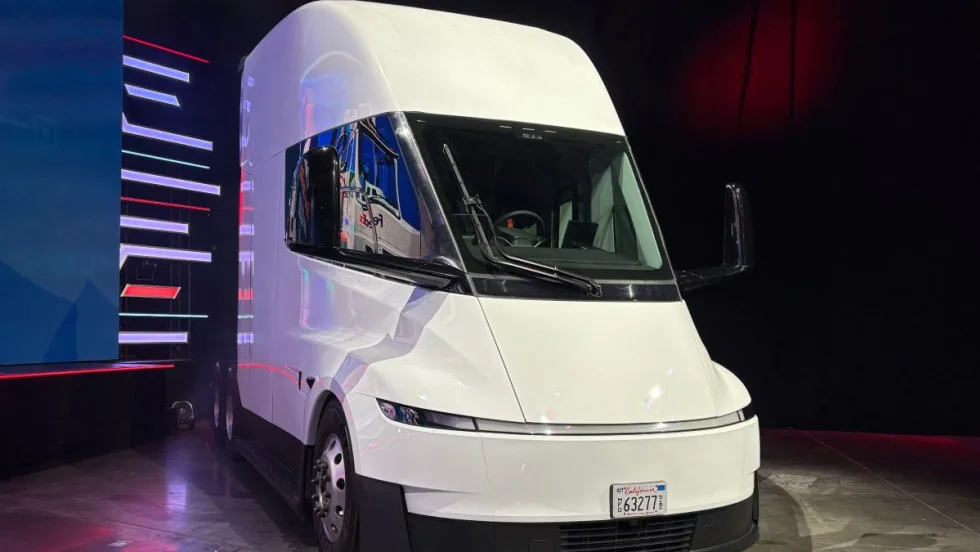
Fleet Economics Shape Electric Truck Outlook
ACT Research expects costs, charging infrastructure, and technology improvements to drive zero-emission commercial vehicle adoption as federal regulations and incentives retreat.
Read More →
Kodiak Targets Dallas–Houston for Driverless Trucks
The company says its autonomous trucks are completing the I-45 run without a safety observer taking control. It plans to remove the observer by the end of 2026.
Read More →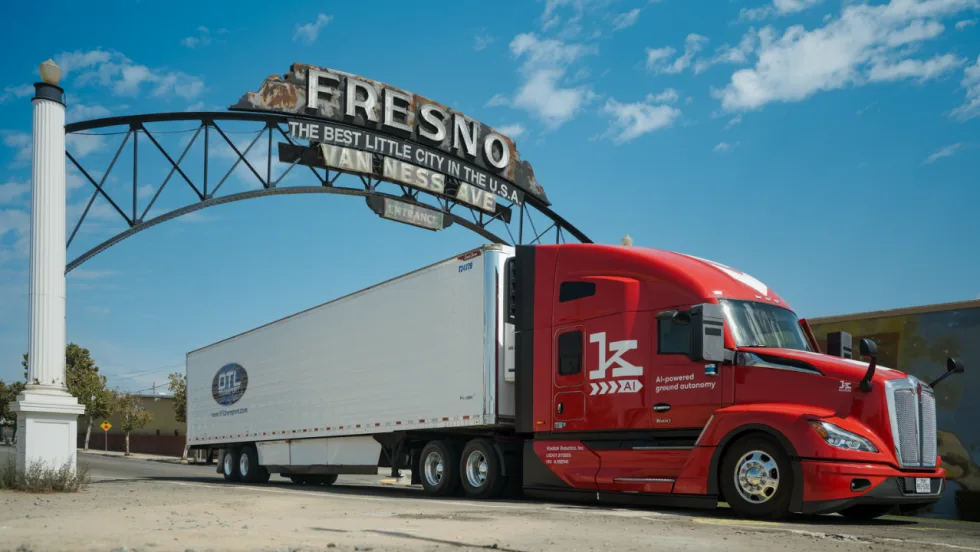
Kodiak Hauls Produce in California Autonomous Truck Pilot
Kodiak AI and DTL Transport have begun hauling produce between Fresno and Los Angeles under California’s new rules for testing heavy-duty autonomous trucks. A safety driver remains behind the wheel.
Read More →
Used-Truck Remarketing Math Is Changing
Used-truck value is no longer just a concern at trade-in. Decisions made throughout a truck’s first life can influence what it’s worth years later.
Read More →
How Volvo Updated Its D13 for EPA 2027 [Watch]
Volvo’s updated D13 promises lower emissions without sacrificing performance or fuel economy. Take a closer look at what changed inside the engine in this HDT Spotlight video.
Read More →
Michelin Tire Improves Efficiency and Durability for Regional Fleets
The Michelin X Multi Energy D2 is a regional haul drive tire engineered to help fleets improve fuel efficiency, durability and traction in demanding stop-and-go operations.
Read More →
ZF Expands Commercial Vehicle Push in North America
ZF is expanding its North American commercial-vehicle presence with new transmission applications, electrification, trailer technology and autonomous-driving systems.
Read More →