




Fifth Wheel Maintenance
While the calendar says we've just about made it through another winter, as these words materialize on my screen, the Northeast is digging out from three days of record snowfall

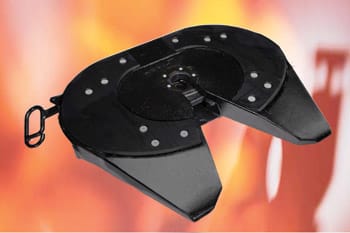
No-lube fifth wheels are gaining acceptance, but they still require periodic inspection, and perhaps adjustment. (Photo by Jost International)
While the calendar says we've just about made it through another winter, as these words materialize on my screen, the Northeast is digging out from three days of record snowfall.
"So much for global warming," you say. Still, it'll soon get milder, and young men's fancies will turn to thoughts of ... fifth wheel maintenance? You better believe it. Spring is the perfect time of year for a thorough fifth wheel cleaning and inspection.
Several months' worth of sand, cinders, gravel, and whatever else has kicked up off the road over the past winter months, including corrosive de-icing agents such as magnesium or calcium chloride, is now bound up in all the old grease caked onto your fifth wheel. Aside from being horribly abrasive, all that gunk can interfere with the lock mechanism, warns Rich Carroll, vice president of sales and marketing at Jost International.
"These corrosive agents are more aggressive than anything we've seen before in our industry. Those residues will damage exposed metal surfaces if they aren't washed away promptly," he says.
Winter and spring are both difficult times for fifth wheels. Cold temperatures cause grease to thicken, which can bind moving parts and interfere with proper operation and the timing of the various movements that go on beneath the top plate. But winter has one thing going for it; it's wet, and water is one of the best lubricants in the world. With spring, the roads dry out, and so does the gunk under the fifth wheel - and that's when we get more sticking and binding.
"One of the best indicators of a problem is when a driver writes up a fifth wheel as hard to release," says Rob Nissen of SAF Holland. "That should be a warning; if it's hard to release, it will be hard to hook. When unhooking, drivers can use horsepower to overcome the problem, but when hooking, they're relying on the free movement of the parts and the tension and timing provided by the springs. If any of that is compromised by corrosion or built-up grease, there could be a problem."
Regular cleaning will keep grease from building up. Some manufacturers suggest switching to something thinner than moly or lithium grease in the winter, like a 90-weight oil.
Inspect and adjust
You can't do much of an inspection if the working parts are covered in gobs of grease, so a thorough spring-cleaning is a must. Exact requirements for visual and mechanical inspection will vary by manufacturer, but essentially you're looking for damage to the top plate, slack in the jaws, proper function of the jaws, and the condition of the release handle.
"In terms of the PM process, much of it is inspection and diagnostics," says Terry Mennen, vice president of Sales and Marketing at Fontaine Fifth Wheel. "Look at things like the pull handle, make sure the springs are all in place and properly tensioned, and then clean the jaw and locks."
While adjustment procedures vary across brands and models, the allowable amount of slack does not. Roadside inspectors will sideline a truck with any more than half an inch of fore/aft movement between the top plate and the trailer, while the manufacturers recommend about 1/16-inch freeplay around the kingpin. There's some latitude there, but excessive slack is uncomfortable for the driver and will eventually wear the throat of the fifth wheel.
Corrosion, as already mentioned, could become an issue with bare metal springs, so inspect them carefully and replace as necessary. "There's no definition for wear on the springs," says Nissen. "As long as they are cycling properly, the springs are doing their job."
Pull handles can be easily damaged or bent, and in some cases, a bent handle could impede the locking mechanism.
Don't overlook the fasteners or the slider mechanism either, cautions Jost's Carroll. If 20 percent or more of the fasteners are missing or ineffective, the truck is out of service. That's only one out of five, so it's not a big margin for error. Non-functioning sliders can be a huge source of frustration for drivers. Few cycle the sliders periodically to keep them from seizing.
"Stuck slider locks are often due to a period of inactivity or an accumulation of debris in the mechanism," he says. "Corrosion resulting from exposure to corrosive melting agents can do it too. The solution is often no more complex than a little penetrating oil and some patience."
Fifth wheel maintenance, as they say, is a dirty job, but somebody has to do it. You'll get years of reliable service from a well-maintained and regularly cleaned fifth wheel today, and the whole process from start to finish might not take an hour.
Maintenance & repair resources
Fontaine Fifth Wheel's web site features an extensive collection of how-to videos on inspections, maintenance and repair procedures, as well as a host of technician training videos that offer certification upon completion. www.fifthwheel.com
Jost's web site boasts a live chat feature for product related inquiries. There's also a wealth of product information, service bulletins and manuals, as well as parts references and instructions for various service and repair procedures. www.jostinternational.com
SAF Holland's web site contains a vast store of parts ordering references, maintenance, installation, and spec'ing guides, as well as sales material and brochures. www.safholland.us
Lubrication recommendations
Properly lubricated fifth wheel top plates will retain peak performance for a long time. A layer of grease is essential to free movement of the trailer and the tractor, but it's often applied incorrectly. Too thin a film will cause greater wear on the fifth wheel, but too much tends to be a more common problem. Old residual grease can be a problem, too. Dust and dirt accumulated over thousands of miles will contaminate the grease, lessening its effectiveness.
When the fifth wheel has been cleaned of old grease, apply a small bead of grease evenly in a back-and-forth motion. Apply a heavier coat to the rear two-thirds of the fifth wheel - the grease will be pushed forward when hooking up to a trailer. Too much grease is wasteful and messy, and it does you no good at the end of the day, stuck to your axle housing and brake pots.
"You don't need a tremendous amount of grease," says Fontaine Fifth Wheel's Terry Mennen. "You just want to make sure that the grease pockets that are built into the top plate are full. You need to spread grease all over the mating surfaces."
While different types of greases or oils can be used, greases formulated specifically for fifth wheel applications provide the best lubrication. The proper thickness is crucial, as thin greases will wear away quickly during wet conditions and excessively thick grease may cause clumping - especially in the cold. Shell Lubricants recommends grease formulated with heavier base oils and high solids content to attain adequate film thickness, and an extreme pressure (EP) additive package.
Product manufacturers suggest water-resistant lithium - or moly-base grease. Consult the maintenance manual for specific recommendations.
When greasing the bracket bearings - if they require grease; some do not - use a pry bar to lift the top plate slightly off the bearing, and rock the fifth wheel back and forth while applying grease. Some lubrication may be required on the underside, such as the locking mechanism, the cam track, or the pivots on the release handle. Use a light oil here. No-lube and lo-lube fifth wheels may have grease fittings on the underside to ease lubrication of the lock mechanism and to prevent excess grease from accumulating on the mating surface.
None of the three major manufactures uses an identical locking system. Don't assume their lubrication needs will be the same. If you're unsure of the ex
More Maintenance
The Maintenance Checks Trucking Fleets Should Prioritize Before Fall Freight Picks Up
Making it through August isn’t the same as being ready for the next several months of operation. Find out what systems may have suffered from summer heat and need to be checked out before fall.
Read More →
What Three Fleets Are Doing Differently When Buying Truck Parts in 2026
With freight improving but costs still climbing, fleet maintenance executives explain how they're balancing price, quality, and supplier relationships.
Read More →
Paccar Recalls 2027 Trucks Built This Summer for Possible Electrical Problem
The nearly 6,000 Kenworth and Peterbilt trucks in the recall could potentially lose engine power, among other things.
Read More →
Will API PC-12 Oil Change Trucking Fleet Maintenance?
The new API PC-12 heavy-duty engine oil category reflects the changing demands of modern diesel engines. But fleets like Foodliner are looking to getting their own data before making decisions on adopting the new oils and questions such as extending oil drain intervals.
Read More →
Brake Safety Week to Focus on Drums and Rotors
Commercial vehicle inspectors are focusing on truck brakes during CVSA's Brake Safety Week, August 23-29.
Read More →
Possible Battery-Cable Fires Prompt Recall of 15,000+ International MV and HV Trucks
On the recalled vehicles, manufacturing variations can cause the battery interconnect cable to contact the auxiliary stud and hold down the bracket.
Read More →
Rush, MCT Team Up to Grow Refrigeration Service Network
The joint venture will operate MCT's network of Carrier Transicold dealerships and mobile service locations, with the companies promising greater service capacity and uptime for refrigerated fleets.
Read More →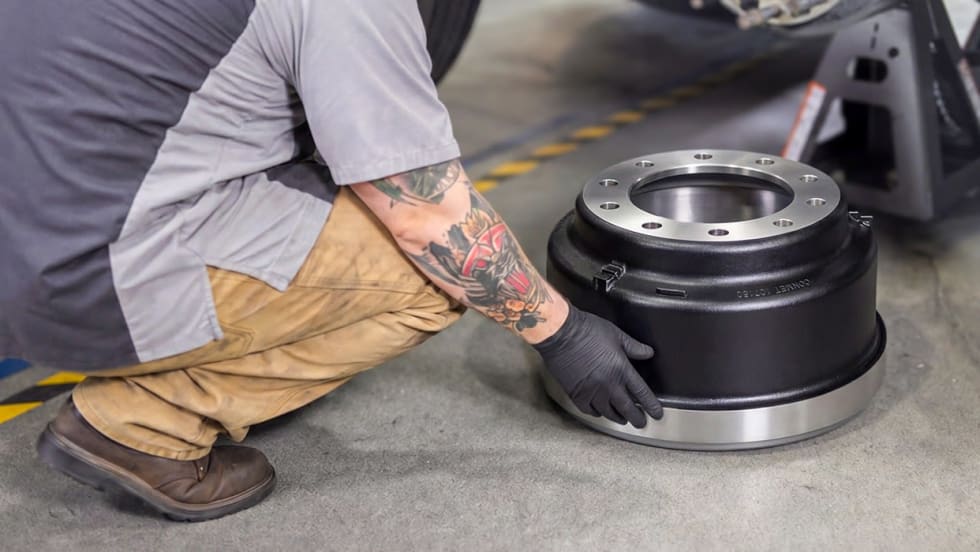
ConMet Expands Aftermarket Brake Drum Lineup With TruCast
A new heavy-duty truck brake drum option in the aftermarket gives customers more flexibility within the ConMet product family.
Read More →
Mack Expands Premium Service Contract Coverage to Medium-Duty MD
With a service contract, inspections, preventive maintenance and repairs can be handled in a single visit instead of multiple ones.
Read More →
Maintenance in the Messy Middle Part 5: Battery-Electric Trucks
No oil changes. No diesel exhaust fluid. No exhaust aftertreatment. But NACFE battery-electric trucks still require specialized maintenance procedures.
Read More →