




EOBRs Are now ELDs
An acronym transition and other things you should know about the pending rule mandating electronic logging devices.

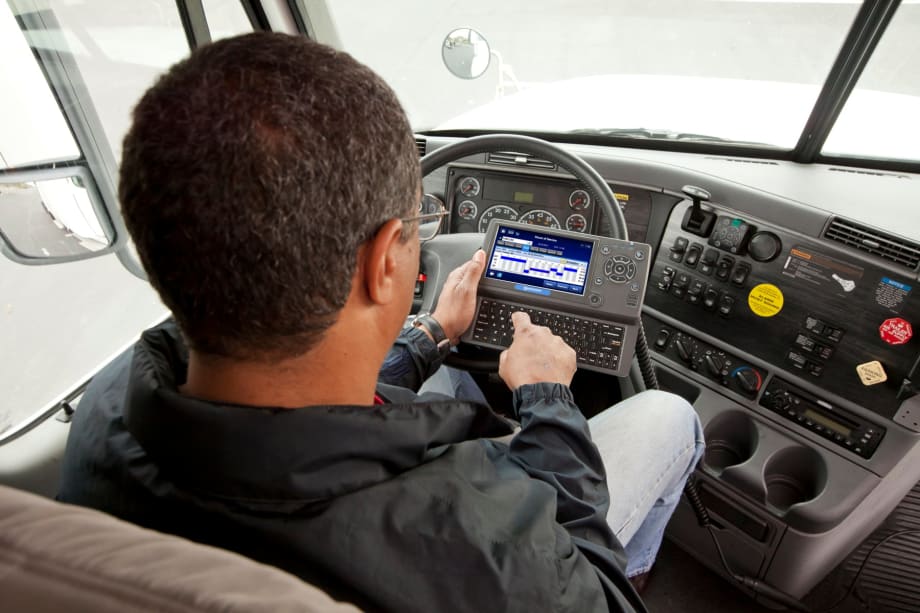
The Federal Motor Carrier Safety Administration is putting the finishing touches on a rule requiring electronic logging devices for keeping driver logs.
Among the provisions of last year’s Moving Ahead for Progress in the 21st Century transportation bill is language directing the Department of Transportation, through the Federal Motor Carrier Safety Administration, to implement a rule mandating electronic logging devices in all vehicles operated by drivers now required to keep paper logbooks.
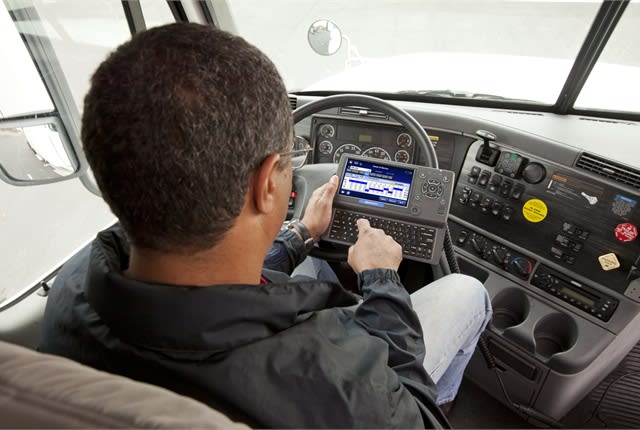
The Federal Motor Carrier Safety Administration is putting the finishing touches on a rule requiring electronic logging devices for keeping driver logs.
In 2010, the FMCSA published a final rule requiring electronic on-board recorders, or EOBRs, for hours-of-service compliance for certain fleets. That rule, however, was vacated last year by a federal court ruling because the FMCSA did not consider the issue of driver harassment in developing the rule.
In response the FMCSA said it will prepare a Supplemental Notice of Proposed Rulemaking on EOBRs this fall that addresses the driver harassment issue and other items.
But they are no longer referred to as EOBRs in the rulemaking process, but as ELDs – electronic logging devices.
“EOBR is a general term we’ve used in the industry for these types of devices,” says Dave Kraft, director of industry affairs, Omnitracs. “Now we talk about electronic logging devices.” Kraft says the MAP-21 transportation bill referred to the devices as electronic logging devices and the FMCSA decided to use that term in its rulemaking. “They will be called ELDs in the regulatory environment, but if you still want to call it an EOBR, you can.”
Potential effects
In general, the industry supports the rule, according to Rob Abbott, vice president of safety policy for the American Trucking Associations. Speaking at an industry event in May, Abbott said there seems to be a clear correlation between safety and the use of the devices. It would also level the playing field between fleets that comply and those that don’t.
The Owner-Operator Independent Drivers Association, however, doesn’t see such a clear-cut safety correlation. The association’s suit was what led to the previous rule being vacated, and it says in addition to the harassment issue, the government has not proven that the safety benefits will outweigh the costs.
ATA does have some concerns about the technical specifications and data transfer requirements.
EOBRs or ELDs now in use must adhere to the technical specifications contained in Part 395.15 of the HOS rules.
“Technically, today we are still subject to 395.15,” Kraft says. “All of the systems in the market today comply with that regulation.” The new rule will likely have similar technical specifications as the vacated rule (395.16) but with some changes.
Additional requirements in the new regulation may require some vendors to update their products to remain compliant. “Those new requirements are things that suppliers already have, by and large,” Kraft says. For example, the rule will probably require using GPS to record location, and most systems already do that.
“I think there will be some fundamental changes,” says Brian McLaughlin, president of PeopleNet. “But I think those vendors that have relatively open systems will be OK.”
McLaughlin also says the definition of tamper-proof will be a big issue. He says that definition might eliminate some cell phones or other devices that plug into the vehicles J-bus. We won’t know until the final rule is published.

Requirements in the new regulation may require some vendors to update their products to remain compliant.
Certification
Another key component of the new rule will be a requirement that ELD vendors have their products certified through a third-party. Currently, vendors self-certify that their products meet FMCSA requirements.
“We think certification of these devices can be a positive thing,” McLaughlin says. “Any time you have a mandate coming down on an industry, you get all kinds of new entrants and they all claim to be compliant. Unfortunately, the fleets take the responsibility to have a compliant system. If the system they deploy is actually not compliant, the fleet faces the consequences.”
Joel Beal, owner of JBA Telematics, says he is a “big proponent” of the FMCSA certifying vendors. “The fleet guy is the one who gets the ticket,” he says. “It’s unfair to mandate a device and not control the devices that come on the market.”
Christian Schenk, senior vice president product strategy and market growth, XRS, agrees that certification is good. “The automated logging is a bunch of software,” he says. “The key component is the company behind the device. The software is the easy part; the hard part is staying up on the regulations and changing rules.”
For example, the changes to the hours-of-service rules scheduled to go into effect this month regarding the restart of mandatory breaks cost EOBR vendors several millions of dollars and months of work to bring their systems up to date.
The mandate will bring a slew of new entrants, Schenk says. “They may know software, but will they know compliance?”
While most current vendors selling automated logging products support certification, the downside to third-party certification is how long such certification takes, McLaughlin notes. If certification gets bogged down, “it will slow down the innovation of the industry,” he says.
Data transfer
Another key issue is how the data is transferred from the device to law enforcement personnel during an inspection.
“First and foremost among the issues to work out: how do you transfer data to the roadside inspector,” McLaughlin says. Various means have been discussed: using the device’s screen, a wireless connection, a USB stick, or via the telematics provider, where the data would be transmitted to the provider’s server and then transferred to the enforcement agency’s system and then back down to the patrol car.
“That could be an area that either eliminates some systems or opens up the door for systems,” McLaughlin says. “I think data transfer will be an issue.”
Fred Fakkema, vice president product management, Zonar Systems, says that from the law enforcement side, “there’s a push to put a printer in the truck, but then you are back to paper, so that won’t work.”
Zonar, like other vendors, offers a tablet device that is detachable. The driver simply hands it out the window. “The data transfer could be done wireless, but not all inspectors have the technical capability for that,” he says.
Speaking at an industry event earlier this year, Steve Keppler, executive director of the Commercial Vehicle Safety Alliance, said law enforcement was generally supportive of ELDs, but “one of the things to keep in mind from the enforcement perspective is that agencies don’t have a lot of money around to buy the newest technologies” that would allow them to read or transfer data during a roadside inspection. The rule “needs to be able to account for the differing levels of technology in the field.”
Timeline
While the transportation bill called for a final rule by October of this year, it’s unlikely a final rule will be issued until sometime in 2014, according to many within the industry. Jack Van Steenburg, chief safety officer for the Federal Motor Carrier Safety Administration, speaking at an industry event in May, said that the rulemaking would be coming up in the fall.
At the same event, however, Annette Sandberg, CEO of TransSafe Consulting and former FMCSA administrator, said a final rule is doubtful before mid-2014. “This rule has been kind of hanging out there,” she said. The certification and driver harassment issues are holding it up.
Dave Kraft predicts that instead of publishing a final rule by the October deadline called for in MAP-21, the FMCSA will do a proposed rule. He expects a final rule won’t be published until late 2014.
Beyond the mandate
Many fleets have deployed onboard computer systems and automated logging applications for a number of years now. Quite a few are on their third or fourth generation system. But electronic logging capability is not the main reason fleets are making these investments.
“When people buy an onboard computer to put in their truck, the electronic log is just one piece of the value proposition,” explains Pete Allen, CEO of Cadec. They are also looking to improve fuel economy by measuring speeding, idling and mileage. They want to automate fuel tax reporting, and they want to improve productivity by sending route plans and dispatch directions to the vehicle and then comparing planned versus actual routes.
“There is so much more to having an onboard computer fleet management system in the vehicle than just the EOBR, but for the trucking world, you got to have it to play in the business,” Allen says.
“In today’s market, without a mandate, nobody wants to buy a device that only does electronic logs,” says Eric Witty, HOS product manager, Omnitracs. “You don’t see people shopping for an electronic log system, you see them shopping for onboard systems to help manage their entire operation, and the electronic log is a part of that.”
At the same time, Witty says interest in automated logging applications has continued to rise. “Within our customer base, once CSA started two years ago, we started seeing more adoption of the electronic log applications, and that adoption has not stopped. A good percentage of new sales are also deploying the application.”
L.T. “Chip” Powell, director of U.S. operations for BlueTree Systems, also sees the growing trend toward adoption of electronic logging devices. “Private fleets have been using elogs for more than a decade,” he says. “The technology is widely deployed in many large and medium-sized for-hire fleets as well, but now, even smaller fleets understand the regulatory environment is going to take us in that direction and they are going to adopt it.”
As the mandate approaches, industry observers anticipate more single-function devices that only do HOS logging will come on the market, with a lower price than today’s full-fledged onboard computers.
But JBA Telematics’ Beal predicts most current vendors won’t rush into providing such devices. For one thing, he says prices have come down enough that smaller carriers or owner-operators may forgo the single-function route and adopt a more robust system in order to get the other benefits such systems provide.
“If I was running a fleet, there is no way I’d put a truck out on the road without a hardwired, fully-functioning telematics device.”
Zonar Systems’ Fakkema agrees: “There are so many more uses than just compliance with these devices.”
That doesn’t mean you want to just run out and buy a system willy-nilly, says BlueTree Systems’ Powell. Whether you have deployed such technology, are planning to or are waiting for the final rule, “at the end of the day, you want to think about the same things when deploying these systems. Number one they have to be reliable, you have to consider cost and then you have to look at installation and implementation.”
In other words, do your homework.
More Drivers

Samsara Launches Custom AI Agent Builder
Agent Studio lets fleets create AI tools for hours-of-service monitoring, reporting and driver support, including agents that communicate by phone.
Read More →
Trucker Path Expands Reserved Parking Network
Trucker Path has added close to 6,000 more truck parking spaces to its Trucker Path Reserved Parking Network with the addition of Safe Truck Parking.
Read More →
EEOC Sues Texas Trucking Company Over Driver Age Limits
The agency says Trancasa USA rejected applicants over 65 and applied tougher driving-record standards to those over 60.
Read More →
Nussbaum, Roehl Announce Second Driver Pay Increase This Year
This year has seen a swath of major truck driver pay increases as freight capacity has tightened.
Read More →
From One Generation to the Next: How Mentorship Builds Safer Truck Drivers
After three decades in trucking, Harold Perry shares what he's learned about driver safety, mentorship, and helping the next generation build confidence behind the wheel.
Read More →
Truck Drivers Need More Than Another Alert
Fleets have more visibility into truck health, safety events, and driver activity than ever. The next challenge is turning all that information into useful guidance for the person who has to decide what to do next.
Read More →
FMCSA Removes 110 Truck Driver Training Schools from Certified ELDT List
Federal regulators also are targeting more than 160 additional training providers and launching a nationwide audit of third-party CDL skills testers as part of a broader crackdown on trucking fraud.
Read More →
Hours of Service Pilot Programs: FMCSA Readies for 2027 Rollout
Two pilot programs could eventually reshape hours-of-service rules, giving truck drivers options to pause their 14-hour clock or use longer split sleeper rest periods.
Read More →
Medical Cards, English Proficiency Reshape Roadcheck Violations
Medical-card violations jumped to the top of the driver out-of-service list during CVSA’s 2026 International Roadcheck, while English-language proficiency violations appeared among the leading violations for the first time.
Read More →
Driver Trust Can Make or Break the Success of Fleet Safety Technology
New Teletrac Navman research suggests that onboarding, transparency about driver data, and positive feedback can play a significant role in how commercial drivers respond to safety and coaching technology.
Read More →