




Driving Navistar's eStar Van
Primitive batteries and limited range caused electric cars and trucks to lose a technology battle with the internal combustion engine in the early 20th century. But electrics have come a long way, buddy

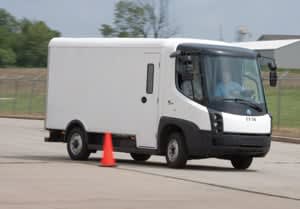
The eStar's turning circle is only 36 feet. Electric propulsion is so quiet that Navistar is thinking of broadcasting music from an external speaker to avoid sneaking up on pedestrians. (Photo by Navistar)
Primitive batteries and limited range caused electric cars and trucks to lose a technology battle with the internal combustion engine in the early 20th century. But electrics have come a long way, buddy.
"Range anxiety" - the fear of running out of juice before a day's work is done - is calmed, thanks to modern lithium-ion batteries that provide up to 100 miles of running before recharging. They weigh far less than lead-acid batteries would, and should last far longer - perhaps more than a vehicle's useful life, according to those promoting Navistar International's new Class 3 electric truck.
Shown off by Navistar on Capitol Hill last September as well as on Earth Day in April, and at the Mid-America Trucking Show in March, the truck was formally christened "eStar" last month. The snappy van is a product of a joint venture with Modec Ltd., an English firm begun eight years ago with investment help from the United Kingdom's Department of Trade and Industry. That Navistar has gotten a substantial grant from the U.S. Department of Energy is indicative of the great expense of electric and alternative-fuel vehicles. For now they cannot make an economic go of it without government subsidies. However, backers say they will in the next few years, as fuel becomes more expensive and prices of special components come down.
Driving impressions
The eStar is nimble, quick and quiet, as I discovered during a spin around Wakarusa in northern Indiana, where the new truck is being assembled. Just sitting there it's different. The bulbous cab has a huge windshield and angled side windows, two of which power down and up. (Will they be enough to ventilate the greenhouse-like interior in hot sun? I'm guessing most drivers will clamor for optional A/C.)
Side entry doors are behind the cab, at the front of the body. With a single short step up, the driver's inside. He or she enters the cab and moves between the seats, turning left to get behind the wheel. Starting is done with a keyless fob that's pressed against a round button - iButton, Navistar calls it - on the wall under the window, to the driver's immediate left. This activates eStar's electric system. The only indication of this is the lighting up of the small I-Pack instrument cluster at the center of the dashboard. All remained quiet as I buckled up and prepared to move out.
A paddle on the left read P-R-N-D. Darren Gosbee, Navistar's director of development for hybrid and electric powertrains, instructed me to put my foot on the brake pedal, release the handbrake (down on the left next to the seat), select D for Drive and move out. "The turning circle is 36 feet," he noted as I made my first U-turn on an asphalt lot outside the Monaco RV plant (owned by Navistar, where the eStar is being built) while heading for an exit gate. I was going to remark that its turning radius seemed shorter, then realized that he had said "circle." The radius is actually 18 feet - tighter than any four-wheel conveyance I can think of, and certainly a boon in the cramped streets and alleys the truck is meant for.
It's certainly not meant for highways or even freeways, because its top speed is only 50 mph. That's purposely limited, because above 40 mph, wind resistance becomes a factor that must be overcome by the batteries. That would drastically cut range, Gosbee explained. It'd probably go 60 or 70 mph, but a 4,000-pound payload would also be a burden to the batteries and the 70-kilowatt (102-horsepower) motor in the rear end, which whined softly, up and down in pitch, while under way. A characteristic of electric motors is that full torque is available at 0 mph, he said. In this case that's 221 pounds-feet, enough for brisk acceleration, at least while the truck is empty. (continued)
The truck rode smoothly on its independent coil-spring suspensions, and four-wheel hydraulic disc brakes stopped it promptly. Power steering is electric-over-hydraulic, and whirring of its pump could be heard while standing still. Perhaps because the truck is almost compact in outward dimensions, it seemed to be going faster than the colorful LED speedometer said. Forty or so is all I reached during short dashes on streets downtown and in residential neighborhoods.
In Elkhart County
Wakarusa is in Elkhart County, famous for making recreational vehicles, whose sales plunged during the Great Recession. Unemployment here has been more than 20 percent, but is easing as the economic recovery progresses.
Monaco added 40 jobs for the eStar program, and that might increase to 700 as the program ramps up. Not all will be here, as they will be spread out along the eStar's supply chain. For example, li-ion batteries are now being made by A123 Systems of Livonia, Mich., and other electrical, mechanical and body parts will come from other sources in the U.S. Americanizing the eStar was a condition of DOE's $39.2 million grant, which Navistar has matched.
The rounded cab, made of gel-coated fiberglass, currently comes with powertrain and other parts from the United Kingdom. Cabs and 14- or 16-foot bodies are similar in construction to the fiberglass motor homes produced in Elkhart County, so they could be made locally, said Shane Terblanche, Navistar's general manager for electric trucks, during a phone-and-Web broadcast. Navistar people are working out this and many other sourcing details.
Serious interest in eStar has come from at least 20 fleets, and Navistar officials anticipate more as the program grows. Monaco expects to build about 400 in the first year, and the plant could assemble 4,000 to 5,000 annually.
One kick-off customer is FedEx Express. It will deploy four eStars in Los Angeles, where the truck's high maneuverability will work well on congested streets and its zero tailpipe emissions will earn purchase grants from California's Air Resources Board, according to Deborah Willig, a fleet manager at the company's headquarters in Memphis, Tenn. She said drivers who saw and sampled an eStar during a cross-country tour in March "loved it," which is understandable. It's simply fun to drive.
What it's not is cheap. Its list price is almost $150,000, which is three times more than a comparable straight-diesel van. However, money from various federal and state programs will offset that cost, said Patrick Davis, manager of the U.S. Department of Energy's vehicle technologies program, who was one of the presenters of the webinar. "We will pay up to half the incremental cost" of an electric vehicle, he said. For eStar that's almost $100,000. There's also a $7,500 electric-vehicle tax credit, plus the CARB grants in California.
The cost of lithium-ion batteries is coming down, Davis said. A couple of years ago it was about $1,200 per kilowatt-hour. It's now $800. "We'd like to see it go to $400," he said. It's possible as more factories open and production volume increases. As part of economic stimulus efforts, DOE is sinking billions of dollars into battery development.
The truck's low operating cost compared to a diesel walk-in van should also make it attractive to fleets, especially as the cost of fuel rises. Recharging the 300-volt battery "cassette" is done overnight by plugging it into the local power grid, which will cost far less than tanking up a truck with diesel fuel. The cassette is under the cargo floor and can be changed in about 20 minutes while the truck's on a lift. An eStar's system also generates electric power when a driver takes his foot off the accelerator and presses the brake pedal. The state-of-charge gauge said we started off at 74 percent, which went to 75 after a number of regenerative stops, then ended up at 73. That helps with range.
The truck will be distributed through select Navistar dealerships in urban areas that are trained and equipped to maintain and recycle the batteries. The dealers will work closely with local utilities to make sure purchasers
More Equipment

What the U.S.-Canada Trade War Means for Trucking
Escalating U.S.-Canada tariffs could disrupt cross-border freight, reduce truck volumes, raise costs, and create new uncertainty for carriers on both sides of the border.
Read More →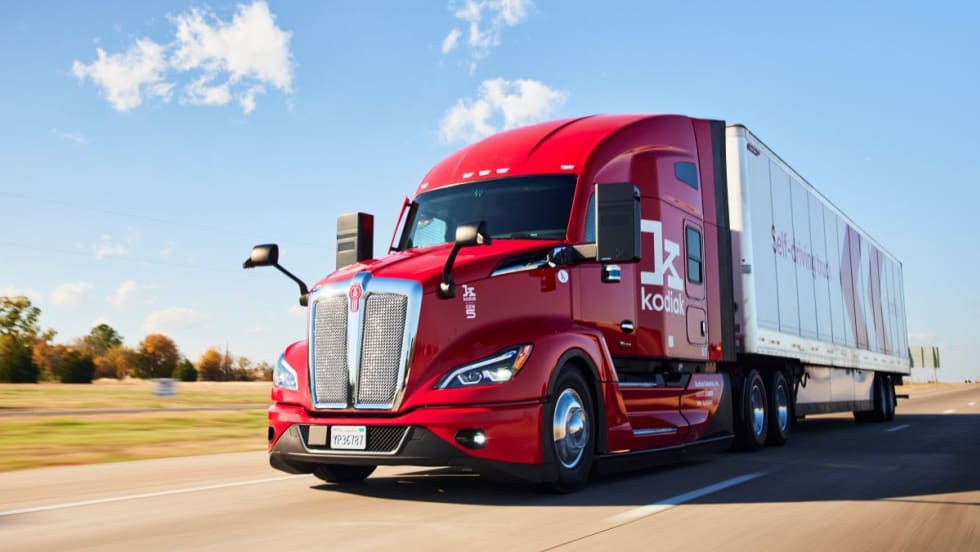
Autonomous Truck Testing Moves Ahead in California as Teamsters Challenge Rules
California has begun permitting heavy-duty autonomous truck testing, with Aurora and Kodiak among the first to receive approval, as the Teamsters sue the DMV over the new regulations.
Read More →
Behind the Wheel of the New Mack Anthem [Video]
HDT takes the new Mack Anthem around Mack’s Pennsylvania test track to see how its driver-focused design, technology, visibility and handling perform from behind the wheel.
Read More →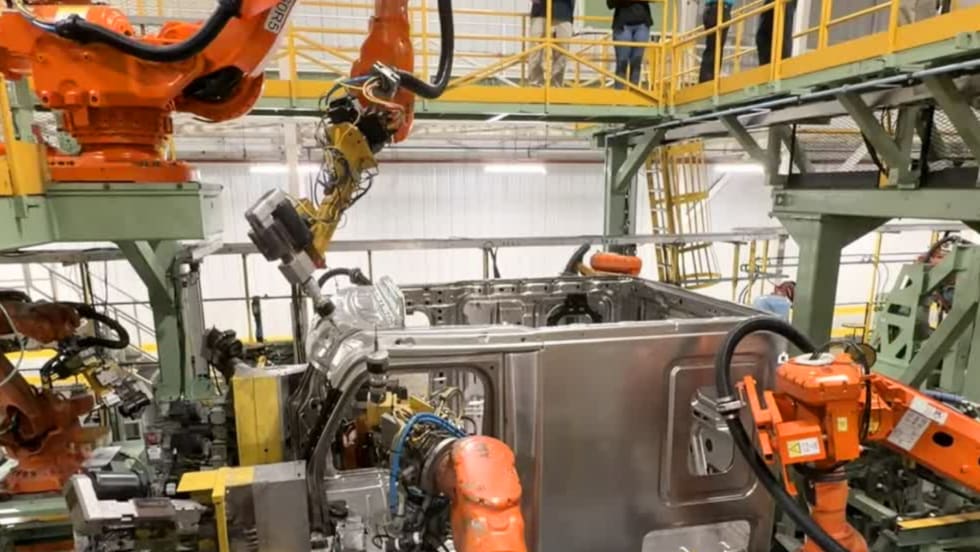
DTNA Plans New U.S. Truck Plant as Manufacturing Footprint Shifts
Daimler Truck North America is evaluating sites for a new assembly plant expected to open in 2029 while winding down operations at its longtime Portland manufacturing facility.
Read More →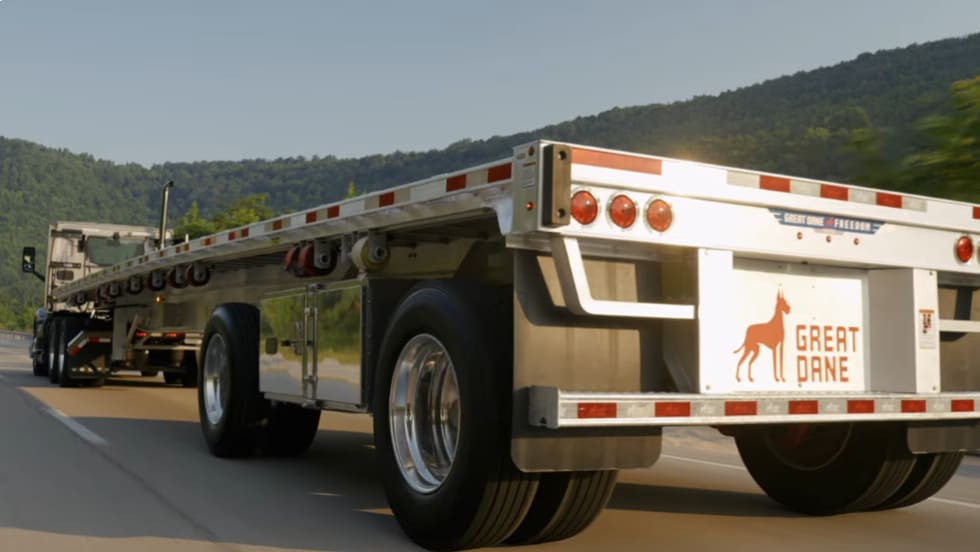
Great Dane Flatbed Trailer Offers Light Weight and Strength
Freedom Ultra is designed for a wide range of open-deck applications, including building materials, lumber, machinery, steel products, industrial freight, and coil hauling.
Read More →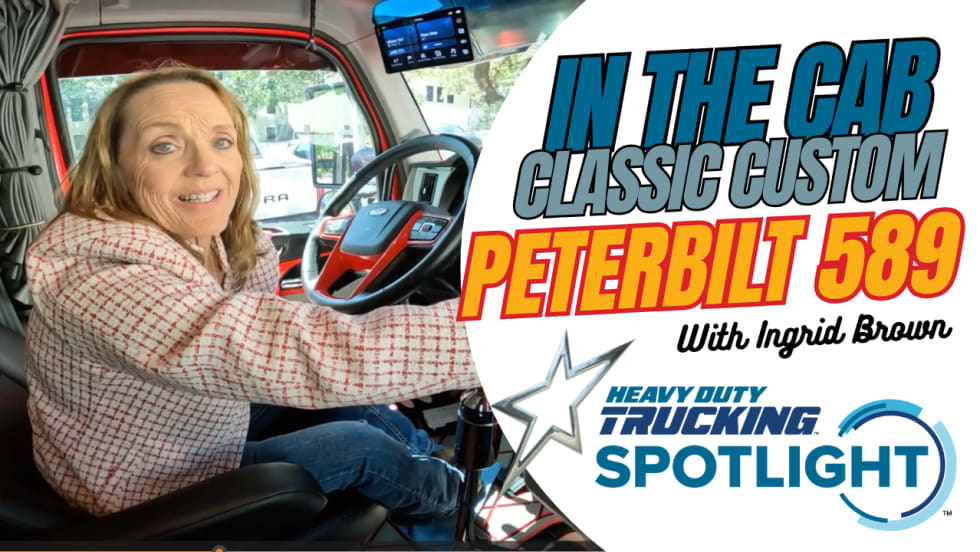
What It's Like Inside this Custom 2025 Peterbilt 589?
Take a driver's-eye tour of this customized 2025 Peterbilt 589 in this video, as longtime driver Ingrid Brown explains its features, compares it to previous models, and shares plenty of personality along the way.
Read More →
Drivers Put Western Star Trucks to the Test at Star Nation Experience
Watch to get an inside look at the Western Star trucks, technology, and community behind the Star Nation Experience 2026!
Read More →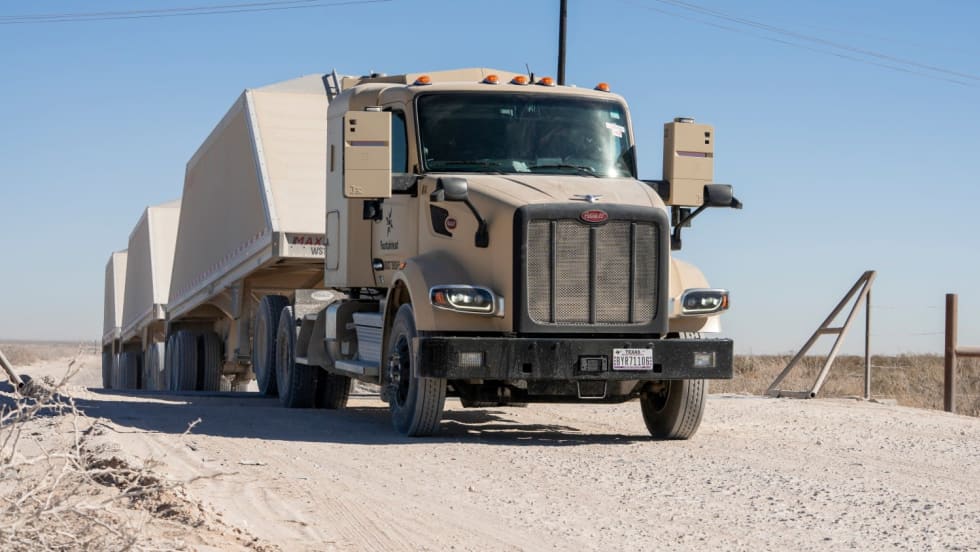
Atlas Expands Kodiak Driverless Truck Fleet in Permian Basin
Atlas Energy Solutions is expanding autonomous frac sand hauling in the Permian Basin with a second load-out location and plans for 100 driverless trucks by mid-2027.
Read More →
Putting Mack’s Command Steer to the Test
A test drive of Mack’s Command Steer active steering system evaluates how it can make truck driving easier and less tiring.
Read More →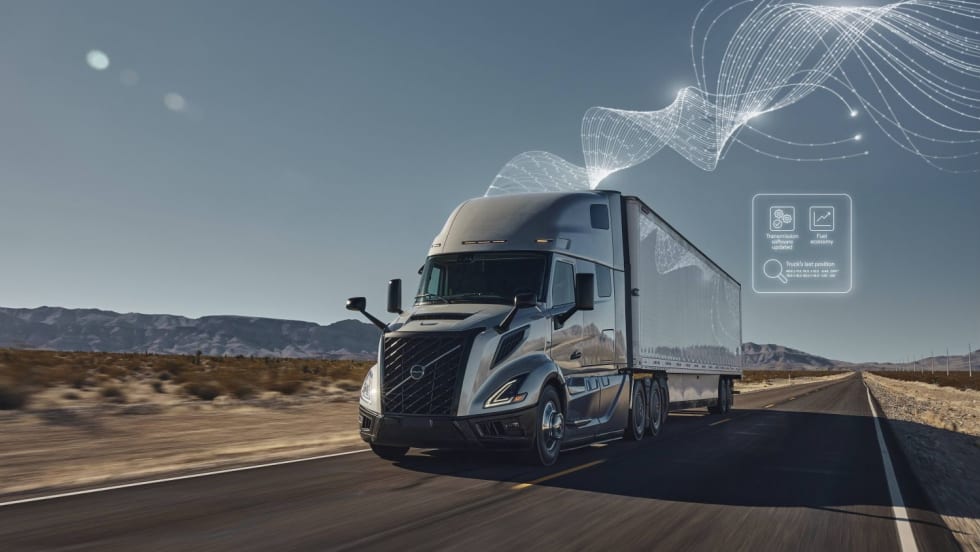
Mack, Volvo Expand DEF Derate Software Updates
The updated software gives Mack and Volvo truck owners more time to address DEF-related issues before the engine derates or the vehicle goes into reduced-speed inducement, following new EPA guidance.
Read More →