




Driving GM's 2-Mode Hybrid
Is this the system that will save full-size SUVs and pickups from high-priced gasoline? General Motors' 2-Mode Hybrid, which first appeared about a year ago on the Chevrolet Tahoe and GMC Yukon and recently on Silverado and Sierra 1500-series pickups

Is this the system that will save full-size SUVs and pickups from high-priced gasoline? General Motors' 2-Mode Hybrid, which first appeared about a year ago on the Chevrolet Tahoe and GMC Yukon and recently on Silverado and Sierra 1500-series pickups,
claims to use 50 percent less fuel than straight-gasoline engines in city driving and 25 to 30 percent less in highway driving.
At 21-mpg city, a 2-wheel-drive Tahoe hybrid's economy is as good as a Toyota Camry 4's, GM brags, citing government testing. At 22-mpg highway, it's as good as a Camry V-6's. Choose a 4x4 and you lose only 1 mpg. And it'll still carry a bunch of people and luggage and tow 6,000 to 6,200 pounds - all the things folks expect of big SUVs, even if they seldom actually do many of them. That could well keep customers buying them, even with gas again at reasonable prices, Yes, the hybrid has a hefty price premium, but let's worry about that later.
The 2-Mode Hybrid system is so named because two electric motors built into a special 4-speed automatic transmission provide two sets of infinitely variable ratios, plus fixed ratios in 1st and 2nd gears under high-load conditions. The motors act as generators during coasting and braking, sending electricity to a bank of nickel-metal-hydride batteries, from where the juice is sent back to the motors to help acceleration.
Full torque from the motors and the engine is available when needed, so it's a proverbial stump puller. Under light loads the V-8 engine becomes a V-4 whenever it can, closing exhaust valves on those unused cylinders and employing variable valve timing in many situations. And it shuts down frequently in stop-and-go driving.
The Tahoe is intriguing to drive partly because it's eerily quiet, and because you can hear a faint whine as it moves away from a stop on electric-only power, resorting to engine propulsion when speed begins to build and/or the driver puts his foot into it. With a light foot the motors can accelerate the Tahoe to 30 mph, GM says, but this one never got beyond 13 mph before the engine restarted. That V-8 is a 6-liter (364-cubic-inch) machine so there's plenty of horsepower (332) and torque (364 pounds-feet), yet it's well muffled (as is the cabin in this limo-like truck).
The Electronically Variable Transmission is ultra smooth and while driving it around the far west side of Las Vegas I could hardly tell what it was doing. I couldn't feel it shifting and it seemed to go to the highest ratio possible in any situation. The tachometer needle hints at what the engine is up to, and that's not much in the way of revs. It seldom got above 2,000 rpm and often loafed along at 1,200 to 1,400.
The tach needle drops as vehicle speed slows and soon the needle rests on Auto Stop, indicating the engine has shut down because it's not needed. That label on the tach is useful to someone not familiar with the truck's hybrid operation because the engine simply stopping might otherwise be disconcerting. ("Eh? It's not running! What'd I do?!") The engine shuts off when the truck is coming to a stop or coasting slowly. You can faintly feel the engine shut off but you can't always hear it, and probably never would if you're playing the radio or yakking on a cell phone.
Electric-only operation is likewise quiet, but you can hear a descending whine as the vehicle comes to a stop and the system regenerates while you brake, capturing energy, converting it to volts and amps that it sends to the batteries. And there's an ascending whine from the electric motors as you move away from a stop. The motors run on 300 volts and so does the air conditioning compressor, so you stay comfy at red lights while the engine naps.
Electric propulsion is what sets the 2-Mode Hybrid apart from GM's "mild" hybrid system used in the Chevrolet Malibu sedan and in the now-discontinued Silverado-Sierra Hybrid pickups. The mild system's generator does not help to move those vehicles; it only captures braking energy that's then used to run accessories while the engine shuts off during stops and pauses briefly at low speeds. Otherwise, the engines in those vehicles do all the work, and the mild hybrid system thus saves only about 10 percent in fuel at best.
The GM 2-Mode Hybrid operates like other "parallel" hybrids in that it'll go on electric or gasoline power or both. Incorporating the motors inside the transmission sets it apart from the Eaton electric hybrid systems now available in many medium-duty trucks and vans (but not from GM), where a single motor-generator is placed outside the transmission.
Like them, the electrified Tahoe is expensive to buy; sticker prices on fancy models are above $50,000 and in the $60,000 range for the Cadillac Escalade version. But in the Chevy Silverado and GMC Sierra 1500-series it costs less, as the hybrid system will be available as an option on base-trim pickups as well as more fancy versions. Moreover, available tax credits might mitigate the financial sting on all of them.
General Motors partnered with Chrysler and BMW to develop the hybrid system; Chrysler briefly briefly had its version on the market in a pair of 2008- and '09-model SUVs, but it's already gone. Chrysler's Aspen and Dodge's Durango themselves have been discontinued, so the gasoline-electric system is not available except in those vehicles still on dealers' lots. The system uses the same transmission mated to a Hemi V-8, and drives much like the GM version. The hybrid option will reappear in Dodge Ram 1500 series pickups sometime in the 2010 model year, Chrysler says.
Though GM and the other domestic builders are now preoccupied with survival, it plans to make 2-Mode Hybrid a strong part of its fuel-saving efforts. These also include the an EFX package that adds about 1 mpg to pickup trucks' EPA ratings, boosting of E85-capable FlexFuel engines, continued development of hydrogen fuel cells, and encouraging politicians and the energy industry to build infrastructures to support both fuels. All that fits into the impression I got in listening to the hybrid's electric whine: It sounds like the future.
From the February 2009 issue of Heavy Duty Trucking.
More Fuel Smarts

Cummins Adjusts 2027 Engine Rollout After EPA Proposal
The engine maker will gradually introduce its new Model Year 2027 diesel engines while continuing to offer current models during the transition, citing the EPA's proposed emissions rule changes.
Read More →
EPA Proposal Could Ease 2027 Truck Costs and Buying Uncertainty
The proposal doesn't change the tougher NOx standard, but it would revise key implementation requirements that manufacturers say have driven up costs and complicated fleet purchasing decisions.
Read More →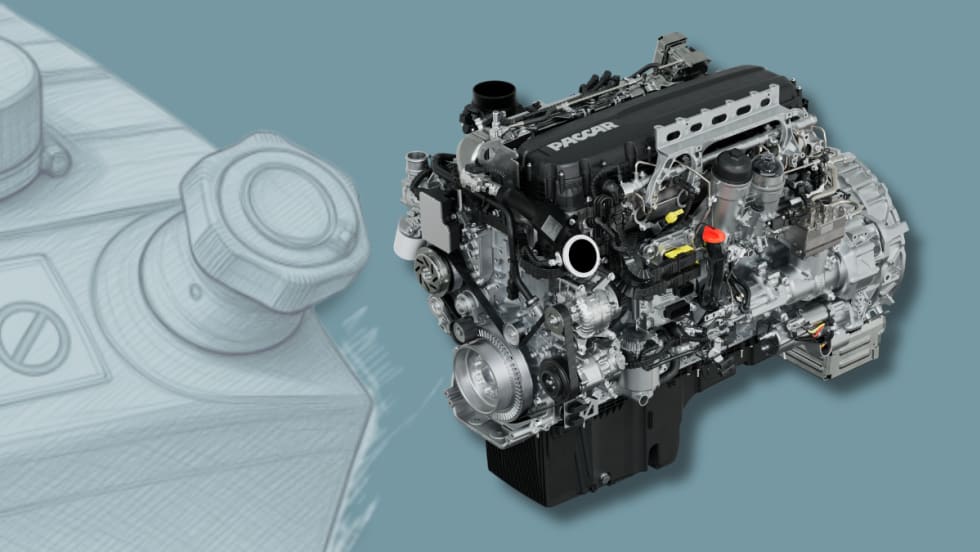
Cummins, Paccar Ease DEF Derates After EPA Guidance
Updated diesel engine software gives truck operators more time to address emissions-system issues while staying compliant with EPA emissions standards.
Read More →
Maintenance in the Messy Middle Part 3: Biodiesel
Biodiesel can reduce emissions, improve fuel-system lubricity and use existing diesel infrastructure. But NACFE’s Messy Middle maintenance report says fleets must actively manage storage, cold-weather operation, filters and oil drain intervals to avoid problems.
Read More →
Enhance Fleet Performance with High-Efficiency Auxiliary Power Units
Drive sustainable cost savings while increasing driver comfort during short- and long-haul logistics operations.
Read More →
Maintenance in the ‘Messy Middle’ Part 2: Renewable Diesel Fuel
NACFE's latest Messy Middle Powertrain Service & Maintenance report says renewable diesel gives fleets an opportunity to reduce carbon emissions without changing trucks, fueling infrastructure or maintenance practices. But technicians still need to understand several important operational differences.
Read More →
The Diesel Engine Enters NACFE’s ‘Messy Middle’
NACFE’s new Messy Middle Powertrain Service & Maintenance report says keeping modern diesel engines running now depends as much on software, diagnostics and data as traditional mechanical service.
Read More →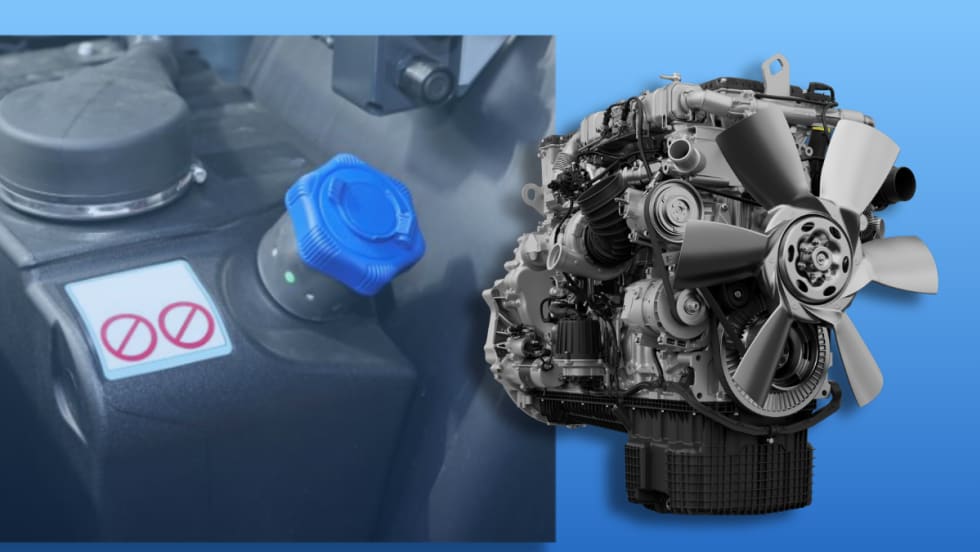
DTNA Software Update Gives Truckers More Time Before DEF Derates Take Effect
The changes reflect EPA guidance aimed at reducing downtime caused by emissions-system faults while maintaining compliance requirements.
Read More →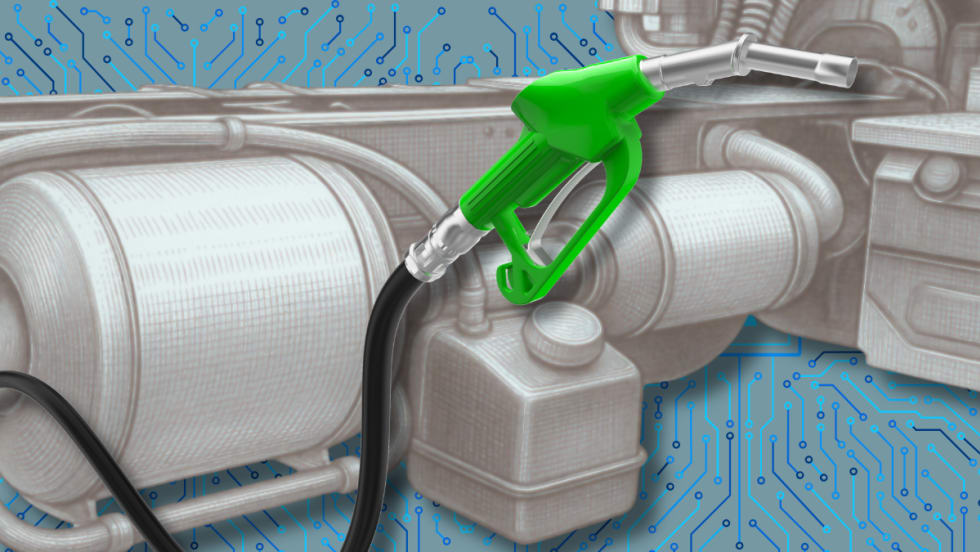
New Agentic Predictive Maintenance Report Demonstrates How Degraded Aftertreatment Systems Waste Fuel
Questar analyzed a large mixed-class fleet and discovered it was wasting as much as $30 in fuel per vehicle, per day, because of mechanically degraded aftertreatment systems.
Read More →
New York City's Microhub Project is Delivering Results
Trucking, last-mile delivery companies, and environmental advocates like what they are seeing so far with New York's microhub program.
Read More →