





Related: Tribe Express Takes the Long View on Driver Retention
Driver Retention Begins With Recruiting
You want to develop a satisfied workforce of drivers who view their employer as a committed partner rather than the highest bidder at the moment. It’s not easy. It requires not just the efforts of the recruiting department, but the engagement of top management.
July 22, 2016

Photo: Boyd Bros
9 min to read
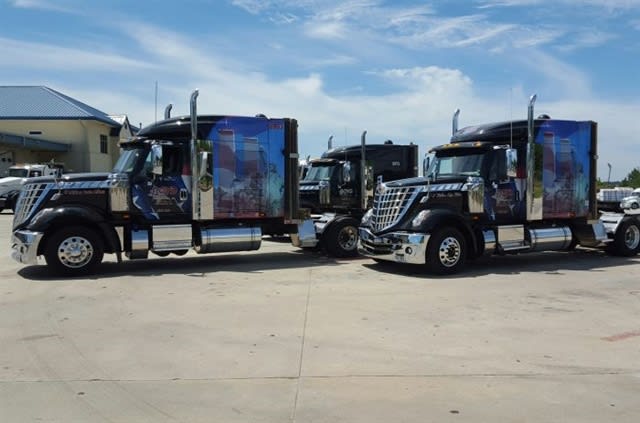
Photo: Boyd Bros
There’s no silver bullet, let alone any secret sauce of sundry ingredients, for successfully recruiting over-the-road drivers. Drivers are the buyers in this job market. Both hard-to-impress veterans and newbies cautious about where to launch their careers will need convincing to sign on with your company.
Given these dynamics, it stands to reason that recruiting and retaining must be two sides of the same coin. You want to develop a satisfied workforce of drivers who view their employer as a committed partner rather than the highest bidder at the moment.
Like the better mousetrap that has customers beating a path to your door, presenting recruits with an employment package that will sell them on driving for your fleet for years to come is the strongest recruitment message you can send.
It’s not easy. It requires not just the efforts of the recruiting department, but the engagement of top management across the silos of the business to stress that drivers are the living, breathing heart of the operation.
Money and time
Finding, retaining and developing talent remains the top business concern cited by most (59%) of the respondents in the latest HireRight Transportation Spotlight report, which includes input from 3,500 human resource, recruiting, safety and security executives from around the U.S.
Pay was the chief reason survey respondents reported for drivers to leave, followed closely by spending more time at home and better benefits. While reaching retirement age was also a big factor, almost a quarter of the drivers left to “work outside transportation” and a decent number left due to health issues. Only 7% of respondents reported that drivers were “not leaving.”
The survey also found that to help improve retention, over half the respondents are offering increased pay, almost half are upgrading equipment, and nearly half are instituting recognition and rewards programs. As for non-monetary perks, investing in driver appreciation events and providing flexible work arrangements ranked highly.
While it wasn’t reported specifically as a retention option in the HireRight survey, wellness programs are increasingly garnering interest among fleets as a way to help keep drivers healthy and happy and demonstrate that the company cares about them. Over a third (35%) reported providing safety and accident-prevention programs. Other wellness-specific offerings noted include free immunization/flu shots and smoking-cessation programs (18%).
On the other hand, close to half (45%) reported not offering any kind of wellness program.
“Driving is a physically demanding profession, and getting proper rest, eating right and maintaining an exercise routine is a challenge due to the nature of the job,” contends Steven Spencer, managing director of HireRight’s transportation and health care business. “The transportation industry is realizing that wellness programs and other methods of improving the quality of life for drivers, while relatively new to motor carriers, are effective ways to attract and retain drivers and boost their overall health, well-being and retention.”
Even though the majority of drivers often decide whether they will stay with a company within the first six months, according to HireRight, nearly a third of the fleets surveyed are not applying retention tactics to new hires. Of course, that means the other two-thirds are.
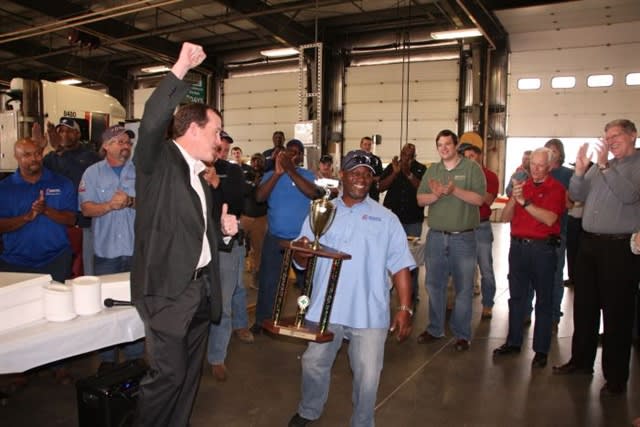
Co-workers applaud veteran Boyd Bros. driver Willie Cooley receiving trophy from the carrier for having completed 1-million miles of safe driving. “You have to have a system in place to keep the really good guys driving for you,” says Boyd’s Lori Furnell. “Once they’re in the door here, we have strategies in place to try to turn them into long-term employees.”Photo: Boyd Bros.
At the table
Boyd Bros. Transportation also counts getting adequate home time and high enough pay as the most important factors in recruiting drivers. “For that 20% of drivers who constantly churn, you have to offer the usual things just to get them to sit at the table, such as a sign-on bonus,” says Lori Furnell, vice president of communications for the Birmingham, Ala.-based all-flatbed carrier.
“But you also have to have a system in place to keep the really good guys driving for you,” she continues. “Once they’re in the door here, we have strategies in place to try to turn them into long-term employees.”
Among the fleet’s 700 drivers are plenty of long-timers, with impressive safety records to boot. “One in seven of our drivers has at least 1 million miles of safe driving to their credit,” notes Furnell. No wonder the fleet wants to develop more such drivers from those it is recruiting now.
After drivers complete orientation, Boyd Bros. offers guaranteed pay for their first four weeks while they’re being coached on being better drivers. “We know may drivers tend to switch jobs in their first month,” Furnell explains. “With guaranteed pay, what we’re saying is, if you let us work with you during the transition to learn our system to be successful here, you need not worry about making the miles those weeks. And they often end up making more than the guarantee.”
Boyd Bros. also offers a special Christmas bonus. “Drivers who stay on from April through November receive a bonus in December of 2 cents per mile driven,” Furnell says. “They know they have to be here to get that reward and it works as recognition for their service as well.
“Everyone, of course, offers driver bonuses. Our idea is to help them through the transition period so they can see the benefit of staying here.”
As for getting drivers home, Boyd Bros. can boast being able to get 95% of drivers home every weekend.
The carrier also thinks it’s crucial to help drivers operate safely. “Often turnover is due to a driver losing their CDL after an accident,” Furnell says. “And part of CSA compliance is about helping drivers operate safely and be healthy. That’s why we promote maintaining a healthy lifestyle on the road. We also offer safety training and reward drivers for completing it.”
Boyd Bros. has turned to a third-party provider, Stay Metrics, to conduct online driver-satisfaction surveys and offer safety and wellness training modules that drivers may complete to earn reward points that be used to redeem various consumer products, even up to a washer and dryer.
“The drivers gain the points as they complete the training and we use the survey results to identify issues of concern to drivers before they grow into problems,” Furnell says. “Using an outside firm for this ensures it is seen as honest. It’s all part of our concentrated effort to meet the needs of our drivers. Drivers often feel ‘lied to,’ so we work to be transparent. We want them to come in with their eyes wide open.”
Staying on top of all things that touch drivers is also why Boyd Bros. tracks both turnover and home time week by week. “Last week, 98% of our drivers made it home and our turnover right now stands at 78%,” Furnell says. “We have conversations about these numbers every week. Because you cannot separate recruiting or anything else — operations, maintenance, etc. — from retention.”
Talking the talk
At Celadon Trucking, recruiting and retaining is “all about communications,” says Joe Weigel, director of marketing and communications. “Many times the recruiting components are comparable – pay, equipment, home time. It’s important that once they join the fleet, they stay connected to the company so that they ‘stay for the long haul.’
“In a perfect world,” he continues, “every driver would get a personal call each week from the owner/president of the fleet to stay connected, but that’s not feasible in most cases. Most trucking companies have to rely on other means to stay connected.”
For the Indianapolis-based truckload carrier, that means reaching out digitally as much as possible. “At Celadon,” says Weigel, “we’ve been using social media for a while as a way to stay connected, and we just started using a marketing automation software platform to improve our communication efforts with our drivers.”
Consultant Duff Swain, president of Trincon Group, figures that if a fleet has a reputation for retention, it doesn’t have a recruiting problem – good drivers will find their way there. He says the real issue is keeping newly recruited drivers and “not letting the good ones get away.”
Swain contends that pay is not the be-all, end-all issue for drivers. “Time and time again, fleets have increased pay, only to see drivers still leave. They may blame it on poor earnings or lack of miles. But it’s really about whether the drivers feel valued.” He says drivers want to be treated fairly. “They want to know what is expected of them, how they are doing, and how they can resolve problems.”
He regards retention not as a distinct process, but one that starts with recruitment. Once recruited, the fleet must qualify, screen and orient a new hire and then help transition him or her into the job. From there, periodic reviews and performance recognition carry on the retention effort.
“The first step is to always think about retention,” Swain urges. “Recruiting is a sales process. But once you’ve sold them, retention starts at orientation. The onboarding process should close the deal — so the driver comes out of it wanting to stay there and contribute as a good employee and be rewarded and recognized for that.
“It’s important to define a reason and benefit for quality drivers to come to your company and then create opportunities that will convince them to stay,” Swain adds.
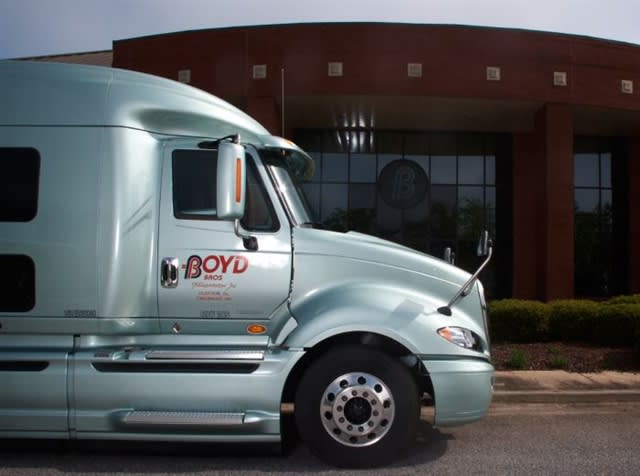
Recognizing that drivers tend to switch jobs in their first month, Boyd Bros. guarantees the pay of drivers who have completed orientation for their first four weeks. That way, the carrier figures they need not worry about making miles while they’re learning how the company operates.Photo: Boyd Bros
Catch 22
Echoing that viewpoint is Mark Tinney, president of JOBehaviors, which provides job-specific compatibility assessments for both prospective drivers and fleets seeking drivers. “Good drivers are appreciative of a quality, selective company that won’t drag them down. You want to be an employer of choice,” he says.
“There’s a huge payback from identifying such applicants,” Tinney continues. “By finding these selective candidates, you become more competitive [in the driver market] in the long run without having to excessively raise pay and benefits.” He adds that he’s “all for better pay, but that won’t get you higher-quality drivers. Just more candidates.”
As for getting to those top-notch prospects, Tinney advises taking a scientific approach to recruiting and qualifying potential hires. His firm allows drivers seeking work to complete free of charge an online assessment that reveals which behaviors they possess that are critical to being a “high-performance” long-haul trucker. Meanwhile, his fleet customers can create custom search queries that will help identify “high-potential candidates that meet the company’s unique performance needs.”
He says these assessments serve “not so much to screen out applicants, but to identify those prospects with the most desired behaviors” so that a better long-term match will result. Tinney says examples of high-performance behaviors that the assessments confirm in candidates include whether they will: maintain self-control in difficult or stressful situations; stay honest and straightforward with others; keep focus and attention even in good driving conditions; perform and finish all assigned tasks; and make every effort to improve the image of the truck driver.
Tinney contends that 20% of the driver’s job is technical in nature and the other 80% is behavioral. “It’s easy to do a good job of assessing the technical skills. It’s harder to assess behavior— to determine ahead of time who well work well with others or succeed under pressure.
“The Catch 22 of trucking is thinking you have to take on any driver who is minimally acceptable,” he adds. “But if you stay in that mindset, you’ll end up stuck with the revolving door.”
Subscribe to Our Newsletter
More Fleet Management

ITS Logistics Settles Religious Harassment Case
The Nevada-based logistics firm agreed to pay more than $396,000 to settle a religious harassment charge involving an employee's Jewish identity.
Read More →
Your Trucks Are Busy. That Doesn’t Mean They’re Winning.
High utilization doesn’t always mean strong margins. Looking beyond the current load can help fleets make better dispatch decisions and get more value from each truck’s time.
Read More →
Why This Trucking Recovery Is Different
Freight demand remains sluggish, but rising costs and tougher enforcement have taken enough capacity out of the market to change the outlook for motor carriers.
Read More →
Platform Science Adds Dispatch and Safety Tools
Four additions to PS Fleet help fleets monitor loads, manage driver coaching, share truck locations and adjust video system settings.
Read More →
PrePass Intelligence Mines Fleet Bypass, Toll and Safety Data
PrePass Intelligence helps fleets measure bypass savings, flag potential toll overcharges, and spot suspicious transactions by combining data from separate systems.
Read More →
Motive Adds AI Agents for Fleet Operations
New tools automate follow-up on fleet data, from maintenance work orders to driver alerts, with two-way voice conversations planned for later this year.
Read More →
Can You Beat Our Trucking Trivia Challenge?
Test your truck knowledge with 19 trivia questions from Heavy Duty Trucking Exchange. Can you keep up with the fleet pros?
Read More →
BeyondTrucks Adds Rules Checks to Dispatch
New Compatibility Engine checks driver qualifications, equipment requirements and fleet policies before loads are dispatched.
Read More →
Diesel Prices Hijack Trucking’s Worry List
ATRI’s annual survey finds cautious optimism about freight, but diesel costs, litigation, and insurance continue to squeeze fleets. Drivers have different priorities on several issues.
Read More →
Nomination Deadline Extended for HDT Emerging Leaders
Just a few more days to nominate accomplished trucking fleet professionals under 40 who are making an impact and helping lead the industry forward for the HDT Emerging Leaders award. Deadline extended to October 20!
Read More →