




CSA 2010: Maintenance Musts
Vehicle maintenance is one of the top areas where fleets are at risk under the Federal Motor Carrier Safety Administration's new CSA 2010 program
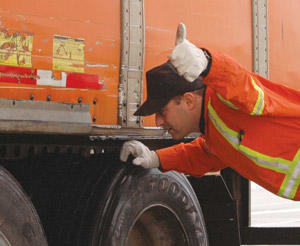
Vehicle maintenance is one of the top areas where fleets are at risk under the Federal Motor Carrier Safety Administration's new CSA 2010 program.
Carrier safety risk management firm Rair released a report comparing the safety methodology under the new Comprehensive Safety Analysis program to the older SafeStat records of more than 64,000 fleets. It showed fleets are most at risk from deficiencies in fatigued driving (hours of service violations), but next is vehicle maintenance.
According to Rair President and CEO J.J. Singh, "vehicle maintenance is the dark horse" among the seven Behavior Analysis and Safety Improvement Categories, or BASICs.
Looking at peer fleet information using the CSA 2010 criteria, as many as 10 to15 percent of large fleets (with more than 500 power units) are at risk of intervention for maintenance-related violations, the study found. As fleet size gets smaller, the at-risk ranking gets bigger and bigger. In the one-to-five fleet size, one small fleet in four is potentially looking at FMCSA intervention for maintenance problems.
Similar research by Vigillo, which data-mined its own 1,700 carrier clients, revealed that CSA 2010 Version 2, only a week old as of this writing, has moved maintenance from a relatively lowly position to a tied Number 2. Echoing the Rair study, Vigillo's numbers show as many as 15 percent of carriers are at risk of intervention because of violations at roadside inspection, accident reporting and records auditing.
"Now more than ever before, maintenance is in the spotlight of CSA," writes Vigillo President Steve Bryan in his blog. "Why, you ask? While 57 violations were removed from evaluation under CSA version 2 in Maintenance, hundreds of violations were removed from the other BASICs. So at the end of the day, the Maintenance BASIC is now 40 percent more important than it was last week. Fourteen percent of Vigillo's customers are now over the threshold in Maintenance."
Earlier this year, fleets in the pilot states could run their CSA scores to see where they are deficient. Now, all fleets have been able to review their CSA 2010 data through the FMCSA website. But Vigillo's Bryan says even with the numbers available, many fleets are oblivious of their exposure to the maintenance BASIC.
The driver inspection
Rair's Singh says one solution is the correct and careful use of the Driver Vehicle Inspection Report that is filled out - or should be - every day by the truck driver. "The bigger fleets have a more proactive approach to maintenance and more rigorous processes to act on the DVIR," he says. "But even so, 10 to 15 percent of even those fleets are at risk of intervention. There is a need for training of drivers in the proper inspection and reporting on the DVIR, and then a robust process to correct in a timely manner any problems identified."
All too often, the DVIR is a case of "pencil whipping," to use Singh's term. Drivers sign off without calling out problems, and maintenance managers sign off without doing anything about the problems that may have been identified.
"So when a truck is inspected at the roadside, problems are found that are noted as violations on the roadside inspection report - and they don't have to have citations, just violations," Singh says. "For smaller fleets that are less likely to have safety lanes and processes to deal with the issues, there's a higher likelihood of receiving a violation at the scale."
Because carriers and drivers can be penalized for failure to properly maintain their commercial motor vehicles, proper maintenance refers not only to making appropriate repairs but also to performing pre- and post-trip inspections, writing accurate DVIRs, properly fixing problems, and maintaining appropriate repair records.
The regulations are spelled out in Title 49 CFR, Parts 393 and 396.
According to Darry Stuart, president of DWS Fleet Services, a Connecticut-based limited-time maintenance executive service, it's important that fleets understand the implications of CSA 2010 - especially the vehicle maintenance BASIC.
"The driver and his boss are going to take the brunt. They will have to be more responsible and their records will pinpoint weaknesses. The maintenance department should not see any real changes if it has a reasonable program, performs PMs on time and responds to the driver vehicle condition report (DVCR), the driver vehicle inspection report (DVIR) and the vehicle condition reports (VCR)," he says.
The DVIR is required by Title 49 CFR 396.11. The report must cover at least the following parts and accessories:
* Service brakes, including trailer brake connections
* Parking brake
* Steering mechanism
* Lighting devices and reflectors
* Tires
* Horn
* Windshield wipers
* Rear vision mirrors
* Coupling devices
* Wheels and rims
* Emergency equipment
Before requiring or permitting a driver to operate a vehicle, all repairs reported on the DVIR must be made to any defect or deficiency listed that would be likely to affect the safety of operation of the vehicle.
As drivers become more aware that these violations will affect their standing under CSA 2010 as well, they are going to become very reluctant to take out a truck that the daily walk-around shows to have likely mechanical violations. Drivers will also have to be more rigorous with their pre-trip inspections if they are not to gather their own points for maintenance violations. This will greatly exacerbate the problem of late dispatch, where a truck first has to go back around to have problems fixed before the driver will accept it.
"Thus the trucks more than ever will have to be on the 'ready' line free of defects," Stuart says.
Stuart says CSA 2010 may finally give maintenance professionals "what we have always wanted and preached: a detailed post-trip VCR, so we can make the vehicle ready for the next dispatch. What we don't want is finding faults on the pre-trip. This means the driver could possibly be late on a load because what should have been a post-trip repair would turn into a dispatch delay on the next pre-trip. And that's providing someone is available for repair."
Lighting & wiring
According to both Rair and Vigillo data, the most frequent causes for violations are, in this order, lamps, brakes, and tires. These must obviously be a focus of the maintenance department, whether drivers write them up in the DVIRs or not.
Stuart says lamps have been an issue for years. Inspecting equipment whenever it is at the terminal is paramount, including trailers. Giving drivers spare bulbs is not the answer, because lamps have been made theft-proof over the years and drivers can't get into them. Spec'ing LED lighting makes increasing sense, as the lifetime operation of these lighting sources lessens the exposure to lighting violations.
"That being said, we should be preparing for some intensity in this area, because if you find yourself scrambling, shame on your maintenance system," says Stuart, who is a past chairman of the American Trucking Associations' Technology and Maintenance Council. "Tune it up quickly. The days of the driver being dispatched with a light out and a claim it just failed 20 miles ago are gone."
Wiring problems can be spotted and shorts and other on-the-road problems averted by simply spending more time at PMs inspecting wiring for corrosion, chafing and poor routing that causes tension or flexing that will fail the conductor inside the sheathing.
And take those sharp-tipped connectivity tracers away from technicians. Any break in the insulation will almost certainly bring corrosion in its wake and frustrate the integrity of sealed harnesses that suppliers like Grote, Phillips and Truck-Lite have worked so hard to achieve.
Brakes
Brakes are high on enforcement's list of priorities for obvious reasons. Stuart says brake re
More Maintenance
Shell Prepares Rotella Oils for 2027
New CL-4 and FB-4 formulations will begin arriving in early 2027, with improved protection against oil breakdown, wear and deposits, according to Shell.
Read More →
Mack Expands Extended Coverage With Four Chassis System Plans
Mack Trucks' new system-specific coverage options allow heavy-duty fleets to select protection for driveline, cab, HVAC, electronics, and advanced safety components.
Read More →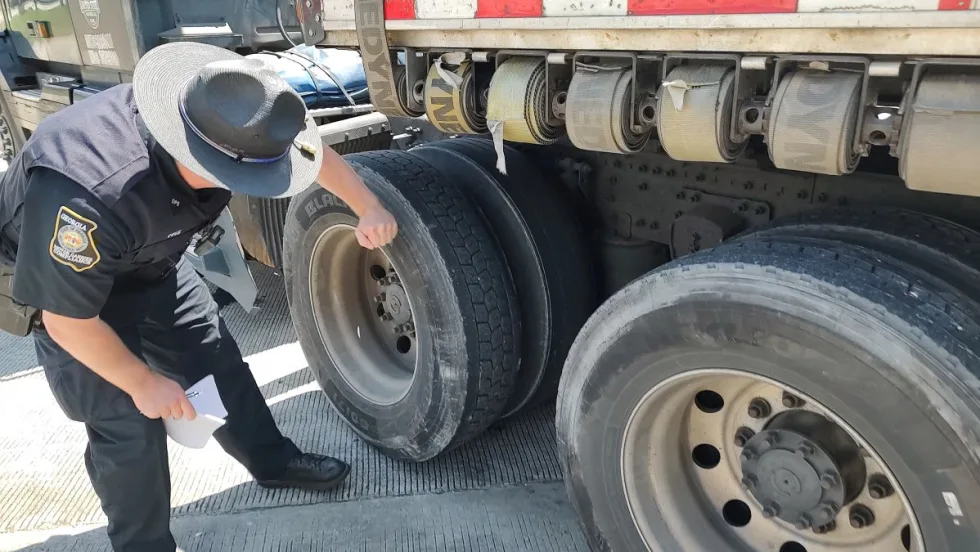
What an Out-of-Service Order Really Costs, and How to Plan for One
The repair invoice is the first number you see — and often one of the smallest. Here’s what else an out-of-service order can cost a fleet, and how planning can reduce the damage.
Read More →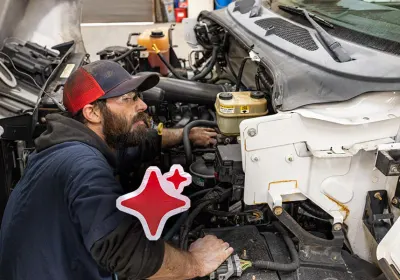
International Launches Online Truck Parts Store
Fleetrite.com lets fleets and repair shops find OEM and all-makes parts, check prices and availability, and order without calling a parts counter.
Read More →
Continental Introduces New Regional Truck Tires
Continental says its new Generation 5 steer and drive tires for regional operations offer longer tread life, with estimated mileage gains of 22% and 19%, respectively.
Read More →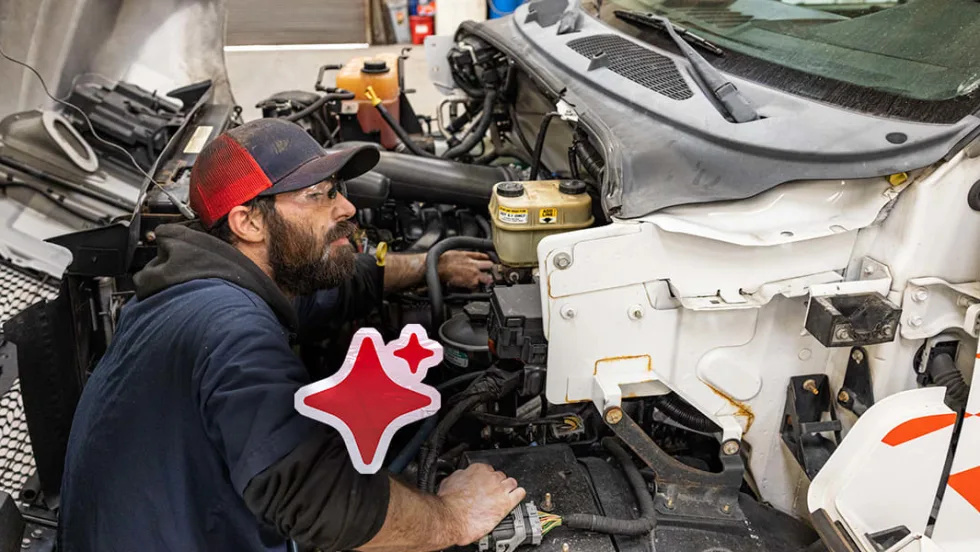
How AI Can Help Your Techs’ Efficiency
The technician shortage isn't going away, and no single fix can close the gap on its own. Trent Broberg makes the case that AI's real job in the shop is protecting the billable hours and job satisfaction of the techs you already have, not asking them to work faster.
Read More →
Color Match Smarter: Tools That Restore & Perform
For fleet managers and collision repair professionals keeping heavy-duty trucks on the road, getting the color right the first time isn't just about appearance — it's about efficiency, turnaround time, and bottom-line results. Discover how today's digital color tools are transforming the repair process from guesswork to precision.
Read More →
Wrong Repair Prompts Recall of Freightliner, Western Star 4x2 Trucks
DTNA is recalling more than 2,400 trucks that received an incompatible software fix instead of the hardware repair required to address brake valve corrosion.
Read More →
Truck Drivers Need More Than Another Alert
Fleets have more visibility into truck health, safety events, and driver activity than ever. The next challenge is turning all that information into useful guidance for the person who has to decide what to do next.
Read More →
The Maintenance Checks Trucking Fleets Should Prioritize Before Fall Freight Picks Up
Making it through August isn’t the same as being ready for the next several months of operation. Find out what systems may have suffered from summer heat and need to be checked out before fall.
Read More →