




Cracking the VMRS Code
How a set of codes developed nearly 50 years ago will change the way you spec and maintain trucks.

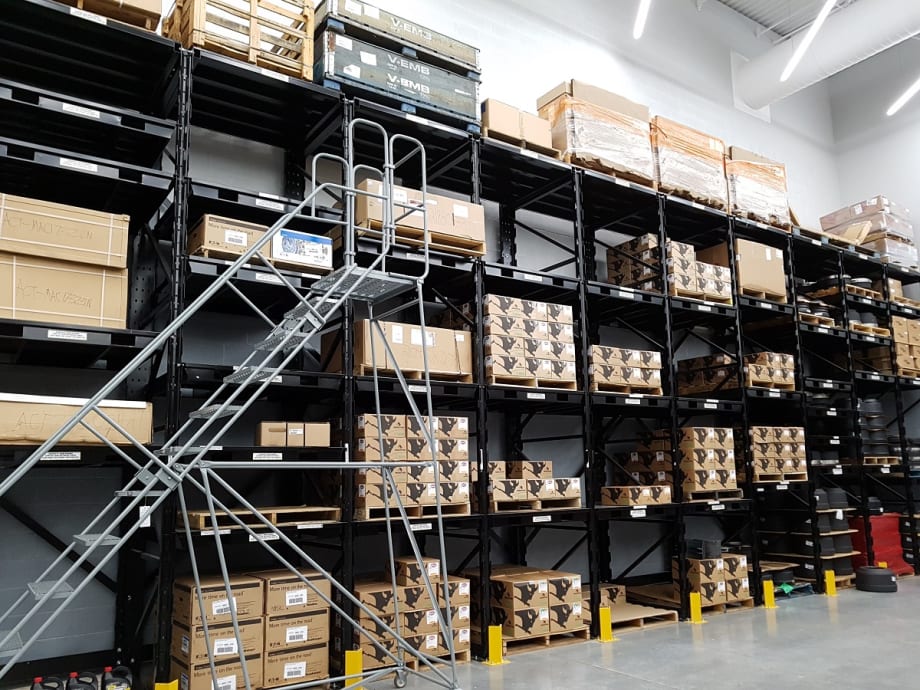
Thanks to the elegance of their design, once VRMS code data is fed into a maintenance software system, fleet managers can use as little, or as much,of the codes as they need to get the information and the operational snapshot they need on a daily, weekly, monthly or yearly basis.
Photo: Jack Roberts
Every once in a while, design engineers step up to the plate and knock the ball clean out of the park.
That’s the case with the Technology & Maintenance Council’s Vehicle Maintenance and Reporting System, known as VMRS. The coding system was developed in 1970, as fleet maintenance professionals at the time recognized the need for a common language platform that could help them identify and communicate a myriad of maintenance issues, from the causes of failures to corrective measures, as well as identifying operating systems, equipment, and the various types of work that needs to be performed on each of them.
It was a massive — and important — assignment for the committee tasked with inventing the new language. Being engineers, it’s only natural that they settled on a numeric code. But Jack Poster, TMC’s VMRS Services Manager for TMC (which still owns, administers, and updates the codes), marvels at how astute a choice those developers made.
“I don’t know how far into the future those VMRS founders were thinking when they developed those codes,” Poster says. “In fact, I don’t know if they were thinking about the future at all. But it is remarkable that they sat down to develop a way to allow multiple maintenance communications to have a single language to identify parts, procedures, and practices. And they decided to use a numeric code at a time when computers filled entire rooms. Given where we’ve come since that time — and where we’re going — they could not have come up with a better system.”
That’s because VMRS codes, in addition to being powerful communication enablers in the fleet maintenance world, have proven to be wonderfully adaptive and expandable. Since its inception in 1970, the code has been expanded and refined several times as its functionality and flexibility have been recognized. Today, it is more accurate to call VMRS a structured coding system, which uses a series of sequenced numbers to drill down as deep into a vehicle, system, or component as a fleet manager wants to go. In its latest incarnation, for example, VMRS can accommodate up to 1,000 distinct vehicle systems, compared to the original 100.
It’s a very logical system that is relatively intuitive and easy to learn, Poster says. This has not only made it a boon for fleet managers who want to customize it for their specific applications and needs, but also enabled consistent expansion as vehicles and fleet operations have become more complex.
“It’s a universal, foundational platform,” agrees Daryle Shuford, director of roadside fleet solutions, FleetNet America. “I liken it to Beethoven. If they can read music, anyone on the planet can play Beethoven’s Fifth Symphony, no matter what language they speak. VMRS codes work in the exact same way.”
Shuford says because of the elegance of the design, fleet managers can use as little, or as much, of the codes as they need to get the information and the operational snapshot they need on a daily, weekly, monthly or yearly basis.
“It really runs the gamut in fleets today,” he says. “We have customers who use the codes to take things all the way down to a component level. But to us, it’s a very powerful tool because we can record data from roadside events or breakdowns using VMRS codes to give our customers a complete picture of how and why this event happened.”
FleetNet America technicians can key data into a system that syncs with fleet maintenance software to then paint a complete picture of why things are happening to vehicles and identify trends and patterns that lead to premature failures before they get out of hand.
“We can point fleets toward the cause of a breakdown,” he says. “And then, they can take that VMRS data, combine it with their proprietary system, and improve on that picture. The more granular the data, the deeper you can go into what’s happening with your vehicles. VMRS codes give fleet managers the ability to narrow breakdowns down to particular makes or even year models of trucks.”
VMRS codes are the maintenance bible for maintenance operations at Southeast Logistics, a long-haul carrier based in Tuscaloosa, Alabama. Maintenance Director Bryan Golden uses VMRS codes to track trends and monitor failures by taking the data down to a component level in his reporting.
“Its real power is that it allows us to go in and add our own internal codes to customize my reports,” Golden explains. “I can isolate virtually any aspect or component in our operations and get reports. It helps us control our costs both from an operational point of view — are the tires we’re running holding up the way we need them to, for example. But it also helps us control costs internally. Is my department being charged for an accident? Was that accident due to a component failure? Or was the truck in good running order and the accident happened due to circumstances beyond our control? I can use that data to prove that’s the case and prove I’m not liable for that cost internally. It’s a very powerful tool that saves us a lot of time and money in our operations.”
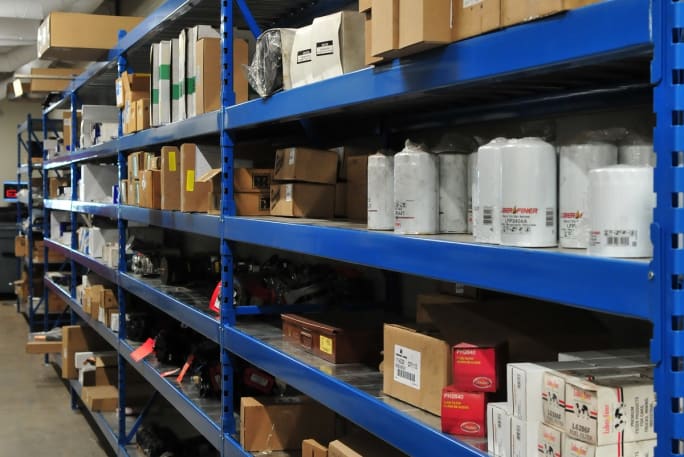
VRMS codes can not only help fleets get a handle on maintenance issues; but they also are a powerful tool for getting parts inventories update and organized.
Photo: Jim Park
The rise of edge analytics
VMRS is going to become even more powerful in the future, says Chris Orban, vice president, data science, for Trimble. Up to now, most fleets have used VMRS codes primarily in “after-the-fact” analysis of vehicle maintenance and performance. But he believes that soon, VMRS codes, component sensors and telematics systems will combine to create a revolutionary world of real-time edge analytic capabilities for fleet managers.
“Let’s say a fleet today says, it knows based on VMRS codes that it can expect water pump failures on certain truck models in its fleet at 300,000 miles,” says Orban. “But consider for a moment that a mile isn’t always just a mile: A mile on a flat, stretch of Nebraska interstate is very different from a mile spent in heavy Chicago traffic or climbing a mountain in the hot Arizona desert. And as any fleet manager knows, those operational parameters matter. A lot. But up until now, it’s been impossible for fleets to measure, collect and crunch that information.”
Using VMRS codes, Orban says soon fleets will be able to drill down on vehicle operations to the point where cargo weight, how it’s distributed in the trailer, driver behavior, weather and other critical factors will tie in with VMRS codes to create reliable data on the future health and behavior of the vehicle. He says fleet managers will soon be able to spec specific vehicles for specific routes or geographic areas down to the component level, while coaching drivers in real time on how to best operate in those environments, while offering detailed, route- and application-specific maintenance programs and procedures for those vehicles — all based on VMRS codes.
“This is the next level in fleet operations and maintenance,” Orban says. “Right now, we’re seeing fleets coaching drivers on safety and fuel economy. Soon, they’ll be talking them about how to handle vehicles correctly on specific routes.”
Moreover, Orban thinks OEMs will be the biggest proponents of using VMRS codes to collect data and use it on this level. “We always think about spec’ing the perfect truck from a fleet’s point of view,” he says. “But OEMs don’t want their trucks driven hard and failing, either. Because that costs them money on warranty work.”
Soon, Orban predicts fleet managers will use VMRS code data to sit down with dealers and OEM engineers to customize vehicle specs in ways that have never been possible before. Specs will evolve from a “one size fits all” solution across an entire fleet, to specialized equipment packages that are fine-tuned to run on specific roads and routes. That power will be expanded even more as sensors begin transmitting real-time component health information — again using VMRS codes — to fleets.
“The days of ‘Our water pumps fail at 300,000 miles’ will be gone forever,” Orban says. “Fleets will know that water pumps on one engine on one route fail at one mileage number, and trucks using a different engine on the same route can expect the water pump to fail at another mileage number. And that will hold true across the fleet’s entire spectrum of makes, models, engine specs and routes.”
As amazing as these advances are, none of them would be possible without the common language platform that enables fleets and OEMs and dealers to communicate about how vehicles, systems and components are performing. VMRS codes give fleet managers the information they need — from the view at 35,000 feet, all the way down to a granular level. It’s a true testament to the talents of the engineers who developed this unique language and the trucking professionals who have steadily nurtured it and expanded upon it ever since.
More Maintenance

Color Match Smarter: Tools That Restore & Perform
For fleet managers and collision repair professionals keeping heavy-duty trucks on the road, getting the color right the first time isn't just about appearance — it's about efficiency, turnaround time, and bottom-line results. Discover how today's digital color tools are transforming the repair process from guesswork to precision.
Read More →
Wrong Repair Prompts Recall of Freightliner, Western Star 4x2 Trucks
DTNA is recalling more than 2,400 trucks that received an incompatible software fix instead of the hardware repair required to address brake valve corrosion.
Read More →
Truck Drivers Need More Than Another Alert
Fleets have more visibility into truck health, safety events, and driver activity than ever. The next challenge is turning all that information into useful guidance for the person who has to decide what to do next.
Read More →
The Maintenance Checks Trucking Fleets Should Prioritize Before Fall Freight Picks Up
Making it through August isn’t the same as being ready for the next several months of operation. Find out what systems may have suffered from summer heat and need to be checked out before fall.
Read More →
What Three Fleets Are Doing Differently When Buying Truck Parts in 2026
With freight improving but costs still climbing, fleet maintenance executives explain how they're balancing price, quality, and supplier relationships.
Read More →
Paccar Recalls 2027 Trucks Built This Summer for Possible Electrical Problem
The nearly 6,000 Kenworth and Peterbilt trucks in the recall could potentially lose engine power, among other things.
Read More →
Will API PC-12 Oil Change Trucking Fleet Maintenance?
The new API PC-12 heavy-duty engine oil category reflects the changing demands of modern diesel engines. But fleets like Foodliner are looking to getting their own data before making decisions on adopting the new oils and questions such as extending oil drain intervals.
Read More →
Brake Safety Week to Focus on Drums and Rotors
Commercial vehicle inspectors are focusing on truck brakes during CVSA's Brake Safety Week, August 23-29.
Read More →Possible Battery-Cable Fires Prompt Recall of 15,000+ International MV and HV Trucks
On the recalled vehicles, manufacturing variations can cause the battery interconnect cable to contact the auxiliary stud and hold down the bracket.
Read More →
Rush, MCT Team Up to Grow Refrigeration Service Network
The joint venture will operate MCT's network of Carrier Transicold dealerships and mobile service locations, with the companies promising greater service capacity and uptime for refrigerated fleets.
Read More →