




Change in Excise Tax Removes One LNG Stumbling Block
The temporary highway funding bill passed this summer changed how liquified natural gas is taxed to make it more equitable to diesel fuel, and one LNG provider believes that will lead more fleets to consider using it as an alternative fuel.

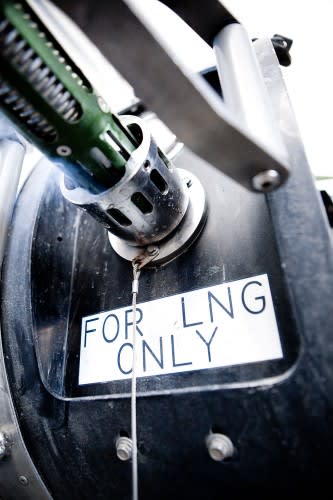
The temporary highway funding bill passed this summer included a provision known as "the LNG-diesel fix," which changes the tax code to tax liquefied natural gas at essentially the same rate as diesel. One provider of liquefied natural gas believes that will lead more fleets to consider using LNG as an alternative fuel.
Currently, the federal highway excise tax on both diesel and LNG is 24.3 cents per gallon. However, it takes 1.7 gallons of LNG to equal the same energy content as one gallon of diesel fuel. Because the excise tax is based on volume (gallons), not energy content, LNG is taxed at 170% of the rate of diesel on an energy equivalent basis. Fixing this disparity brings the LNG excise tax down to 14.1 cents per gallon, effective Jan. 1, 2016.
"One of the things that has really held LNG back, is that LNG was taxed on a per gallon basis, but it took 1.7 LNG gallons to have the same diesel equivalent of energy," explains David Jaskolski. "So we were paying over 40 cents in federal excise tax. When you have that disparity it makes it tough."
Jaskolski is senior account manager with Pivotal LNG, a division of AGL Resources, which sells liquefied natural gas as an alternative fuel. It's one of the largest producers of LNG in the United States, with the capability of making up to 540,000 gallons of LNG per day. It supplies more than 1 million gallons a month for truck fleets, including UPS LNG facilities in Tennessee and Florida.
The new law, he says, "leveled the playing field, which was what we were asking for. It doesn't subsidize it, it doesn't give us an advantage. For guys that would like to do LNG but didn't want to pay that extra tax, now that roadblock has been removed."
Although lower diesel prices have dampened some of the interest in natural gas, Jaskolski says with the tax inequities addressed, there are several types of fleets that may become more interested in LNG as a fuel.
"People who have a long-term outlook for fuel purchasing, especially private fleets that can't pass off costs through a fuel surcharge, they're still interested," he says. "The spread between natural gas and diesel prices affect interest level, absolutely. But the fleets I've talked to understand one thing with the current rapid drop in diesel prices: What goes down is going to come back up. It's just a matter of when."
He notes that world events that affect the price of crude oil, thanks to the way oil is traded on a global commodities market, also affect the price of diesel. LNG, as a domestically produced and domestically traded product, is far more stable in price, he says.
That makes LNG more attractive, especially in regional and super-regional applications, he says.
"If the operation is hub and spoke or even node to node, and they operate day cabs, they're probably a real good regular route fleet that's a potential customer for LNG," he explains. The trucks fuel at a central point, so the lack of widespread LNG fueling stations isn't an issue. And one of the benefits of LNG over compressed natural gas, he says, is the space taken up by the fuel tanks on the wheelbase, a concern for fleets in regional applications that want to keep the wheelbase short for a tighter turning radius. LNG takes twice the space on the frame as diesel fuel, he says – but CNG takes almost four times as much.
Intermodal drayage and distribution centers, he says, are other areas where LNG may see more adoption now that the taxes have been equalized.
More Fuel Smarts

Record Diesel Prices Squeeze Trucking Fleets
Average U.S. diesel prices have climbed to nearly $6 a gallon, surpassing the 2022 record as tight refinery capacity and Middle East disruptions keep fuel costs elevated.
Read More →
How Fuel Delivery Shapes Engine Performance
Fuel delivery depends on more than what happens at the injector. For fleet, maintenance and technical professionals, looking at the full path from pump to injector can provide useful context for understanding engine performance.
Read More →
East Coast Port Launches $45M Electric Truck Push
The Port Authority of New York and New Jersey announced millions in incentives for zero-emission drayage trucks, yard tractors, and new charging hubs near the port.
Read More →

California Bill Could Shed Light on Electric Truck Prices
Why do battery-electric Class 8 trucks remain so expensive? A California bill headed to Gov. Gavin Newsom would give fleets and state agencies more visibility into what manufacturers charge.
Read More →
Detroit Opens Orders for EPA 2027 Engines
Detroit isn’t starting from scratch to meet EPA 2027 diesel emissions standards. Its Gen 6 DD13 and DD15 engines keep much of today’s platform while updating the fuel and aftertreatment systems.
Read More →
Zero-Emission Truck Corridor Planned for West Coast
California, Oregon, Washington, British Columbia and Baja California are coordinating plans for truck charging and hydrogen fueling from Canada to Mexico.
Read More →
A Closer Look at Kenworth’s Electric T880E Vocational Truck [Video]
Learn more about Kenworth's T880E battery-electric vocational truck at the Paccar Technical Center, including its range, applications, upfitting considerations, and PTO options, in this HDT Spotlight video.
Read More →
Kenworth T880E Brings EV Power to Vocational Trucks
A closer look at the Kenworth T880E’s range, charging, powertrain and upfit options — and where fleets are showing the most interest.
Read More →
Jennie Abarca Is Proving Electric Trucks Can Do the Job
HDT Truck Fleet Innovator Jennie Abarca is building confidence in fleet electrification one load at a time while openly sharing the challenges she encounters along the way as a small-fleet owner.
Read More →
Cummins Adjusts 2027 Engine Rollout After EPA Proposal
The engine maker will gradually introduce its new Model Year 2027 diesel engines while continuing to offer current models during the transition, citing the EPA's proposed emissions rule changes.
Read More →