




Cargo Vans Update: Business thriving, though some casualties
Like most commercial truck sectors, sales of full-size cargo vans and walk-in vans are thriving and even booming - but there are casualties. The electric truck business, while still viable, is taking a hit, with two suppliers in financial straits

Like most commercial truck sectors, sales of full-size cargo vans and walk-in vans are thriving and even booming - but there are casualties. The electric truck business, while still viable, is taking a hit, with two suppliers in financial straits.
First, the cheer: Retail business by Ford Motor Co., traditionally the dominant builder with its E-series vans, cutaways, wagons and buses, is up 12% through July, according to Marc Rogowski, marketing manager for E-series and Transit. Last year industry sales of full-size vans were 256,606, of which Ford sold 116,170.
Ford's market share so far this year is 45.4%. Ford is preparing to phase out the popular E-series and replace it with the Euro-style Transit, which is bigger and lighter, and uses smaller powertrains for better fuel economy. The Transit will go into production in a retooled plant in Kansas City, Mo., late next year and the E-series will begin winding down in early 2014, Rogowski says. But the E-series plant in Avon Lake, Ohio, will continue making cutaways and stripped chassis through the rest of the decade, and will take over F-650 and F-750 production as that is brought up from a Navistar factory in Mexico.
The E-series currently is gasoline only, mostly the 4.6- and 5.4-liter V-8s, because the Ford-made Power Stroke diesel won't fit in it. "Definitely there are customers out there that say they would like a diesel, so the announcement about the Transit is exciting for us," Rogowski says.
The next-generation Transit, unveiled July 6 in Amsterdam, Holland, will be a global vehicle built near where it will be sold, according to Ford of Europe officials. North America will be a large market for it, and Ford is spending $1.1 billion to make it here.
The Transit will come in three roof heights and several wheelbases. It will get several engines. One is the 3.5-liter EcoBoost gasoline V-6 like the one going in almost half of all F-150 pickups. Another is a "powerful" diesel of undisclosed size and power, and there will probably be at least one other gasoline engine. Conversions to propane and natural gas are probable, as they are now on the V-8s and a V-10 elsewhere in Ford's truck offerings.
Inspired by Sprinter?
Plans for the Transit follow the success of the Mercedes Benz-made Sprinter van, first brought here in 2004 with a large body - several, actually - and a small powertrain: a 2.7-liter, 5-cylinder diesel and a 5-speed automatic transmission taken from a Mercedes car. Its fuel economy ran well into the mid-20-mpg range, something unheard of in domestic vans. A gasoline engine was tried but quickly dropped. The current model has a 3-liter V-6 diesel and has proven just as economical, reliable and quick in performance.
Daimler's American operation considers it a premium product and prices it accordingly, but it can pay off in constant commercial use in higher-mileage operations. Sprinters are built in Germany, then knocked down and shipped here for assembly. They are sold by some Freightliner and Mercedes-Benz dealers.
In 2011 sales jumped 94% over 2010, according to Claus Tritt, general manager for commercial vans at Mercedes-Benz USA. This year they're up 27.5%. Of course, unit numbers - 16,577 last year - are modest compared to total industry sales of 256,606, the great majority of them traditional domestic vans sold mostly by Ford and General Motors in 2011. Yet it started a trend that is expanding.
Nissan Van
Between the domestic and European vans are the Nissan 3/4- and 1-ton cargo vans, called NV 25OO and 3500 HD. They have a large Euro-style body and a domestic-type powertrain using large V-8 and V-6 engines. The Nissan Van has been in the market for about a year and a half, and is doing well, says Joe Castelli, vice president for fleet and commercial sales for Nissan America. It is assembled in a plant in Mississippi.
"When we got into the business it was brand new, so every one of our sales was a conquest sale," he says. "Sales this year are up over last year by 244%, from 2,428 in the 2011 model-year to 5,914 for 2012. The primary customer is the individual owner, the small fleet operator, who appreciates its amenities," such as a roomy and comfortable pickup-like cab interior, two available roof heights, tie-downs in the cargo area, and good performance.
Entering production late this year is an NV200 compact van that "will be a fantastic complementary piece for the full-size van," Castelli says. It will be new to the U.S., but last year Nissan sold 100,000 globally. The powertrain includes a 2-liter 4-cylinder gasoline engine and continuously variable automatic transmission from the Sentra small sedan. It will get in the mid to high 20s in mpg. An electric-drive version of the NV200 is under development, and testing and sales will begin next year in Europe and Asia, Castelli says. Later it should come here.
Present and future Transit Connect
The compact Ford Transit Connect, built in Turkey, is popping up all over among users who like its nimble handling and fuel-efficient ways. For now it continues with the 2-liter inline 4, and it's now convertible to the gaseous fuels.
Rogowski says there's increasing interest in propane and natural gas among buyers of all commercial trucks. Ford-approved upfitters convert several truck and gasoline-engine models to propane, also called LPG for liquefied petroleum gas.
A new Transit Connect was also shown in Amsterdam. Aside from new styling, the U.S. version will get an additional, long-wheelbase version and a windowed wagon variant, and at least one more gasoline engine. "The new model has a stylish cockpit with car-like design and craftsmanship, and offers the latest Ford interior technologies and driver assistance features," the Ford of Europe announcement said. The new Transit and Transit Connect will be displayed at the Detroit auto show in January, according to Ford spokesman Mike Levine.
But the Transit Connect Electric is gone for now and perhaps for good. Azure Dynamics, its innovative but financially strapped manufacturer, declared bankruptcy and has not been successful in attracting enough capital to reorganize. In a release in early September, the Vancouver, B.C.-based company said it has stopped honoring warranty claims, something it had continued after the earlier bankruptcy filing, but a spokesman could not comment further.
Azure also converted Ford E-450 cutaway chassis to gasoline-electric hybrids, but that project apparently is also finished and Azure's Livonia, Mich., facility is closed. Ford was a supplier to Azure and didn't comment on the situation.
GM G-Series
General Motors is watching the Transit developments, but for now is sticking with its G-Series full-size vans, which include the GMC Savana and Chevrolet Express, according to Joyce Mattman, director of product, and Joe Langhauser, product manager, at GM Fleet and Commercial.
"The large-van market is doing really well," Langhauser said. "The industry is up 17%. We have no plans for a Euro van," though GM has them in Europe. "We still believe that the [GMC] Savana and [Chevrolet] Express as they exist today still serve the American market uniquely and well. We'll see some trading of customers as these new vans come in."
Adds Mattman, "A lot of our customers like the established parts and repair aspects of the current product, and the body-on-frame design. There's a lot of interest in Euro vans. We see advantages and disadvantages. There can be unexpected costs with a new vehicle."
GM's current range of powertrains continues. It includes a gasoline V-6 and two V-8s plus the Duramax diesel V-8, an exclusive now in domestic cargo vans. But development work and special equipment to meet federal and California emissions limits have made the diesel very expensive: about $12,000 more than the 6-liter gasoline engine. "Gasoline is still the fuel of choice and probably will be for the foreseeable future," Langhauser says.
However, interest in natural gas is building. GM ventured into it in 1999, Mattman says, but it lasted only about four years because the fueling infrastructure wasn't sufficient and gasoline prices dropped.
"But this time around, phones continue to ring about CNG [compressed natural gas]," Langhauser says. Customers "are looking for cleaner, greener solutions, long-term. It's less cost, there's plenty of it, and it's cleaner burning. CNG is the wave of the future."
GM offers a conversion for propane, used mostly by operators of utility trucks, and airport shuttle and school buses built on cutaway van chassis. These conversions are done by Knapheide in St. Peters, Mo. AT&T bought nearly 1,300 last year alone, Langhauser says.
GM offers a CNG conversion on the Vortec 6-liter V-8 in short-wheel-base 3/4- and 1-ton vans, and soon it'll be available on long-wheelbase versions. But CNG is not available on half-ton models, he explains, because the CNG tanks weigh 400 pounds, which saps the lighter-duty vans' payload capacity.
G-vans for 2013 also get a list of new options including a radio-navigation system, backup-proximity alarm, and a rear-vision camera.
Walk-in vans
Walk-in van manufacturers now include Freightliner Custom Chassis Corp. (a unit of Daimler Trucks North America) and Utilimaster, owned by Spartan Motors. Smith Electric has entered the market with an all-electric walk-in Step Van, but Workhorse Custom Chassis is closing down as part of cost-cutting by owner Navistar International Corp. Navistar says it will continue to provide dealers and customers with warranty and parts and service support for existing Workhorse chassis.
Utilimaster and Morgan Olson continue as the industry's long-term suppliers of the trucks' signature feature, large aluminum bodies.
Sales of walk-in vans in a typical year total about 10,000 units, but have been flat the last couple of years, says Gordie Taylor, FCCC's product manager, commercial vehicles, and Bryan Henke, manager of product marketing. It's been steady, though, and "with Workhorse getting out of the market, there seems to be a move toward gasoline," which Workhorse emphasized, Taylor says. "Larger fleets that fully understand the cost of ownership, when they run the miles they go diesel. But without the miles, they go gasoline."
FCCC's production is now 60% gasoline and 40% diesel, where not many years ago it was all diesel. Last year it began offering the 6-liter GM gasoline V-8.
The FCCC diesel is Cummins' ISB6.7 with selective catalytic reduction, and "SCR is working well," Henke says. "In 2013 we go to the next generation, but customers won't even notice it. It's on-board diagnostics with additional sensors."
Van chassis can also be had with CNG. "It's a specialized vocation, and a lot of it has to do with the infrastructure involved," Taylor says. "There's more and more emphasis on CNG, so there's starting to be more and more places where you can get it." The upcharge for a CNG-powered walk-in van is 20% to 30% more than gasoline, while the diesel upcharge is 10% to 15%.
A new propane offering is the S2G, based on an existing chassis but using an FCCC-trimmed cab from Freightliner's M2. It's powered by a specially prepared 8.1-liter V-8 that uses a block from the discontinued GM Vortec 8100, with heads and a fuel system designed by Power Integration Inc. and Clean Fuels USA. It was a project funded by the Propane Education & Research Council, and customers are expected to include propane distributors who want their delivery trucks to burn what they sell.
Electric vans
Smith Electric Vehicles, in business in the United Kingdom since the 1920s, has been building plug-in electric trucks in Kansas City, Mo. for several years. Its products include the medium-duty Newton and lighter-duty Edison for customers ranging from Coca-Cola to the U.S. Army. In March, it introduced a midrange Newton Step Van with body by Utili-master, saying its first customer would be FedEx.
But last year Smith's American management took on debt to buy itself from the parent company, and it has run into financial trouble. It is preparing an initial public offering of stock that it hopes will raise $76 million.
Introduced in 2009 with the help of a federal grant, Navistar's eStar van captured early sales from several customers for use in California, which encourages use of zero-emissions vehicles with state grants.
Although Al23 Systems, which supplies batteries for the eStar and Smith electric vans, is in financial straits and is the subject of a controversial purchase proposal by a Chinese automotive company, "individual suppliers are not impacting our eStar business, "says Navistar spokesman Steve Schrier. About 100 were built at the Navistar-Monaco plant in Waka-rusa, Ind., last year.
In addition to its collaboration with Smith on the Newton Step Van, Utilimaster Corp. does conversions of Ford, GM and Isuzu chassis to propane and CNG systems. Last year Utilimaster and its parent, Spartan Motors, partnered with Isuzu Commercial Truck of America in announcing a new Reach van. It's an integrated product based on an Eco-Max diesel chassis with a lightweight composite body that Spartan has begun as sembling. (Spartan assembles Isuzu's NPR Gas model, with an Isuzu cab and chassis and GM's popular 6-liter gasoline V-8.)
From the October 2012 issue of Heavy Duty Trucking magazine.
More Equipment

Kodiak Lines Up Fleets for Driverless Trucking
An agreement for 75 trucks, a new Texas freight lane, and progress on safety validation move Kodiak closer to its planned driverless highway launch.
Read More →
How GP Transco Builds Fuel Savings a Fraction at a Time
Aerodynamic specs, solar panels, and driver incentives help GP Transco turn small efficiency gains into savings it can reinvest in its people.
Read More →
More Trailer Data Through the Same Seven-Way [Video]
Can trucking’s standard seven-way connector handle more cameras and trailer data? Grote’s Adam Slade shows HDT how the company is using new technology with its 4See trailer system, not only to add a new backup camera but also to expand other capabilities — without adding another connection.
Read More →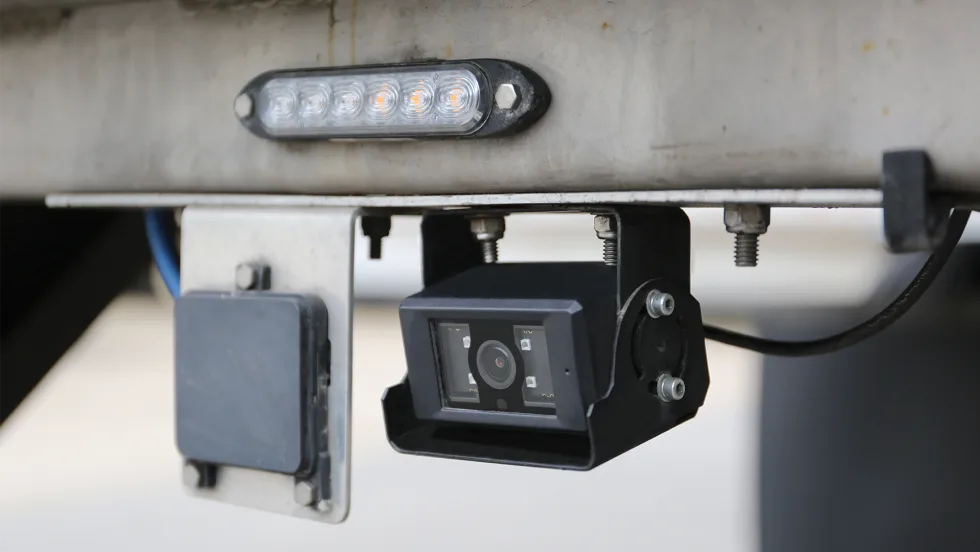
Grote: More Cameras, Same Seven-Way Connector
The next-generation 4See rear-view backup camera from Grote uses the standard seven-way connector and supports additional cameras and other trailer data.
Read More →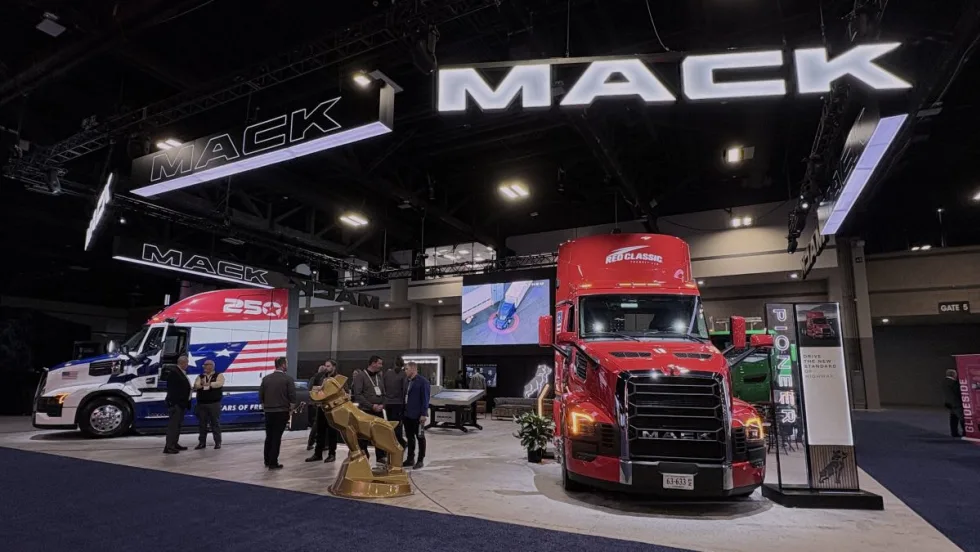
Trucks at ATA's 2026 MC&E in Charlotte, North Carolina [Photos]
From rigs decked out in patriotic America's 250 paint schemes to autonomous trucks and more, check out these photos from ATA's 2026 Management Conference & Exhibition.
Read More →
Help HDT Find Trucking’s Top Products
Have you come across a new product that could make a difference for trucking fleets? Nominate it for HDT’s 2027 Top 20 Products Awards by November 9.
Read More →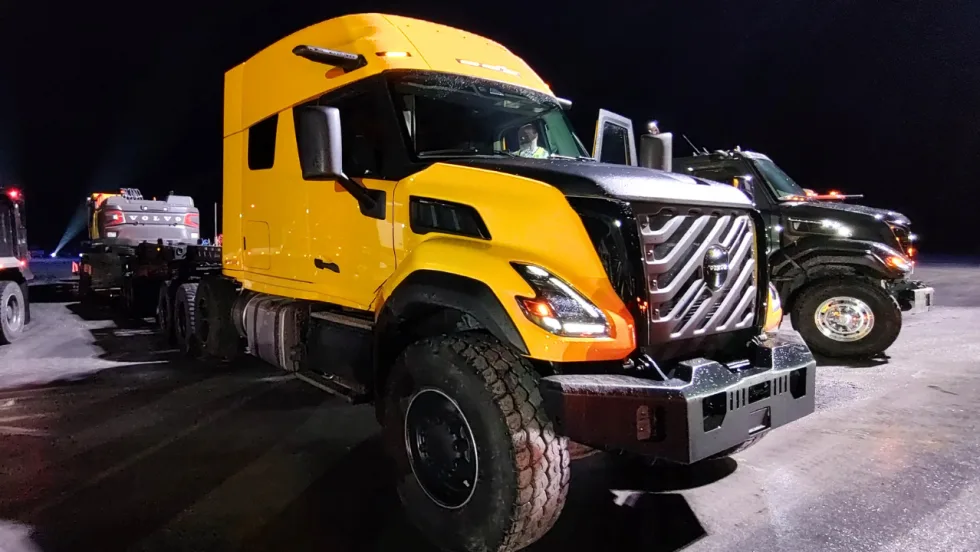
Volvo Unveils New VNX Heavy-Haul and Vocational Truck
Volvo Trucks has launched the VNX, a new vocational truck also available as a tractor in day cab and two sleeper configurations, with one heavy-haul model. The Volvo VNX is powered by Volvo's D13 platform, which delivers up to 540 horsepower and 1,950 pound-feet of torque and is EPA 2027-compliant.
Read More →
How GP Transco Cuts Trucking Fuel Costs, a Tenth of a Gallon at a Time
What’s another tenth of a mile per gallon worth? GP Transco shares how equipment upgrades and driver coaching turn small gains into meaningful fuel savings.
Read More →
Electric Yard Tractors Move Beyond Pilots
Operating-cost savings have overtaken sustainability goals as the leading reason surveyed fleets are adopting battery-electric terminal tractors, according to new NACFE research.
Read More →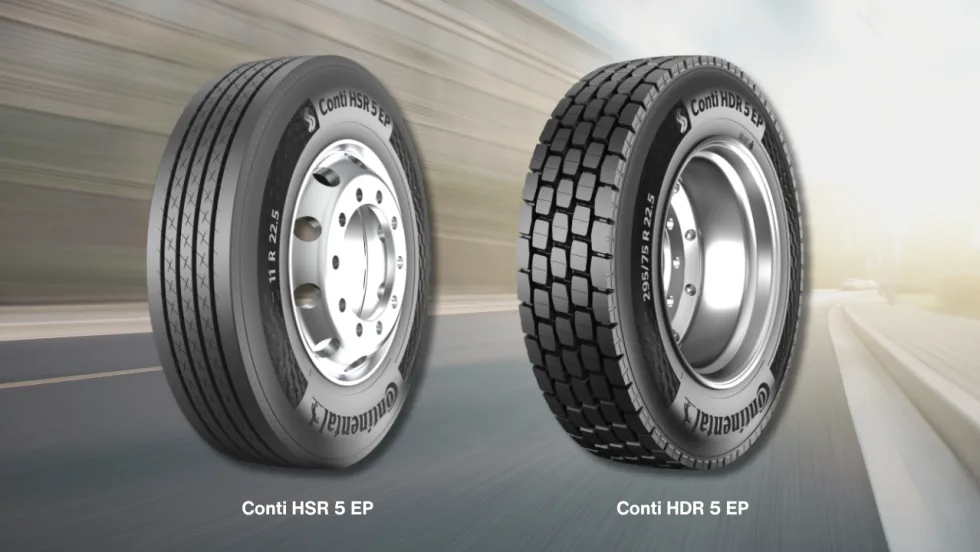
Continental Introduces New Regional Truck Tires
Continental says its new Generation 5 steer and drive tires for regional operations offer longer tread life, with estimated mileage gains of 22% and 19%, respectively.
Read More →