




Brake Maintenance
Brake maintenance, particularly maintenance intervals for heavy duty trucks, depends more than anything else on the vehicle duty cycle. There is a world of difference between a refuse truck that experiences 200-300 heavy brake applications in a shif
Brake maintenance, particularly maintenance intervals for heavy duty trucks, depends more than anything else on the vehicle duty cycle. There is a world of difference between a refuse truck that experiences 200-300 heavy brake applications in a shift
and an over-the-road truck that may have two applications a day - one for lunch and the other at the end of the day. Oddly enough, the easy-duty application may dish up more problems than severe service, because very little heat is generated in the brakes. OTR trucks might see 125-150 degrees in the brakes on average, where a refuse truck may well have brakes running 450-500 degrees. These severe applications result in shoe lining wearing out in as little as two months, with drum replacements maybe every three times the shoes are exchanged. But at least it's predictable and service can be scheduled. (Much better is a hydraulic hybrid system that captures the energy when stopping, instead of throwing it away as heat. But that's another story.)
As far as over-the-road trucks are concerned, brake service is usually done when mechanics routinely lubricating the chassis peer through the access holes in the dust shields - when they are fitted - to discover the linings are worn thin. For a conventional S-cam brake this might be around the 250,000-300,000 mile mark - although good drivers can make a set of linings go out to double this mileage.
But this is a rather hit-and-miss inspection process, says John Hawker, the primary field engineer for Bendix Spicer Foundation Brake. Far better, he says, is to use a wear gauge provided by the brake manufacturer. The correct procedure is to look at the date the truck is placed in service and the mileage at which 50 percent of the brake block has been worn away as indicated by the gauge. So when a 7/8-inch block show 7/16-inch remaining with the gauge, the mileage to full lining wearing out can be estimated fairly accurately. Hawker uses the example of a 50 percent indication at 300,000 miles, at which point he strongly suggests pulling drums at 500,000 to 550,000 miles to see what is going on inside the drum and how much lining is left on the shoes.
Depending on the truck's suspension, peering or access through the inspection holes may not be possible. Such circumstances argue for spec'ing brakes without dust shields, and according to ArvinMeritor's Joe Kay, engineering manager for Brake Systems, something like half the fleets opt to delete the shields. He says Canadian fleets like them because more sand is used up there during the winters, and dust shields keep some of the abrasives out of the drums. Bendix's Hawker thinks dust shields are a good idea, because they can cut down on other issues. But, he says, mechanics must be dissuaded from levering them aside to get in to the brakes to assess wear.
Corrosion Issues
For U.S.-based fleets, a different winter issue can spell big problems for brakes: winter chemicals used to de-ice the highways.
Rust jacking of linings surfaced as a problem around five years ago after some states adopted calcium and magnesium chloride as a de-icer in preference to the old road salt (sodium chloride). Years of experience and steps to minimize salt spray corrosion have been negated by the adoption of magnesium chloride. The new chemical is virtually impossible to wash away and is hygroscopic - that is, attracts water from vapor in the air. It also shows a remarkable ability in solution to wick its way into wiring and the tight space between the brake shoe table and the lining. Once in there, the chemical pulls in water and sits as a corrosive chemical, attacking the shoe table if it is not fully protected. As rust flakes form, they jack the lining off the table, leading to a host of problems.
Regularly hosing off the underside of the truck during and after winter is a good preventive maintenance practice, helping to prevent some of the issues with wiring, but cleaning out the brakes is especially difficult, if not impossible. Some suggestions include pulling drums and using a brush with a soap solution, but most fleets wouldn't welcome the downtime. And pulling drums can exacerbate wheel seal problems if technicians are not careful.
According to Hawker, original equipment shoes shipped with the tractor tend to be pretty good and go to the warranty point without problems. The issue is more with trailer brakes and with relined shoes after brake service. The major line of defense to avoid the rust jacking problem is to buy relined shoes from quality sources that not only supply the correct lining material to OE spec - important - but also clean and then apply an anti-rust barrier to the shoe table before linings are attached.
Trailer brakes are a different problem, with most being purely a low-cost commodity. There, voids between the shoe table and the lining allow for capture of the corrosion. The age of the linings also works against the longevity of the shoes in a corrosive environment.
Curiously, another problem is surfacing, especially on trailers that are parked for a long time after being exposed to winter chemicals. Corrosion of the drum's friction surface extends into the lining to freeze the brakes. According to Kay, if the problem is severe enough, the trailer can drag the tires, especially if the trailer is unloaded, which is likely when it's sitting for a long time.
Corrosion can also affect other brake parts, resulting in failures. Spring brake chambers are a case in point. Considerable care must be exercised when checking out and servicing these components. The tightly compressed spring within can do considerable harm if it is accidentally released.
Unfortunately, brake jobs are usually performed by technicians new to the job, leaving experienced mechanics to do the higher-level troubleshooting and repair of other truck systems. Supervision is definitely needed whenever any spring brake repair is called for.
Other components at the wheel end that can cause problems, often through the effects of corrosion, are the slack adjusters, auto slack adjusters and S-cam bushings.
Automatic Slack Adjusters
The most immediate indicator of a brake problem is a brake stroke out of range. Automatic slack adjusters have been required for trucks and tractors since 1994 and trailers since 1995. For tractors, it is likely that between 93 percent and 98 percent will have auto slacks. For trailers, this percentage could be considerably less, because the regulation went into effect later and trailers stay in fleets a lot longer.
However, trailers that have seen brake work may have been retrofitted with ASAs, since using them results in far fewer DOT out-of-service conditions. A Canadian study showed vehicles without ASAs are twice as likely to be put out of service for brake stroke outside of mandated limits.
There are two things really to be understood about ASAs. They work, and work well - until they stop working. And when they stop working, they must never be manually adjusted, because the ASA is telling you there's likely something else wrong with the brake.
Several fatalities have occurred because of ASA manual adjustment, and the National Transportation Safety Board has come out with a very strongly worded prohibition against tampering with the auto slacks.
Drivers have a duty to inspect brakes for proper adjustment during a pre-trip inspection. Drivers are qualified to inspect brakes - Section 5 of the CDL Study Guide, accepted by all 50 states, recommends the procedure. However, a driver is actually forbidden from working on truck brakes unless he or she has the training or experience required under FMCSR Part 396.25.
So if a driver finds a brake out of adjustment, he has a duty to report it and get it fixed by a qualified mechanic. (See driver pre-trip check on page 87).
ArvinMeritor's Kay and Bendix's Hawker say that brake chamber overstroke is the first
More Maintenance
Rush, MCT Team Up to Grow Refrigeration Service Network
The joint venture will operate MCT's network of Carrier Transicold dealerships and mobile service locations, with the companies promising greater service capacity and uptime for refrigerated fleets.
Read More →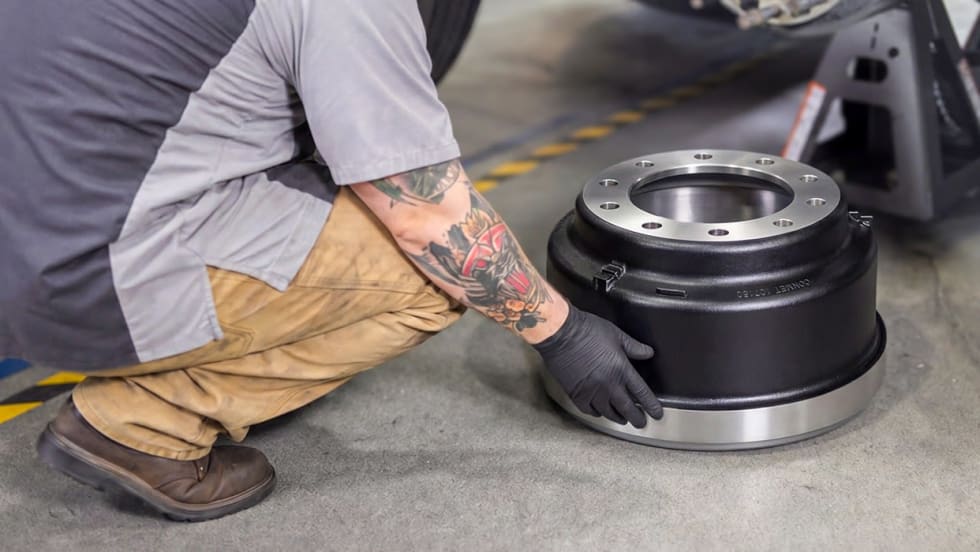
ConMet Expands Aftermarket Brake Drum Lineup With TruCast
A new heavy-duty truck brake drum option in the aftermarket gives customers more flexibility within the ConMet product family.
Read More →
Mack Expands Premium Service Contract Coverage to Medium-Duty MD
With a service contract, inspections, preventive maintenance and repairs can be handled in a single visit instead of multiple ones.
Read More →
Maintenance in the Messy Middle Part 5: Battery-Electric Trucks
No oil changes. No diesel exhaust fluid. No exhaust aftertreatment. But NACFE battery-electric trucks still require specialized maintenance procedures.
Read More →
Trucking Fleets Faced Record Operating Costs During Third Year of Freight Recession
ATRI's annual operational cost report shows carriers trimmed fleets, delayed equipment purchases, and ran older trucks as expenses continued to outpace freight rates.
Read More →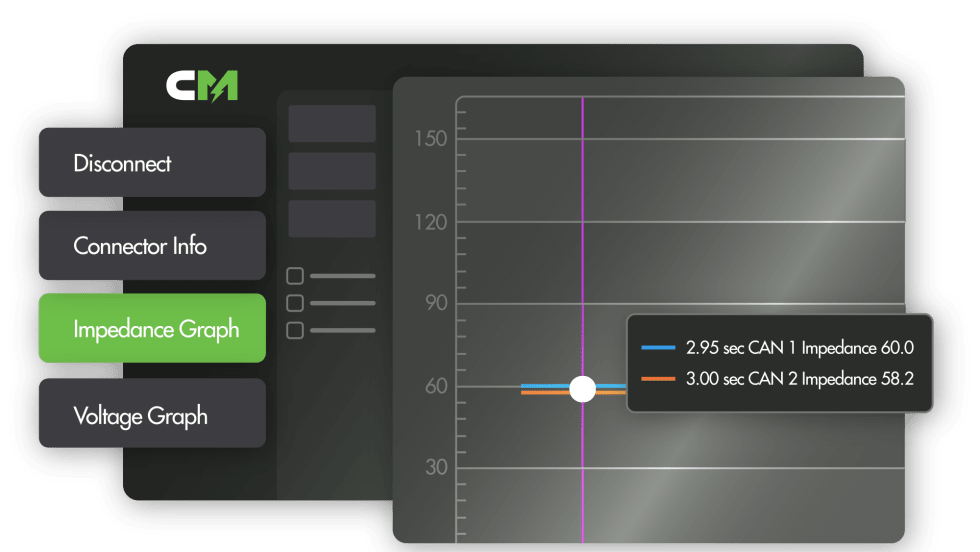
Noregon Launches CAN Mentor to Simplify Vehicle Network Diagnostics
New Noregon software helps technicians identify CAN network issues without requiring advanced diagnostic equipment or specialized training.
Read More →
Maintenance in the Messy Middle Part 4: Renewable Natural Gas
The keys to running renewable natural gas as a fleet fuel depend on specialized technician training, rigorous inspection schedules and an understanding of high-pressure fuel systems.
Read More →
Mack Adds 'Lock & Leave' Feature to Simplify Over-the-Air Software Updates
Mack’s new OTA enhancement allows drivers to start eligible software updates, lock the truck and walk away.
Read More →
Maintenance in the Messy Middle Part 3: Biodiesel
Biodiesel can reduce emissions, improve fuel-system lubricity and use existing diesel infrastructure. But NACFE’s Messy Middle maintenance report says fleets must actively manage storage, cold-weather operation, filters and oil drain intervals to avoid problems.
Read More →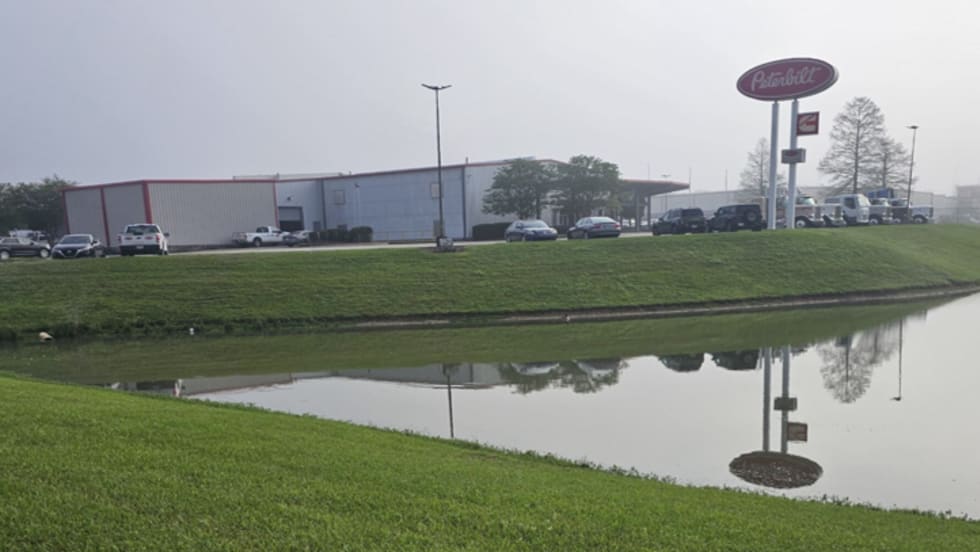
Rush Expands Gulf Coast Peterbilt Network With Louisiana Acquisition
The expanded Rush network gives fleets additional sales, service, leasing and collision repair support across Louisiana's major trucking markets.
Read More →