




Bi-fuel impressions
The momentum toward natural gas as a motor fuel has been building for several years, and we don't know how far it will take the national "fleet." Some people would like gas to be a major automotive fuel because it's comparatively clean and "green," domestically produced

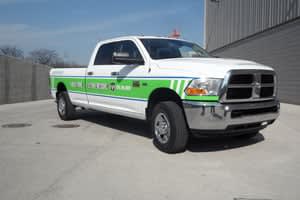
The Ram's Hemi V-8 engine starts out on gasoline then switches automatically to natural gas. It will run that way until the engine's turned off or the CNG tanks run empty, then it will return to gasoline.
The momentum toward natural gas as a motor fuel has been building for several years, and we don't know how far it will take the national "fleet." Some people would like gas to be a major automotive fuel because it's comparatively clean and "green," domestically produced.
Additionally, we have an abundance of it in underground shale-rock formations, and massive drilling and production have driven down prices.
This slowly developing trend can only be pushed further by recent announcements from Detroit's Big Three auto builders that they will soon sell "bi-fuel" gasoline/natural gas pickup trucks. Pickups are immensely popular because they're versatile, useful and satisfying to drive, not just as everyday transportation for consumers but also to do hauling work for commercial users. The prospect of cheaper operation of these somewhat thirsty vehicles should catch the attention of a lot of buyers if they want to spend an extra $10,000 to $11,000 compared to a gasoline-only pickup and have access to a station dispensing compressed natural gas, or CNG.
The commercial truck organizations of Ford, General Motors and Chrysler's Ram division all announced their three-quarter-ton bi-fuel pickups at the annual Work Truck Show staged by the National Truck Equipment Association, held in March in Indianapolis.
Green Truck Ride-and-Drive
Ram executives made one bi-fuel truck available to drive during the Green Truck Ride-and-Drive event.
The Ram's Hemi V-8 engine starts out on gasoline then switches automatically to natural gas. It will run that way until the engine's turned off or the CNG tanks run empty, then it will return to gasoline. I wanted to know what the gasoline-to-gas switchover feels like.
The answer was: nothing. That's what a Ram representative with the truck told me, and that's what I felt when it happened - nothing. I cranked over the engine, which began running like any other Hemi, and "gas" appeared among the other words and numbers in the information display near the instrument cluster. "Shouldn't that say 'gasoline?'" I asked, and the rep chuckled. "Yes, but there's not much space in the display, so we shortened it." I put the transmission in Drive and moved the truck across the lot toward the street. "It'll switch to CNG in two minutes or less," he added.
The switch was quick, occurring while I was watching the pavement ahead and before I reached the street, but the rep pointed it out. "There, now it's on CNG," he said. Sure enough, those letters were now in that block on the info display. It couldn't have been much more than a minute. I didn't feel anything, I commented. "You won't," he said. "That's how it works." He said that a change back to gasoline when the CNG runs out is also imperceptible.
I can't manually switch between the two fuels? I asked. "No," he said. "It will start on gasoline then switch to CNG, and that's the preferred fuel." Automatic operation kind of takes the fun out of it, I observed, but I knew the engineers didn't mean this to be fun. They wanted a serious dual-fuel system that operates smoothly and reliably, and that's what they crafted.
More surprises
Engineers at Chrysler's Auburn Hills, Mich., headquarters got a lot of help from counterparts at Fiat in Italy, which took over Chrysler during its bankruptcy. Fiat supplies a lot of natural gas products and know-how to customers in Europe and other markets.
They apparently knew what they were doing with this truck, because the engine ran normally. Driving a 395-horsepower Hemi is always fun because it really goes, even when the engine loses 10% to 15% of its power while on natural gas. The Hemi utters just enough guttural exhaust sound to make it audibly pleasurable.
Moreover, I was a little surprised that this four-door crewcab, with its big nose and full-length, 8-foot bed, made sharp turns easily (though I wouldn't try to park it in my garage) and that its off-road-ready springs allowed such a smooth ride.
For now, this version of a Ram 2500 4x4 is the only thing Ram plans to offer with the bi-fuel option.
The 8-gallon gasoline tank is mounted in its usual place, between frame rails beneath the pickup bed. The CNG bottles are in a cabinet behind the cab and hold 18.2 gasoline-equivalent gallons. CNG-only range is 255 miles. The backup gasoline supply extends that to 367. Because the engine will start only on gasoline, you don't want to run out of that.
My only gripe with the drive was the shortness of the course set up by Green Truck organizers. It amounted to a ride around about six blocks in downtown Indianapolis, covering maybe two miles. It was enough for me to at least verify that yes, by gosh, Ram's bi-fuel setup works.
From the May 2012 issue of HDT
More Fuel Smarts

How GP Transco Builds Fuel Savings a Fraction at a Time
Aerodynamic specs, solar panels, and driver incentives help GP Transco turn small efficiency gains into savings it can reinvest in its people.
Read More →
Trucking’s Diesel Squeeze Isn’t Letting Up
With diesel topping $6 a gallon nationally, ATA's Bob Costello explains why fleets should prepare for continued pressure at the pump.
Read More →
FlowBelow Redesigns Trailer AeroSlider to Cut Fuel Use
The lighter trailer aerodynamic system installs in less than 45 minutes, according to the company, with potential payback in under a year depending on fuel prices and trailer mileage.
Read More →
Why Diesel Price Relief Efforts May Fall Short
Diesel prices have eased from September’s record high, but doubts about additional Russian supply and limits on dyed-diesel tax relief mean trucking fleets still face expensive fuel. And prices could go higher.
Read More →
Why Small Fuel Savings Matter in Trucking
Can better fuel economy help pay for driver raises? In this podcast, GP Transco explains how small efficiency gains create room to reinvest in its people.
Read More →
How GP Transco Cuts Trucking Fuel Costs, a Tenth of a Gallon at a Time
What’s another tenth of a mile per gallon worth? GP Transco shares how equipment upgrades and driver coaching turn small gains into meaningful fuel savings.
Read More →
Electric Yard Tractors Move Beyond Pilots
Operating-cost savings have overtaken sustainability goals as the leading reason surveyed fleets are adopting battery-electric terminal tractors, according to new NACFE research.
Read More →
Geotab Links Fleet Card to Vehicle Data
The new card combines fuel discounts with telematics-based purchase controls. Geotab’s analysis also points to potential savings from choosing lower-priced fuel stops.
Read More →
Fleet Economics Shape Electric Truck Outlook
ACT Research expects costs, charging infrastructure, and technology improvements to drive zero-emission commercial vehicle adoption as federal regulations and incentives retreat.
Read More →
Wex Adds Cardless Fuel Payments for Over-the-Road Customers
A new fuel card feature for Wex customers offers convenience and security.
Read More →