




Battery-Electric Trucks: Maintenance 101
Dropping diesel powertrains for battery-electric means there will be fewer parts to worry about, but procedures will change and new maintenance intervals will be needed.

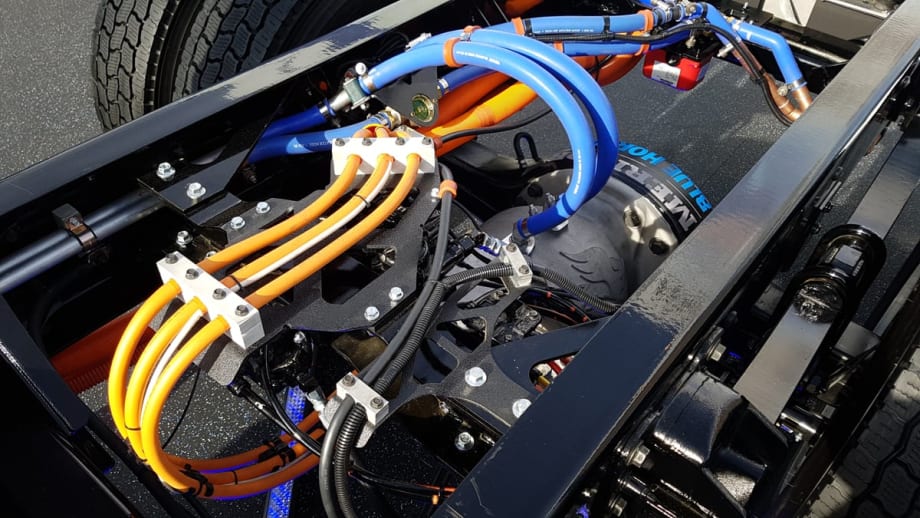
New technology requires new procedures. OEMs and suppliers are writing the maintenance manuals and diagnostic procedures for EVs as they go.
Photo: Jim Park
Trucking has been clamoring for maintenance-free trucks for decades. We may finally have such a unicorn with battery-electric trucks — or at least as close to maintenance-free as we can get. With something like 30%-40% fewer moving parts, there’s just that much less to worry about.
An electric motor has one moving part, compared to the hundreds of moving parts inside diesel engines and transmissions. There are fewer fluids to change, fewer things to grease, and basically fewer things that can go wrong with electric trucks.
“The design intent is for the motors, inverters, cables, and such things to last the life of the vehicle with just periodic inspections,” says Ameya Jathar, Meritor’s senior director for platform engineering. “We obviously want to ensure the cables are not rubbing through and the connectors are not backing out or falling apart.
"It’s still too early to say whether or not we will have to implement any specific service intervals or not. In my opinion, at least, it’s not a completely answered problem yet. We will learn as we deploy more electric vehicles.”
Components such as air and air conditioning compressors, power steering pumps, and coolant pumps will no longer be belt-driven by the diesel, so new maintenance protocols will be needed for these systems. Other chassis components will still require the usual maintenance and inspections established by the OEM, says Arun Chickmenahallit, Ryder’s director of maintenance research and development for advanced vehicle technology.
“For electric vehicles, the majority of the periodic maintenance is similar to the internal combustion vehicles, with the exception that BEVs will involve inspection of a number of new components,” he says.
These include:
Battery: Look for damaged/loose connections
Motor and inverter: Look for leakage of oil and loose connections
Controllers: Look for loose connections and corrosion
High-voltage cables and wiring connectors: Look for damage, corrosion and loose connections
Tires: Inspect for excessive wear due to higher torque at the wheels
Manual service disconnect (MSD): Ensure the integrity and check that it de-energizes the system
E-axles: If equipped, inspect for oil leaks
Brake maintenance and repair is expected to be reduced considerably, as regenerative braking will do most of the work. There also will be some cooling fluid changes required for the batteries and controllers, but those intervals haven’t been firmly established yet.
“Fleet maintenance schedules today are built around major component services, like oil drop intervals,” says Tom Lincoln, national sales manager for Dana’s commercial vehicle business unit. “In the absence of pre-determined intervals, fleets will have to develop the discipline to get under the trucks and do visual and touch chassis inspections with the same frequency they do now.”
Electric-Truck Battery Maintenance
While electric-truck batteries are not expected to require any physical maintenance other than periodic condition inspections, the physical battery cells, the hundreds of little “AA”-sized cells connected together within the larger battery pack, can become “out-of-balance” with each other over time, explains Meritor’s Jathar.
“Those batteries need to be balanced and maintained so that you can actually get a full charge and a full discharge and maintain the original capacity.”
He says Meritor has developed an algorithm in the charging software that will detect such a condition and automatically initiate a process to correct it. The truck has to remain plugged in and on charge for a few hours after a charging cycle has completed.
If the truck’s duty cycle is such that it is immediately put back into service after charging, the likelihood of an out-of-balance condition increases. At a certain level of imbalance, a service code will be triggered along with instructions on how to complete the task.
Jathar says if the auto-balance function is allowed to do its job after the battery has finished charging, fleets will hardly ever need to perform this maintenance task.
“But if you cannot do the auto-balancing, and you do not leave it plugged in, we [currently] estimate this will have to be done every three months.”
Additions to the Shop for Battery-Electric Truck Maintenance
Unlike with natural gas, and probably hydrogen, fleets will not have to make any substantial changes to their shops to accommodate battery-electric trucks. BEVs won’t require rubber-insulated flooring or special venting or fire suppression systems.
But you may need to carve out some space in the tool crib for the special insulated tools the techs will need, and possibly some special lifting equipment to move batteries around.
“Most of the changes you’ll see are related to the types of tools that are used,” says Brandon Wandell, operations manager of Dana’s sustainable mobility center in Maumee, Ohio. “They need insulated tool sets as well as the rubber gloves and the appropriate PPE. Here in our shops at Dana, we had to get some heavy lifting tools and insulated tables or lift tables.”
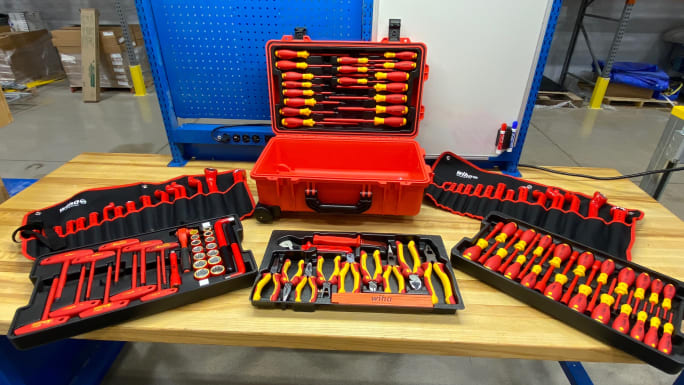
Tools used on electric vehicles must be insulated. The kit shown above sells for $1,600 on Amazon.
Photo: Dana
A charger or two would be a useful addition to most shops, as well.
“Fleets will probably need a method to charge and discharge batteries, to maintain the proper state-of-charge if it comes in too high or too low,” says Joe Bertrand, a high-voltage battery technical specialist at Dana. “If it’s been abused in some way, you’ve got to put it back to a normal operating condition.”
Bertrand says a Level 2 charger is sufficient for most fleets.
“It’s not an expensive piece of equipment, but it is something that probably most shops don’t have today,” he says.
Technician Training for Electric Trucks
There will be a learning curve for technicians assigned to work on battery-electric trucks. Basic maintenance for the drivetrain and the controllers will be less mechanical in nature and more software- and diagnostics-focused. Top-level Class A technicians familiar with diesel fuel management and emissions systems should adapt fairly easily.
“There are a lot of parallels between the two, and our techs here adopted fairly quickly,” says Dana’s Lincoln. “We [Dana] as component suppliers, and our partner OEMs, still have some ground to cover in terms of understanding the need and demand for maintenance in the real world.”
The high-voltage side will require specialized training not unlike what a lineman for an electric utility company might get. Lincoln says OEMs and suppliers are hard at work on that, too.
But even the 12-volt side of the truck will be different and unfamiliar to some.
“Systems on the low-voltage side, the 12-volt side of the system, are significantly different compared to your standard diesel or natural gas systems,” Meritor’s Jathar says. “There are no additional safety concerns here, but technicians will need separate training to recognize the new components and to understand how they are connected using new electrical schematics and service tools that we provide.”
Jathar says the diagnostics systems and maintenance manuals are modeled on current methods of how diesel vehicles are serviced.
“We expect there will be a significant knowledge carry-over from that, and the feedback we are getting from the training programs confirms that,” he adds.
There will be lots of procedural stuff the techs need to become familiar with, such as proper shut-down procedures, de-energizing the system, and learning how to ensure the 15-minute capacitance bleed-down is complete before they begin work on the truck.
Specialized Training for BEV Truck Maintenance
Fleets are not likely to train all the techs on staff to handle the advanced work on such trucks. The top techs will likely be trained in specialized requirements, while generalized training may be offered to the mid-level tech, just to ensure they understand the systems and can perform routine maintenance.
Safety, of course, will be paramount. Most techs probably need to be trained in basic safety and emergency procedures such as how to find and use the master service disconnect switches or the loop-cut fail-safe disconnect switches that mechanically or electrically isolate the high-voltage system from the rest of the truck.
In the near term, most of the training techs receive is likely to be platform-specific, and fleets should not expect “general knowledge” to be readily transferrable across different truck brands.
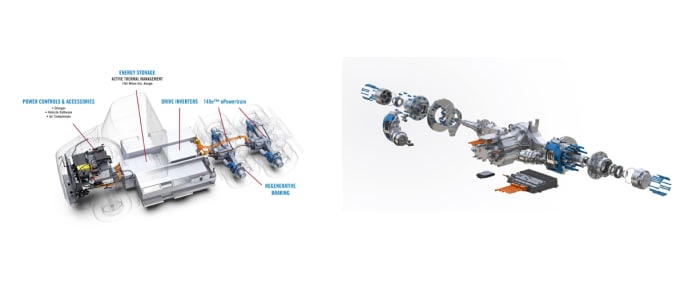
Components such as drive axles won’t change much, save for the addition of an electric motor. All the bearings, brakes, and fluids still need to be maintained.
Photo: Meritor
“I don’t think the vocational tech schools are yet offering anything as specific as the training required for high-voltage battery electric systems for commercial vehicles,” Lincoln says. “In the near term, until the schools wrap their arms around this advanced curriculum, the training will be OEM-specific and so will the tooling.”
Other training fleets might consider is first aid and firefighting as they relate to electrical injuries and fires — even something as basic as defining what type of fire extinguisher to use on a battery fire. Getting to know the specific battery chemistries in use in a shop can prevent potential calamity.
With all the new technology aboard these trucks, and additional safety hazards posed by high-voltage cables and batteries, almost every maintenance and service procedure will need to be rewritten, or at least reviewed to ensure electric trucks are getting properly serviced and technicians are not putting themselves in harm’s way doing a job they thought they understood.
More Maintenance

Color Match Smarter: Tools That Restore & Perform
For fleet managers and collision repair professionals keeping heavy-duty trucks on the road, getting the color right the first time isn't just about appearance — it's about efficiency, turnaround time, and bottom-line results. Discover how today's digital color tools are transforming the repair process from guesswork to precision.
Read More →
Wrong Repair Prompts Recall of Freightliner, Western Star 4x2 Trucks
DTNA is recalling more than 2,400 trucks that received an incompatible software fix instead of the hardware repair required to address brake valve corrosion.
Read More →
Truck Drivers Need More Than Another Alert
Fleets have more visibility into truck health, safety events, and driver activity than ever. The next challenge is turning all that information into useful guidance for the person who has to decide what to do next.
Read More →
The Maintenance Checks Trucking Fleets Should Prioritize Before Fall Freight Picks Up
Making it through August isn’t the same as being ready for the next several months of operation. Find out what systems may have suffered from summer heat and need to be checked out before fall.
Read More →
What Three Fleets Are Doing Differently When Buying Truck Parts in 2026
With freight improving but costs still climbing, fleet maintenance executives explain how they're balancing price, quality, and supplier relationships.
Read More →
Paccar Recalls 2027 Trucks Built This Summer for Possible Electrical Problem
The nearly 6,000 Kenworth and Peterbilt trucks in the recall could potentially lose engine power, among other things.
Read More →
Will API PC-12 Oil Change Trucking Fleet Maintenance?
The new API PC-12 heavy-duty engine oil category reflects the changing demands of modern diesel engines. But fleets like Foodliner are looking to getting their own data before making decisions on adopting the new oils and questions such as extending oil drain intervals.
Read More →
Brake Safety Week to Focus on Drums and Rotors
Commercial vehicle inspectors are focusing on truck brakes during CVSA's Brake Safety Week, August 23-29.
Read More →Possible Battery-Cable Fires Prompt Recall of 15,000+ International MV and HV Trucks
On the recalled vehicles, manufacturing variations can cause the battery interconnect cable to contact the auxiliary stud and hold down the bracket.
Read More →
Rush, MCT Team Up to Grow Refrigeration Service Network
The joint venture will operate MCT's network of Carrier Transicold dealerships and mobile service locations, with the companies promising greater service capacity and uptime for refrigerated fleets.
Read More →