




Augmented Reality Could Help Technicians Learn, Diagnose, Repair
A pilot program is allowing trucking fleets and other transportation-related organizations to evaluate augmented reality technology as part of their maintenance operations.

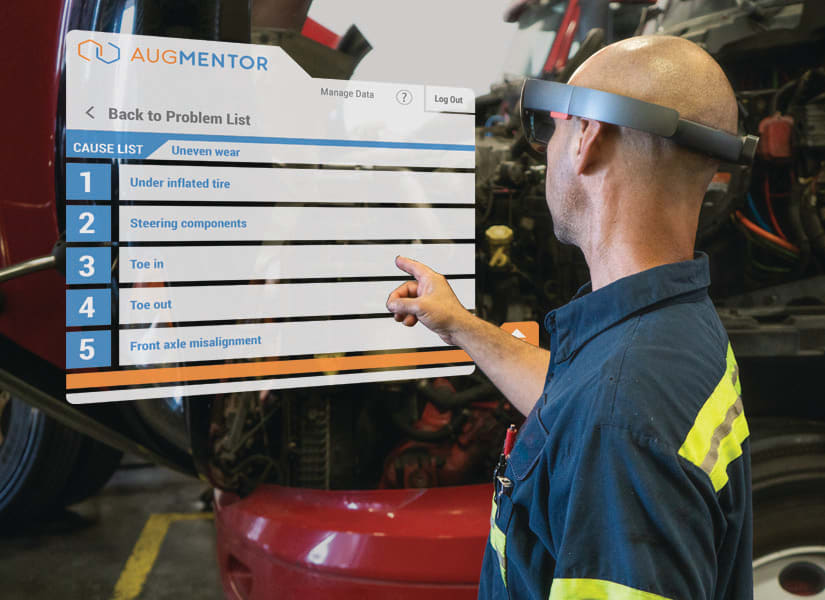
Augmented reality technology can be used to help technicians learn and maybe even diagnose and repair trucks.
Photo: Design Interactive
A pilot program is allowing trucking fleets and other transportation-related organizations to evaluate augmented reality technology as part of their maintenance operations.
Augmented reality is a technology that overlays a virtual object onto a real image or video. It differs from virtual reality, explains Matt Johnston, director of commercial experience for Design Interactive, which is working with fleets to do pilot programs of its Augmentor AR technology for technicians.
“Imagine putting on this headset; virtual reality closes you off from the rest of the world,” he says. “You are completely immersed in this other place. I can transport you to a boat in the middle of the ocean or a fantasy world or a virtual maintenance facility with a virtual truck; you look around you 360 degrees and you can almost trick your mind into thinking you’re there."
In contrast, he says, “augmented reality is looking through a device and seeing the real world, but augmented by virtual objects. So when I look at a real truck, I might see a floating virtual hologram of a brake, with step-by-step instructions. Each of those steps is virtually placed on the truck and allow the technician to walk through those procedures.” 3-D diagrams, PDFs, audio notes, video, can all be part of the experience.
Growing Technology
Augmented reality adoption rates have been increasing in 2018, according to Design Interactive, particularly in the manufacturing and retail/warehousing sectors, with logistics accounting for 24% of headset sales. One of the growing uses is pick by vision, which allows a warehouse worker to receive pick and pack instructions through the head mounted display and use the device as a bar code scanner.
Design Interactive wants to bring this into the shop with Augmentor, an augmented reality troubleshooting application that can guide a technician through the diagnostic process.
Experts, including maintenance leadership and learning and development managers, can create content so it’s specific to that company and that equipment.
Design Interactive has been in business about 20 years. They’re human factors experts, explains Johnston – finding ways to help people do their jobs as efficiently and safely as possible. The company initially started developing AR for technicians after being approached by the Navy, which had not changed how it trained its mechanics in 20 years.
“We investigated various industries to see how they may be able to take advantage of it, and we discovered that every industry was being challenged with the threat that their people are getting older and retiring,” Johnston says. “There’s this massive outflow of knowledge occurring and no technology available to capture what they know before they leave, and be able to share that expertise in the way the next generation could consume from a training perspective.”
AR in the Trucking Industry
DI realized it was on to something in trucking when it started learning more about the industry from fleet maintenance executives involved with the American Trucking Associations’ Technology & Maintenance Council.
In fact, DI is working with TMC to turn its tire conditions book into AR content.
“Say I want to train a technician on how to inspect tires for different types of wear,” Johnston says, “what it’s caused by and what to do. I can float a hologram of a tire that has an example of river wear or one-sided wear and the person can make a determination of whether the real tire exhibits the same pattern. I can bring a virtual database to life. This tire looks like his floating hologram, and that means one-sided wear and is indicative of a worn kingpin.”
Johnston says that, so far, 13 different types of wear from the TMC book are translated into the AR software. Some, like the one-sided wear, use a 3-D hologram, while others use photos and text content in a virtual sticky note.
“When we gave them the 3-D floating tire and cross section, they were like, ‘Wow, it’s almost like I can reach out and touch it,” Johnston says.
Design Interactive also is working with suppliers. Initially, the folks at DI expected that the program would be used for experienced technicians and fleet trainers to cerate training content or procedures they wanted to share. That content is stored in the cloud for anyone to download. But as it learned more about how the trucking industry works, it realized that fleets rely heavily on training from engine and component suppliers, so it started working with vendors to develop ways to augment their training for customers.
Right now, the development is focused on using AR for training, but Johnson says it’s working with fleets over the next few months to determine how it would work in actual diagnostic and repair situations.
For now, the program is available only through AR headsets (DI uses the Microsoft Hololens), which, while they have come down in price, are still expensive enough that you’re not going to go around buying one for every technician. However, a smartphone-based version is on the way in the first quarter of 2019.
Expect more details to come out of TMC’s spring meeting in March 2019, Johnston says.
More Maintenance

Color Match Smarter: Tools That Restore & Perform
For fleet managers and collision repair professionals keeping heavy-duty trucks on the road, getting the color right the first time isn't just about appearance — it's about efficiency, turnaround time, and bottom-line results. Discover how today's digital color tools are transforming the repair process from guesswork to precision.
Read More →
Wrong Repair Prompts Recall of Freightliner, Western Star 4x2 Trucks
DTNA is recalling more than 2,400 trucks that received an incompatible software fix instead of the hardware repair required to address brake valve corrosion.
Read More →
Truck Drivers Need More Than Another Alert
Fleets have more visibility into truck health, safety events, and driver activity than ever. The next challenge is turning all that information into useful guidance for the person who has to decide what to do next.
Read More →
The Maintenance Checks Trucking Fleets Should Prioritize Before Fall Freight Picks Up
Making it through August isn’t the same as being ready for the next several months of operation. Find out what systems may have suffered from summer heat and need to be checked out before fall.
Read More →
What Three Fleets Are Doing Differently When Buying Truck Parts in 2026
With freight improving but costs still climbing, fleet maintenance executives explain how they're balancing price, quality, and supplier relationships.
Read More →
Paccar Recalls 2027 Trucks Built This Summer for Possible Electrical Problem
The nearly 6,000 Kenworth and Peterbilt trucks in the recall could potentially lose engine power, among other things.
Read More →
Will API PC-12 Oil Change Trucking Fleet Maintenance?
The new API PC-12 heavy-duty engine oil category reflects the changing demands of modern diesel engines. But fleets like Foodliner are looking to getting their own data before making decisions on adopting the new oils and questions such as extending oil drain intervals.
Read More →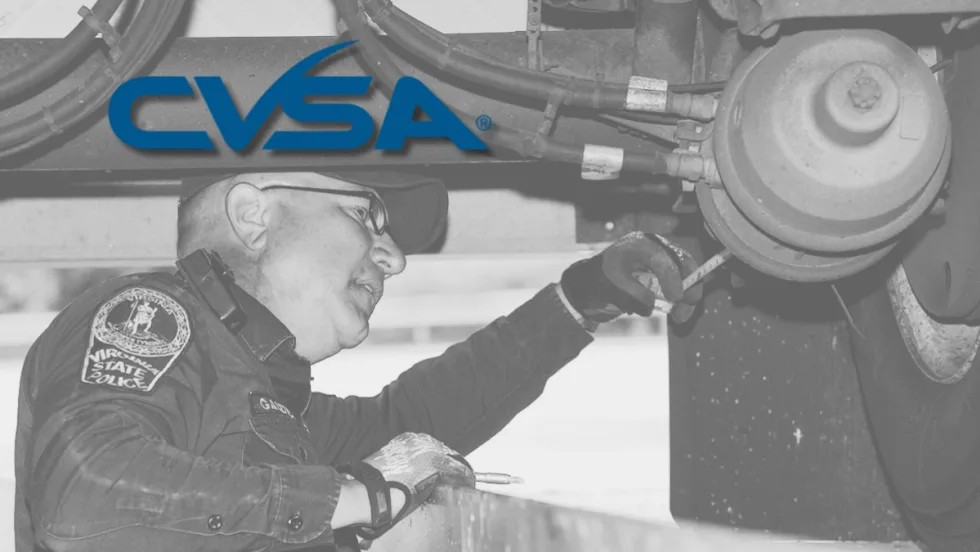
Brake Safety Week to Focus on Drums and Rotors
Commercial vehicle inspectors are focusing on truck brakes during CVSA's Brake Safety Week, August 23-29.
Read More →Possible Battery-Cable Fires Prompt Recall of 15,000+ International MV and HV Trucks
On the recalled vehicles, manufacturing variations can cause the battery interconnect cable to contact the auxiliary stud and hold down the bracket.
Read More →
Rush, MCT Team Up to Grow Refrigeration Service Network
The joint venture will operate MCT's network of Carrier Transicold dealerships and mobile service locations, with the companies promising greater service capacity and uptime for refrigerated fleets.
Read More →