





Related: Fleet Shares Lessons on Evaluating and Implementing ELDs
How to Get the Most From Your ELDs
While some fleets may view electronic logging devices only as a regulatory requirement, the data they collect can be integrated with mobile communication and back-office systems to improve efficiency, long-range planning and safety.
December 10, 2018
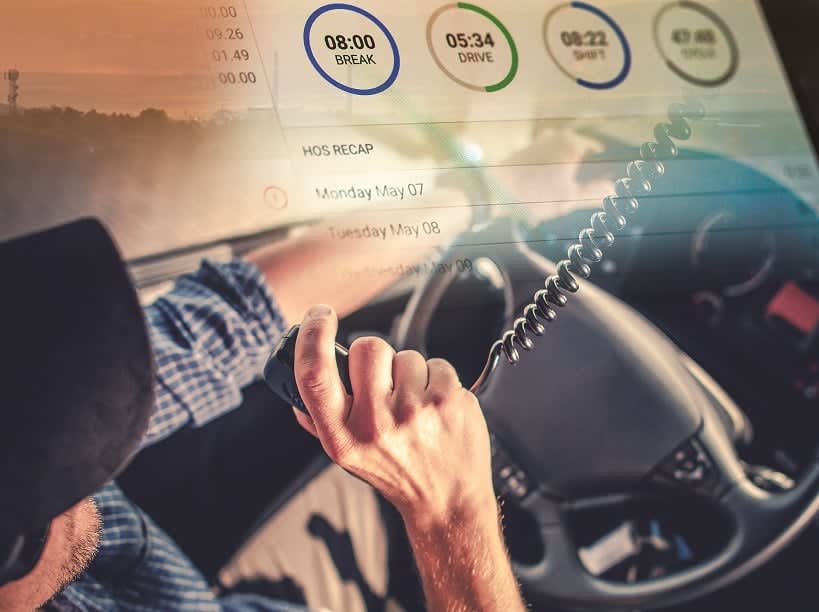
Now that electronic logging devices are mandatory, how can you get the most out of the device?
8 min to read
All electronic logging devices meeting the standards set by the Federal Motor Carrier Safety Administration must do the same things in terms of recording driver hours-of-service data. They must be integrated with the commercial vehicle’s engine computer and automatically record date, time, location, engine hours, vehicle miles, driver duty status and engine status. FMCSA does not require an approved ELD be in communication with fleet dispatch to track the vehicle or driver in real time or to be part of a vehicle mobile communications system. Many owner-operators and small fleets don’t need such tracking; they just need the compliance.
On the other hand, a large number of fleets closely track vehicles and have done so for a number of years. They do so because collecting the type of data ELDs require and integrating that with mobile communication and back-office systems provides great value by improving efficiency, long-range planning and safety.
That doesn’t mean a small fleet new to the technology needs all the bells and whistles at first. But there is an advantage in using technologies and applications that make use of your ELD data beyond compliance.
“Don’t buy the most expensive device, if you don’t need it,” Jerry Roberson, Bolt Systems, says he advised his customers. “You need compliance. But, to me, if you just plug it in for HOS, you won’t get as much out of it.” The devices generate a lot of useful data, he notes. “And it might be worth it to spend 15% more to get some more features.”
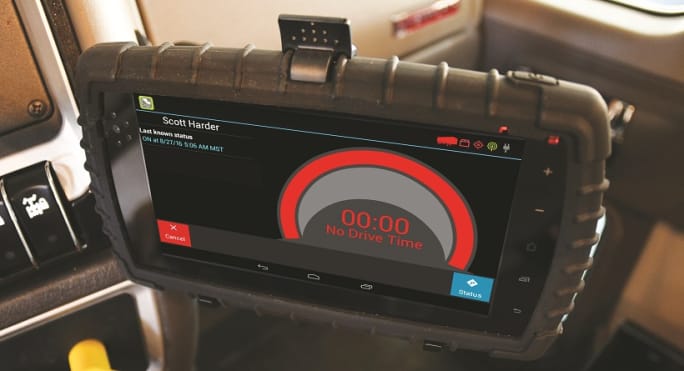
ELD data can be put to use in a number of ways beyond hours-of-service compliance, from dispatch to maintenance to safety.
Photo: GPS Insight
Better manage drivers and assets
When coupled with compliance management software, ELDs help simplify a complex process, says Chris Ransom, associate director of solutions engineering, Verizon Connect. Regardless of fleet size, these applications can help make “compliance simple and stress-free,” he says, and that allows fleet managers to focus on other things.
How much a fleet can benefit depends upon “where people are in their life cycle of technology,” says Eric Witty, vice president product, Trimble Transportation Mobility (formerly PeopleNet). For those who just installed ELDs, after hours of service, fuel tax compliance might be the next step, he suggests. “Now that I have an ELD, I can use the device to capture the data and electronically do my fuel tax reports.”
For small fleets, the devices provide the data to monitor idling time, speeding, and other driver behaviors. “That’s important for a fleet,” Witty says, but maybe less so for a very small operator.
Regardless of fleet size, there are some things ELD data can reveal that “resonate,” says Tom Cuthbertson, vice president regulatory compliance, Omnitracs. “The access to fuel management data, whether a five-truck fleet or 1,000-truck fleet, can pay for some of these systems.”
Overall planning is aided by the data, says Dustin Strickland, McLeod Software product manager, LoadMaster Enterprise. If there is electronic access to each driver’s HOS data, “load planners and driver managers can make better decisions on what loads they select for their driver.”
When coupled with a telematics system, driver availability is “real time,” agrees John Gaither, sales engineer, ELD product specialist, GPS Insight. That can help planners decide which drivers to assign to loads days ahead. “Planners no longer need to wait for drivers to tell them how many hours they have, and the data is more accurate.”
“I would say ELDs have created a lot more connectivity across a larger number of vehicles,” says Carlton Bale, founder and director of strategy at ZED Connect. That creates an abundance of data. But the key is turning that data into useful information. “Some fleets that have never looked at that as closely, it now allows them to be more proactive in their planning.”
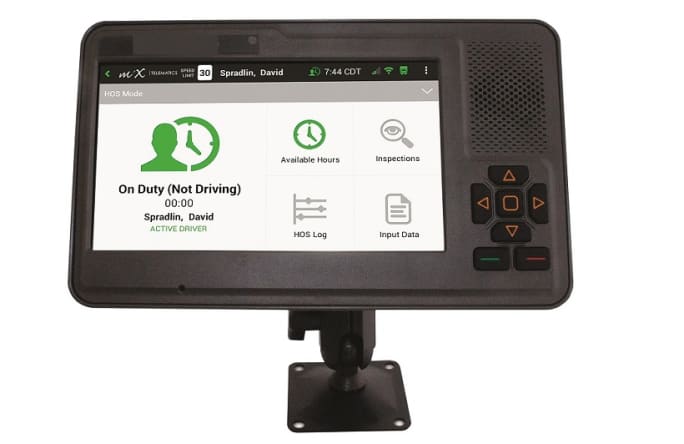
Many telematics vendors offer ELDs as part of a package of fleet management applications.
Photo: Mix Telematics
Use data to manage productivity loss
Part of that planning may help mitigate any productivity loss fleet experience as a result of adopting ELDs. Early adopters made adjustments to routes and schedules; newer adopters may face a period of transition.
“From what I’ve heard and seen, it’s a little bit of a mixed bag,” in terms of productivity, says Jay Delaney, senior director project management, Trimble Transportation Enterprise (TMW Systems). The majority of customers he’s spoken with reported a loss of productivity, but not all of that may be attributed to the ELD. “The environment we operate in today is different than the environment last year,” he notes, which could have some impact. “The interesting ones” were those that said they gained productivity. Some of that was attributed to the fact that ELDs track driving and on-duty time to the second, while with paper logs, time was reported in 15-minute intervals. For instance, Delaney says, if a driver stopped for a break, he would record 15 minutes on a paper log, even if he only stopped for 10 minutes. “So, some folks are seeing shorter breaks recorded, and those minutes add up,” he explains.
Cuthbertson says fleets have reported being less productive during their first 30-60 days after implementing ELDs. “But I’ve heard large carriers seeing 3-4% improvement in productivity – that is significant.” These fleets are the ones that take advantage of integrating their ELD devices with their telematics and dispatch systems.
Robertson has observed that some small dedicated carriers have had to adjust the way they run their routes. However, for those that have taken advantage of integrating the data into their systems, they may be able to go after more business with shippers.
Productivity losses have largely depended on how big of a change ELDs made to a fleet’s operations, Bale notes. “In my opinion, most fleets were running pretty close to the guidelines and probably did not see a significant impact, but it removed some flexibility they may have had before.”
As Witty says, for larger fleets, there was probably little impact, noting that 90% of Trimble’s customers were already using electronic logs.

ELDs encourage greater accountability from both drivers and fleet managers.
Photo: GPS Insight
Analyzing data for operational improvements
Other than productivity, Strickland says the mandate has changed how the industry looks at capacity. “Fleets that are still considering physical equipment in a given region as their definition of capacity find themselves in a much different world.” That’s where the advantages of the connected fleet come in to play, he says. “We see fleets capturing this data not just because it’s mandated, but because they are making tactical decisions on what loads they select and the lanes they run.”
Delaney agrees that applying analytics to ELD data opened “a lot of possibilities.” For instance, the data can be analyzed for driver utilization by looking at where they take breaks. “Analytics of where drivers are taking rest breaks helps to find places that are good for driver breaks,” he explains.
Not only does a fleet manager have visibility of driver hours, but the devices’ GPS readings also can help identify load retention issues, Cuthbertson says. They can also show which routes might have consistent traffic congestion, so you can allow for more hours on that load.
Ransom notes that fleets that just deployed ELDs due to the mandate are, in most cases, getting extra benefits. “Most telematics companies offer ELD as an add-on,” he says. And while just the ELD function was the main focus for the recent adopters, “we are seeing companies beginning to leverage maintenance data, safety data, utilization data and other things.”
Bale notes that the ELD data allow a fleet to collect a large data set and then track individual vehicle data to see how that vehicle compares in terms of fuel consumption, maintenance schedules and other information that can help reduce unscheduled downtime. “We’re looking for a future like the airlines,” he says. “Scheduled flights take off and land and don’t do repairs in the middle.”
Using data to improve safety
When it comes to safety, compliance with hours of service is not the only way ELDs can help. The data they generate also can be used to help improve driver safety and even driver retention.
With the “basic ELD you can get to speeding and over RPM,” Witty says. “Speeding is a good indicator of driver behavior.” The data offers fleets a way to do some coaching related to these behaviors.
Adam Brutell, vice president sales marketing North America, MiX Telematics, says using ELD data for driver scoring is a common practice. Analytic applications can take an even deeper look at speeding or hard braking over an extended period to identify trends or patterns.
Gaither adds that, “depending on the system, ELDs can deliver telematics data that can be used for improving fleet safety.” Not only can fleets identify areas where drivers need some coaching, but they can also reward those with good safety scores.
Perhaps most importantly, ELDs promote greater accountability from drivers as well as their employers, says Ananth Rani, CEO of Azuga, which in turn helps improve safety.
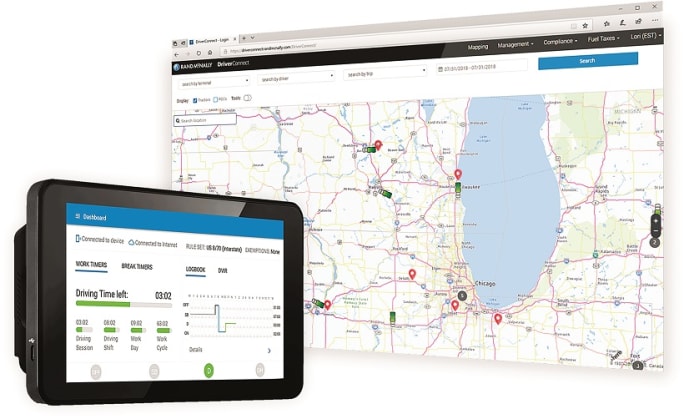
No longer is capacity defined by the number of trucks in a given area.
Photo: Rand McNally
Leveling the playing field
Some say the ELD mandate has had an equalizing effect on the industry, in terms of making operating conditions the same for truckers and fleets of all sizes. “What I see in the marketplace, first of all, it’s a level playing field,” Delaney says.
That has resulted in a “pushback from carriers to shippers for loads than can’t be done” in the legal number of hours available, he says. ELD data has assisted that pushback, and the current tight freight market has put more juice on the carriers’ side.
Gaither agrees that ELD data can help carriers work with shippers. “Shippers are becoming increasingly aware that shipper-caused delays and detention are being more closely monitored.” That will ultimately make it better for fleets and drivers alike, he says, with shippers being more respectful of drivers’ time.
Some may look at the ELD mandate as a burdensome regulation. But that’s no excuse for not taking full advantage of the devices, beyond simple compliance.
Subscribe to Our Newsletter
More Equipment

How GP Transco Cuts Trucking Fuel Costs, a Tenth of a Gallon at a Time
What’s another tenth of a mile per gallon worth? GP Transco shares how equipment upgrades and driver coaching turn small gains into meaningful fuel savings.
Read More →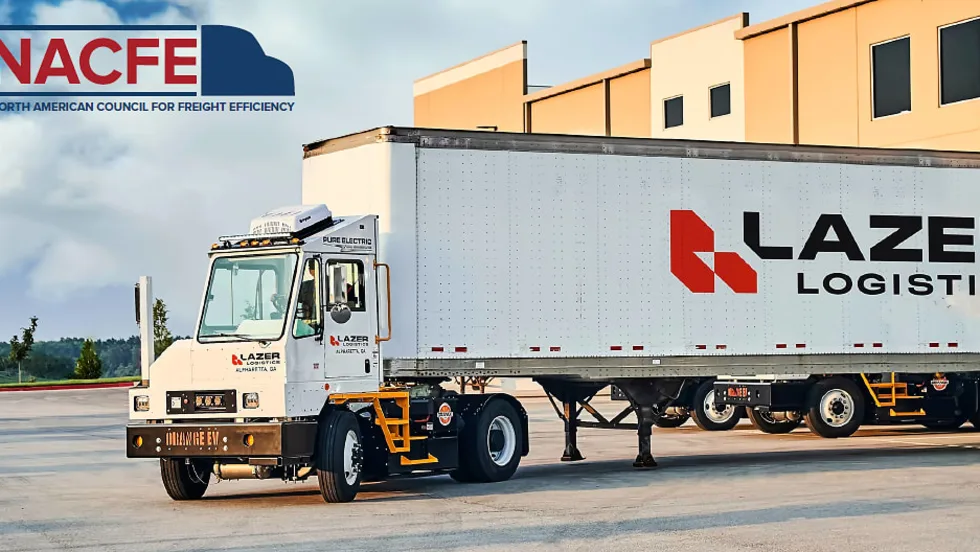
Electric Yard Tractors Move Beyond Pilots
Operating-cost savings have overtaken sustainability goals as the leading reason surveyed fleets are adopting battery-electric terminal tractors, according to new NACFE research.
Read More →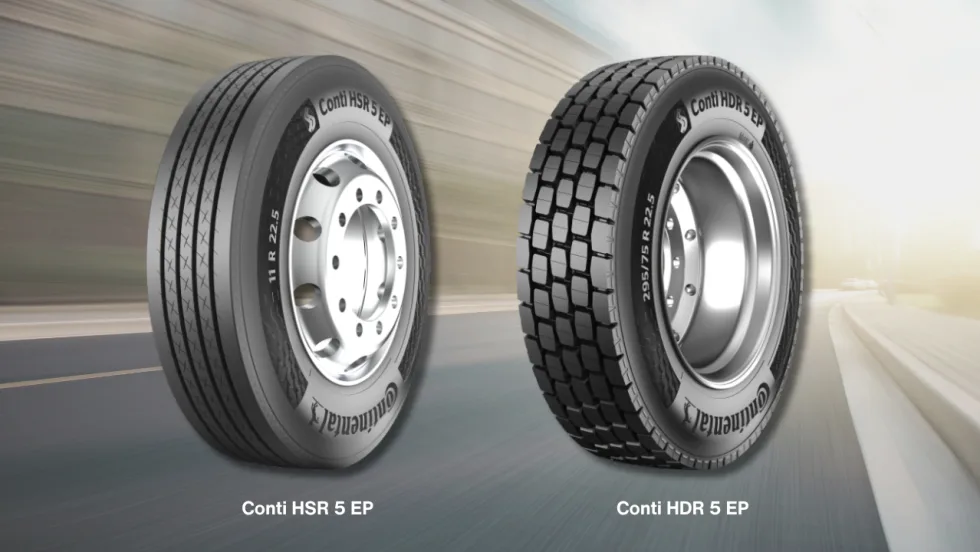
Continental Introduces New Regional Truck Tires
Continental says its new Generation 5 steer and drive tires for regional operations offer longer tread life, with estimated mileage gains of 22% and 19%, respectively.
Read More →
Tekmodo Introduces CargoBright Brand for Translucent Trailer Roofs
CargoBright is designed to diffuse daylight across the cargo area while performing as a working vehicle roof.
Read More →
Fleet Economics Shape Electric Truck Outlook
ACT Research expects costs, charging infrastructure, and technology improvements to drive zero-emission commercial vehicle adoption as federal regulations and incentives retreat.
Read More →
Kodiak Targets Dallas–Houston for Driverless Trucks
The company says its autonomous trucks are completing the I-45 run without a safety observer taking control. It plans to remove the observer by the end of 2026.
Read More →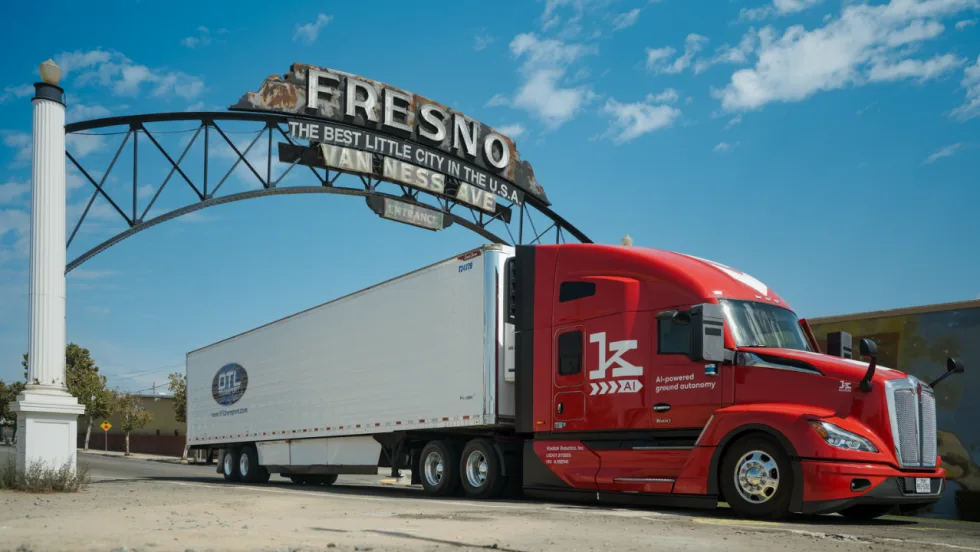
Kodiak Hauls Produce in California Autonomous Truck Pilot
Kodiak AI and DTL Transport have begun hauling produce between Fresno and Los Angeles under California’s new rules for testing heavy-duty autonomous trucks. A safety driver remains behind the wheel.
Read More →
Used-Truck Remarketing Math Is Changing
Used-truck value is no longer just a concern at trade-in. Decisions made throughout a truck’s first life can influence what it’s worth years later.
Read More →
How Volvo Updated Its D13 for EPA 2027 [Watch]
Volvo’s updated D13 promises lower emissions without sacrificing performance or fuel economy. Take a closer look at what changed inside the engine in this HDT Spotlight video.
Read More →
Michelin Tire Improves Efficiency and Durability for Regional Fleets
The Michelin X Multi Energy D2 is a regional haul drive tire engineered to help fleets improve fuel efficiency, durability and traction in demanding stop-and-go operations.
Read More →