





Retreading Wide-Base Tires:How Retreads Can Help Reduce a Truck Fleet’s Carbon Footprint
Are Wide-Base Tires Still Worth the Effort?
After two decades, most fleets have made up their minds on wide-base single tires. They either love them — or they can’t be bothered.
March 1, 2021

Wide-base single tires offer fuel and weight savings, but getting the best life from the tire may require a little extra effort.
Photo: Jim Park
6 min to read
When they first appeared on the market, wide-base single tires were touted as fuel- and weight-saving wonders. Nobody disputes the weight savings, but recent versions of low-rolling-resistance dual tires have significantly narrowed the wide-singles’ lead on fuel efficiency. As a result, a fair number of fleets have given up on wide-base tires, unwilling to put up with what they saw as rapid wear, less-than-optimal retreadability, and driver concerns about traction and being left stranded by a blow-out.
Many other fleets, however, have stuck with their wide singles and report great tire life, great fuel mileage, and a satisfactory ownership experience. What gives? Is it the tire? Is it the truck? Is it the fleet’s tire maintenance program?
It’s probably a bit of all three.
Mike Beckett, president of MD Alignment Services, makes a living solving his customers’ tire wear and vehicle handling problems. He’s seen every tire wear issue you can imagine, so he understands the causes — and it’s usually not the tire, he says.
“Wide-base singles work better for some people than others,” he says. “I think what separates the two is the ability to tightly control the operation and the tire’s working environment. You have to have the right inflation pressure, you have to use the right axles, and you have to keep the alignment right. Fleets that stay on top of all that are usually successful.”
We have previously reported on Beckett’s assertion that thin-walled axle tubes and lighter-weight axles are susceptible to flexing that can cause rapid wear of a tire’s inner shoulder. He says the phenomenon is present on drive and trailer axles running dual as well as wide-base tires, but it’s more pronounced in single tires, especially those mounted on large-offset wheels.
“When the axle deflects upward, the bottom of the tire scoots out. When it scoots back in, it chops the inside edge off a wide-base tire or the inside edge off the inside tire in a dual assembly,” he says. “Two-inch offset wheels can exacerbate the problem by pushing the load center further outboard, adding a greater cantilever effect on the axle tube, causing a temporary negative camber condition as the axle flexes.”

Stiffening the axles can reduce flex and preserve the inner shoulders.
Photo: Jim Park
Lately, he has been suggesting fleets that are having problems with inner shoulder wear take steps to stiffen the axles by welding a section of angle-iron across the top of the center section of the axle tube and two shorter pieces of angle iron outboard of the suspension.
“Customers tell us it solves the inside shoulder wear problems,” Beckett tells HDT. “If you want the benefits of wide-based tires but not the exaggerated inner shoulder wear, you should probably pay attention to your axle specifications. Opt for the thicker axle tubes and eat the 20 extra pounds.”
Beckett’s assertion is disputed by some suspension and axle manufacturers, but he stands by it.
Michelin’s guidance on wide-single tires is similar to Beckett’s. Wide-base singles are subject to the same operational dynamics as dual tires. Tire pressure, vehicle load and alignment, operational application, and road type all have an impact on how a tire wears and performs, Michelin says.
“Like steer tires that are mounted in single assembly, wide-single tires on drive or trailer axles demand the same attention and care,” says Karl Remec, business segment manager, long-distance transportation, at Michelin North America.
What Happens to Wide-Base Tires When There are Mechanical Problems
Tires, as we’ve noted many times, usually don’t self-destruct. They exhibit wear characteristics imposed by external forces, such as bad alignment or loose or worn suspension components. Tires respond to their environment, and if the environment isn’t conducive to a long and happy life, the tire suffers the consequences.
Beckett says dual tires and wide-base singles respond the same way to various mechanical problems, but the signs of wear are usually amplified because there’s only one tread face rather than two across which the signs are distributed.
“They aren’t necessarily more susceptible to wear, they just show the signs more clearly,” he says. “They seem to be less forgiving than dual tires.”

Inside shoulder wear may not be the fault of the tire, but the result of excessive flexing of lightweight axles or loose wheel bearings.
Photo: Jim Park
Many tire problems can be traced to mechanical conditions in the vehicle, so to obtain maximized tire performance, vehicles must be properly maintained, and that includes drive-axle and trailer-axle alignment – practices that are not widespread among fleets.
“Alignment refers not only to the various angles of the steer axle geometry, but also to the tracking of all axles on a vehicle,” says Michelin’s Remec. “The dual purpose of proper alignment is to minimize tire wear and to maximize predictable vehicle handling and driver control. Along with misalignment, improper inflation pressure and the inappropriate use of a tire/retread design for a particular application can all limit the life of a tire.”
Owner-operator Henry Albert, who aggressively pursues his fuel economy target of 10+ mpg, swears by his wide-base single tires. Last fall he retired a set of Michelin X One Energy drive tires after 380,000 miles. He says there were still 3/32 of tread rubber left, but with winter approaching he wanted a little more rubber down below.
“That’s good tire mileage, and it’s not unusual for wide-singles to run out like that if you look after them,” he says. “I align the truck regularly with the MD Alignment tools and vigorously maintain 100-psi inflation pressure with the help of a tire pressure monitoring system.”
Inflation Pressure is Critical for Wide-Base Truck Tires
Wide-base single tires appear to be more sensitive to incorrect inflation pressure than dual tires. While fleets routinely “over-inflate” their dual tires to 100 psi, it has been suggested that over-inflating wide singles can distort the shape of the tire, especially when lightly loaded, causing the center of the tread face to make contact with the road rather than even contact across the tread face. This, Beckett explains, changes the circumference of the tire and results in scrubbing of the shoulder areas, which increases shoulder wear.
Excess speed can cause the same problem on some brands, Beckett says.
“The centrifugal forces acting on the center of the tread face cause it to grow taller than the shoulders. The shoulders are attached to the sidewalls, so they can’t maintain the same circumference as the center, and you get scrubbing of the shoulders as a result.”
Over-inflating also renders the tire more susceptible to damage.
“Over-inflated tires increase the likelihood of crown cuts, impact breaks, punctures, and shock damage resulting from the decrease of sidewall flexing and an increase in firmness of the tread surface,” Remec says. “Maintain all tires at the target inflation pressure based on the manufacturers’ application data book for the particular axle load.”
Michelin’s recommendation for its current X One Energy Line D 445/50R22.5, for example, is 100 psi for a fully loaded drive or trailer axle at 17,000 pounds. Bridgestone’s load and inflation tables also recommend 100 psi for its 445/50R22.5 wide-base tires. Other manufacturers have their own recommendations.
As for the issue of blowouts leaving trucks stranded and unable to “limp in” for a repair, Albert stresses that he has never heard of properly inflated tires blowing out unless they hit something on the road.
“Underinflated tires run hot, the rubber compounds break down or the sidewalls flex excessively, and the tire explodes,” he says. “It happens all the time, but its not the tire’s fault that it’s under-inflated. My tire pressure monitoring system is the best investment I have ever made in my tires.”
Besides, limping in, even with dual tires, is a DOT violation.
All that said, fleets that don’t have strict tire management programs in place might do better staying with dual tires. Fleets that take tire maintenance seriously and spec their equipment properly will see the weight and fuel savings gains. Nothing in life comes for free.
Subscribe to Our Newsletter
More Equipment

Kodiak Lines Up Fleets for Driverless Trucking
An agreement for 75 trucks, a new Texas freight lane, and progress on safety validation move Kodiak closer to its planned driverless highway launch.
Read More →
How GP Transco Builds Fuel Savings a Fraction at a Time
Aerodynamic specs, solar panels, and driver incentives help GP Transco turn small efficiency gains into savings it can reinvest in its people.
Read More →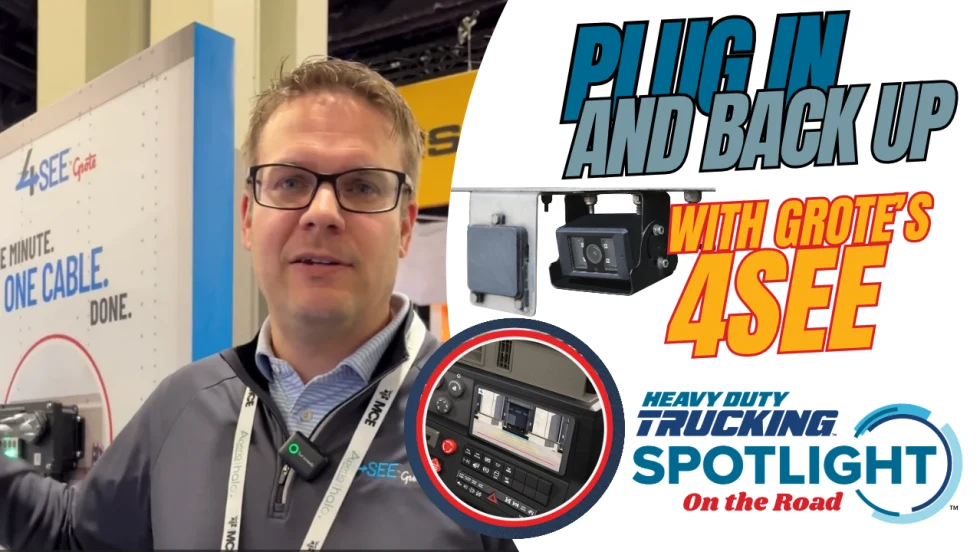
More Trailer Data Through the Same Seven-Way [Video]
Can trucking’s standard seven-way connector handle more cameras and trailer data? Grote’s Adam Slade shows HDT how the company is using new technology with its 4See trailer system, not only to add a new backup camera but also to expand other capabilities — without adding another connection.
Read More →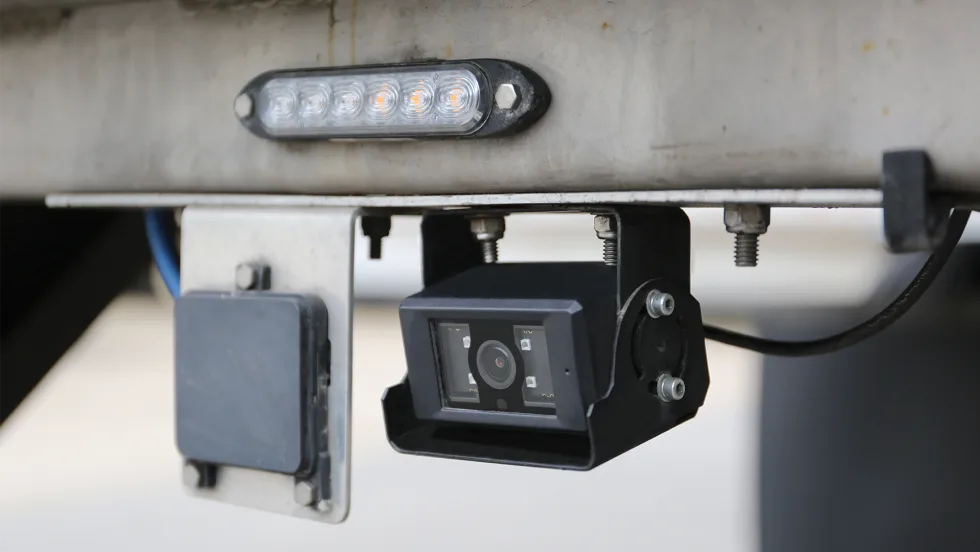
Grote: More Cameras, Same Seven-Way Connector
The next-generation 4See rear-view backup camera from Grote uses the standard seven-way connector and supports additional cameras and other trailer data.
Read More →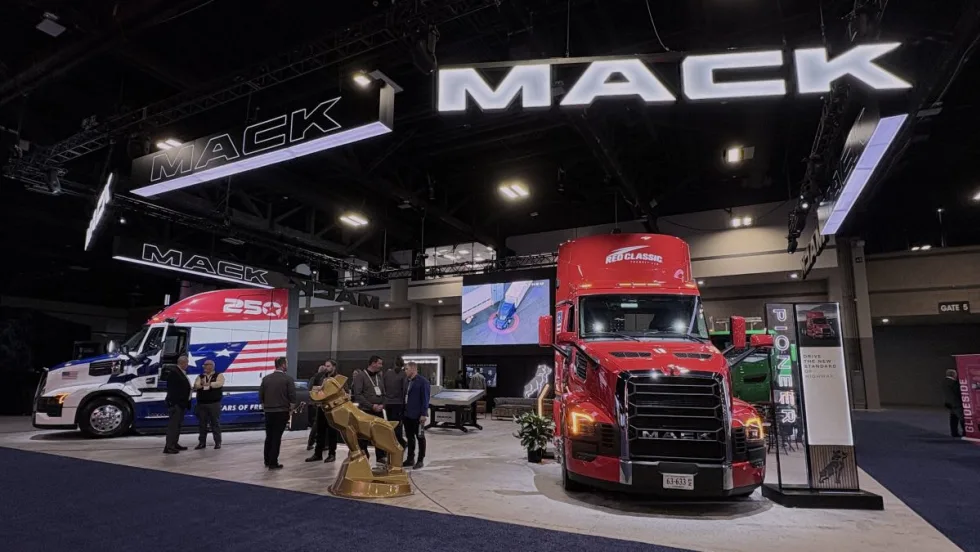
Trucks at ATA's 2026 MC&E in Charlotte, North Carolina [Photos]
From rigs decked out in patriotic America's 250 paint schemes to autonomous trucks and more, check out these photos from ATA's 2026 Management Conference & Exhibition.
Read More →
Help HDT Find Trucking’s Top Products
Have you come across a new product that could make a difference for trucking fleets? Nominate it for HDT’s 2027 Top 20 Products Awards by November 9.
Read More →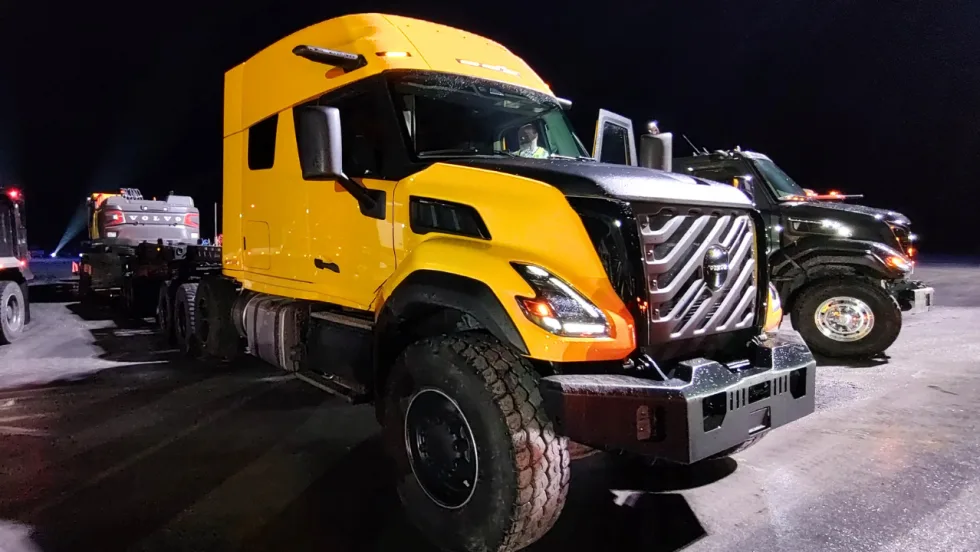
Volvo Unveils New VNX Heavy-Haul and Vocational Truck
Volvo Trucks has launched the VNX, a new vocational truck also available as a tractor in day cab and two sleeper configurations, with one heavy-haul model. The Volvo VNX is powered by Volvo's D13 platform, which delivers up to 540 horsepower and 1,950 pound-feet of torque and is EPA 2027-compliant.
Read More →
How GP Transco Cuts Trucking Fuel Costs, a Tenth of a Gallon at a Time
What’s another tenth of a mile per gallon worth? GP Transco shares how equipment upgrades and driver coaching turn small gains into meaningful fuel savings.
Read More →
Electric Yard Tractors Move Beyond Pilots
Operating-cost savings have overtaken sustainability goals as the leading reason surveyed fleets are adopting battery-electric terminal tractors, according to new NACFE research.
Read More →
Continental Introduces New Regional Truck Tires
Continental says its new Generation 5 steer and drive tires for regional operations offer longer tread life, with estimated mileage gains of 22% and 19%, respectively.
Read More →