





Related: Commentary: It Comes Down to Quality
8 Ways to Make Outsourcing Work For You
Many fleets have tried outsourcing, only to bring their maintenance and repair work back in house because of negative experiences. But that doesn’t have to be the case.
January 21, 2016
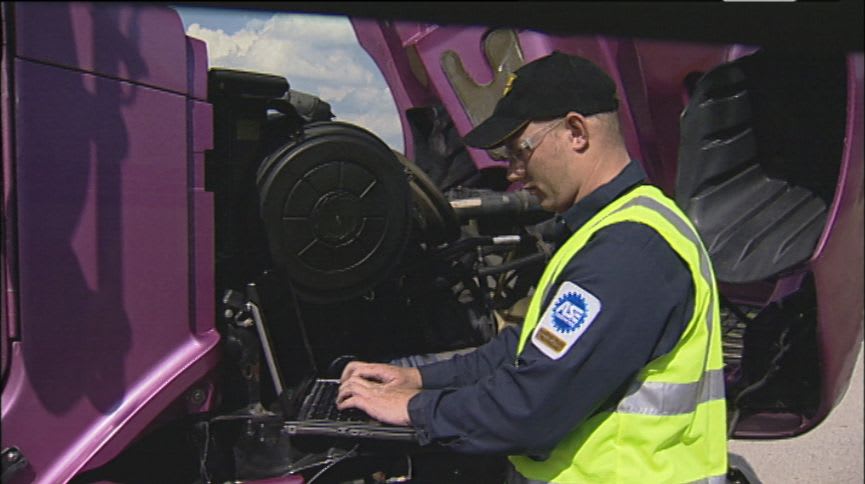
If you choose the right service provider, their technicians can even take diagnostic tools out into the field. Photo: Travel Center
8 min to read
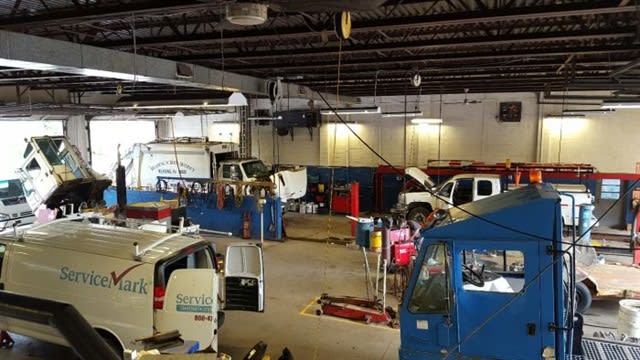
Visit any shop you are thinking of outsourcing to so you can determine what they actually specialize in.Photo: John Wensel
Even though fleets say they would like to outsource more of their service work, there has been little change in the number who do so. According to John Blodgett, vice president of sales and marketing for market research firm MacKay & Co., fleets are only outsourcing one-third to one-quarter of their maintenance and repair.
There are some good reasons for fleets to want, and need, to look for outside help with maintenance and repair.
The economic downturn of a few years ago resulted in changes to shipping lanes as shippers vied to secure better rates, notes Mike Lombardi, executive vice president of sales for TravelCenters of America. “Fleets saw shifts to the lanes they were running in and that did not match up with some of their existing maintenance terminals.” Other fleets began getting more dedicated business, resulting in them not seeing their trucks as often as they had in the past.
“Outsourcing can relieve many costs and pains surrounding hiring, training, equipment and tool investments, software license fees and administrative systems,” says Joe Puff, vice president of truck technology and maintenance for NationaLease. “Additionally the challenges managing EPA and local environmental regulations, fire codes, building codes, OSHA, NHTSA, CSA and so on can be significantly reduced.”
Here are some tips that can help you find the service providers that are right for you.
1. Know what you need
Outsourcing is not an either/or proposition. “It is not unusual for us to have a fleet that says, ‘I am good running my shop from 8 a.m. until 8 p.m. Monday through Friday, but after that it is not economical for me to do my own work,’” explains Lombardi. “So they ask us to pick up their off-hour business.”
He explains that different kinds of service providers fill different needs. “We consider ourselves as the urgent care center, while the dealership is more like the full service hospital.” A fleet may need to rely on both types of operations to meet its service needs.
Blodgett says the fleet manager needs to ask himself, “What type of service work do I need the provider to be able to do? Do I need a service provider to have a national or regional footprint or is just local fine? What do I require for maintenance record keeping? Do I need service completed at night and on weekends?”
The answers to these questions will help in choosing the right service provider.
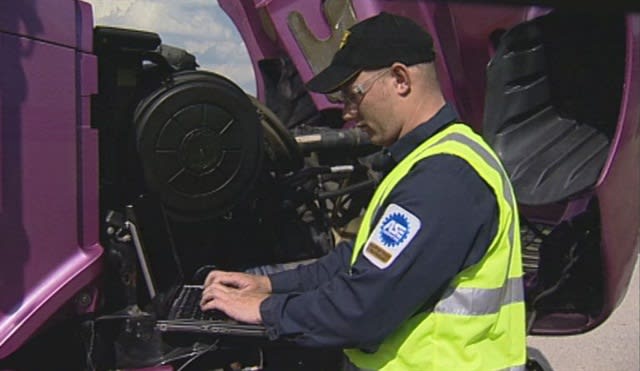
If you choose the right service provider, their technicians can even take diagnostic tools out into the field. Photo: Travel Center
2. Don’t lose control
Fleets worry about losing control when they outsource, says Michael Riemer, vice president products and channel marketing for Decisiv, which provides information technology that helps dealers and service providers stay in touch with fleet customers. “Whether it is real or imagined, it comes up in almost every situation. Do they really trust the people doing the work? Do they get the information and reporting to make the required business decisions?”
He suggests fleets make an initial commitment to outsourcing by picking a location and doing a pilot project. Patience is required. “Understand that there will be an initial spike in costs for deferred maintenance, so start small to get comfortable and demand real-time information and good reporting.”
3. Explore your options
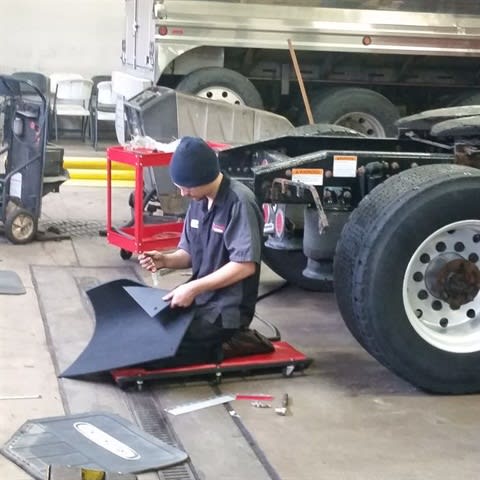
Make sure the shop you choose has the tooling, training and technology to handle your maintenance and repairs. Photo: Joe Laux
Joe Laux, president of River States Truck and Trailer, a truck dealer group in Wisconsin and Minnesota, advises fleets to look for a partner “that has invested in tooling, training and technology so they can do great work and get it done right the first time.”
Find a service provider that can “look at your freight needs by unit and can provide service for that unit during its down period,” he adds. If you only want to use one outsourced service provider, “make sure they are capable of handling all the services you need, whether that is an engine overhaul, automated transmission maintenance, DPF maintenance, etc.”
Mike Delaney, president and CEO of the truck maintenance network WheelTime, says, “Find a high-quality supplier that has computerized communication systems, has the ability to duplicate operations across multiple locations, and one that is going to match your needs including the way you do business in your own environment.”
A good way to determine if a service provider is right for your operation is to visit their shop. John Wensel, owner of Pennsylvania-based Wensel’s Truck & Trailer Repair, encourages fleets to come see his facilities and to ask questions. “Find out what services a shop can provide, how long they have been in business, what they specialize in, and who their customers are,” he suggests.
Paul Raymond, president of the Canadian-based Parts for Trucks, believes it’s important for fleets to “take time to evaluate where [the service provider’s] parts are sourced, how many technicians are licensed and what specialized equipment and tools are available.” He also says to make sure the provider is big enough to handle your expected volume of work and urgent/emergency needs.
The shop that is right for you might not be the one that is right next door, says Aubrey Hill, vice president of Kansas-based Truck Parts & Equipment. “Don’t ignore the shop a mile down the road. Look at their technicians. Go in and talk to them so you can get a good feel for what they know and how much they care about doing a good job.”
4. Understand what you are paying for
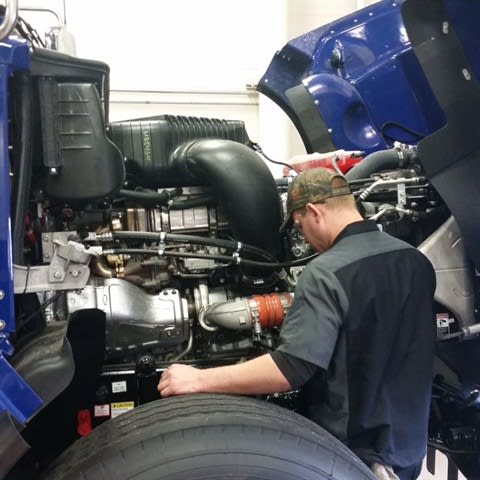
Consider outsourcing more complicated work such as engine repairs to better manage the throughput in your own shop.Photo: Joe Laux
Many fleets think outsourcing will cost them more than keeping service in house.
“Fleets that pay their technicians $35 an hour will say their labor rate is $35 an hour, but that does not take into account the cost of heating a building, the taxes, the training — all those things that go into a technician,” Laux says. “If their trucks are all running and my technicians don’t have anything to work on they are paying me zero,” but they have to pay their own technicians whether they are working on a truck or not.
Tim Grabou, vice president of shop operations at Blaine Brothers, a truck repair service based in Minnesota, says fleets make a mistake when they choose a service provider based on the lowest labor rate. “That is absolutely the wrong approach. Labor rates can be a bit of an illusion. Ask them how they are coming up with their labor rate. Are they using a standard repair time book?”
Raymond agrees and adds, “Do not be overly influenced by a quoted low labor door rate. Low rates do not equal low maintenance costs, as these shops may quickly switch to off-brand parts or be tempted to inflate hours to compensate for low hourly rates.”
5. Remember the big picture
Certain types of outsourced repairs can have a tremendous impact on throughput in the fleet’s own shop. Delaney says a WheelTime customer had been doing everything in house but was falling behind on PMs. “They assumed they did not have enough technicians, but the reality was two techs were getting tied up with major engine work. Two techs can PM a lot of trucks in a week,” he says. By outsourcing the engine work the techs were able to complete more PMs and get more revenue-producing trucks on the road each week.
6. Demand customization
Outsourcing does not mean you have to let someone else determine how your vehicles will be serviced. A good service provider will be able to tailor its offerings to mesh with your preferred way of completing repairs.
“If we know that for X repair we have to use Y process, then we can put those instructions directly into our system,” Delaney says. “We have customers who have specific labor hours around certain jobs they do in their own shop, and we load those same hours into ours so they know when we are doing the work we are allotting the exact same amount of time for the jobs as they allot. We can essentially design service programs that mirror the way they do repairs.”
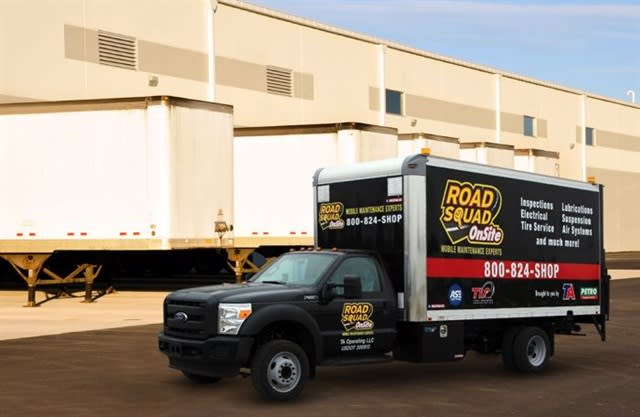
Some outside service providers will come to the fleet to perform maintenance and repair.Photo: Travel Centers
7. Let technology help
Technology is an enabler of the customized service you should demand from your outside service providers. Delaney explains that roughly 80% of the total time a unit is out of service is not actual repair time. “It is everything else — waiting for approvals, communication, checking to see if something is under warranty, waiting for parts.”
Using technology eliminates that dead time, “because we know the parameters for each customer and can work within them so we don’t have to wait for approvals or spend time shipping information back and forth,” he says.
Grabou says his company offers “a complete solution, from maintenance tracking to analyzing things like trade in times and cost per mile. We are helping fleets with all aspects of their business from purchasing to trade in to repair vs. replace. You can’t just be a repair shop anymore. You have to offer more.”
He explains that technology allows Blaine Brothers to track the fleet’s maintenance costs with a couple of key strokes, and to type in a job code and see the last time that repair was done and what the warranty availability is.
8. Build relationships
While a fleet may be tempted not to put all its service eggs in one basket, Hill says doing that can actually work to its advantage.
“If you are working with an outside repair facility and they know they are getting the lion’s share of your work, they are going to be a lot more flexible when you call them and say, ‘Hey, I am in deep stuff here and I need your help to get me out of it.’ Those types of relationships are a big key to successful outsourcing.”
Subscribe to Our Newsletter
More Maintenance

Sponsored•September 16, 2026
Color Match Smarter: Tools That Restore & Perform
For fleet managers and collision repair professionals keeping heavy-duty trucks on the road, getting the color right the first time isn't just about appearance — it's about efficiency, turnaround time, and bottom-line results. Discover how today's digital color tools are transforming the repair process from guesswork to precision.
Read More →
Wrong Repair Prompts Recall of Freightliner, Western Star 4x2 Trucks
DTNA is recalling more than 2,400 trucks that received an incompatible software fix instead of the hardware repair required to address brake valve corrosion.
Read More →
Truck Drivers Need More Than Another Alert
Fleets have more visibility into truck health, safety events, and driver activity than ever. The next challenge is turning all that information into useful guidance for the person who has to decide what to do next.
Read More →
The Maintenance Checks Trucking Fleets Should Prioritize Before Fall Freight Picks Up
Making it through August isn’t the same as being ready for the next several months of operation. Find out what systems may have suffered from summer heat and need to be checked out before fall.
Read More →
What Three Fleets Are Doing Differently When Buying Truck Parts in 2026
With freight improving but costs still climbing, fleet maintenance executives explain how they're balancing price, quality, and supplier relationships.
Read More →
Paccar Recalls 2027 Trucks Built This Summer for Possible Electrical Problem
The nearly 6,000 Kenworth and Peterbilt trucks in the recall could potentially lose engine power, among other things.
Read More →
Will API PC-12 Oil Change Trucking Fleet Maintenance?
The new API PC-12 heavy-duty engine oil category reflects the changing demands of modern diesel engines. But fleets like Foodliner are looking to getting their own data before making decisions on adopting the new oils and questions such as extending oil drain intervals.
Read More →
Brake Safety Week to Focus on Drums and Rotors
Commercial vehicle inspectors are focusing on truck brakes during CVSA's Brake Safety Week, August 23-29.
Read More →
Possible Battery-Cable Fires Prompt Recall of 15,000+ International MV and HV Trucks
On the recalled vehicles, manufacturing variations can cause the battery interconnect cable to contact the auxiliary stud and hold down the bracket.
Read More →
Rush, MCT Team Up to Grow Refrigeration Service Network
The joint venture will operate MCT's network of Carrier Transicold dealerships and mobile service locations, with the companies promising greater service capacity and uptime for refrigerated fleets.
Read More →