5 Ways a Fuel Program Can Save Your Truck Fleet Money
Cutting fuel use is not the only way to shrink your fleet’s diesel bill. Are you doing any of these five things to cut costs?
by Deborah Lockridge Editor in Chief
June 7, 2022
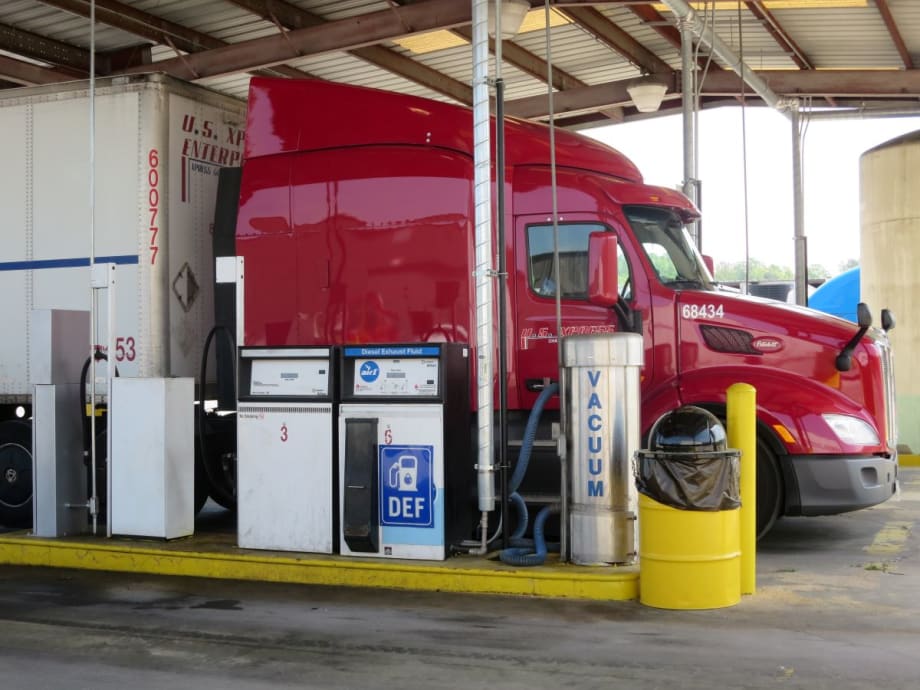
If you buy bulk fuel, check to make sure you’re getting the best deal — and don’t forget to double-check those invoices.
Photo: Deborah Lockridge
6 min to read
Decreasing the amount of fuel you use, via better miles per gallon or improving freight efficiency through routing or more efficient use of trailer space, is not the only way to save money on fuel. Taking a close look at how and where you buy fuel can identify ways to save money on the price you pay per gallon.
Ad Loading...
Glen Sokolis has been helping fleets manage their fuel programs for more than two decades, with fuel-buying experience from the contract to the tank to the truck. He’s the founder and CEO of Sokolis Group, a fuel management consulting company.
He advises fleets to step back and look at their whole fuel program from top to bottom. He cites fuel management as one of the components that gets lost in most organizations — even big fleets.
Ad Loading...
For instance: If you’re a small operator, your “fuel program” may just be a fuel card. But look at the fuel card you’re using. Does it offer the best discounts?
If your operations are local, you might be able to have all your drivers fuel at one location and negotiate a deal with that location.
If you’re a larger company, you might buy fuel at truck stop chains, use mobile fueling, or have bulk fuel delivered, and there are discounts to be had with enough volume.
The goal is for each fleet to look at its program and decide what’s best for this company — and to revisit that decision on an ongoing basis.
“It’s really an all-encompassing look at how you’re buying fuel,” Sokolis says. “I find most companies sort of set it and forget it and never look back. But a good fuel program is a living, breathing thing.”
Ad Loading...
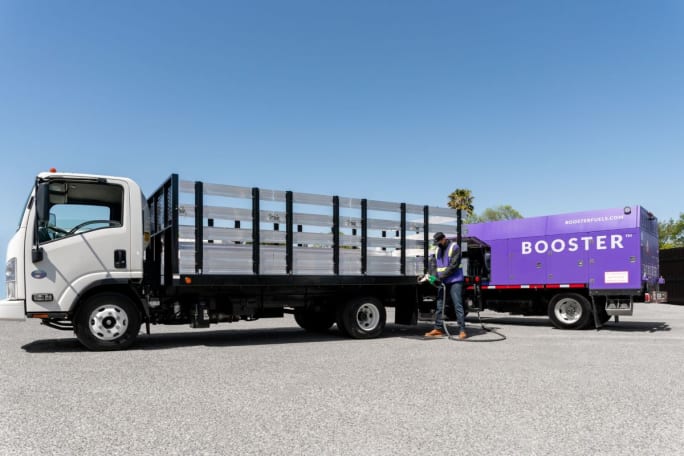
Mobile fueling is becoming a more widespread option and something fleets can consider in evaluating their fuel management programs.
Photo: Booster Fuels
1. Know How Much Fuel You’re Buying, And From Where
The first thing to know for a good fuel program is how many gallons you actually buy, Sokolis stresses.
“You’d be surprised about how many companies don’t actually know,” he says. “They know the dollars, but dollars aren’t always going to give me an answer, especially right now when the prices are so high.”
You can negotiate deals if you know how many gallons you’re buying, but determining that is often easier said than done.
“A lot of companies don’t buy their fuel from just one source anymore,” Sokolis explains. “They buy it on a fuel card, and they have a mobile fuel vendor, and they use Ryder, Penske, or some other major lease company to buy their fuel. We’ve had companies come to us that maybe have eight locations, and every one of their locations is using a different fuel card. All these different fuel sources are coming in, and they don’t consolidate it all, so they really don’t have a great handle on how many gallons they’re buying any month or any year.”
2. Negotiate Discounts
Once you’re armed with information on your fleet’s fuel-buying patterns, you can work to negotiate discounts.
Ad Loading...
In general, Sokolis says, a fleet probably needs to be buying 10,000 gallons or more of fuel per month in order to talk to a fuel vendor or local retailer and negotiate a deal. Talk to some of your fuel suppliers and see if you can consolidate some of your volume for a larger discount. If you’re buying bulk or mobile fuel, determine if you’re getting the best pricing available to you based upon your size, how frequently you get your deliveries, and how well you pay.
Even for smaller operations, just using a fuel card typically provides some kind of a percentage off.
For over-the-road fleets, “use a fleet fuel card that is widely accepted at truck stops,” Sokolis suggests. If you’re issuing a regular credit card to drivers for fuel purchases, you’re paying a premium over the cash price.
“This is an expense that most companies don’t even know that they are paying,” he says.
Does your card offer other benefits, such as cardless fueling, discounts on other products and services such as tires, or access to reporting and analytics tools?
Ad Loading...
3. Evaluate Fueling Options
One of the common things fleets overlook, Sokolis says, is that there are other fueling options out there.
“They’re so set in the ways they’re doing things that they might not have looked at the possibilities of going to a different truck stop chain, or consolidating their volume to one specific truck stop chain, or potentially mobile fueling.”
For instance, are you spending a lot of money on labor costs? Because if you are, perhaps you want to look into mobile fueling, where a mobile fueler comes out at night and fuels your vehicles where they’re parked. Your driver gets in the next day, and away he or she goes to start making deliveries. Your drivers aren’t wasting their time fueling up before they can even get started on their work for the day. And you can negotiate discount deals with the mobile fuel vendors.
“One of the things that has sort of been going away over the years has been bulk fuel on site,” Sokolis says, thanks to environmental regulations and challenges in upkeep. “Underground tanks always seem to need some upgrade or have some kind of issue,” he says. “An above ground tank, that occupies a lot of space, and again, there are additional issues. But if you already have a bulk tank and it’s all upgraded and good, you probably want to stay with that and negotiate a deal with your vendor.”
Of course, for many over-the-road fleets, truck stops are a necessary part of their fuel program. If you have a larger fleet, look at consolidating your gallons with a single truck stop chain. “Instead of having your drivers be able to buy fuel at every truck stop available in America, you may want to consolidate down to one of the larger truck stop chains and negotiate a deal,” he says.
Ad Loading...
4. Understand Margins
“A common problem in fuel-management programs is that fleets don’t understand fuel margins,” Sokolis says. “They understand their margins in their business, but they don’t understand the margins in a fuel business.
“What you want to do when negotiating a deal is have the lowest possible margin that you’re paying in fuel. And for every company, it’s a little bit different. If you’re buying 500 gallons from a vendor, your margin is going to be very large. If you’re buying 500,000 gallons from a vendor, your margin is going to be very small.”
Sokolis recommends aiming for a deal where pricing is based upon some kind of a benchmark, such as the Oil Price Information Service or DTN average.
“You can negotiate a discount off that benchmark along with some kind of freight rate that goes along with it, so you have consistency in pricing,” he says. “Yes, the price is going to go up and down, based upon the market conditions, but your margins are going to remain the same, which ultimately that’s really what you want.”
5. Audit Your Fuel Bills
“Fuel companies are having issues with labor, just like everybody else, and a lot of mistakes are made,” Sokolis says. “We have seen many invoices that were signed off for payment that had the wrong gallons by more than 1,000 gallons and the wrong fuel price by more than $3 a gallon.
Ad Loading...
“Audit your fuel invoices to make sure that you’re getting what you thought you were going to get and paying for what you thought you were going to be paying. If the vendor makes a half-cent or a one-cent a gallon mistake on your pricing, that can lead to tens of thousands of dollars in missed opportunities where you’re paying more.”
This article first appeared in the June 2022 issue of Heavy Duty Trucking magazine.
Volvo’s updated D13 promises lower emissions without sacrificing performance or fuel economy. Take a closer look at what changed inside the engine in this HDT Spotlight video.
Energy Vision estimates fleets could recover the higher purchase price of an RNG-fueled Class 8 tractor in 1.3 to 2.8 years under current fuel-price scenarios.
Calstart is now Catalyst Mobility, reflecting the nonprofit’s growing national role in clean transportation, including zero-emission trucks, infrastructure and incentive programs.
Average U.S. diesel prices have climbed to nearly $6 a gallon, surpassing the 2022 record as tight refinery capacity and Middle East disruptions keep fuel costs elevated.
Fuel delivery depends on more than what happens at the injector. For fleet, maintenance and technical professionals, looking at the full path from pump to injector can provide useful context for understanding engine performance.
The Port Authority of New York and New Jersey announced millions in incentives for zero-emission drayage trucks, yard tractors, and new charging hubs near the port.
Why do battery-electric Class 8 trucks remain so expensive? A California bill headed to Gov. Gavin Newsom would give fleets and state agencies more visibility into what manufacturers charge.
Detroit isn’t starting from scratch to meet EPA 2027 diesel emissions standards. Its Gen 6 DD13 and DD15 engines keep much of today’s platform while updating the fuel and aftertreatment systems.
California, Oregon, Washington, British Columbia and Baja California are coordinating plans for truck charging and hydrogen fueling from Canada to Mexico.
Learn more about Kenworth's T880E battery-electric vocational truck at the Paccar Technical Center, including its range, applications, upfitting considerations, and PTO options, in this HDT Spotlight video.