




5 Tips For Keeping Truck Lighting in Check
The Commercial Vehicle Safety Alliance's Roadcheck inspection blitz is a great reason to get up close and personal with your lighting system.

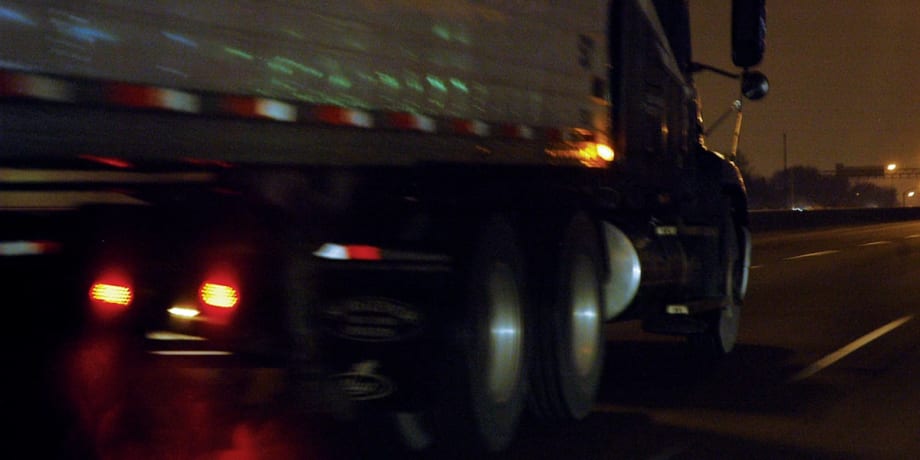
There’s no better way to get invited into a roadside inspection than to drive around with a light or two out.
Photo: Jim Park
In 2021, the Commercial Vehicle Safety Alliance moved the dates of its International Roadcheck inspection blitz from the first week in June to the first week in May. Vehicle lighting was one of the areas inspectors paid special attention to.
That’s not surprising. Lighting problems account for six out of 25, or 24%, of the most common vehicle violations found at roadside. Data from the Federal Motor Carrier Safety Administration shows the top violation, “inoperable required lamp - 393.9” appeared more than 312,000 times last year. It accounted for 12.2% of all vehicle violations and 4.4% of all out-of-service vehicle violations.
Considering all possible lighting-related violations issued in fiscal 2020, one in four vehicles chosen for inspection (25.3%) was issued a lighting-related violation. Slightly more than one in seven out-of-service violations (16.4%) was lighting-related.
“Lighting issues draw attention to the truck,” says Kyle O’Dell, director of engineering and new product development at Optronics International and USA Harness International.
“Even when a vehicle is stationary, an inoperable vehicle lamp suggests to authorities that a vehicle is not being properly maintained. If a vehicle is stopped for a lighting problem, a more thorough roadside inspection is almost inevitable.”
While drivers are required to inspect their vehicles daily, O’Dell says they are often placed in a difficult position between the time needed for a thorough inspection and the minutes ticking away.
“A full inspection will take between 30 to 50 minutes,” he says. “But in an industry where time is quite literally money, there is pressure to keep the pre-trip inspection as brief as possible. In some instances, drivers don’t get paid for the time they spend on pre-trip inspections, which adds additional anxiety and can lead to omissions.”
Not only that, but there also are additional barriers to reporting defects and following through with repairs. It’s a little easier to get the message back to the maintenance department with an electronic inspection report, but a paper report may not be seen until long after the trailer has been dropped at another customer’s yard.
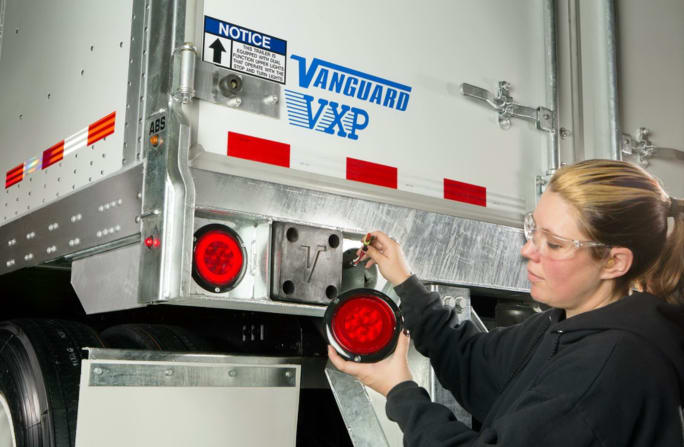
Some lights have specific orientation for proper lighting visibility and heat dispersion. Make sure they are installed correctly.
Photo: Optronics
In addition, lighting is the kind of problem that can appear with little warning. A light may be fine when the vehicle is initially inspected, but it can fail as the trailer is driven out of the yard.
Here are five tips that can help keep you out of Roadcheck “jail.”
1. Advance warning
Alert drivers to the date change for Roadcheck and advise them to be particularly vigilant for lighting problems. Remind them of FMCSA’s lighting requirements. Distribute bulletins on what to look for when inspecting tractor and trailer lighting, such as non-working lamps or lamps burning dimmer than others, damaged lenses; loose tractor/trailer seven-way connectors; damaged, corroded, or frayed wiring, etc. Encourage them to report everything.
2. Spring cleaning
Winter can play havoc with electrical systems and lighting. Aside from being bathed in corrosive road spray and the constant freeze/thaw cycles in the winter, trailer wiring can be damaged by ice accumulation, warns Alicia Jones, global market manager - trailer/body builder at Grote Industries.
“Any wires that hang down from their correct runs on the exterior of trailers are prime candidates for ice buildup,” she says. “As ice accumulates, the increased weight pulls on the wiring, causing more fraying, loose, or severed connections, lamp dislocations, and stress on splices. If a wire or cable pulls out completely, you can lose your lighting.”
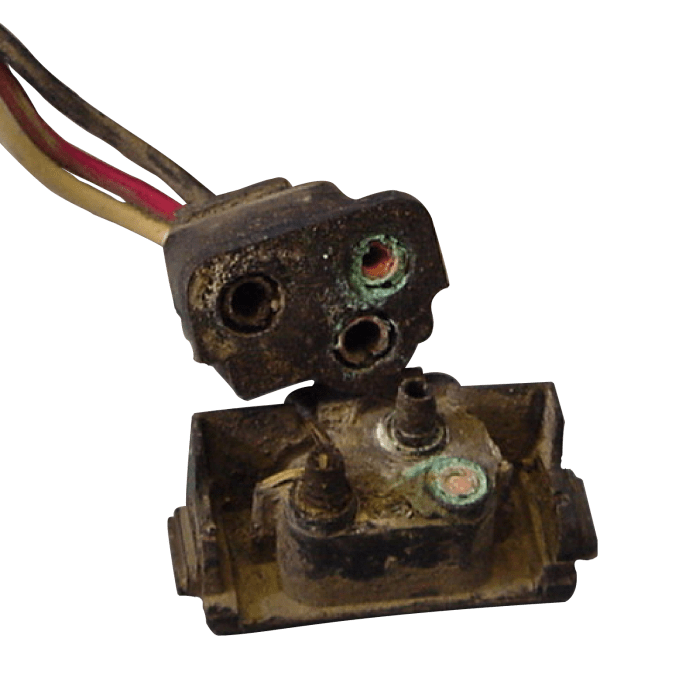
Water, dirt, salt, and other road contaminants can enter a lamp or connector, providing an electrical path that can accelerate corrosion.
Photo: Clarience Technologies
Jones recommends securing the connectors and tucking any dangling wiring up into its run and securing it with plastic tie wraps so ice can’t dislodge it. Also, check to see that drip loops are not in a place where unseen ice can build up. “In winter, drip loops no longer always deflect water as they do when the temperature is above freezing,” she says.
3. Focus on older equipment
Older equipment is more susceptible to problems because corrosion has had time to set in, connectors may have loosened over time, and the light fixtures may have been damaged.
“Small cracks can develop in the inner and outer insulation of constantly flexing cable, and abrasions may occur as it relentlessly contacts metallic surfaces,” cautions O’Dell. “Any breach in the protective surface of the wire can admit water and road chemicals. The same flexing and undulation can promote the migration of moisture throughout the electrical system.”
Older lamp housings may have been subject to abuse over the years, from striking tree limbs to being washed in harsh chemicals. Cracks and breaks in the housing or the lens could admit moisture, which can cause corrosion in the terminals and the wire connecting the lamp to the harness. While they may continue to function, they should be flagged for replacement next time the vehicle is in for preventive maintenance.
4. Keep the lenses clean
Peterson Lighting and Harness Systems cautions against using acetone, alcohol, abrasive cleansers, or acidic or caustic compounds and solvents when washing tractors and trailers.
Peterson service literature says warm water and mild dishwashing soap will do an excellent job of removing dirt from the lenses of vehicle lights without damaging the light or the vehicle. When cleaning a non-sealed incandescent light, do not allow water to enter the light housing.
Never direct the spray from a high-pressure power washer at your vehicle’s lights or electrical connections.
Finally, when replacing a damaged lamp, be sure the conductor and connector are clean and corrosion-free. Otherwise you are setting the same problem in motion again. Peterson recommends using a high-quality dielectric grease on bullet connectors plugs. However, do not apply grease or sealant to silicone-sealed modular connectors.
5. Don’t ignore the tractor
Since all the energy needed for the trailer electrical system (lights, antilock brakes, and the multitude of new telematics equipment and sensors) comes from the tractor, the logical place to look for bad connections or low-voltage problems is the seven-way pigtail cable or the seven-way connector socket on the tractor.
Phillips Industries recommends using a simple seven-way socket circuit checker and plug circuit checker to check for electrical continuity. That won’t indicate what voltage is at the socket, but it will indicate if the cable is properly connected and providing power to the trailer circuits.
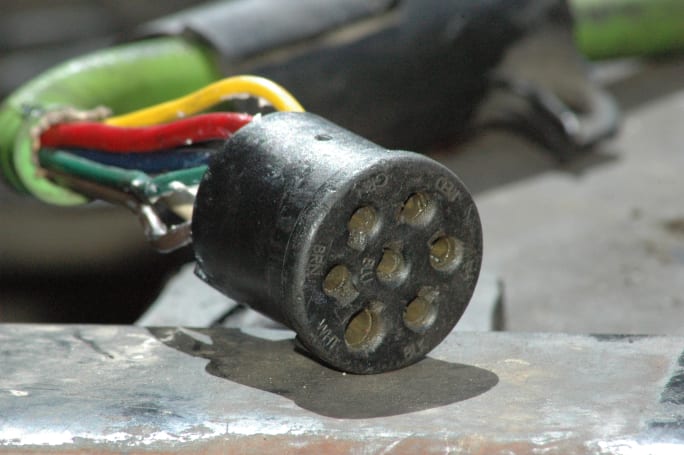
All the energy needed for the trailer electrical system comes from the tractor. A logical place to look for bad connections or low-voltage problems is the7-way pigtail cable.
Photo: Jim Park
Clean out all the old grease and watch for corrosion while there. TMC RP 159, Installation and Inspection Guidelines for Seven-Conductor Truck-Trailer Connector, from the American Trucking Associations’ Technology & Maintenance Council, can help here.
6. Continuity vs. voltage
When checking to see if a circuit is live, it’s easy to poke a continuity tester into the socket — never pierce the wire insulation with the probe — but that only tells half the story. It reveals nothing about the voltage on the circuit. Even one volt beyond the designed voltage will reduce the expected life of an incandescent bulb filament by more than 50%, according to Clarience Technologies, maker of the Truck-Lite brand.
“Voltage should be checked regularly to ensure the vehicle is operating within a safe range,” notes the company’s Lighting User’s Guide.
Voltage-drop in a circuit can have several origins, from badly corroded wire to incorrect wire gauge.
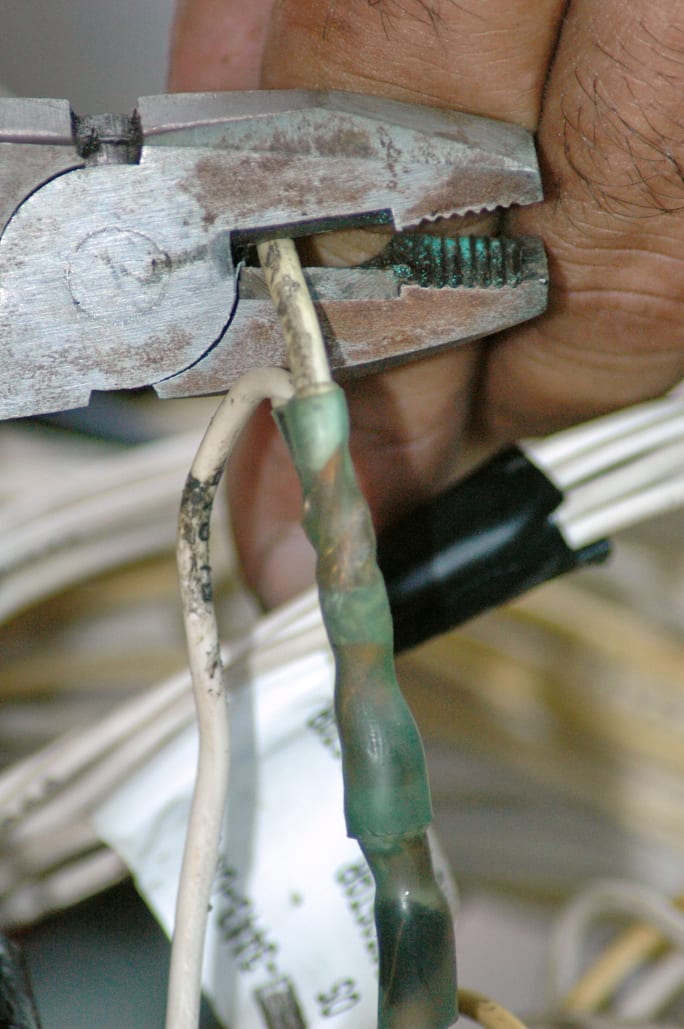
There are right and wrongs of repairing and splicing wire. TMC’s RP 186-Wire and Cable Repair Guidelines can help eliminate messes like this one.
Photo: Jim Park
“Wire size or gauge is very important,” notes the Truck-Lite guide. “The use of a wire gauge too small can cause dim or intermittent operation or excessive voltage drop and presents a potential fire hazard.”
When making repairs, always use stranded copper wire of the correct gauge and used correctly sized connectors.
LED lighting systems eliminate this problem, but they can be sensitive to voltage, too. While they will function on a range of voltages and still appear just as bright, once the voltage dips below a certain point, LEDs simply go out. They don’t dim first, warns Larry Rambeaux, a sales application engineer at Purkeys.
“LED lights are what’s referred to as constant current,” he says. “An LED will work from, say, 7 volts to 15 volts or whatever, and be the same brightness. But if they drop down to 6.99 volts, suddenly they don’t work. And there’s no difference in brightness with the LED in between. That light will appear the same brightness, whether it’s 10 volts, 11 volts, 12 volts, whatever. But if the voltage drops below that minimum, they go from working fine to nothing.”
Roadcheck is only three days out of 365. It’s good to prep equipment for this special period, but roadside inspections go on year-round. There’s no better way to get “invited” to participate in one of those inspections than to drive around with a light or two out.
More Maintenance

Color Match Smarter: Tools That Restore & Perform
For fleet managers and collision repair professionals keeping heavy-duty trucks on the road, getting the color right the first time isn't just about appearance — it's about efficiency, turnaround time, and bottom-line results. Discover how today's digital color tools are transforming the repair process from guesswork to precision.
Read More →
Wrong Repair Prompts Recall of Freightliner, Western Star 4x2 Trucks
DTNA is recalling more than 2,400 trucks that received an incompatible software fix instead of the hardware repair required to address brake valve corrosion.
Read More →
Truck Drivers Need More Than Another Alert
Fleets have more visibility into truck health, safety events, and driver activity than ever. The next challenge is turning all that information into useful guidance for the person who has to decide what to do next.
Read More →
The Maintenance Checks Trucking Fleets Should Prioritize Before Fall Freight Picks Up
Making it through August isn’t the same as being ready for the next several months of operation. Find out what systems may have suffered from summer heat and need to be checked out before fall.
Read More →
What Three Fleets Are Doing Differently When Buying Truck Parts in 2026
With freight improving but costs still climbing, fleet maintenance executives explain how they're balancing price, quality, and supplier relationships.
Read More →
Paccar Recalls 2027 Trucks Built This Summer for Possible Electrical Problem
The nearly 6,000 Kenworth and Peterbilt trucks in the recall could potentially lose engine power, among other things.
Read More →
Will API PC-12 Oil Change Trucking Fleet Maintenance?
The new API PC-12 heavy-duty engine oil category reflects the changing demands of modern diesel engines. But fleets like Foodliner are looking to getting their own data before making decisions on adopting the new oils and questions such as extending oil drain intervals.
Read More →
Brake Safety Week to Focus on Drums and Rotors
Commercial vehicle inspectors are focusing on truck brakes during CVSA's Brake Safety Week, August 23-29.
Read More →Possible Battery-Cable Fires Prompt Recall of 15,000+ International MV and HV Trucks
On the recalled vehicles, manufacturing variations can cause the battery interconnect cable to contact the auxiliary stud and hold down the bracket.
Read More →
Rush, MCT Team Up to Grow Refrigeration Service Network
The joint venture will operate MCT's network of Carrier Transicold dealerships and mobile service locations, with the companies promising greater service capacity and uptime for refrigerated fleets.
Read More →