




5 Steps to Take When Considering Fuel-saving Tech
Nearly every day you see headlines about alternative fuels for commercial trucks, from natural gas to electric hybrids to Volvo’s latest effort, dimethyl ether or DME.

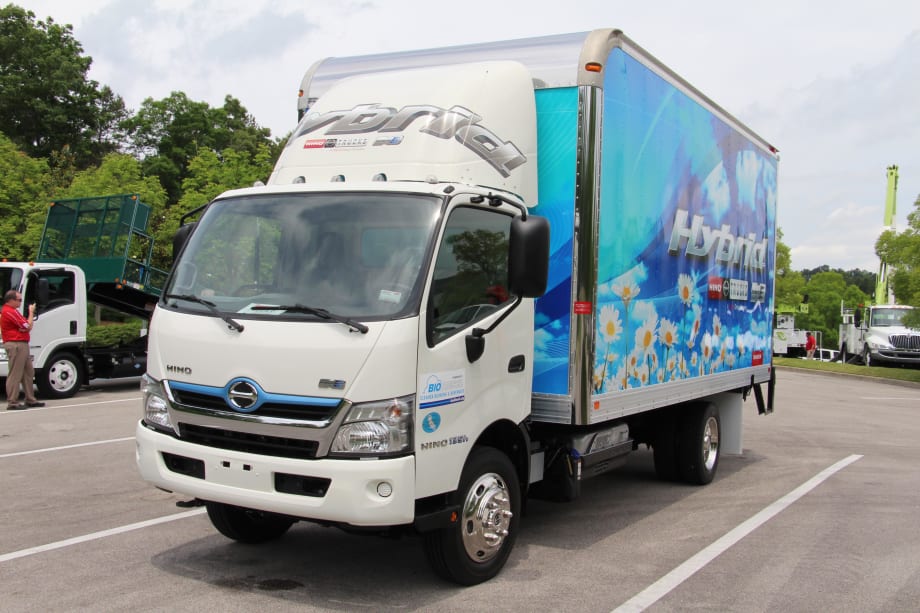
Part of the process of evaluating alternative fuels is matching the options to your fleet profile. For instance, hybrids may not be the smart choice if you don’t do a lot of starting and stopping on your routes.
Nearly every day you see headlines about alternative fuels for commercial trucks, from natural gas to electric hybrids to Volvo’s latest effort, dimethyl ether or DME.
Are we in interesting times when it comes to new engine technology that promises to reduce your fuel bill? No doubt.
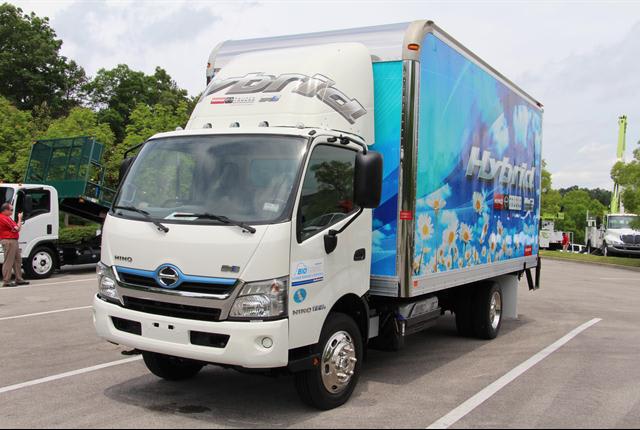
Part of the process of evaluating alternative fuels is matching the options to your fleet profile. For instance, hybrids may not be the smart choice if you don’t do a lot of starting and stopping on your routes.
Is all this confusing, especially when you’re trying to figure out which of these innovations are right for your fleet? Definitely.
Kevin Beaty, Calstart vice president and director of its High Efficiency Truck Users Forum, has some advice. Beaty isn’t trying to sell the benefits of alternative fuels to the entire trucking industry at this moment (though he would probably like to). Rather, he is pushing alternative fuel technology to those who have a shared vision.
“When you think about new technologies that enter the market, you have innovative customers who are the first to adopt. Then you have the early adopter population,” Beaty says. “So for me the next natural step on the commercialization path is finding those early adopters” of fuel-saving technologies.
Beaty is trying to appeal to these first adopters (about 1% to 2% of truck fleets) and early adopters (about 10%) through education. To that end he developed a presentation for the Birmingham, Ala., Southeast regional HTUF event in May about the economics and best practices for evaluating fuel-saving technology.
The event was put on by Calstart, a non-profit company that brings together business, fleets and government to develop and implement clean, efficient transportation solutions both inside and outside of trucking.
Here are Beaty’s five suggested steps to take when evaluating alternative fuel technologies.
1. Baseline your fleet
You have to understand your starting point, a baseline, before you can truly evaluate the impact of alternative fuel options. That means determining your fleet’s fuel use, but there is more to it that that. Begin by measuring your yearly fuel burn, not only an overall number, but also for each vehicle.
“If you just imagine a 100-vehicle fleet, it’s probably true that 10% to 20% of those vehicles are consuming 60% to 70% of the fuel for that fleet, at least it’s very possible. So you really want to understand the profile of the fleet and really drill into those vehicles that represent the greatest opportunity for the short term,” Beaty says.
Baselining can even be done by getting a representative sample of the trucks in your fleets, provided this fraction is truly indicative of your entire truck fleet.
If you want to get more sophisticated, you can also measure other parts of your fleet’s fuel burn, such as duty cycle, idle time, gallons used per day and even seasonal variables. Telematics are a perfect example of how easily obtainable this information can be.
2. Know your options
One of the keys to figuring out what alternative fuel technology is right for you is to look at what options you currently have that can reduce the amount of money spent on fuel. For instance, can you eliminate, or at least greatly reduce, truck idling so you aren’t burning more fuel?
“For some fleets, they could accomplish just as much fuel consumption reduction by eliminating engine idling as opposed to adopting a new technology,” Beaty says.
One option many fleets may not even see in front of them is to consider changes in operations. In other words, can you dispatch better-suited vehicles for specific jobs or applications, or might it be better to pull some poorly performing vehicles from service?
3. Match your options to your fleet profile
Evaluating fuel saving-technology options includes considering the geography of where your vehicles run, as well as your operational profiles.
For instance, you may like the idea of retrofitting your trucks with a dual-fuel natural gas and diesel system.But if natural gas isn’t available where you are and where you run, then you might as well strike it off your list.
By the same token, other technologies may not be right for certain applications.
Hybrid electric vehicles, Beaty notes, are poorly suited for use on higher speed routes or routes where a vehicle is doing limited starting and stopping and idling.
For higher mileage routes, natural gas is better suited, he notes.
If you’re looking at plug-in electrics or E-85 for smaller vehicles in your fleet, they may be a great idea in some parts of the country, but a horrible choice in others, because the fueling infrastructure isn’t developed.
4. Outline your reduction path
Just like a smart hiker who knows what path they are going to take, you need to plan how your fleet is going to shift into new technology.
How would a different fuel affect your operations over a period of several years?
This includes looking for solutions where you can expand the capacity of your service offerings or improve the service.
It also important to realize in planning for the future that there are improvements expected in vehicle fuel economy on traditional diesel.
In addition, some alternatives, such as hybrids and even biodiesel, are in their infancy and will likely improve over the coming years.
In other words, you shouldn’t rush in putting together your plan. Be patient and build one for adopting fuel-saving technology that takes several years, rather than rushing into a decision at once.
“For over-the-road at the moment and with today’s circumstances, which are not likely to change much during the ownership interval, taking a very serious look at natural gas is the right thing to do,” he says.
Beaty points out that there are even different technologies for natural gas, some of which can have a bigger up-front cost than others, but the benefit is that the payback over the long-term.
5. Paying for your plan
It’s not news that much of the new technology designed to cut your fuel bill carries an expensive price tag.
Having good access to cash or credit can help you pay down these premiums up front, especially considering the conventional wisdom that energy prices are going to increase over the long term.
In putting together a plan for your fleet, Beaty emphasized there is no “silver bullet” that is going to cover every vehicle, fleet or location to provide better fuel economy and lessen fuel bills.
Rather you need to consider a portfolio of options and choose technology and deploy them in a way that saves you money and reduces your susceptibility to volatile fuel prices.
More Fuel Smarts

East Coast Port Launches $45M Electric Truck Push
The Port Authority of New York and New Jersey announced millions in incentives for zero-emission drayage trucks, yard tractors, and new charging hubs near the port.
Read More →
California Bill Could Shed Light on Electric Truck Prices
Why do battery-electric Class 8 trucks remain so expensive? A California bill headed to Gov. Gavin Newsom would give fleets and state agencies more visibility into what manufacturers charge.
Read More →
Detroit Opens Orders for EPA 2027 Engines
Detroit isn’t starting from scratch to meet EPA 2027 diesel emissions standards. Its Gen 6 DD13 and DD15 engines keep much of today’s platform while updating the fuel and aftertreatment systems.
Read More →
Zero-Emission Truck Corridor Planned for West Coast
California, Oregon, Washington, British Columbia and Baja California are coordinating plans for truck charging and hydrogen fueling from Canada to Mexico.
Read More →
A Closer Look at Kenworth’s Electric T880E Vocational Truck [Video]
Learn more about Kenworth's T880E battery-electric vocational truck at the Paccar Technical Center, including its range, applications, upfitting considerations, and PTO options, in this HDT Spotlight video.
Read More →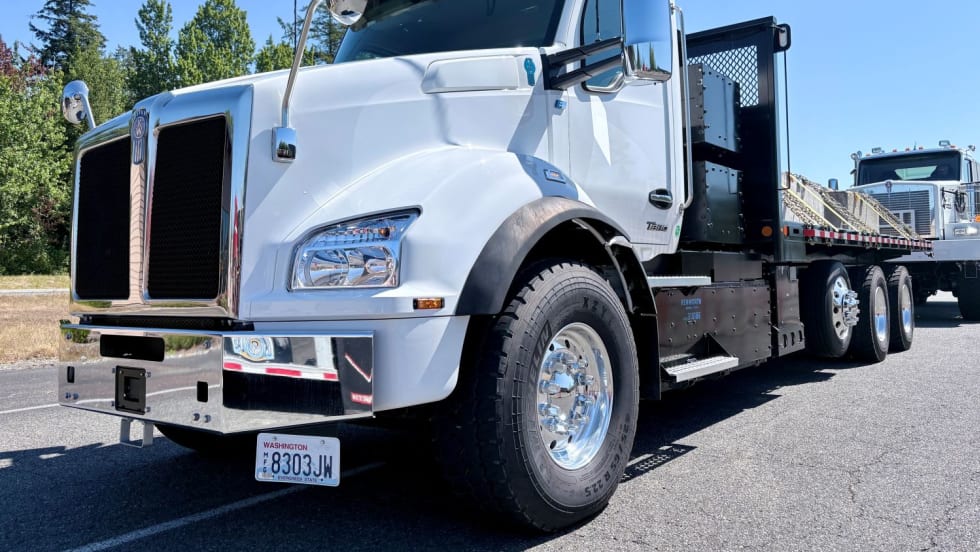
Kenworth T880E Brings EV Power to Vocational Trucks
A closer look at the Kenworth T880E’s range, charging, powertrain and upfit options — and where fleets are showing the most interest.
Read More →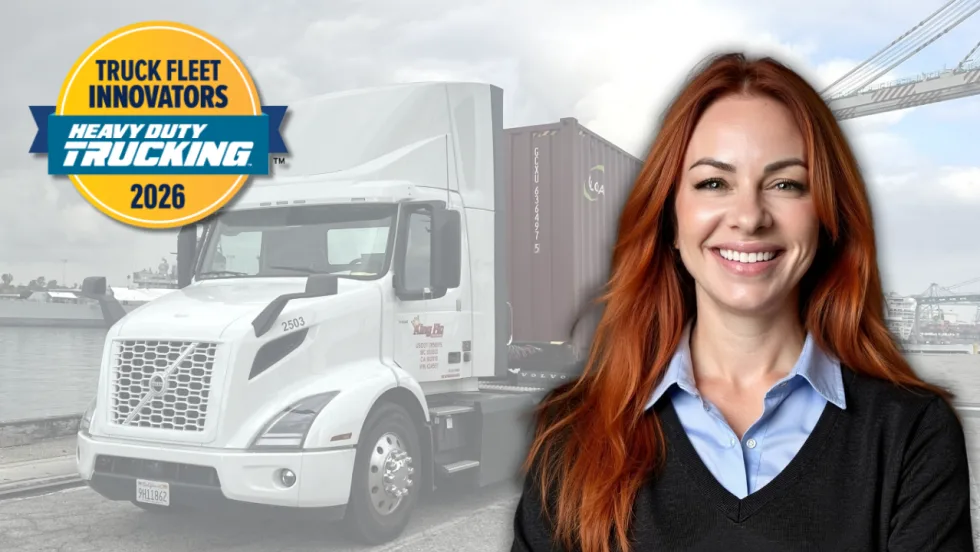
Jennie Abarca Is Proving Electric Trucks Can Do the Job
HDT Truck Fleet Innovator Jennie Abarca is building confidence in fleet electrification one load at a time while openly sharing the challenges she encounters along the way as a small-fleet owner.
Read More →
Cummins Adjusts 2027 Engine Rollout After EPA Proposal
The engine maker will gradually introduce its new Model Year 2027 diesel engines while continuing to offer current models during the transition, citing the EPA's proposed emissions rule changes.
Read More →
EPA Proposal Could Ease 2027 Truck Costs and Buying Uncertainty
The proposal doesn't change the tougher NOx standard, but it would revise key implementation requirements that manufacturers say have driven up costs and complicated fleet purchasing decisions.
Read More →
Cummins, Paccar Ease DEF Derates After EPA Guidance
Updated diesel engine software gives truck operators more time to address emissions-system issues while staying compliant with EPA emissions standards.
Read More →