




121 Ways to Save Fuel: Trailers
From the equipment you spec and maintain, to the fuel you buy, to driver training and incentives, you’ll find tips for nearly any type of fleet.
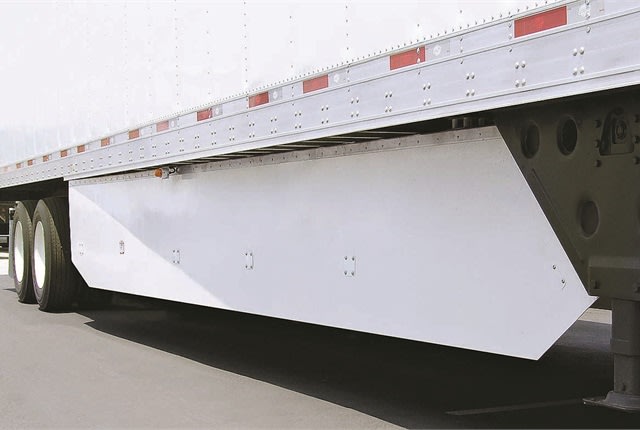
18. Install trailer skirts
Trailer side skirts can offer 4% to 5% fuel savings at highway speeds, according to the Environmental Protection Agency’s SmartWay program, and some manufacturers claim even more.
The typical cost per trailer to install skirts had dropped from $2,000 in 2008 to about $750 three years later, according to figures from Mesilla Valley.
19. Nose, underside and rear
Trailer side skirts aren’t the only aero add-ons for trailers. Others address the nose, underside and rear of the trailer. Some can be used in conjunction with trailer skirts for added savings.
SmartTruck offers an “under-tray” system, with options beyond the parts under the trailer, such as the Aero Rain Guard (on top of the trailer) and Side Fairings, which it says work to bend the high-energy air around the trailer corners, reducing the low energy wake behind the trailer.
There are also nose fairings for the front of trailers. For instance, on the T680 Advantage tractor-trailer rig Kenworth showcased last year, a Laydon nose fairing fills the gap between the tractor and front of the dry van to shield the trailer from the negative impacts of a crosswind. Nose Cone has been on the market for many years. Freight Wing has a cab fairing made of flexible plastic panels and braces, and Carrier Transicold offers a system.
ATDynamics’ TrailerTail “boattail” systems unfold easily and help reduce the drag from turbulence behind the trailer.
Airtab vortex generators are another option. Duplainville Transport, the private trucking arm of Quad Graphics, uses them around the rear door frame to control the flow of air around the back of the trailer. Some fleets use them at the rear of tractors to help smooth the flow of air from tractor to trailer, and some drivers claim Airtabs add stability.
20. Use a liftable trailer axle
For diminishing-load operations, an automatic lift on one of the trailer’s tandem axles can provide lower rolling resistance and thus better fuel economy once the load has dropped to the point where a single axle will do the job. PepsiCo is one company that’s using this technique, with SAF Holland’s CBX40 Auto-PosiLift air-ride suspension. Bendix recently added automatic lift-axle control to its TABS-6 Advanced trailer roll stability system.
21. Take an incremental approach to add-on devices
“When it comes to equipping a trailer with an aerodynamic device to improve fuel savings, cost can be an issue with systems that provide higher levels of fuel savings, requiring a greater upfront investment from fleets or owner-operators,” says Mitch Greenberg, chief commercial officer, SmartTruck.
“While some fleets and owner-operators want the greatest fuel saving return on investment right away, it’s important for the others to look at aerodynamic systems that allow them to gain an entry-level of fuel savings (and many times compliance) with the ability to add-on additional components or systems down the road to boost their future fuels savings as well.”
SmartTruck, of course, offers this approach with its systems, but you could do the same thing with other trailer aero devices, such as starting with trailer skirts and later adding a boattail device.
22. Refrigerated trailers
K&J Trucking, a Sioux Falls, S.D.-based refrigerated carrier, chose Blue Tree Systems’ R:COM service initially for location tracking and temperature management in transit. “But we quickly saw refrigeration unit fuel use drop. Our fuel costs went down enough that we expect the systems to easily pay for themselves within a year,” says President Michelle “Shelly” Koch.
The largest source of fuel savings for K&J is the ability to monitor and shut down refrigeration units when trailer doors are open. “A pre-cooled trailer that is unloaded quickly actually holds its temperature more efficiently, especially on multi-stop loads, because a running refrigeration unit pulls in warm air,” Koch explains.
23. Spec lighter-weight flooring
Havco says its composite product, Fusion Floor, can save up to 360 pounds a trailer by removing 1/4 inch of floor thickness. Depending on the desired floor rating and design, the fleet may also be able to use a wider crossmember spacing. A crossmember weighs approximately 25 to 27 pounds each, Havco points out. Research what lightweight flooring options may work for your operation.
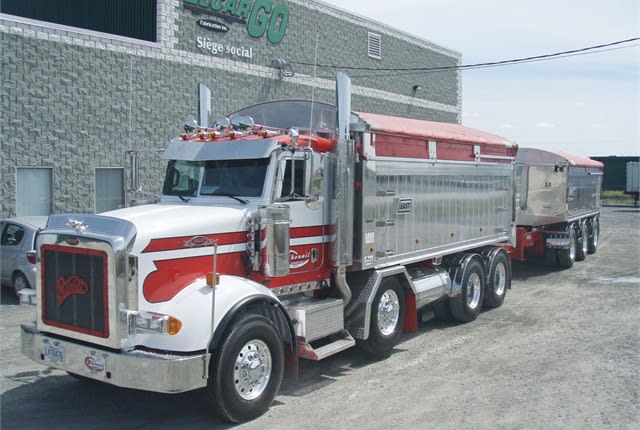
24. Tarp for aerodynamics
Properly tarping loads not only protects the load and keeps bulk materials from escaping, but also can improve aerodynamics.
“We already knew that our mechanical tarp systems would generate fuel savings on loaded and empty bulk trailers, but until we participated in testing by [FPInnovations’ Performance Innovation Transport] we didn’t have scientific proof to support those claims,” says Roger Lussier, sales manager at ElCargo Fabrication. “PIT’s very conclusive test results enable us to verify that our mechanical tarp systems will bring fuel savings of almost 15%.”
25. Balance your load
“Although your truck can pull more than it can carry, it works less when carrying than pulling, so balance the load between your drives and trailer tandems with slightly more on your drives,” recommends Thomas Watercott, co-owner of Nothing But the Right Stuff in Graham, N.C.
26. Upgrade to newer refrigeration units
The latest Tier 4 trailer refrigeration units are more fuel-efficient than their predecessors.
For instance, Carrier Transicold says its X4 Series models achieve 35% to 50% more BTUs of cooling per gallon of fuel at AHRI rating conditions, and the already-efficient hybrid Vector units achieve up to 30% more BTUs of cooling per gallon. Carrier says use of new Tier 4 models can result up to 22% and 26% fuel savings over previous models for its X4 and Vector platforms, respectively.
Thermo King says its Precedent reefers use a diesel-electric drive system instead of belts to deliver double-digit fuel savings. TK says the Diesel Direct Electric system cuts the need for power, so its Precedent engines develop less horsepower but produce as much or more refrigeration performance than older models. This keeps loads healthy and conserves fuel.
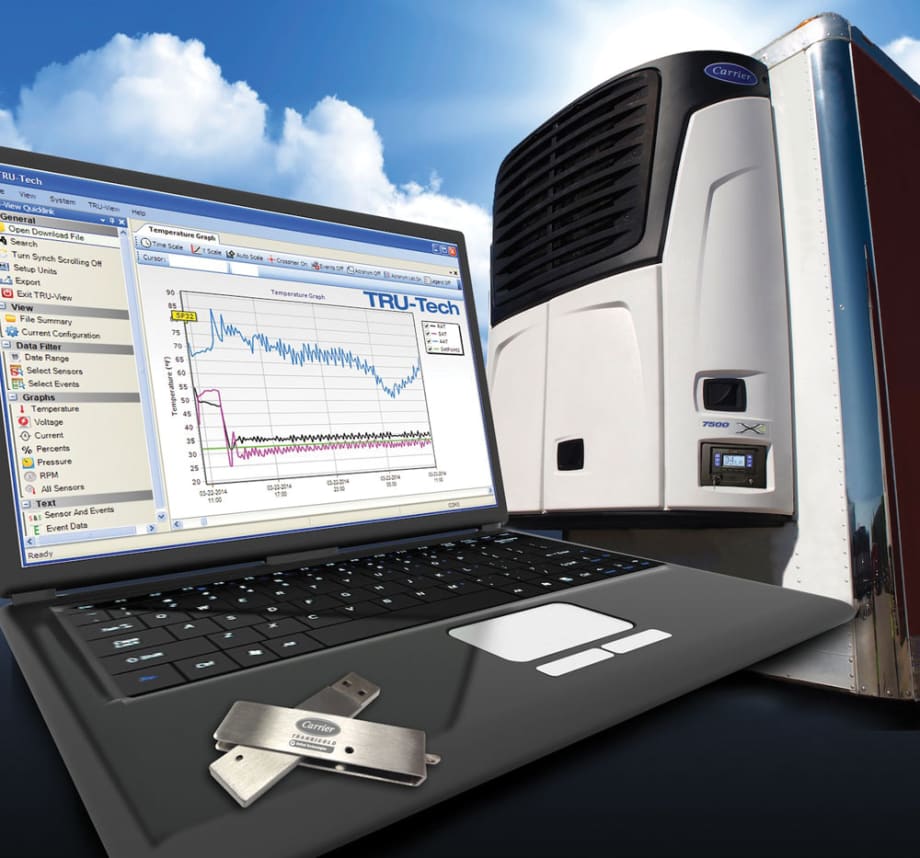
27. Fine-tune refrigeration control pre-sets
The microprocessor controllers found in most of today’s refrigeration units are essentially mini-computers. Software controls all operational aspects, but users have the ability to adjust refrigeration performance based on their own requirements.
Unlike a home refrigerator or residential thermostat with a simple temperature control, transport refrigeration systems manage multiple variables to provide precise temperature and environmental conditions for a given cargo, with the ability to automatically react and adjust to factors such as outside temperature changes, product categories and desired temp set points.
Training drivers to properly use these features can provide fast paybacks on their price premiums, while keeping loads fresh, say Carrier and Thermo King.
RELATED: 121 Ways to Save Fuel
More Fleet Management

How Telematics Improves Visibility, Control, and Performance in Refrigerated Fleets
Explore how telematics help refrigerated fleets improve visibility, uptime, efficiency, compliance, and cargo protection across connected cold chain operations.
Read More →
What the U.S.-Canada Trade War Means for Trucking
Escalating U.S.-Canada tariffs could disrupt cross-border freight, reduce truck volumes, raise costs, and create new uncertainty for carriers on both sides of the border.
Read More →
What Are Trucking’s Top Concerns for 2026?
The American Transportation Research Institute wants to know what's worrying trucking fleet managers, drivers, and other stakeholders in its annual Industry Issues survey.
Read More →

American Trucking Associations Looks for a New Leader
ATA President and CEO Chris Spear abruptly left his job at the association on August 21, at a pivotal time for the trucking industry.
Read More →
Public Wi-Fi Cybersecurity Risks: How Truck Drivers and Fleets Can Protect Their Data
Public Wi-Fi can expose truck drivers and fleets to credential theft, malware, and other cyber threats. Here’s how to reduce the risk on the road.
Read More →
For Nicky Cupp, Fleet Innovation Starts With Frustration
HDT Truck Fleet Innovator Nicky Cupp turns everyday pain points at Fraley & Schilling into opportunities for better technology and smarter processes.
Read More →
Adam Buttgenbach’s Approach to Electric Trucks: Start With Where They Fit
HDT Truck Fleet Innovator Adam Buttgenbach helped PepsiCo build one of North America’s largest EV fleets by focusing on where electric trucks make operational sense.
Read More →
Deen Albert: Let Automation Do the Math, People Make the Decisions
HDT Truck Fleet Innovator Deen Albert makes sure people are still at the heart of operations at Grand Island Express, even while adopting artificial intelligence tools. AI-assisted dispatch helped boost revenue 25% with the same number of trucks.
Read More →
Trimble’s New AI Agent Takes Aim at Fleet Back-Office Busywork
Arc Agent works across Trimble TMS products to automate repetitive tasks such as freight orders, maintenance, invoices, fuel costs and more.
Read More →
How HDT’s 2026 Truck Fleet Innovators Are Rethinking Fleet Operations
Meet five trucking leaders who are challenging assumptions, solving operational problems, and putting innovative ideas to work.
Read More →