




OSHA To Enforce Wheel Chock Rule
The Occupational Safety and Health Administration says it will enforce regulations requiring the use of wheel chocks to secure trucks and trailers when loading and loading, though it’s not clear who will be responsible
The Occupational Safety and Health Administration says it will enforce regulations requiring the use of wheel chocks to secure trucks and trailers when loading and loading, though it’s not clear who will be responsible.
OSHA’s regulations governing lift trucks dictate that “the brakes of highway trucks shall be set and wheel chocks placed under the rear wheels to prevent the trucks from rolling while they are boarded with powered industrial trucks.” In 1973 an OSHA review commission decided that those rules were pre-empted by a federal highway safety regulation which required brakes to be set on unattended vehicles. The Department of Transportation rescinded that rule (49CFR 392.20) last year, stating that state and local governments were in a better position to monitor and enforce regulations of that nature.
The OSHA rules, contained in 29 CFR 1910.178(k)(1) and (m)(7), further state that “fixed jacks may be necessary to support a semitrailer during loading or unloading when the trailer is not coupled to a tractor” and that “the flooring of trucks and trailers must be checked for breaks and weakness before they are driven onto.”
While the regulations are aimed at protecting dock workers, responsibility for compliance isn’t entirely clear, says Stuart Flatow, the American Trucking Assn.’s director of occupational safety and health. Citations for violations will most likely go to the employer of those workers -- i.e. the owner or operator of the loading dock -- and he says truck drivers and motor carriers may be expected to carry wheel chocks in their trucks or at least be on the alert that rear wheels must be chocked.
Flatow says ATA tried to arrange a meeting with OSHA before the directive was issued but its request was denied. “Loading dock safety of course is critical,” he says. “But we believe it’s a multi-prong approach, not just the use of one device.” That approach might include parking brakes, dock locks or similar devices, as well as employee communications and training.
The directive can be accessed via OSHA’s Internet site (http://www.osha.gov). The regulations can be found at www.access.gpo.gov/su_docs/aces/aces140.
More Drivers

EEOC Sues KLLM Over Alleged Sex Discrimination in Driver Training
KLLM is facing a federal sex-discrimination lawsuit over policies the EEOC alleges put female truck driver trainees at a disadvantage.
Read More →
FMCSA Moves to Codify English Language Requirements for Commercial Drivers
By changing regulations on English-language proficiency requirements for commercial drivers, rather than relying on a guidance memo, the FMCSA said future administrations won't be able to walk back the Trump administration's stricter enforcement with just a memo.
Read More →
Drivers Put Western Star Trucks to the Test at Star Nation Experience
Watch to get an inside look at the Western Star trucks, technology, and community behind the Star Nation Experience 2026!
Read More →
Trump Administration Looks to Put More Veterans Behind the Wheel
The Freedom Haulers program pulls together existing and expanded programs at several federal agencies to recruit veterans to drive commercial heavy-duty trucks and cut the red tape for them to get a CDL, training, and employment.
Read More →
Putting Mack’s Command Steer to the Test
A test drive of Mack’s Command Steer active steering system evaluates how it can make truck driving easier and less tiring.
Read More →
Competition Heating Up for Truck Drivers
New report reveals rising driver hiring costs, the return of sign-on bonuses, growing AI advantages, and the operational factors shaping driver retention.
Read More →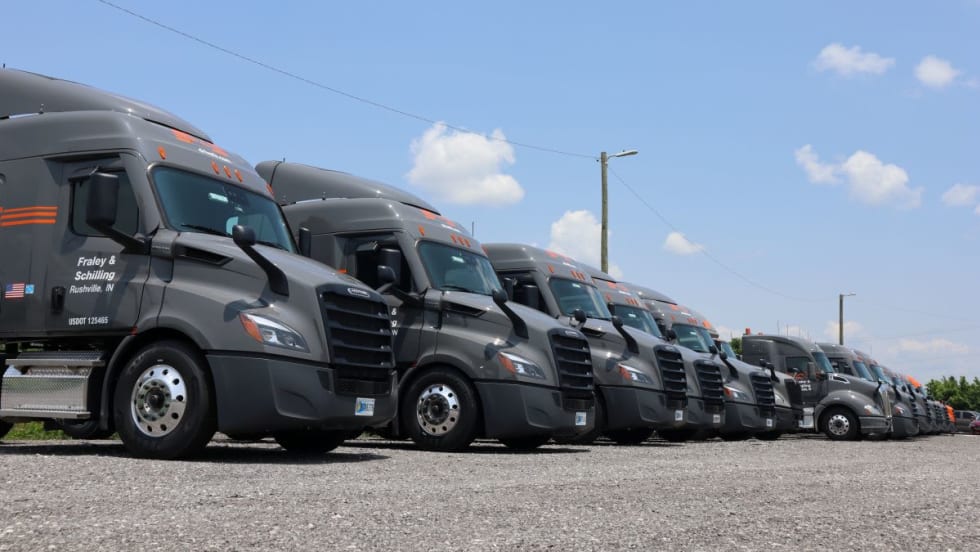
How Fraley & Schilling Improved Logbook Compliance by Over 50%
Fraley & Schilling needed a way to close a compliance workflow gap in its ELD system without adding more work from driver training, reminders, and back-office follow-ups. It found the answer in a custom driver app.
Read More →
Volvo Goes Gaming
Volvo has roared into American Truck Simulator with two new flagship trucks.
Read More →
What the Best Fleets to Drive For Teach About Driver Retention
Survey fatigue, AI-powered routing, owner-operator expectations, and the decline of social media all emerged as themes from this year's Best Fleets to Drive For program.
Read More →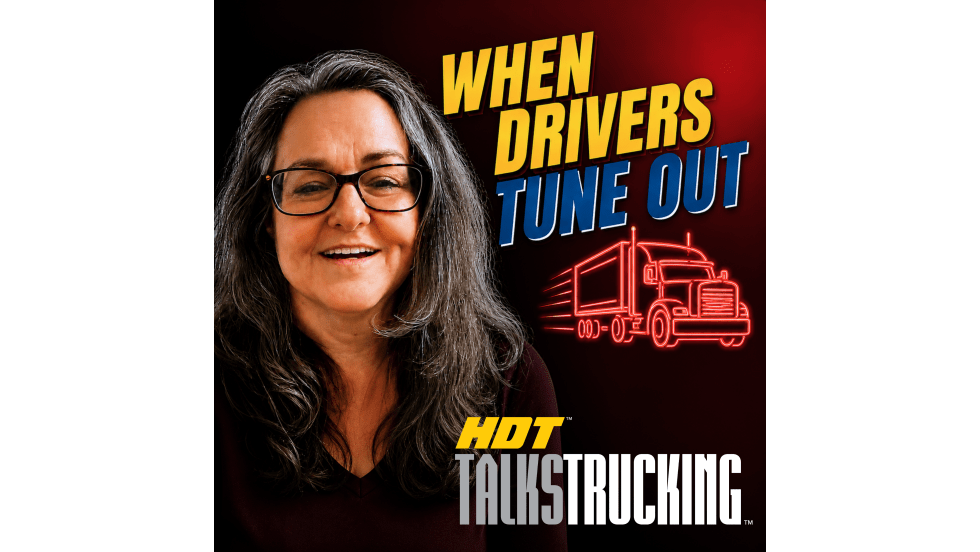
Driver Retention Lessons From the Best Fleets to Drive For
What separates trucking's best workplaces from the rest? Jane Jazrawy shares the biggest lessons from this year's Best Fleets to Drive For program on driver retention, communication, AI, and workforce trends on the HDT Talks Trucking podcast.
Read More →