





Related: Technology Is Changing How Carriers, Shippers, and Brokers Connect
New Marketplace Will Monetize Data for U.S. Logistics Players
A web-based omnichannel data marketplace for U.S. transportation and logistics firms is being rolled out via a partnership between dexFreight and Ocean Protocol of Singapore.
February 13, 2020
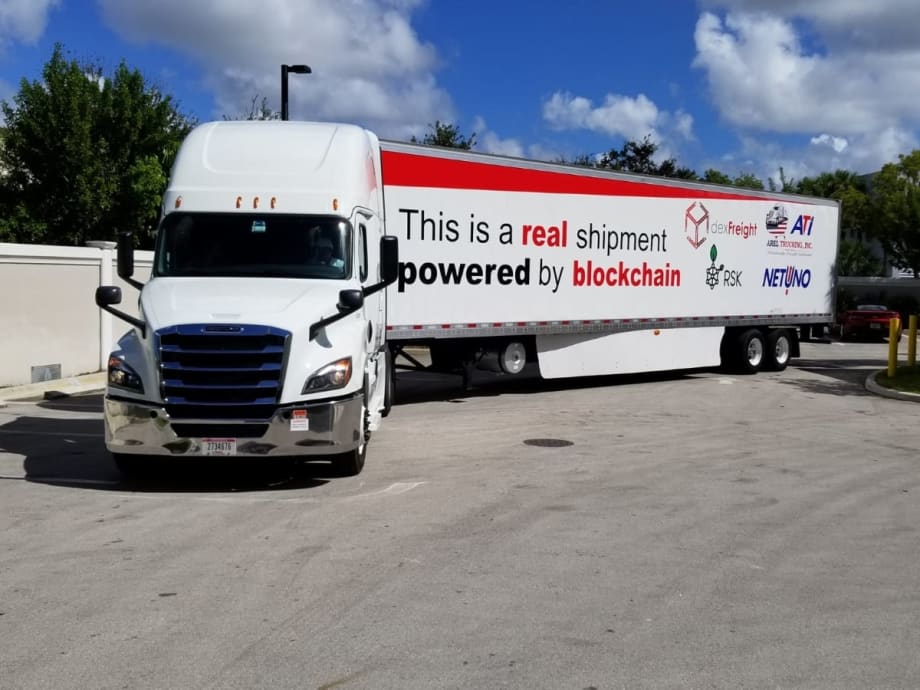
In this new marketplace, carriers, brokers, and shippers will own their data and have the option of sharing it with the community without revealing a company’s identity or strategic competitive information.
Photo: dexFreight
3 min to read
A web-based omnichannel data marketplace for transportation and logistics firms is being rolled out via a partnership between Sunrise, Florida-based dexFreight and Ocean Protocol of Singapore. While dexFreight provides a blockchain-based logistics platform, Ocean Protocol fields a decentralized data-exchange protocol to unlock data for artificial-intelligence use.
The companies said in a news release that the new omnichannel data marketplace will “enable companies to aggregate and monetize operational data.” It will open in April and will first focus on serving U.S.-based truckload transportation providers.
Ocean Protocol and dexFreight also stated that the U.S. logistics industry is comprised of 500,000 trucking companies, 16,000 brokers, and millions of shippers— with the majority of them being small- and medium-size companies.
More to the point, according to the two firms, “Currently, they [logistics players] are unable to receive any compensation as actual owners of their data while third-party software vendors are able to aggregate and sell data to competitors, marketing firms, insurance companies, government agencies and others leaving them out of this revenue from data monetization opportunity.”
Several types of logistics data will be generated in the dexFreight omnichannel marketplace, including information on the historical location of trucks, shipment attributes, prices, indices and invoices.
In the marketplace, carriers, brokers, and shippers will own their data and have the option of sharing it with the community without revealing a company’s identity or strategic competitive information.
Users contributing data will be compensated in tokens via smart contracts. They will also have access to premium marketplace features made possible by harvesting the data, such as rate predictions.
For the data marketplace, dexFreight will manage data gathering and pruning, clean and create metadata information, and identify government data and city pairs to be added. It will also coordinate the testing of the marketplace, handle user onboarding and relations, and gather ongoing feedback.
Ocean Protocol’s role in the marketplace will enable intuitive publishing and consumption of data, and the creation of royalty distribution methods, and payment and pricing functions. The company will also develop a UX for Web3 onboarding, wallets and connections with tokens, and a system for dispute resolution.
“The collaboration of dexFreight and Ocean Protocol aims to break down data silos in the logistics industry,” said Trent McConaghy, founder of Ocean Protocol. “In the near future, we will bring this template to other verticals as well, such as pharma, Ocean Protocolautomotive and the financial services industries.”
“The dexFreight omnichannel data marketplace powered by Ocean Protocol architecture and smart contracts to trace the provenance of data will present an important opportunity for the entire logistics industry to aggregate their data and be compensated accordingly,” said Rajat Rajbhandar, CIO & co-founder of dexFreight. “Through this partnership to launch the industry’s first Web3 data marketplace with a transparent compensation method, we will enable trucking companies, freight brokers and shippers to put their data to work, generating revenue.”
A fact sheet with more information and use cases has been posted by dexFreight.
More Fleet Management

Platform Science Adds Dispatch and Safety Tools
Four additions to PS Fleet help fleets monitor loads, manage driver coaching, share truck locations and adjust video system settings.
Read More →
PrePass Intelligence Mines Fleet Bypass, Toll and Safety Data
PrePass Intelligence helps fleets measure bypass savings, flag potential toll overcharges, and spot suspicious transactions by combining data from separate systems.
Read More →
Motive Adds AI Agents for Fleet Operations
New tools automate follow-up on fleet data, from maintenance work orders to driver alerts, with two-way voice conversations planned for later this year.
Read More →
Can You Beat Our Trucking Trivia Challenge?
Test your truck knowledge with 19 trivia questions from Heavy Duty Trucking Exchange. Can you keep up with the fleet pros?
Read More →
BeyondTrucks Adds Rules Checks to Dispatch
New Compatibility Engine checks driver qualifications, equipment requirements and fleet policies before loads are dispatched.
Read More →
Diesel Prices Hijack Trucking’s Worry List
ATRI’s annual survey finds cautious optimism about freight, but diesel costs, litigation, and insurance continue to squeeze fleets. Drivers have different priorities on several issues.
Read More →
Nomination Deadline Extended for HDT Emerging Leaders
Just a few more days to nominate accomplished trucking fleet professionals under 40 who are making an impact and helping lead the industry forward for the HDT Emerging Leaders award. Deadline extended to October 20!
Read More →
What Will ATA’s New Leader Bring to Trucking's Table?
Incoming President and CEO Mark Colson’s record in Alabama offers clues about his priorities and approach following Chris Spear’s abrupt departure as the head of the American Trucking Associations.
Read More →
Volvo, Waabi Start Commercial Autonomous Operations in Texas
Volvo VNL Autonomous trucks, powered by the Waabi Driver, are hauling freight directly to third-party facilities for a customer in Texas.
Read More →
Samsara Launches Custom AI Agent Builder
Agent Studio lets fleets create AI tools for hours-of-service monitoring, reporting and driver support, including agents that communicate by phone.
Read More →