





Related: GHG Phase 2 Glider Kit Restrictions to Be Enforced After All
EPA Attempt to Rollback Glider-Kit Limits Slammed as Shoddy
The investigative report does not question the content of the proposed rollback rule.
December 6, 2019
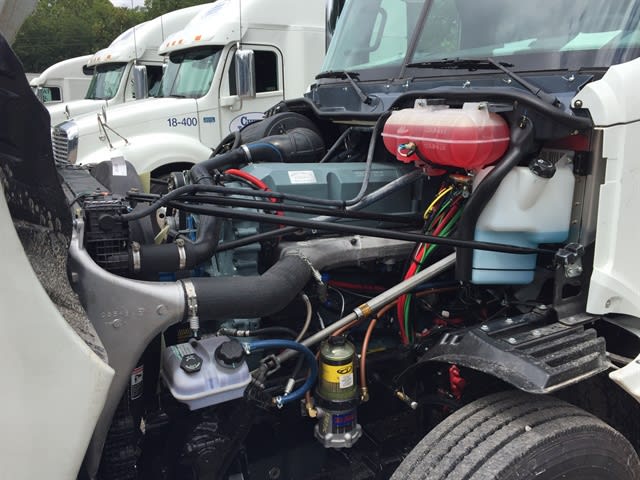
EPA’s Phase 2 GHG emission standards, finalized in October 2016, included emission requirements and production limits for glider-kit vehicles.
Photo: Deborah Lockridge
2 min to read
Although it has no bearing on the current regulatory status of truck glider kits, an investigation by the Environmental Protection Agency’s internal watchdog has determined that the agency essentially did a rush job when it developed a proposed rule in 2017 to repeal clean-air caps on truck glider kits.
The rulemaking process “lacked transparency and deprived the public of required information,” states a Dec. 5 report issued by the EPA’s Office of Inspection General, an independent office within the agency that conducts audits and investigations.
More specifically, the OIG report contends that by skimping on the details, “EPA failed to develop required cost and benefit analyses and to assess air quality impacts on children’s health” in putting together its proposed rollback of glider-kit production limits included in the federal GHG Phase 2 emission rules.
EPA’s Phase 2 GHG emission standards, finalized in October 2016, included emission requirements and production limits for glider-kit vehicles. After receiving a petition from the glider-kit industry in July 2017, EPA proposed to rescind the portion of the Phase 2 rule affecting gliders.
The OIG report states that, according to EPA managers and officials, “[in 2017] then-EPA Administrator Scott Pruitt directed that the Glider Repeal Rule be promulgated as quickly as possible. The proposed repeal rule would relieve industry of compliance requirements of the [GHG] Phase 2 rule, which set emissions standards and production limits for gliders beginning January 1, 2018. EPA officials were aware that available information indicated the proposed Glider Repeal Rule was ‘economically significant;’ however, Pruitt directed the Office of Air and Radiation to develop the proposed rule without conducting the analyses required…
“The lack of analyses caused the public to not be informed of the proposed rule’s benefits, costs, potential alternatives and impacts on children’s health during the public comment period,” the report continues. “As of the date of this report, the proposed Glider Repeal Rule is listed on the EPA’s Fall 2019 Regulatory Agenda as ‘economically significant.’”
While Pruitt resigned his EPA post in July 2018 in the face of allegations that he had used his office for personal gain, the Phase 2 glider-kit limits have remained in place.
This OIG report does not question the content of the proposed rollback rule. And an OIG report completed this summer determined that glider-vehicle testing conducted by the agency-- which found that glider-kit vehicles put out significantly more emissions than new trucks-- had “complied with standard practices.”
But given the Trump Administration’s penchant to seek the roll back of many regulations, it remains anyone’s guess if EPA will proceed anew with a proposed rule to remove or reduce the restrictions on glider kits.
More Fuel Smarts

How Volvo Updated Its D13 for EPA 2027 [Watch]
Volvo’s updated D13 promises lower emissions without sacrificing performance or fuel economy. Take a closer look at what changed inside the engine in this HDT Spotlight video.
Read More →
Diesel Price Spike Shortens Payback for Natural Gas Trucks, Report Says
Energy Vision estimates fleets could recover the higher purchase price of an RNG-fueled Class 8 tractor in 1.3 to 2.8 years under current fuel-price scenarios.
Read More →
Calstart Becomes Catalyst Mobility, Reflecting Broader Focus
Calstart is now Catalyst Mobility, reflecting the nonprofit’s growing national role in clean transportation, including zero-emission trucks, infrastructure and incentive programs.
Read More →

Record Diesel Prices Squeeze Trucking Fleets
Average U.S. diesel prices have climbed to nearly $6 a gallon, surpassing the 2022 record as tight refinery capacity and Middle East disruptions keep fuel costs elevated.
Read More →
Sponsored•September 9, 2026
How Fuel Delivery Shapes Engine Performance
Fuel delivery depends on more than what happens at the injector. For fleet, maintenance and technical professionals, looking at the full path from pump to injector can provide useful context for understanding engine performance.
Read More →
East Coast Port Launches $45M Electric Truck Push
The Port Authority of New York and New Jersey announced millions in incentives for zero-emission drayage trucks, yard tractors, and new charging hubs near the port.
Read More →
California Bill Could Shed Light on Electric Truck Prices
Why do battery-electric Class 8 trucks remain so expensive? A California bill headed to Gov. Gavin Newsom would give fleets and state agencies more visibility into what manufacturers charge.
Read More →
Detroit Opens Orders for EPA 2027 Engines
Detroit isn’t starting from scratch to meet EPA 2027 diesel emissions standards. Its Gen 6 DD13 and DD15 engines keep much of today’s platform while updating the fuel and aftertreatment systems.
Read More →
Zero-Emission Truck Corridor Planned for West Coast
California, Oregon, Washington, British Columbia and Baja California are coordinating plans for truck charging and hydrogen fueling from Canada to Mexico.
Read More →
A Closer Look at Kenworth’s Electric T880E Vocational Truck [Video]
Learn more about Kenworth's T880E battery-electric vocational truck at the Paccar Technical Center, including its range, applications, upfitting considerations, and PTO options, in this HDT Spotlight video.
Read More →