





NYC’s $6 Million Plan to Get Trucks off the Streets
New York City's Microhub Project is Delivering Results
Trucking, last-mile delivery companies, and environmental advocates like what they are seeing so far with New York's microhub program.
June 15, 2026
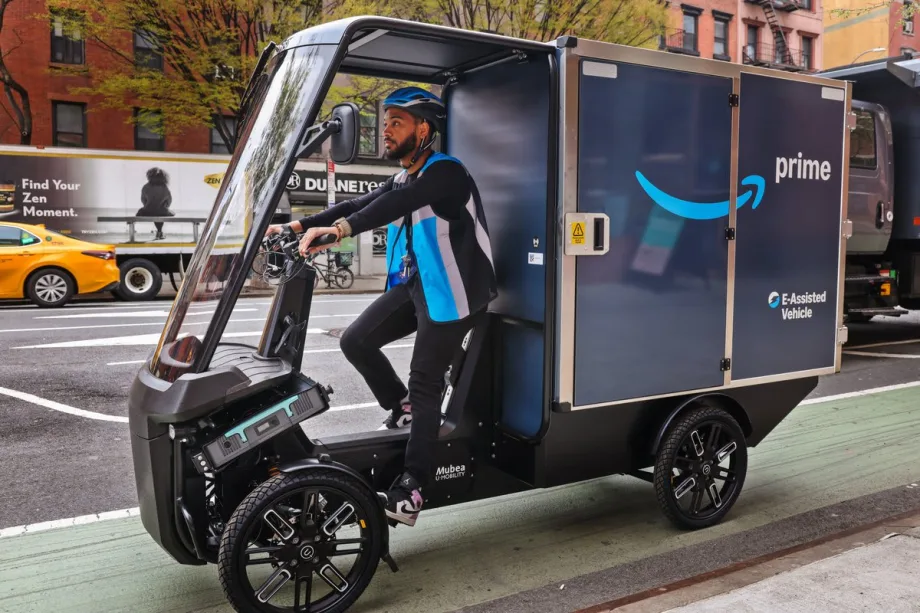
Amazon has been part of the microhub pilot program and hopes to further grow the use of its e-cargo bikes.
Credit:
Amazon
4 min to read
A little over a year into its three-year “microhub” pilot, New York City said these local delivery hubs have cut out more than 3,000 truck trips on city streets. Now it’s looking for companies to participate in the second phase.
A microhub is a safe, dedicated space for truck operators to transfer deliveries onto safer and more sustainable modes of transportation for the last leg of delivery, including e-cargo bikes, handcarts, and smaller electric vans. Each microhub is assigned to a single delivery partner for exclusive use.
The city recently added two new microhub locations in Manhattan: one in the financial district and another on the Upper East Side.
Initial Microhub Pilot Findings
Microhubs were first installed at three locations on the Upper West Side.
- About 860 packages are delivered daily by handcart rather than by truck. This replaces about 1.5 miles of truck-vehicle miles traveled each day.
- Another 110 packages were delivered daily via cargo bike, helping replace around 3 miles of truck vehicle miles traveled daily.
- In total, the pilot reduced an estimated 9 grams of air pollution from the environment, according to city officials.
"When big delivery trucks deliver individual packages on local streets, we can see pedestrian crosswalks and travel lanes getting blocked, and a variety of other unsafe challenges,” said NYC DOT Commissioner Mike Flynn.
“Shifting these deliveries onto handcarts, e-bikes, and other smaller delivery options is a win for our environment, street safety, and our neighborhoods."
What Does New York Trucking Association Think?
The Trucking Association of New York supports the microhub program (unlike NYC’s controversial congestion toll pricing program.)
“Our priority is the safe, efficient, and sustainable movement of goods,” said Zach Miller, Vice President, Government Affairs, at Trucking Association of New York. “We've supported microhub distribution for years because it offers strong operational alignment for certain segments of last-mile freight and the small businesses that provide these delivery services.
"We're pleased to see NYC DOT continue expanding microhubs as part of a broader, holistic freight strategy that includes Blue Highways, off-hour deliveries, package lockers, and a modernized truck route network.”
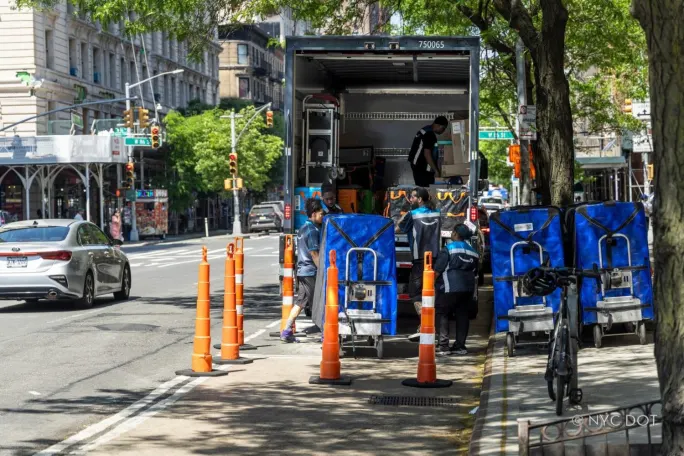
The microhub pilot launched in April 2025. Locations are chosen based on compatible land uses, as well as proximity to high-density areas, truck routes, bike lane networks, and other factor
Credit:
NYC DOT
Delivery and Logistics Companies Praise Microhubs
Two collaborators in the first phase of the program have been Amazon and Net Zero Logistics.
"Programs like this show what's possible when the city and the private sector work together to make urban delivery safer and more sustainable,” said Beryl Tomay, Vice President, Transportation at Amazon.
“We look forward to continuing to innovate — including efforts like the growth of our e-cargo bike program — so we're best able to deliver for New Yorkers."
Net Zero Logistics CEO Mark Chiusano called the program a game-changer for urban delivery.
“By providing dedicated curb space for last-mile transfers to cargo bikes and zero-emission modes of transport (including walking), we can cut truck trips, eliminate double parking, and reduce emissions — all while keeping New York City moving.”
New York is Adding Microhub Locations
NYC DOT recently installed a microhub in the Financial District and another on the Upper East Side.
As the pilot continues, NYC DOT aims to expand geographic and partner reach, inviting broader business participation through an application process and siting microhubs in new neighborhoods.
It's looking for partner companies that already are using or interested in using sustainable last-mile delivery modes. Visit nyc.gov/microhubs for more information.
Why Does NYC Need Microhubs?
With freight volumes projected to grow by 46% through 2055, congestion and emissions from truck traffic pose increasing challenges to New York City's quality of life and infrastructure.
Each day, more than 44,000 trucks cross critical chokepoints like the George Washington and Verrazano Bridges, leading to congestion and delays costing the city an estimated $20 billion annually in lost productivity, increased maintenance, and environmental impacts.
The pilot first launched in April 2025. Locations are selected based on compatible land uses, proximity to high-density areas, truck routes, bike lane networks, and transit, and through conversations with communities and businesses.
What Else is NYC Doing to Reduce Congestion and Emissions from Deliveries?
Some of the other freight reform efforts undertaken by the NYC DOT include:
Curb Management: City officials have created a new Office of Curb Management within NYC DOT to modernize the city's use of curb space. The new office will oversee curb policies across the city's 6,300 miles of streets and roughly 3 million curbside parking spaces, with a focus on improving safety, reducing double parking, and better managing competing demands.
Blue Highways Program: NYC DOT, in coordination with EDC, is reactivating marine infrastructure, helping to shift deliveries from larger trucks to waterways.
Cargo Bike Rulemaking: In March 2024, the agency authorized the use of e-cargo bikes on city streets. Since the inception of the cargo bike pilot program, the use of commercial cargo bikes for deliveries has grown at least seven-fold, with an expectation for continued expansion with the city's support.
Off-Hour Delivery Program: NYC DOT launched applications for its Off-Hour Deliveries (OHD) incentive program to encourage goods delivery during the off-peak hours of 7 p.m. and 6 a.m. One-time monetary reimbursements will help businesses make the switch to off-peak deliveries.
More Fleet Management

Sponsored•September 16, 2026
Color Match Smarter: Tools That Restore & Perform
For fleet managers and collision repair professionals keeping heavy-duty trucks on the road, getting the color right the first time isn't just about appearance — it's about efficiency, turnaround time, and bottom-line results. Discover how today's digital color tools are transforming the repair process from guesswork to precision.
Read More →
FMCSA Pauses Biennial-Update Enforcement Amid Motus Transition
Carriers whose updates were due on or after June 1 have more time, while FMCSA works to stabilize its new registration system and warns of phishing sites impersonating its new carrier registration system, Motus.
Read More →
Sponsored•September 14, 2026
2026 Blueprint for Countering Smarter Supply Chain Theft
Cargo theft is no longer just the cost of doing business. It's a multi-billion-dollar criminal enterprise exploiting vulnerabilities across your fleet, drivers, and supply chain.
Read More →


Sponsored•September 1, 2026
How Telematics Improves Visibility, Control, and Performance in Refrigerated Fleets
Explore how telematics help refrigerated fleets improve visibility, uptime, efficiency, compliance, and cargo protection across connected cold chain operations.
Read More →
What the U.S.-Canada Trade War Means for Trucking
Escalating U.S.-Canada tariffs could disrupt cross-border freight, reduce truck volumes, raise costs, and create new uncertainty for carriers on both sides of the border.
Read More →
What Are Trucking’s Top Concerns for 2026?
The American Transportation Research Institute wants to know what's worrying trucking fleet managers, drivers, and other stakeholders in its annual Industry Issues survey.
Read More →
American Trucking Associations Looks for a New Leader
ATA President and CEO Chris Spear abruptly left his job at the association on August 21, at a pivotal time for the trucking industry.
Read More →
Public Wi-Fi Cybersecurity Risks: How Truck Drivers and Fleets Can Protect Their Data
Public Wi-Fi can expose truck drivers and fleets to credential theft, malware, and other cyber threats. Here’s how to reduce the risk on the road.
Read More →
For Nicky Cupp, Fleet Innovation Starts With Frustration
HDT Truck Fleet Innovator Nicky Cupp turns everyday pain points at Fraley & Schilling into opportunities for better technology and smarter processes.
Read More →
Adam Buttgenbach’s Approach to Electric Trucks: Start With Where They Fit
HDT Truck Fleet Innovator Adam Buttgenbach helped PepsiCo build one of North America’s largest EV fleets by focusing on where electric trucks make operational sense.
Read More →