




Every year, millions of work trucks from thousands of companies deliver goods and provide much needed services across the United States. Despite working in the same transportation industry, very few of the fleets are exactly alike.
The Range of Propane Autogas Refueling Options Available to Fleets
Propane autogas refueling infrastructure is designed to scale and can easily adapt to the varying needs of any fleet.
by Michael Taylor
August 2, 2019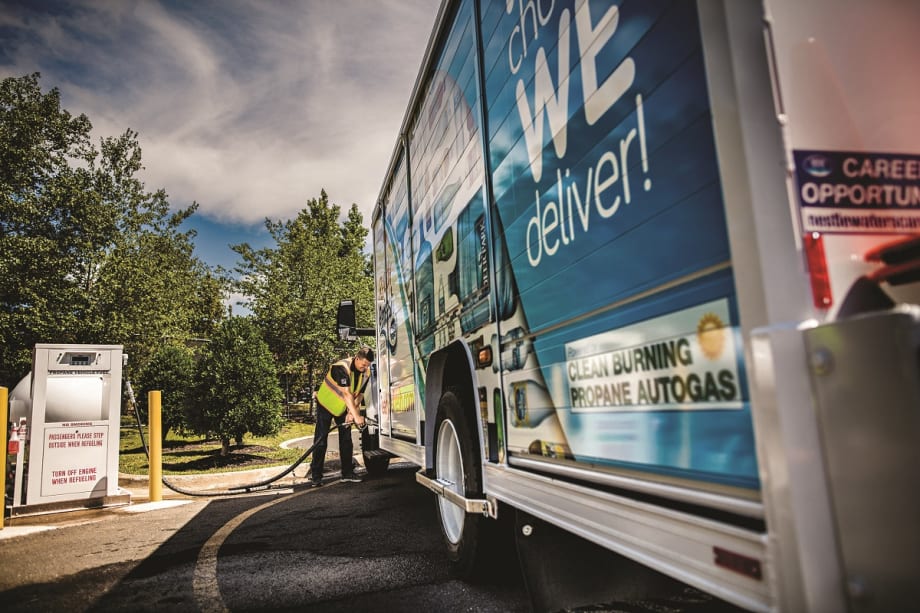
Propane autogas refueling infrastructure is designed to scale and can easily adapt to the varying needs of any fleet.
Photos courtesy PERC
4 min to read
With unique routes, drivers and operations, fleet owners are challenged with creating their own distinctive set up. Propane autogas refueling infrastructure is designed to scale and can easily adapt to the varying needs of any fleet. Most importantly, propane marketers and infrastructure providers understand the varying needs and will work with fleets to design a custom refueling plan.
Fleet managers can choose from five different refueling options, each of which offer distinct advantages to help a company find a solution that best fits its business and maximizes productivity. Affordable and scalable refueling is one of the many reasons propane autogas vehicles provide the lowest total cost-of-ownership of any fuel.
Here are the five scenarios in which the scalability of propane autogas refueling infrastructure can meet the needs of any fleet…
Larger fleets of 50 vehicles or more
For large fleets that require a centralized refueling location, an advanced private station is the best solution. With this setup, larger fuel storage tanks with sufficient capacity to meet fuel needs and two or more fuel dispensers are installed. Overhead canopies may be added for protection from the weather during refueling. Like all permanent propane autogas refueling solutions, the station can easily grow with the expansion of a fleet, adding more dispensers and increasing fuel storage capacity as demand increases.
In some instances, fleets may have a choice of owning or leasing the refueling infrastructure. If the leasing option is available, fleets will be responsible for site preparation, electrical supply and the installation of crash protection. Propane suppliers and infrastructure providers will work with you to determine the best solution for your fleet.
Small fleets of fewer than 50 vehicles
Smaller fleets with a centralized refueling location can choose an affordable standard private station. This refueling solution includes an average fuel capacity of 1,000- to 3,000-gallon tanks plus one or more propane autogas dispensers. Like an advanced private station, fleets may have the option to lease or own the infrastructure. If the leasing option is available, fleets are responsible for site preparation, electrical supply and the installation of crash protection.
Commercial fleets with limited on-site space
A number of fleets are choosing a mobile refueling option which allows them to take advantage of the benefits of propane autogas without installing permanent infrastructure. If this convenient solution is available in your area, your fleet will work with the preferred propane supplier to customize a refueling plan for the individual vehicles on-site utilizing a propane bobtail delivery truck. Costs and situations vary with this option, so check with your propane supplier for details and pricing.
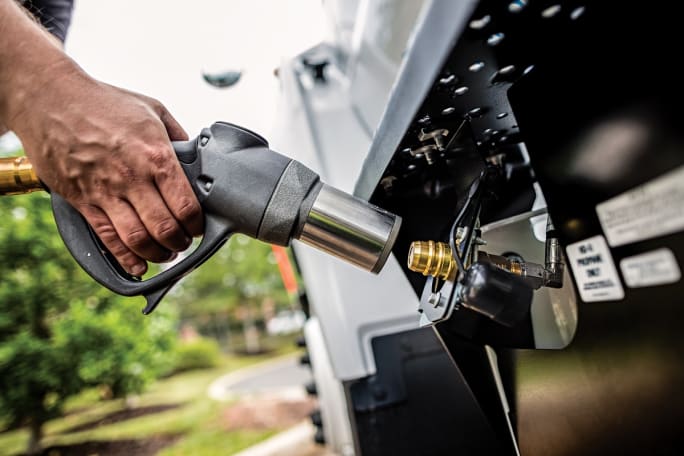
Fleet managers can choose from five different refueling options, each of which offer distinct advantages to help a company find a solution that best fits its business.
Fleets in process of building permanent refueling infrastructure
Some fleets may be in the process of installing permanent infrastructure and need to deploy vehicles prior to completion of the installation. Propane autogas has a solution for this fleet also. Select propane suppliers can provide a temporary refueling solution complete with a fuel storage tank and dispenser mounted on a trailer that can be delivered to fleet locations or work sites. This scenario works for both short term or extended use and is also a viable solution for fleets that require refueling while working for long periods on sites located away from the centralized refueling location, such as construction vehicle fleets during a large project. A propane bobtail truck will replenish the fuel storage tank and delivery must be scheduled with the propane supplier. Like mobile refueling, costs and situations will vary.
Fleets that service a wide area
Another option that requires no infrastructure investment is identifying and utilizing existing propane autogas refueling network stations. There are public and private refueling networks that provide fuel for fleets of all sizes. If a network is not available in your area, a propane supplier may establish one if the fuel consumption for fleets in your area justifies the investment required to install the refueling site. Alternately, several fleets can combine to provide the fuel demand required to justify the installation of a larger refueling network.
Refueling networks provide 24/7 security and convenience and use a card lock system that tracks fuel usage and costs per vehicle, while providing convenience along routes. A complete list of public refueling stations is available from the U.S. Alternative Fuels Data Center at afdc.energy.gov/locator/stations.
With several customizable options, selecting the right propane autogas refueling infrastructure for your fleet will be easy. Your local propane supplier can help you select the right option for you.
Editor’s Note: Michael Taylor is director of autogas business development for the Propane Education & Research Council. This article was authored under the guidance and editorial standards of HDT’s editors to provide useful information to our readers.
Subscribe to Our Newsletter
More Fuel Smarts
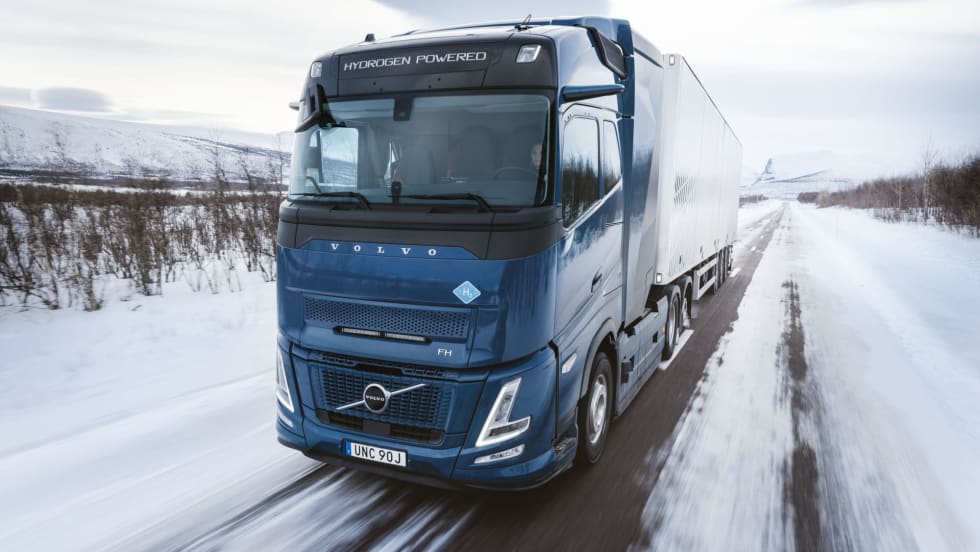
Volvo Testing Hydrogen-Fueled Internal Combustion Engines on Trucks in Europe
Hydrogen combustion engine trucks will be especially suitable over longer distances and in regions where there is limited charging infrastructure or time for recharging of battery-electric trucks, according to the company.
Read More →
Toyota’s Entry Into Cellcentric Signals Push to Accelerate Hydrogen Truck Adoption
By joining Daimler Truck and Volvo, Toyota brings fuel cell expertise to a joint effort aimed at making hydrogen viable for heavy-duty transport.
Read More →
U.S. Diesel Prices Hit $5.40, Top $7 in California
Trucking operators are slowing speeds, cutting empty miles, and declining unprofitable freight as diesel costs continue to rise due to conflict in the Middle East.
Read More →
EPA Targets DEF Sensor Failures Behind Truck Derates
New guidance allows engine makers to replace problematic DEF sensors with NOx-based systems, aiming to reduce unnecessary derates and downtime caused by failures in the sensors designed to monitor diesel exhaust fluid on trucks.
Read More →
Heavy Duty Trucking is Searching for the Top Green Fleets of 2026
Is your company a leader in sustainability efforts among trucking fleets? If so, Heavy Duty Trucking's editors want to hear from you.
Read More →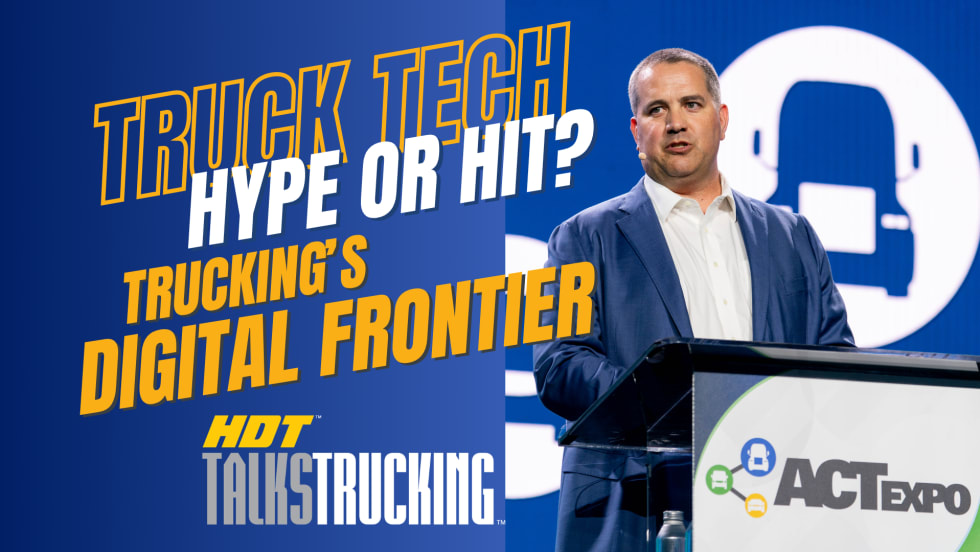
What's Real in Advanced Truck Technology? ACT Expo's Erik Neandross Weighs In
Artificial intelligence, the software-defined vehicle, telematics, autonomous trucks, electric trucks and alternative fuels, and more in this HDT Talks Trucking interview
Read More →Why Diesel Is Climbing Fast—and What the Iran Conflict Has to Do With It
With global oil flows disrupted, U.S. diesel prices have topped $5 across every region, climbing sharply in the past few weeks.
Read More →
From Diesel Prices to Cyberattacks: How the Iran War Is Affecting Trucking
The impact of the Iran conflict extends beyond fuel costs, bringing more fraud and cybersecurity risks to the trucking industry.
Read More →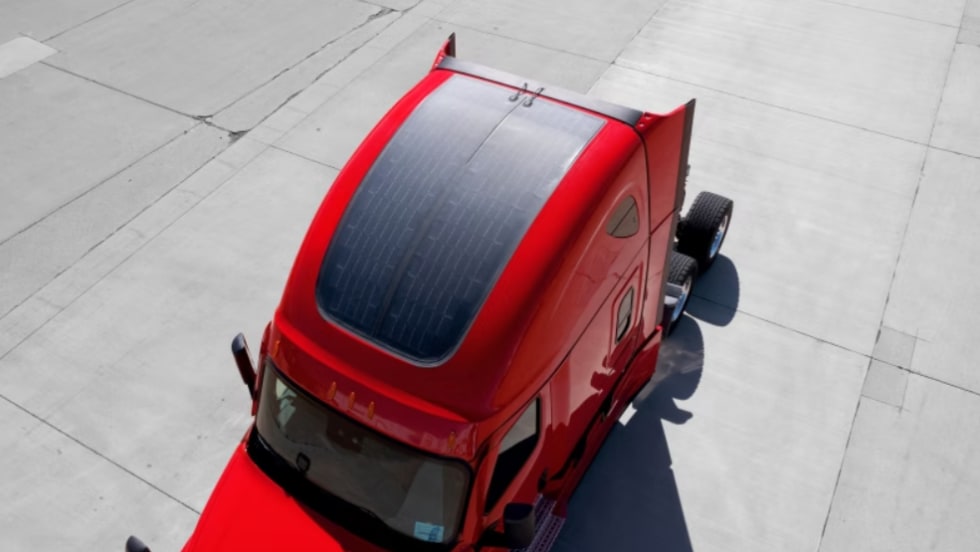
Vanair Introduces Solar, Battery Power Ecosystem for Class 8 Trucks
The company’s expanded EPEQ ecosystem includes flexible solar panels, lithium batteries, hydraulic power systems, and a portable fast charger for electric trucks.
Read More →
Run on Less “Messy Middle” Data Shows Multiple Paths for Truck Powertrains [Listen]
Listen as Mike Roeth of the North American Council for Freight Efficiency shares insights into battery-electric trucks, natural gas, biofuels, and clean diesel on this episode of HDT Talks Trucking.
Read More →