





Related: What's New in Medium Duty
Mitsubishi Fuso Shows Off CNG-Fueled Concept Truck
Mitsubishi Fuso Truck of America, Inc. unveiled its Fuso FE CNG concept truck on April 24. Powered by compressed natural gas, the truck was developed with alternative fuels system provider Agility Fuel Solutions
April 24, 2019
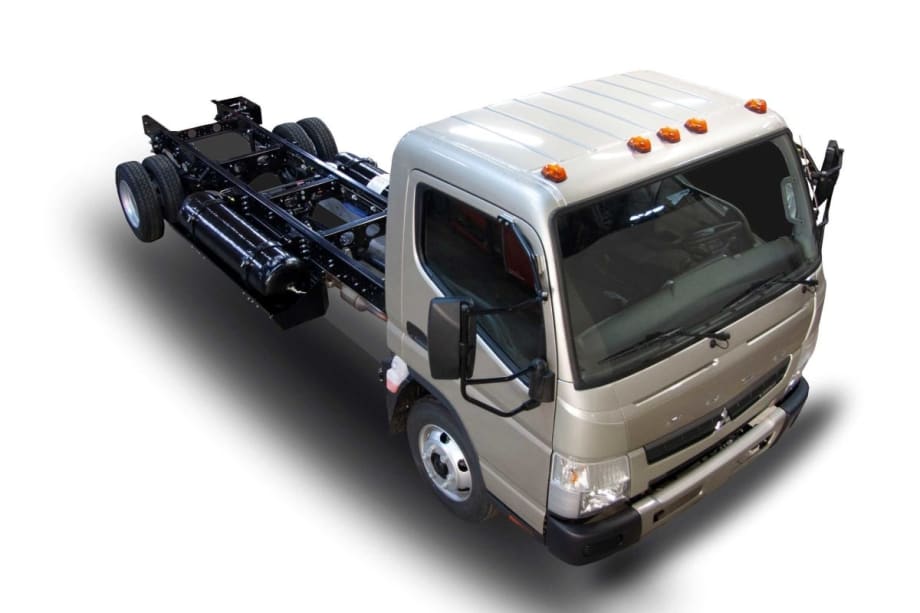
The CNG system on the concept truck is certified to the California Air Resources Board’s optional low NOx standard.
Photo: Mitsubishi Fuso
3 min to read
Mitsubishi Fuso Truck of America, Inc. unveiled its Fuso FE CNG concept truck on April 24. Powered by compressed natural gas, the truck was developed with alternative fuels system provider Agility Fuel Solutions
The OEM said the truck “represents a working collaboration of both companies, potentially providing a more environmentally friendly work truck option for the United States and Canada.”
The FE CNG will provide a 15% to 20% reduction in greenhouse gas emissions and more substantial reductions in volatile organic compounds (VOCs), sulfur dioxide (SO2) and nitrogen dioxide (NOx), according to Mitsubishi Fuso.
The CNG system on the concept truck is certified to the California Air Resources Board’s optional low NOx standard. Because CNG engines produce essentially no particulates, the aftertreatment system is a simple three-phase catalyst instead of the complex aftertreatment system found on all newer diesel trucks, stated Mitsubishi Fuso. In addition, the truck “produces no smell or smoke and is actually quieter than a diesel-powered truck, ideal for urban operations.”
Agility provides CNG cylinders or systems for more than 60,000 trucks and buses worldwide. On the Fuso FE GAS truck, Agility is providing a complete end-to-end CNG fuel system, including dual side-mounted CNG storage systems with 30 gasoline gallon equivalent (GGE) capacity, an integrated regulator assembly and a fuel fill panel, and a CARB- and EPA-certified low-NOx natural gas fuel system for the GM Powertrain V8 6.0L engine that is standard on all FE GAS trucks. Mitsubishi Fuso added that the FE CNG concept truck is estimated to have a driving range of 190 miles.
In addition, the CNG fuel system drives the OEM fuel gauge, providing the driver with a familiar fuel level between empty and full, rather than a pressure value, said the OEM. Also, because the CNG system does not significantly increase the weight of the truck, “overall payload capacity for the FE CNG is not greatly impacted, allowing operators to continue to deliver roughly the same amount of goods compared to other powertrain models.”
“Using Agility’s experience in CNG will benefit our customers by enabling a reliable, integrated CNG-powered solution for our existing FUSO FE GAS truck models,” said Jasmin Kluge, project manager for alternative fuels project, Mitsubishi Fuso Truck of America, Inc. “The additional benefit is its total cost-of-ownership advantage: lower fuel cost, less maintenance, less emissions and less noise, making this a win-win for truck fleets’ bottom line and environmental stewardship.”
“We are excited to work with Fuso to develop a CNG option for the FE GAS platform,” said Brad Garner, Agility’s president – Powertrain Systems. “CNG is an excellent option for return-to-base and urban delivery fleets, with an attractive total cost of ownership.”
Mitsubishi Fuso noted that further tests and market studies of the concept truck are under way “to determine the next steps for this product— with a potential CNG aftermarket solution from Agility occurring by 2020.”
More Fuel Smarts

How Volvo Updated Its D13 for EPA 2027 [Watch]
Volvo’s updated D13 promises lower emissions without sacrificing performance or fuel economy. Take a closer look at what changed inside the engine in this HDT Spotlight video.
Read More →
Diesel Price Spike Shortens Payback for Natural Gas Trucks, Report Says
Energy Vision estimates fleets could recover the higher purchase price of an RNG-fueled Class 8 tractor in 1.3 to 2.8 years under current fuel-price scenarios.
Read More →
Calstart Becomes Catalyst Mobility, Reflecting Broader Focus
Calstart is now Catalyst Mobility, reflecting the nonprofit’s growing national role in clean transportation, including zero-emission trucks, infrastructure and incentive programs.
Read More →

Record Diesel Prices Squeeze Trucking Fleets
Average U.S. diesel prices have climbed to nearly $6 a gallon, surpassing the 2022 record as tight refinery capacity and Middle East disruptions keep fuel costs elevated.
Read More →
Sponsored•September 9, 2026
How Fuel Delivery Shapes Engine Performance
Fuel delivery depends on more than what happens at the injector. For fleet, maintenance and technical professionals, looking at the full path from pump to injector can provide useful context for understanding engine performance.
Read More →
East Coast Port Launches $45M Electric Truck Push
The Port Authority of New York and New Jersey announced millions in incentives for zero-emission drayage trucks, yard tractors, and new charging hubs near the port.
Read More →
California Bill Could Shed Light on Electric Truck Prices
Why do battery-electric Class 8 trucks remain so expensive? A California bill headed to Gov. Gavin Newsom would give fleets and state agencies more visibility into what manufacturers charge.
Read More →
Detroit Opens Orders for EPA 2027 Engines
Detroit isn’t starting from scratch to meet EPA 2027 diesel emissions standards. Its Gen 6 DD13 and DD15 engines keep much of today’s platform while updating the fuel and aftertreatment systems.
Read More →
Zero-Emission Truck Corridor Planned for West Coast
California, Oregon, Washington, British Columbia and Baja California are coordinating plans for truck charging and hydrogen fueling from Canada to Mexico.
Read More →
A Closer Look at Kenworth’s Electric T880E Vocational Truck [Video]
Learn more about Kenworth's T880E battery-electric vocational truck at the Paccar Technical Center, including its range, applications, upfitting considerations, and PTO options, in this HDT Spotlight video.
Read More →