




Related: Suicide by Flatbed on TV’s ‘Blue Bloods’ is Guilty of Technical Errors
Underride Legislation Faces Opposition from Trucking Groups
Reintroduced bipartisan legislation to mandate underride guards on large commercial trucks was met with opposition from the trucking industry, with both ATA and the OOIDA voicing their objections to the proposed rule.

Steven Martinez・Web Editor
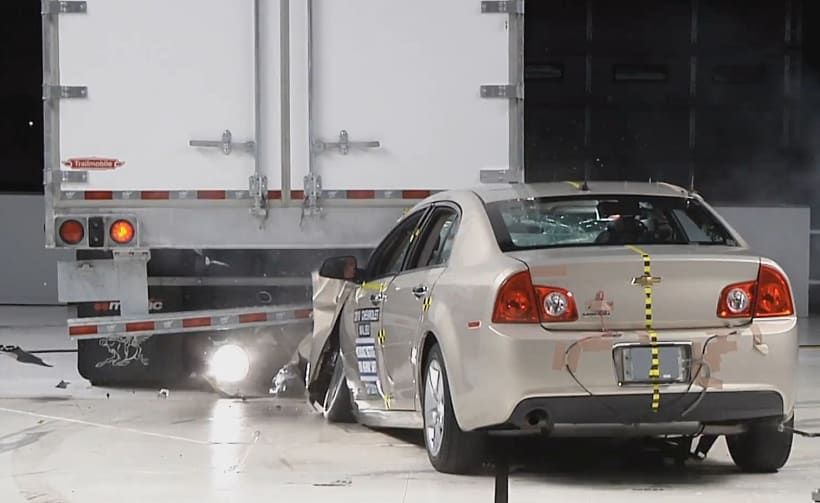
Reintroduced bipartisan legislation to mandate Underride guards on large commercial trucks was met with opposition from the trucking industry, with both ATA and the OOIDA voicing their objections to the proposed rule.
Photo via IIHS
3 min to read
Reintroduced legislation that would mandate underride guards on large commercial trucks was met with opposition from the trucking industry, with both American Trucking Associations and the Owner-Operator Independent Drivers Association voicing their objections to the proposed rule.
The Stop Underrides Act would require underride guards on the sides and front of trucks and trailers exceeding 10,000 pounds in gross vehicle weight and would also seek to update the standards for rear underride guards. The bill has bipartisan support and was co-sponsored by U.S. Senators Kirsten Gillibrand (D-NY) and Marco Rubio (R-FL) and U.S. Representatives Steve Cohen (D-TN-9) and Mark DeSaulnier (D-CA-11).
“Hundreds of individuals across the nation are lost to underride collisions every year, with Florida unfortunately ranking among the top states for reported fatalities. I am proud to join my Senate colleagues in reintroducing the Stop Underrides Act,” said Senator Rubio of the proposed legislation. “As a parent with kids of driving age, I look forward to working in a bipartisan fashion to advance efforts to keep our roads safer.”
A similar bill was proposed in 2017 but was referred to a committee and failed to make it to a vote. Two significant trucking groups, ATA and OOIDA have publicly opposed the mandate.
In a comment to the media, ATA criticized the bill for its inflexibility stating that it "ignores the potential technical issues it raises, as well as the diversity of our industry and other technologies for addressing these and other crashes."
“The trucking industry spends more than $9.5 billion on improving highway safety – including investments in a number of technologies proven to reduce crashes. ATA believes the government should focus on crash avoidance technologies and strategies rather than expensive and unproven collision mitigation equipment," the group stated. "This legislation, while well-intended and a heartfelt response to family tragedy, seeks to address a certain type of truck-involved accident through a highly prescriptive mandate."
OOIDA echoed similar sentiments saying that such requirements cannot be accommodated on most trucking equipment and would yield little if any safety benefit.
In a letter to congress, the OOIDA president and CEO Todd Spencer said that while OOIDA supports efforts to improve highway safety, the standard proposed by the bill goes overboard and would be prohibitively expensive for fleets to implement.
OOIDA said that the bill would also run into problems requiring the equipment on vehicles and trailers that would not be able to accommodate them because of the broad standard of the legislation requiring the guards on all commercial trucks over a certain weight.
“We agree the existing rear underride guard on trailers – commonly referred to as a “DOT Bumper” in the United States – could be enhanced to reduce the risk of rear underrides for personal automobiles. If the Canadian standard was applied in the U.S. on the manufacture of new trailers, we would not oppose it,” Spencer wrote. “Unfortunately, H.R. 1511 goes too far. Regarding rear underride guards, it would mandate truckers install them on trailers that can’t physically accommodate them, such as low boys, household goods trailers, auto transporters, etc. The mandate would retroactively apply to all trailers, including those nearing the end of their service.”
The Stop Underrides Act is supported by several commercial vehicle safety groups including the Commercial Vehicle Safety Alliance, Truck Safety Coalition, National Safety Council, and Road to Zero Coalition.
“As members of the law enforcement community who proactively inspect commercial motor vehicles for safe mechanical fitness during roadside safety inspections, CVSA member jurisdictions know the importance of taking steps to reduce fatalities and serious injuries on our nation’s roadways,” said Collin Mooney, executive director, CVSA. “If passed, the Stop Underrides Act will help mitigate the severity of underride crashes and make our roadways safer.”
More Safety & Compliance

Kodiak Lines Up Fleets for Driverless Trucking
An agreement for 75 trucks, a new Texas freight lane, and progress on safety validation move Kodiak closer to its planned driverless highway launch.
Read More →
More Trailer Data Through the Same Seven-Way [Video]
Can trucking’s standard seven-way connector handle more cameras and trailer data? Grote’s Adam Slade shows HDT how the company is using new technology with its 4See trailer system, not only to add a new backup camera but also to expand other capabilities — without adding another connection.
Read More →
PrePass Intelligence Mines Fleet Bypass, Toll and Safety Data
PrePass Intelligence helps fleets measure bypass savings, flag potential toll overcharges, and spot suspicious transactions by combining data from separate systems.
Read More →
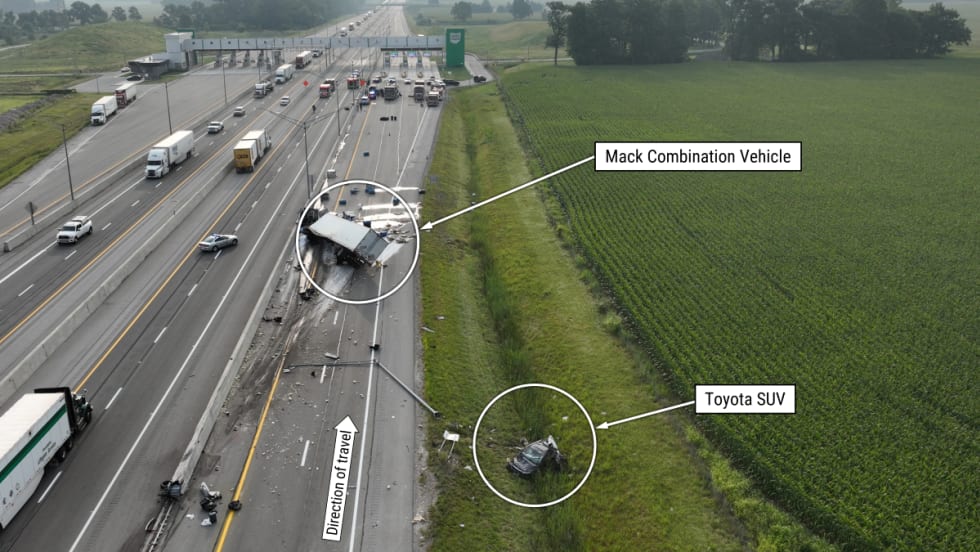
Fatal Crash Exposes Toll Plaza Risks
An NTSB investigation found that last-minute lane changes and large speed differences at an Ohio toll plaza created a hazard the truck driver couldn't avoid in time.
Read More →
When Language Stops the Truck: The Return of ELP Out-of-Service Orders
English language proficiency rules for commercial drivers aren’t new, but renewed out-of-service enforcement has raised the stakes. Here’s what carriers need to know before a driver reaches a roadside inspection.
Read More →
Sponsored•October 6, 2026
A Camera Isn't a Safety Program. Here's What Brokers Are Screening for Now
Footage alone may not be enough to pass broker vetting processes. Here's what counts as a defensible safety program now.
Read More →
Marijuana and Trucking’s Drug-Testing Dilemma
Marijuana is getting stronger, laws are changing, and drug tests still can’t reliably establish impairment. What does that mean for truck drivers and the fleets that employ them?
Read More →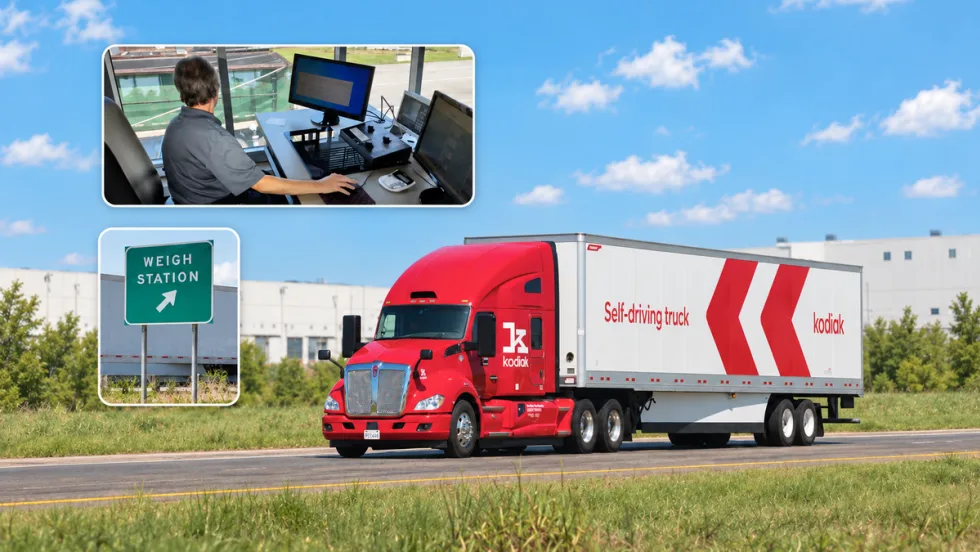
PrePass, Kodiak Connect Driverless Trucks to Roadside Enforcement
The system will allow enforcement agencies to verify Enhanced Inspection information and decide whether Kodiak’s autonomous trucks can bypass roadside screening sites.
Read More →
From One Generation to the Next: How Mentorship Builds Safer Truck Drivers
After three decades in trucking, Harold Perry shares what he's learned about driver safety, mentorship, and helping the next generation build confidence behind the wheel.
Read More →
FMCSA Pauses Biennial-Update Enforcement Amid Motus Transition
Carriers whose updates were due on or after June 1 have more time, while FMCSA works to stabilize its new registration system and warns of phishing sites impersonating its new carrier registration system, Motus.
Read More →