





Related: FMCSA Administrator - Please Prepare Now for ELD Deadline
ATBS: 2018 Saw a Reduction in Driver Turnover, Increased ELD Compliance
Revealing the results of its annual Independent Contractor Benchmarking Study, ATBS President and CEO Todd Amen highlighted the record year for the industry and the effects of the ELD mandate and looked into what 2019 might bring by the year’s end.
March 7, 2019
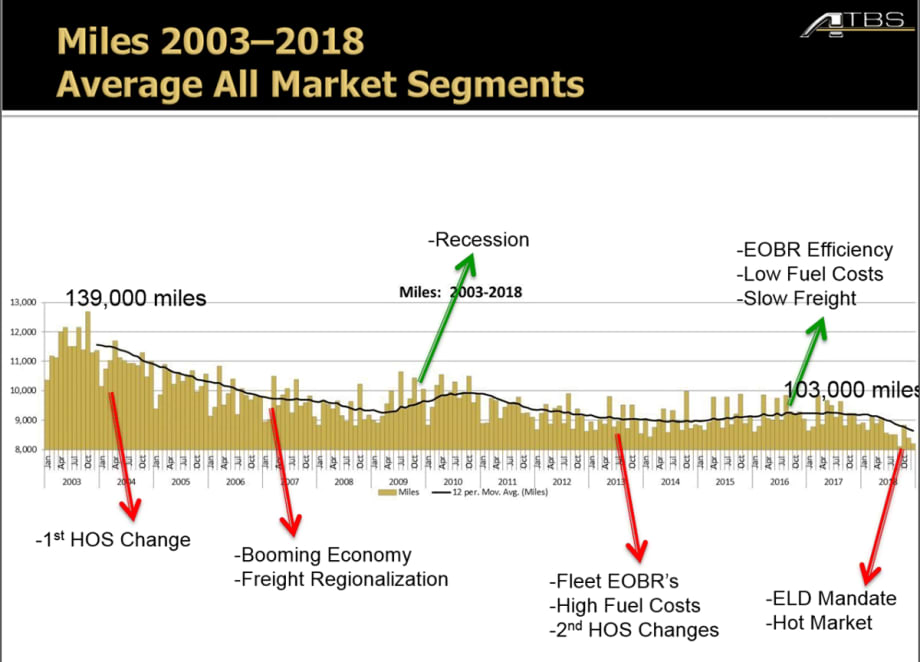
While the average owner-operator was running 139,000 miles annually in 2003, the average is currently around 103,000 miles, a 25% drop in miles in the last 15 years.
Source: ATBS
3 min to read
During a webinar to reveal the results of its annual Independent Contractor Benchmarking Study, ATBS President and CEO Todd Amen, highlighted the record year for the industry and the effects of the ELD mandate and reviewed the predictions for 2018 and looked into what 2019 might bring by the year’s end.
“Last year was truly a record year in many ways for our industry and trucking as a whole, especially for owner-operators,” said Amen.
As in year’s past, the presentation began with a look back on the previous year and the predictions that were made for 2018, which included:
ELD’s full impact won’t be felt until summer 2018 after enforcement in April
Net income will grow significantly throughout 2018 with robust freight market and limited capacity
Fleets with attractive operating models (choice and percentage pay) will gain the most owner-operator capacity
Fleet lease purchase/programs will expand with tax incentives, hot industry and reduced reclassification risks
Good market should last through at least mid-2019
Grass is greener mentality will cause a lot of owner-operator change in 2018 – carrier changes, own authority
All but the last prediction was met, according to Amen. Historically, during boom cycles there is a significant turnover in drivers, with significant sign-on bonuses and pay increases being offered by fleets that want to add capacity. But, in 2018, ATBS saw a reduction of 10-20% in turnover versus 2017 in the fleets they partner with to create the annual Independent Contractor Benchmarking Study.
According to the ATBS survey, the overall owner-operator fleet numbers increased by 2.5%, while large fleets grew by 7.5% and fleets with less than 250 trucks grew by 13.7%.
In terms of the ELD mandate, Amen pointed this out as one of the causes of the reduction in miles driven by owner-operator fleets. In 2003, the average owner-operator was running 139,000 miles annually.
“We all know that today, with ELDs, this is physically impossible and log it legally,” said Amen. “If everything was perfect, the average owner-operator could probably run about 120,000 miles, but right now, the average is about 103,000. We’re down 25% in miles in the last 15 years.”
Approximately 80% percent of owner-operators that were compliant were using ELDs before the mandate’s compliance deadline, according to Amen, but there were some fleets that saw a slowdown due to the addition of the new technology.
Amen concluded the webinar with a list of predictions for 2019, including:
Freight and rates will be moderate through 2019
There will be a move for some owner-operators returning to fleets, as spot markets suffer
As the industry bar has been raised significantly, “we won’t return to pre-2018 contract rates again”
Net income will flatten out and maybe dip a bit in 2019 for owner-operators
Fleet lease purchase program will help those entering the owner-operator market to expand
“This is going to be a year where [fleets] have to transition their thinking away from it’s all about revenue, to [they] have to manage their costs. The average driver can save $2,500 by just slowing down a bit, managing their fuel economy, not idling as much and just focusing on that cost,” Amen added.
More Fleet Management
July Imports Poised to Set Container Record
The National Retail Federation projects July container imports will surpass the pandemic-era record as shippers frontload freight ahead of expected August tariff increases.
Read More →
HDT Announces 2026 Truck Fleet Innovator Finalists
From AI and fleet electrification to safety, operations, and leadership, these HDT Truck Fleet Innovator finalists are changing how trucking gets done.
Read More →
Van Spot Rates Top Contract Rates for First Time Since 2022
There’s more good economic news for the North American trucking industry according to the latest Truckload Volume Index report from DAT.
Read More →
Carrier Transicold Extends Refrigerated Trailer Life
Fleet Refresh enables refrigerated fleets to replace aging transport refrigeration units instead of entire trailers, while adding Lynx Fleet telematics and BluEdge service coverage.
Read More →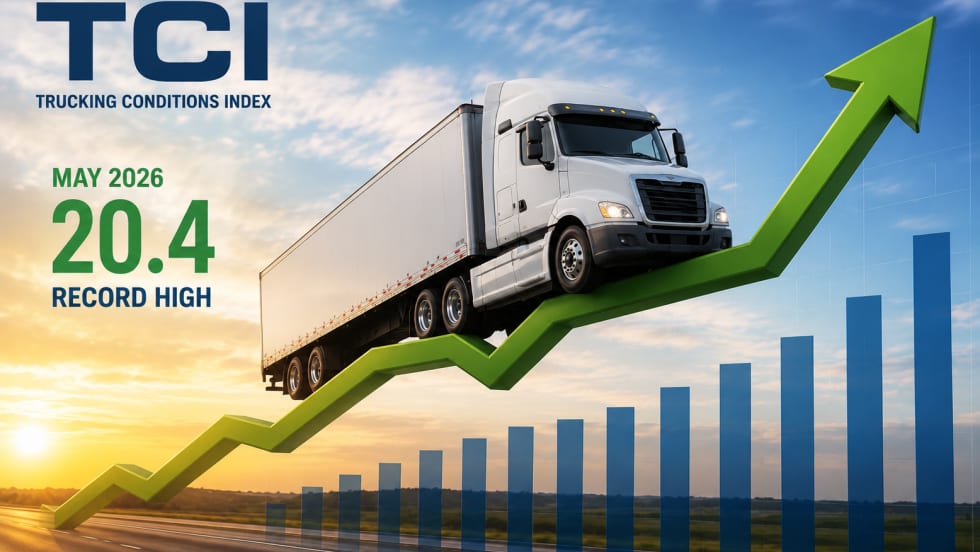
FTR Says Freight Rates Surged in May
FTR's Trucking Conditions Index surged to a record high in May, the analytics firm reports.
Read More →
Meet HDT's Truck Fleet Innovators at Heavy Duty Trucking Exchange
Heavy Duty Trucking Exchange brings fleet managers and suppliers together for the deeper conversations that lead to ideas, partnerships, and solutions. Time is running out to apply for HDTX, September 23-25.
Read More →
Sponsored•July 1, 2026
Enhance Fleet Performance with High-Efficiency Auxiliary Power Units
Drive sustainable cost savings while increasing driver comfort during short- and long-haul logistics operations.
Read More →
Sponsored•June 30, 2026
Is Your Parts Procurement Process Reactive or Proactive?
Ready to revamp your parts procurement process? Learn how now with “Strategic Parts Purchasing: A Process Checklist”
Read More →
What Trucking Events are Happening in 2026?
Looking for trucking-related conventions, expos, and other events? Heavy Duty Trucking has developed this list of national and larger regional trucking shows and events.
Read More →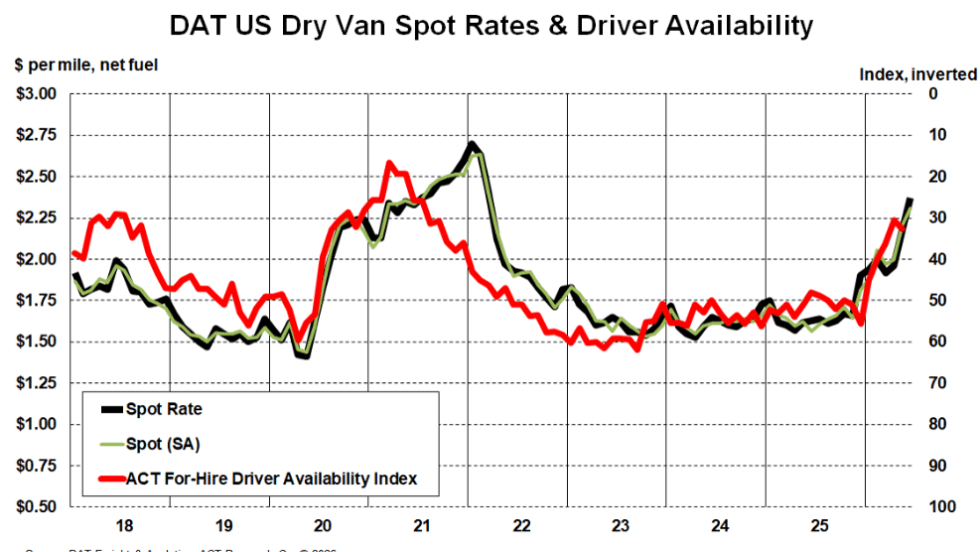
Truckload Rates Keep Rising as Tight Capacity Fuels Freight Market Recovery
Spot and contract rates continued climbing in May and June, not because freight demand is surging, but because fewer trucks and drivers are available.
Read More →