




Commentary: A Driver Shortage by Any Other Name
Call it what you will, the trucking industry is having trouble finding enough qualified drivers. But a crucial part of solving the shortage will require agreement on why it is happening in the first place. Commentary by Editor in Chief Deborah Lockridge.

Media ranging from Fox Business News to the Washington Post to the Journal of Commerce last month were warning shippers and consumers that the driver shortage is going to drive up costs for everything from retail prices to Amazon shipping.

Deborah Lockridge
Photo: HDT File
The American Trucking Associations expects the number of drivers the industry is short of to rise from some 36,000 in 2016 to more than 63,000 by the end of this year, and projects that by 2026, that number could swell to 174,000.
But the Owner-Operator Independent Drivers Association has long claimed there is no such thing as a driver shortage — that if trucking companies simply paid drivers enough, and carriers treated drivers better, the laws of supply and demand would ensure there were plenty of drivers. It most recently made this argument in response to bills in Congress to establish pilot programs or special training/apprenticeship programs that would lower the minimum age for interstate commercial drivers from the current 21.
In a letter to the heads of the House Committee on Transportation and Infrastructure, OOIDA said Congress should “instead be focusing on the causes of the staggering driver turnover rate,” claiming that “drivers who leave the workforce are immediately replaced with less-experienced individuals in an effort to keep labor costs as low as possible and avoid improving working conditions.” Teenagers, they contend, would be viewed as even cheaper labor.
I think there’s a place for properly trained younger drivers, who already can drive intrastate in many states. But OOIDA rightly points out that driver compensation has remained relatively stagnant, “failing to increase at a rate that even reflects inflation.” While carriers have been announcing hefty pay raises in the last year or two, even moving to minimum pay guarantees and in some cases hourly pay or salaries, it can’t begin to make up for the years of stagnation.
But there’s an even more insidious problem that simple per-mile rate increases can’t fix.
The roots of the problem stretch back to trucking’s deregulation in 1980. While there were certainly concerns about driver recruiting and retention before that, economic deregulation led to a booming irregular-route truckload sector and forced the industry to get more efficient.
A lot of that efficiency, it turns out, has been borne on the backs of truck drivers. Paid by the mile, they did whatever it took to get the loads there on time, turning the paper logbooks with which they tracked compliance with federal hours of service regulations into “comic books.” This was not new, of course; the song “Convoy” spoke of “swindle sheets” in 1975. But deregulation and the burgeoning truckload industry widened the practice of “fudging” on log books. One of the most common reasons for those hours-of-service fibs? Masking hours-long, unpaid or underpaid waits at shippers and receivers.
Mandatory electronic logging devices, which went almost fully into effect the first of April, have begun to make the extent of this very clear.
As my owner-operator friend Jeff Clark posted on Facebook: “So here is the deal: kind of. With paper logs we were able to work 16 hours a day, and make it look like we were working 13, in order to get paid for 10. Now, those extra 3 hours have been taken out of the supply chain. My friends, that is not a driver shortage. That is an efficiency shortage.”
It’s an issue that has garnered some attention in Washington, with Federal Motor Carrier Safety Administration chief Ray Martinez saying the agency is open to the idea of increasing flexibility within the hours-of-service regulations (not by extending the hours), now that we can base changes on real ELD data. And lawmakers such as Rep. Peter DeFazio (D-OR) are talking about holding shippers and receivers responsible for making drivers wait hours at the dock.
On the fleet side, if you haven’t already been raising driver pay and talking to your customers about ways to reduce detention time, it’s past time to start.
Related: Younger Truck Drivers Slightly More Prone to Turnover
More Drivers

FMCSA Removes 110 Truck Driver Training Schools from Certified ELDT List
Federal regulators also are targeting more than 160 additional training providers and launching a nationwide audit of third-party CDL skills testers as part of a broader crackdown on trucking fraud.
Read More →
Hours of Service Pilot Programs: FMCSA Readies for 2027 Rollout
Two pilot programs could eventually reshape hours-of-service rules, giving truck drivers options to pause their 14-hour clock or use longer split sleeper rest periods.
Read More →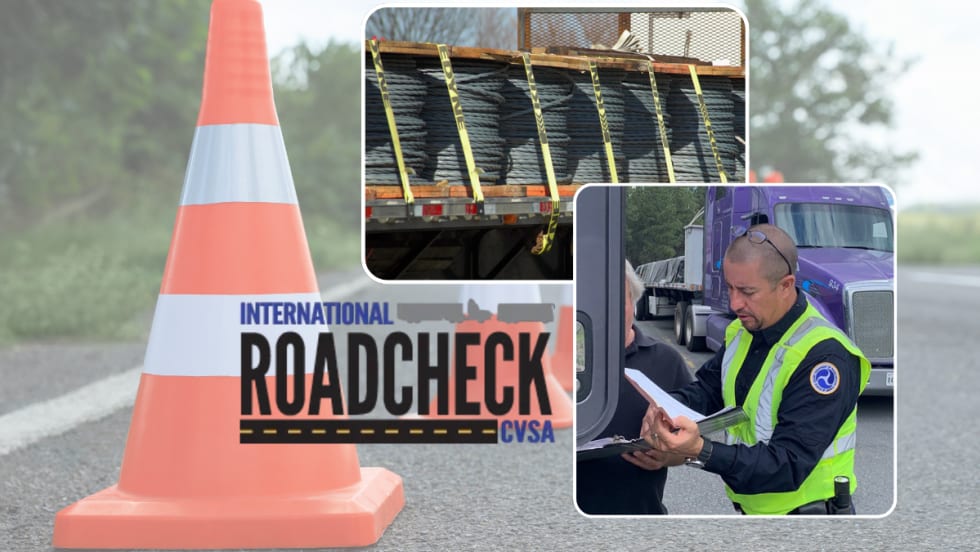
Medical Cards, English Proficiency Reshape Roadcheck Violations
Medical-card violations jumped to the top of the driver out-of-service list during CVSA’s 2026 International Roadcheck, while English-language proficiency violations appeared among the leading violations for the first time.
Read More →
Driver Trust Can Make or Break the Success of Fleet Safety Technology
New Teletrac Navman research suggests that onboarding, transparency about driver data, and positive feedback can play a significant role in how commercial drivers respond to safety and coaching technology.
Read More →
EEOC Sues KLLM Over Alleged Sex Discrimination in Driver Training
KLLM is facing a federal sex-discrimination lawsuit over policies the EEOC alleges put female truck driver trainees at a disadvantage.
Read More →
FMCSA Moves to Codify English Language Requirements for Commercial Drivers
By changing regulations on English-language proficiency requirements for commercial drivers, rather than relying on a guidance memo, the FMCSA said future administrations won't be able to walk back the Trump administration's stricter enforcement with just a memo.
Read More →
Drivers Put Western Star Trucks to the Test at Star Nation Experience
Watch to get an inside look at the Western Star trucks, technology, and community behind the Star Nation Experience 2026!
Read More →
Trump Administration Looks to Put More Veterans Behind the Wheel
The Freedom Haulers program pulls together existing and expanded programs at several federal agencies to recruit veterans to drive commercial heavy-duty trucks and cut the red tape for them to get a CDL, training, and employment.
Read More →
Putting Mack’s Command Steer to the Test
A test drive of Mack’s Command Steer active steering system evaluates how it can make truck driving easier and less tiring.
Read More →
Competition Heating Up for Truck Drivers
New report reveals rising driver hiring costs, the return of sign-on bonuses, growing AI advantages, and the operational factors shaping driver retention.
Read More →