




Renewable Diesel vs. Biodiesel
There are many different types of green fuels and a number of questions arise when determining what falls under the umbrella of clean or green diesel. In particular, there is a lot of confusion about the difference between renewable diesel and biodiesel.

Image: Pixabay

Image: Pixabay
There are many different types of green fuels and a number of questions arise when determining what falls under the umbrella of clean or green diesel. In particular, there is a lot of confusion about the difference between renewable diesel and biodiesel. Many fleets see the two fuels as the same, believing they have similar properties and manufacturing methods. However, with different emission outputs, efficiency of burning, and varying cold and storage properties, these two fuels are not the same.
Renewable Diesel
Simply speaking, renewable diesel is made primarily from waste and residues. Typically known as hydrotreated vegetable oil or HVO, renewable diesel is 100% renewable and sustainable. While some might believe it is the same as biodiesel, improperly referring to it as second-generation biodiesel or paraffinic biodiesel, it is misleading to refer to it as biodiesel.
Currently, most renewable diesel is produced from fats, oils, and greases. It can be created using one of three methods: hydrotreating, thermal conversion, or biomass-to-liquid.
Hydrotreating: This method, sometimes called hydrogenation, involves hydrogenating triglycerides to remove metals and compounds that contain oxygen and nitrogen. Hydrogenation allows renewable diesel to burn cleaner.
Thermal Conversion: Also known as depolymerization, this process takes biomass or other carbon-containing material and turns it into a “bio-oil,” which is then refined into a diesel-like fuel.
Biomass-to-Liquid: Renewable diesel can also be made by converting the material through high-temperature gasification, turning it into a synthetic gas mixture that is rich in hydrogen and carbon monoxide.
There are a number of benefits when fueling with renewable diesel. For example, no engine modifications are required, and it can be used in all modern diesel engines. It also has excellent cold weather performance, allowing a fleet to use it year-round, even in very cold climates. Thanks to a high cetane number (75-85), renewable diesel combusts efficiently and is proven to reduce greenhouse gas emissions by up to 80% when factoring in every step from production through consumption. It is also compatible with existing diesel distribution infrastructure and does not require specialized storage tanks.
Renewable diesel can be blended with fossil diesel or biodiesel, but the best results come from using directly in the diesel engine. It meets the ASTM D975 quality standards set by engine manufacturers and other industry experts, it significantly reduces engine-out emissions (PM, NOx, CO, HC), and does not require any engine modification or fuel delivery infrastructure changes.
Biodiesel
Known as fatty acid methyl ester, or FAME, biodiesel is made primarily from vegetable oils or fats (soybean oil, algae, chicken fat, etc.). The materials go through a process called transesterification to purify oils/fats, but not remove oxygen. Currently, a 20% blend of biodiesel (B20) is approved by most vehicle manufacturers. Although most fleets only use 5% maximum blend, since using larger percentages may result in issues with seals in the fuel system. In terms of cold weather, not all biodiesel products are the same, as the feedstock used in the production of biodiesel determines its attributes.
While biodiesel does meet the ASTM D6751 standard, it does not currently meet ASTM D975. Because the production process does not remove the oxygen, it has been shown to increase engine-out NOx emissions when compared to fossil diesel or renewable diesel. There can also be issues with long-term storage due to its tendency to absorb water, and blending restrictions aimed at preventing engine problems due to biodiesel usage can limit the benefits.
Renewable Diesel’s Similarities to Conventional Diesel
While conventional diesel and renewable diesel are both hydrocarbons and renewable diesel is a chemically indistinguishable hydrocarbon from traditional petroleum diesel, it outperforms both petroleum diesel and biodiesel due to its composition and purity. Every part of renewable diesel can be found in petroleum diesel, but the impurities and contaminants that can come with petroleum diesel are eliminated from renewable diesel.
More Articles

Oil Crisis Squeezes Trucking Lubricant Supplies
Fleets report higher lubricant costs as Middle East disruptions tighten supplies of ingredients used in synthetic engine oils and some driveline lubricants.
Read More →
More Trailer Data Through the Same Seven-Way [Video]
Can trucking’s standard seven-way connector handle more cameras and trailer data? Grote’s Adam Slade shows HDT how the company is using new technology with its 4See trailer system, not only to add a new backup camera but also to expand other capabilities — without adding another connection.
Read More →
Grote: More Cameras, Same Seven-Way Connector
The next-generation 4See rear-view backup camera from Grote uses the standard seven-way connector and supports additional cameras and other trailer data.
Read More →

Why This Trucking Recovery Is Different
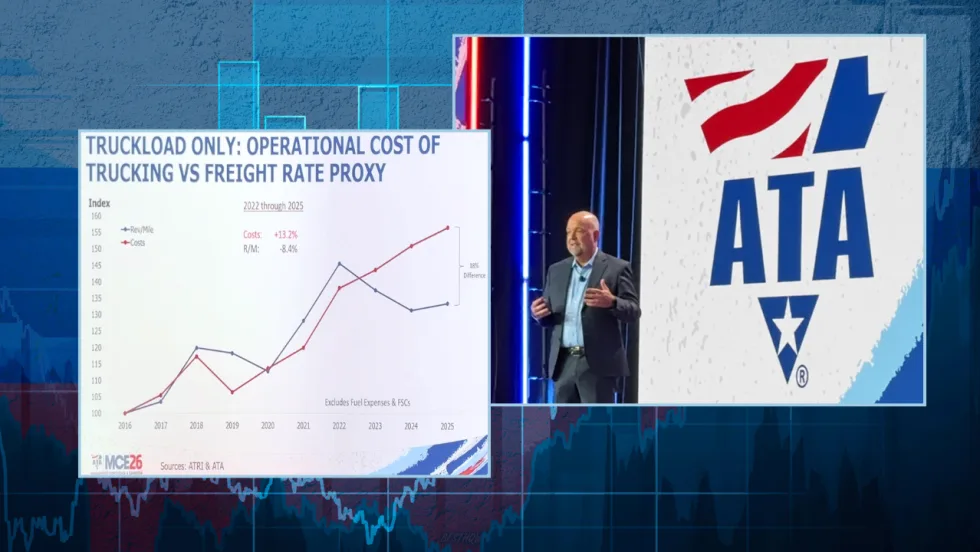
Freight demand remains sluggish, but rising costs and tougher enforcement have taken enough capacity out of the market to change the outlook for motor carriers.
Read More →
Platform Science Adds Dispatch and Safety Tools
Four additions to PS Fleet help fleets monitor loads, manage driver coaching, share truck locations and adjust video system settings.
Read More →
PrePass Intelligence Mines Fleet Bypass, Toll and Safety Data
PrePass Intelligence helps fleets measure bypass savings, flag potential toll overcharges, and spot suspicious transactions by combining data from separate systems.
Read More →
Trucking’s Diesel Squeeze Isn’t Letting Up
With diesel topping $6 a gallon nationally, ATA's Bob Costello explains why fleets should prepare for continued pressure at the pump.
Read More →
Motive Adds AI Agents for Fleet Operations
New tools automate follow-up on fleet data, from maintenance work orders to driver alerts, with two-way voice conversations planned for later this year.
Read More →
Trucks at ATA's 2026 MC&E in Charlotte, North Carolina [Photos]
From rigs decked out in patriotic America's 250 paint schemes to autonomous trucks and more, check out these photos from ATA's 2026 Management Conference & Exhibition.
Read More →
Can You Beat Our Trucking Trivia Challenge?
Test your truck knowledge with 19 trivia questions from Heavy Duty Trucking Exchange. Can you keep up with the fleet pros?
Read More →