





Related: Trailers are Smarter Than Ever
What to Consider When Spec'ing a Drop Deck Trailer
Special cargos require specialized trailers, and one is the drop deck, whether made of steel, aluminum, or a combination of the two.
May 25, 2017
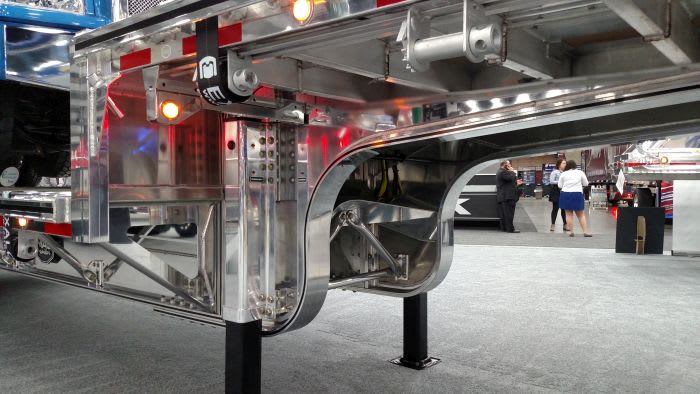
A Mac Trailer aluminum drop deck’s transition area includes the 90-degree step (upper left) and a large curved “radius” beneath the upper and lower decks (center). The radius evenly distributes weight and stress between the two areas. Here, I-beam-like flanges add strength to the curved members. Photo: Tom Berg
5 min to read
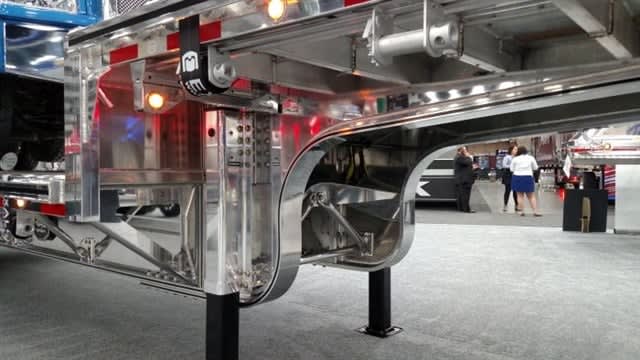
A Mac Trailer aluminum drop deck’s transition area includes the 90-degree step (upper left) and a large curved “radius” beneath the upper and lower decks (center). The radius evenly distributes weight and stress between the two areas. Here, I-beam-like flanges add strength to the curved members.Photo: Tom Berg
When freight is tall, trailers that carry it must be short. That’s the reason for the drop deck, a variant of the flatbed or platform trailer. A “single drop” or “step deck” has a forward down-step and a main deck that provides another 20 or more inches of vertical space to accommodate large coils of steel and aluminum, outsized mechanical or electrical gear, farm implements, and aircraft engines, among other things. A “double drop” has an even lower deck and an up-step ahead of the rear tandem.
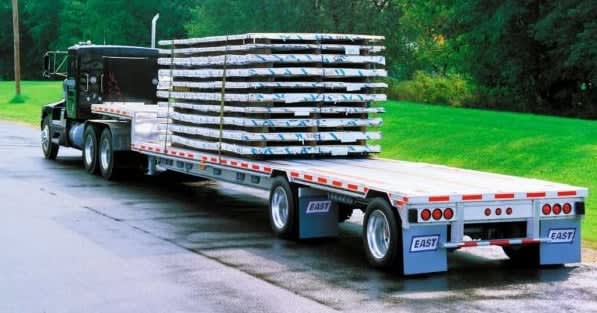
The lower main deck of this lightweight aluminum drop-deck trailer can carry, in this case, more stacked racks than a regular flatbed. Drop or “step decks” can also be made of steel or a steel-aluminum combination.Photo: East Mfg.
The low main deck lowers the center of gravity, which helps with top-heavy loads, noted Bill Wallace at East Manufacturing, one of the trailer makers HDT visited during the recent Mid-America Trucking Show in Louisville, Kentucky.
The depth of a flatbed’s understructure tapers upward under its nose, partly to match the height of the tractor’s fifth wheel and because less strength is needed at the trailer’s front. Likewise, a drop deck’s underframe also tapers upward at the rear, which allows the deck to be closer to the ground. This also is because less strength is needed, and it adds space for tall cargo.
Because of a single drop’s low main deck, the wheels and tires are typically smaller than the usual 22.5-inch size, 19.5s or even 17.5s. But with a double drop’s high rear deck, the 22.5s, with their longer-lasting tires and brakes, can be used.
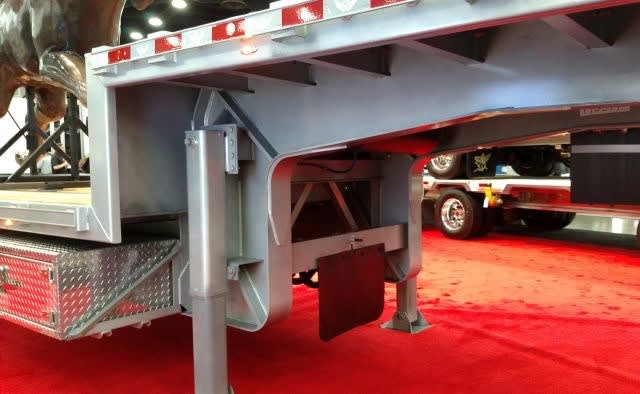
Steel members form a comparatively simple 90-degree bend under this Manac’s transition area, though a compact radius structure is still used. Photo: Tom Berg
Drop decks are not needed for most freight. And drop decks cannot carry items like long pipes, except when fitted with risers along the main deck. Use of wood or metal risers adds versatility, allowing the trailer to be used in more than one way. And short, dense cargo, like bundles of lumber and shingles, can be carried on both the forward and main decks and sometimes on the rear deck of a double drop.
About the Drop Deck's 'Step'
A drop deck’s characteristic step is called the “transition” area, explained Bill McKenzie of Mac Trailers. This takes careful engineering because stresses migrate to a 90-degree bend, and that can cause metal fatigue that leads to cracking and breaking. Details vary among the different trailer builders, but a major difference in transition design is the materials used to make the trailer.
McKenzie pointed out that steel is a hard metal and with proper gusseting can take stresses at a 90-degree bend. Aluminum, being softer, needs help with a right angle, so engineers use a “radius” structure underneath. Somewhat like an arch, the radius evenly distributes weight to the structures of the upper and lower decks, avoiding concentrated stresses and cracking.
Aluminum, of course, reduces a trailer’s weight, but more of it is needed to achieve the same strength as a steel member. So the aluminum member is thicker and taller. The main frame of an aluminum drop deck is 1 inch taller than a steel frame, so the lower deck it supports is an inch higher, explained Kelly Zecha of Doonan Specialized. On a regular flatbed, there’s room under it for the taller frame, so deck height is unaffected.
Choosing Dropdeck Trailer Materials
Whether to choose aluminum, steel, or a combination of both depends on operating requirements and financial considerations. An aluminum trailer will weigh 1,200 to 1,500 pounds less than steel, and much of that goes right to payload capacity and potential increases in revenue.
Then again, not all shipments are so heavy as to demand lightweight trailers, and steel or combo trailers might be entirely adequate to carry a fleet’s usual loads.
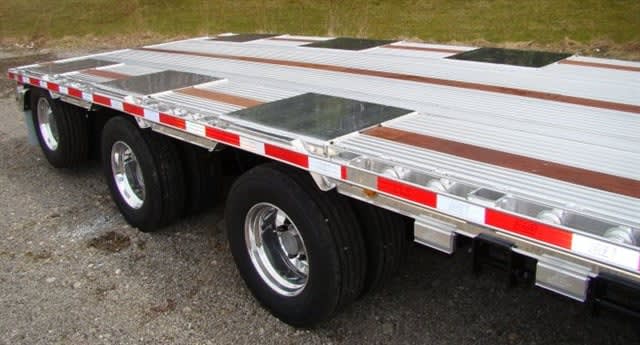
A low main deck usually requires using compact 19.5- or 17.5-inch wheels and tires. Double drops can use 22.5s. Photo: East Mfg.
Steel can take a pounding, so is the favored material for flats, drop decks and other types of trailers used in oil and gas fields and construction work, said Jeff Ingels of XL Specialized. Hauling of wind turbine blades, towers and generator nacelles is usually done with purpose-built steel trailers, an XL specialty. Here, light weight is not an issue because such loads usually go under special permits anyway.
Preventing Corrosion When Spec'ing Dropdeck Trailers
Geography also affects choice of materials, said Zecha. In northern areas where road salt is encountered, Doonan’s customers prefer aluminum for its corrosion resistance. In the South, steel is more prevalent and will last a good amount of time if it stays in salt-free southern or southwestern states. In the southern Midwest, combo trailers, which use steel main beams and certain other parts along with aluminum decks and crossmembers, are popular.
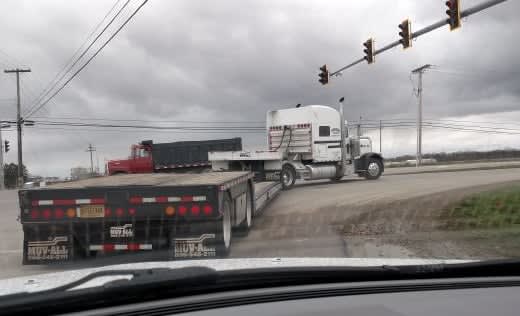
Steel trailers, like this double drop, cost less than aluminum or combos. Steel is also tough and can take a pounding, so is usually used in severe-service applications.Photo: Tom Berg
Special coatings applied to steel constitute a whole other subject, but in general, they resist corrosion much better than paint. And galvanized steel is a trend in drop decks and flatbeds as it is in van-type trailers.
Rust jacking — a well-known affliction affecting brake shoes, where rust pushes lining away from steel tables — also occurs with spring hangers on steel trailers, said McKenzie at Mac, which makes both aluminum and steel products. Extra protection for steel avoids general deterioration and weakening of a trailer and can add to its life and resale value.
Cost ascends from steel to combo to all-aluminum, but the price difference between steel and aluminum has lessened, primarily because steel is more expensive than it used to be. That makes an aluminum trailer more affordable, but the upcharge over a combo or steel will still be in the thousands of dollars, McKenzie said. That’s offset by an aluminum trailer’s longer life and its higher residual value. It can retain 70% of its original value when sold by the original owner vs. perhaps 25% for a combo and even less for a steel trailer. That and other advantages of aluminum are boosting its share of the trailer market. It now accounts for about 30% of flats and drops, and McKenzie thinks it will be 40% five years from now.
Subscribe to Our Newsletter
More Equipment
More Trailer Data Through the Same Seven-Way [Video]
Can trucking’s standard seven-way connector handle more cameras and trailer data? Grote’s Adam Slade shows HDT how the company is using new technology with its 4See trailer system, not only to add a new backup camera but also to expand other capabilities — without adding another connection.
Read More →
Grote: More Cameras, Same Seven-Way Connector
The next-generation 4See rear-view backup camera from Grote uses the standard seven-way connector and supports additional cameras and other trailer data.
Read More →
Trucks at ATA's 2026 MC&E in Charlotte, North Carolina [Photos]
From rigs decked out in patriotic America's 250 paint schemes to autonomous trucks and more, check out these photos from ATA's 2026 Management Conference & Exhibition.
Read More →
Help HDT Find Trucking’s Top Products
Have you come across a new product that could make a difference for trucking fleets? Nominate it for HDT’s 2027 Top 20 Products Awards by November 9.
Read More →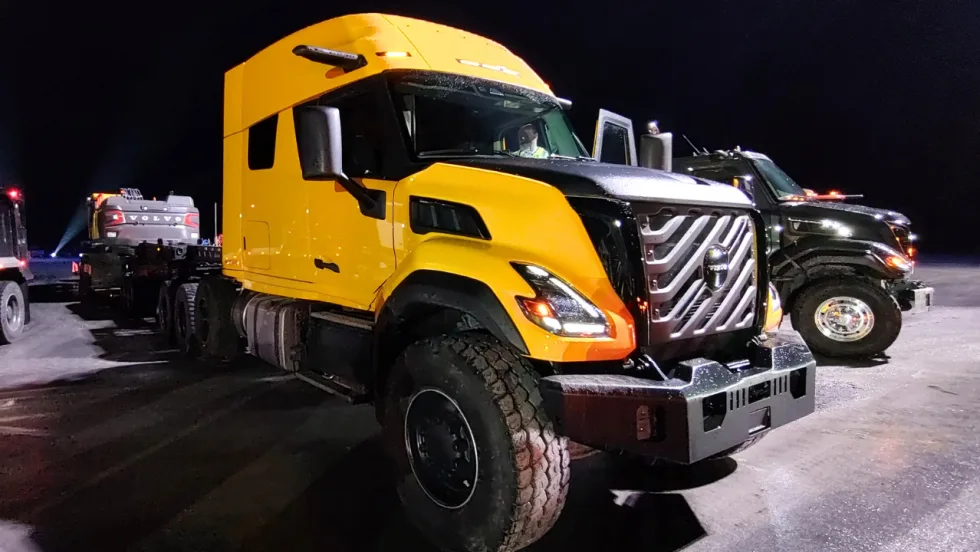
Volvo Unveils New VNX Heavy-Haul and Vocational Truck
Volvo Trucks has launched the VNX, a new vocational truck also available as a tractor in day cab and two sleeper configurations, with one heavy-haul model. The Volvo VNX is powered by Volvo's D13 platform, which delivers up to 540 horsepower and 1,950 pound-feet of torque and is EPA 2027-compliant.
Read More →
How GP Transco Cuts Trucking Fuel Costs, a Tenth of a Gallon at a Time
What’s another tenth of a mile per gallon worth? GP Transco shares how equipment upgrades and driver coaching turn small gains into meaningful fuel savings.
Read More →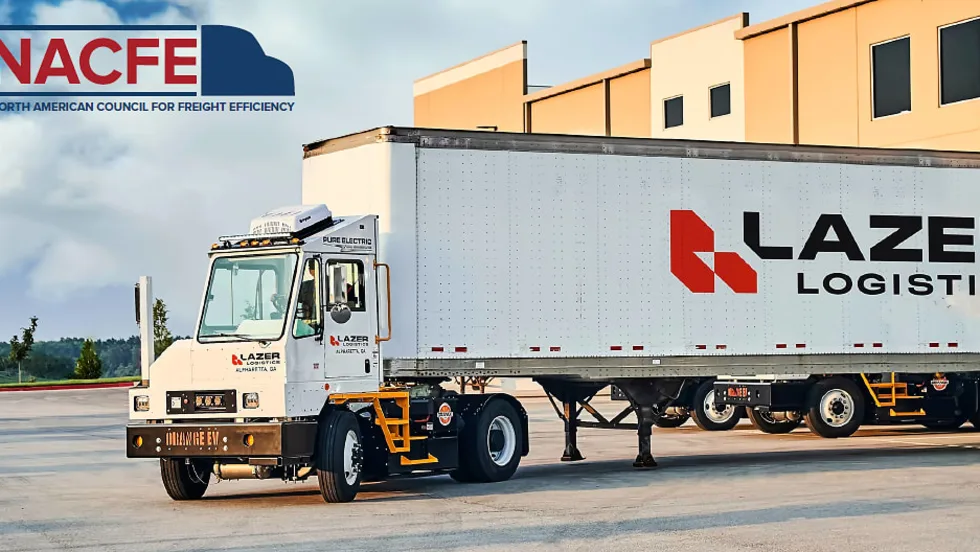
Electric Yard Tractors Move Beyond Pilots
Operating-cost savings have overtaken sustainability goals as the leading reason surveyed fleets are adopting battery-electric terminal tractors, according to new NACFE research.
Read More →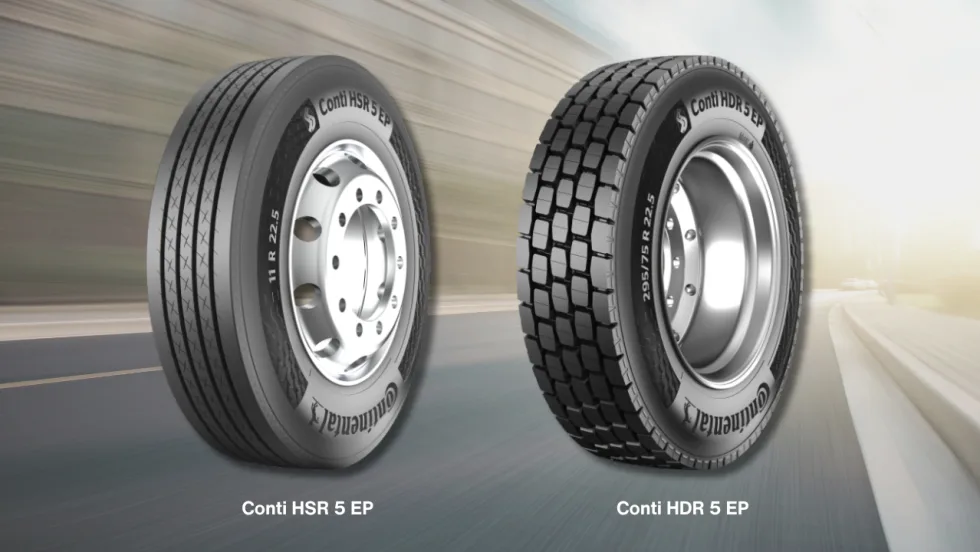
Continental Introduces New Regional Truck Tires
Continental says its new Generation 5 steer and drive tires for regional operations offer longer tread life, with estimated mileage gains of 22% and 19%, respectively.
Read More →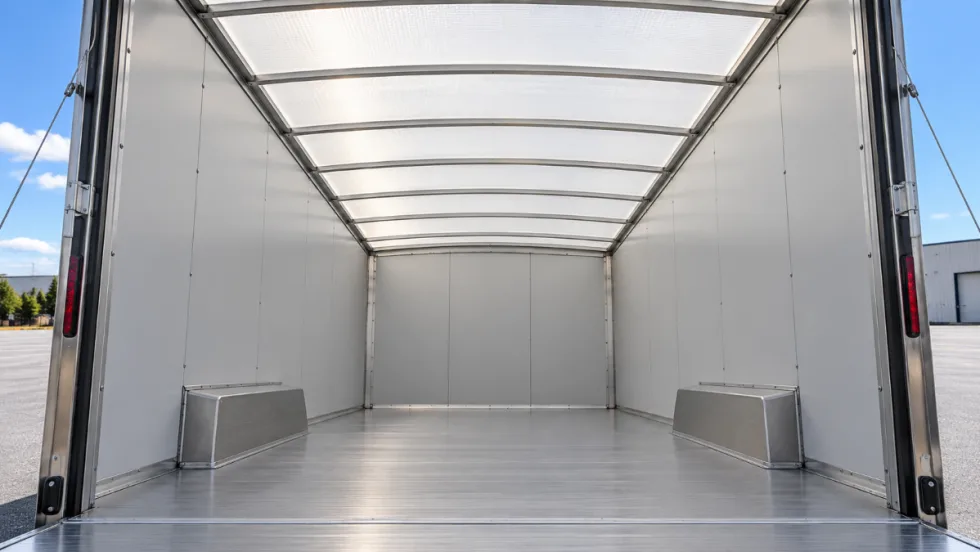
Tekmodo Introduces CargoBright Brand for Translucent Trailer Roofs
CargoBright is designed to diffuse daylight across the cargo area while performing as a working vehicle roof.
Read More →
Fleet Economics Shape Electric Truck Outlook
ACT Research expects costs, charging infrastructure, and technology improvements to drive zero-emission commercial vehicle adoption as federal regulations and incentives retreat.
Read More →