




DaimlerChrysler is in the process of developing and testing several earth-friendly technologies for vans, trucks and buses. The new technologies were previewed to journalists recently at the company's Papenburg, Germany, test center.
Eye on The Environment
DaimlerChrysler develops hybrid, fuel cell technologies.
by Deborah Whistler, Editor
January 1, 20067 min to read
Sprinter Hybrids
A Sprinter hybrid-drive van will undergo testing in North America beginning this month. The van is equipped with a "plug-in" hybrid drive system, which means that its batteries also can be recharged when the engine is switched off – for example at night.
The hybrid Sprinter has an electric motor integrated between the transmission and the clutch. It draws its power from a nickel/metal hydride battery (a lithium/ion battery will be used in future) and acts as an alternator while the vehicle is being driven, recharging the battery using the energy generated during braking or when driving downhill. This process is also referred to as recuperation. The base vehicle is a Sprinter 311 CDI equipped with an automatic transmission.
Optimal operation of the hybrid Sprinter is possible whatever the situation, thanks to the parallel arrangement and intelligent combination of the internal combustion engine and the electric motor. Zero emissions and low noise are assured when only the electric motor is operating. Low fuel consumption is assured in hybrid mode (when the electric motor is operated in addition to the internal combustion engine at low speeds or when accelerating). This "boost" function is available when extra power is needed for accelerating or driving uphill. During normal operation, the driver can select the desired drive type at the push of a button.
FUEL CELL TECHNOLOGIES
Hybrid drive systems will bridge the gap before the introduction of zero-emission fuel cell systems. Two fuel-cell-equipped Sprinter vans are also undergoing extended customer testing in North America.
The first fuel-cell-equipped Sprinter went into daily service in Europe at Hermes Versand Service (a parcel delivery company) in 2001 and has clocked several thousand miles of service. The fuel cell system is installed under the floor and doesn't reduce the amount of cargo space available.
Two Dodge Sprinter vehicles featuring this technology have been in service at United Parcel Service since last year – the first commercial vehicles fitted with a fuel cell to be used by a commercial delivery service in North America.
FUEL CELL CITARO
Experts all over the world are predicting a bright future for the fuel cell drive system. Many fuel cell buses are in service. A current large-scale customer field test is being carried out in Europe, involving 30 Mercedes-Benz Citaro buses in 10 major European cities.
The Australian city of Perth joined the test at the end of 2004, putting three buses into service. Another test began recently in Beijing, the venue for the 2008 Olympics. There will be a total of 36 Citaro buses with fuel cell drive on the road worldwide.
All 36 vehicles have their hydrogen tanks housed on the roof, together with the fuel-cell stacks. The fuel cells generate electricity and heat based on the controlled reaction of hydrogen and oxygen. This energy is used to power an electric drive motor. The only emissions produced by the motor are pure water vapors.
FEDEX TEST
Freightliner has joined forces with Eaton to develop 18 delivery vehicles with hybrid drive for the FedEx Express parcel service. These vehicles are currently undergoing field tests in several American cities.
Called the FedEx Express E700, this model is based on the successful FedEx Express W700 distribution vehicle. This medium-size distribution vehicle with a van body is based on a chassis from the Freightliner MT-45 SR series.
The drive system consists of a combination of diesel engine and electric motor, lithium/ion batteries to store the energy, and an automated transmission. When starting off and when carrying light loads, only the electric drive system is used. The diesel engine cuts in when extra power is required and also serves as an alternator for charging the battery. The battery can also be charged by the conversion of kinetic energy into electrical energy when driving downhill and when braking. The four-cylinder diesel engine is lifted from the 900 series in Europe and has been renamed the MBE 900 for the U.S. market.
CLEAN & QUIET
Freightliner is also developing a hybrid drive system for its Business Class M2 series of medium-duty trucks. These cab-behind-engine trucks with two or three axles are predominantly used for short-haul work and short-radius distribution as well as for municipal applications. Many of them are equipped with Mercedes-Benz engines and transmissions.
For the hybrid drive system being developed, Freightliner has opted for a parallel set-up. This means that, as well as serving as an alternator for charging the batteries, the internal combustion engine is also used for powering the vehicle directly in conjunction with an electric motor. The drive power is sent to the wheels via an automated transmission.
When starting off, the two-axle Freightliner vehicle is powered by the electric motor alone, the diesel engine only cutting in when extra power is required. During braking, kinetic energy is converted into electrical energy, which is then used to recharge the batteries (recuperation).
Freightliner believes that this system will cut fuel consumption by around 25 to 30 percent compared to a purely diesel-driven system. Further advantages include lower emissions and quieter operation. The electric motor also can be used to power auxiliary equipment.
Freightliner has already received an order for 70 Business Class M2 vehicles with hybrid drive. Production is scheduled to start this year.
HYBRID-DRIVE CANTER
Hybrid-drive vehicles have an extremely important role to play in Japan due to the operating conditions there, notably the extremely densely populated urban areas and the country's stringent environmental regulations.
What's more, many companies in Japan place great stock in their "green" image. To this end, Mitsubishi Fuso has developed the light-duty Canter HEV hybrid-drive truck.
When starting off, the Canter HEV uses the electric drive only, meaning quiet, zero-emission operation. The diesel engine kicks in at 15 and 30 km/h, depending on power requirements. The switch from electric to diesel-electric drive is extremely smooth and only takes place when the driver presses the accelerator. The batteries used to power the electric motor are recharged by the diesel engine as well as by the conversion of kinetic energy into electrical energy when driving downhill and when braking.
Eight vehicles are currently undergoing testing, with the production launch planned for the middle of the year. In the future, the Canter with hybrid drive will be available in China, Australia and the United States. There are currently no plans to export the vehicle to Europe.
AERO HEV
One of the best examples of worldwide research and development work within the DaimlerChrysler Group is the Aero HEV(Hybrid Electric Vehicle) low-floor urban bus produced by the group's Japanese subsidiary, Mitsubishi Fuso.
Arranged in series, the drive system has a diesel engine to drive an alternator. The energy generated in this way drives an electric motor, whose power is sent to the rear axle. Excess energy is stored in lithium/ion batteries on the roof of the bus. In this system, there is no mechanical link between the alternator and the electric motor. Nor is there any transmission. This set-up makes extra space available, which Mitsubishi Fuso uses to install a transverse internal combustion engine and alternator at the rear of the bus.
The diesel engine in the bus operates at constant rpm and always in the best possible range with respect to fuel consumption and emissions. When the vehicle pulls up at traffic lights and bus stops, the diesel engine switches off automatically. The doors and air-conditioning system are electrically powered. Only the electric motor is used when starting off. The diesel engine switches on when the bus reaches a medium-range speed. During braking, the kinetic energy is transformed into electrical energy (recuperation).
Compared to conventional diesel drive systems, fuel consumption is up to 40 percent lower, while nitrogen oxide emissions are reduced by 68 percent and particulate emissions are cut by as much as 76 percent.
The Aero HEV is equipped with 435/45 R 22.5 single-wide tires instead of twin tires on the rear axle. As a result, the aisle width above the rear axle is increased by 50 percent. Seven hybrid buses are now undergoing testing, including vehicles used in transport fleets.
Production launch is planned in 2006.
Subscribe to Our Newsletter
More Fleet Management
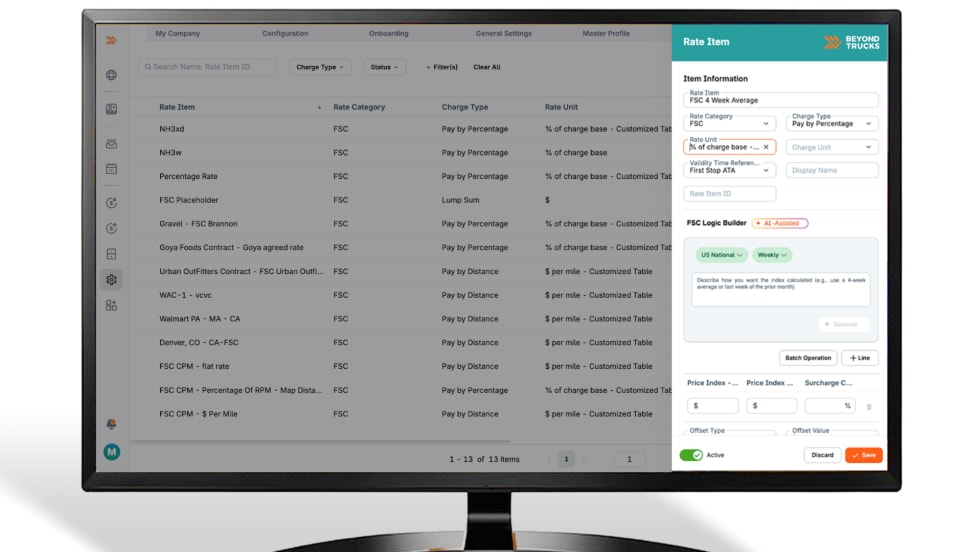
BeyondTrucks Targets Rate Complexity with New AI RateAgents
BeyondTrucks says its new RateAgents can turn plain-language rate logic into working code, starting with fuel surcharges — a critical but notoriously complex piece of carrier revenue.
Read More →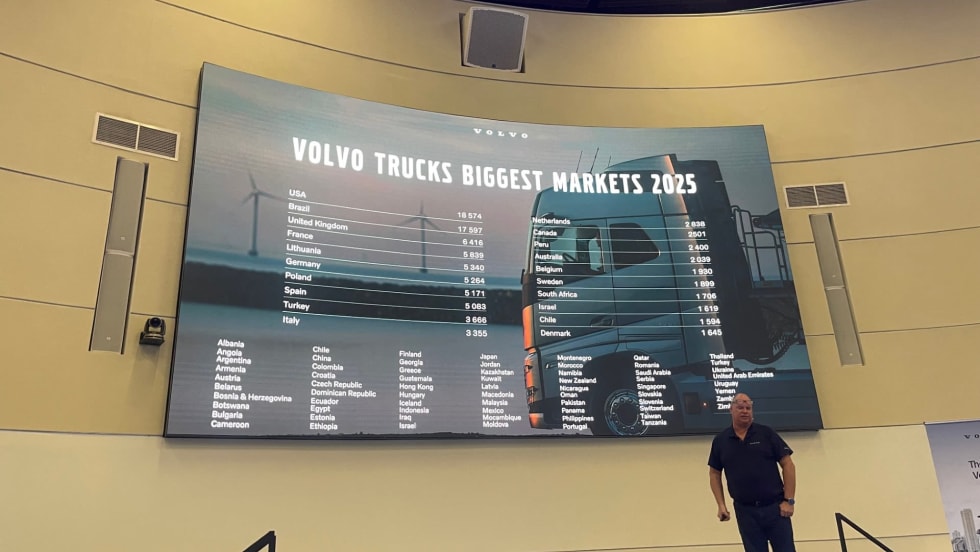
Volvo Sees Market ‘Tipping Point’ as New VNL Orders Surge
Soft freight conditions persist, but aging fleets, strong order intake, and new-product momentum signal a more optimistic second half of 2026, Volvo Trucks North America says.
Read More →
Cargo Theft’s New Playbook: Strategic Fraud, Double Brokering, and Cybercrime Hit Trucking
Cargo theft is evolving from regional smash-and-grab operations to sophisticated fraud schemes. Strategic theft now accounts for roughly a third of cargo crime, with incidents rising sharply in recent years. Here’s how the schemes work — and what fleets can do to protect themselves.
Read More →
HDT Honors the Best New Products of 2025 at TMC [Photos]
Heavy Duty Trucking's Top 20 Products awards recognize the best new products and technologies. Check out the award presentations at the 2026 Technology & Maintenance Council annual meeting.
Read More →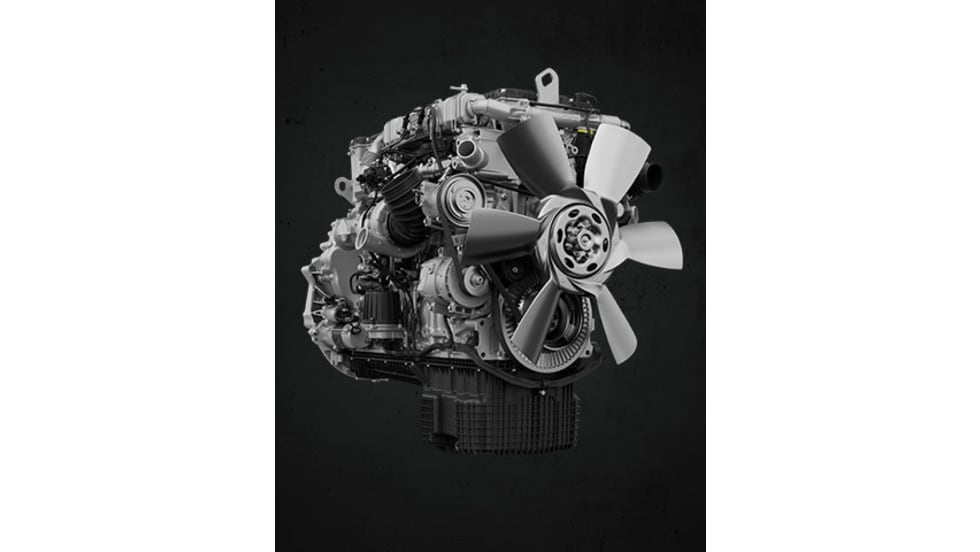
Sponsored•March 31, 2026
Detroit Engines: Trusted Performance, Built for What's Next
The Detroit® Gen 6 engine platform proves that real progress doesn’t require a complete redesign. Built on 20 years of trusted technology, these engines are designed for efficiency, stronger performance, and greater reliability than before. And they do it all while complying with 2027 EPA standards on every mile.
Read More →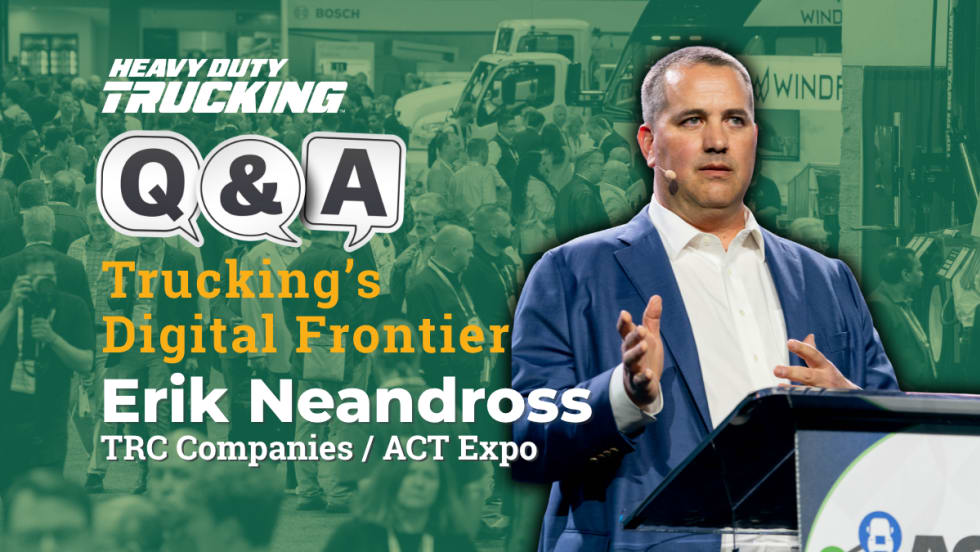
Q&A: What's Real in Advanced Truck Tech? ACT Expo's Erik Neandross Weighs In
The 2026 ACT Expo is focusing heavily on what organizer Erik Neandross calls trucking's digital frontier. This interview excerpt dives into artificial intelligence, zero-emission vehicles, and tips to make sense of it all.
Read More →
Trucking's Digital Frontier: AI, Connected Vehicles, Alternative Fuels and More
There's an amazing amount of new technology for trucking out there. For fleets, the challenge is figuring out what’s real, what’s hype, and what’s worth investing in.
Read More →
What's Real in Advanced Truck Technology? ACT Expo's Erik Neandross Weighs In
Artificial intelligence, the software-defined vehicle, telematics, autonomous trucks, electric trucks and alternative fuels, and more in this HDT Talks Trucking interview
Read More →
ACT: Trucking Volumes Rise, Capacity Tightens as Fuel Prices Cloud Outlook
ACT Research data shows volumes hitting a four-year high and supply-demand balance strengthening, but higher oil prices are undercutting tariff relief and tempering optimism.
Read More →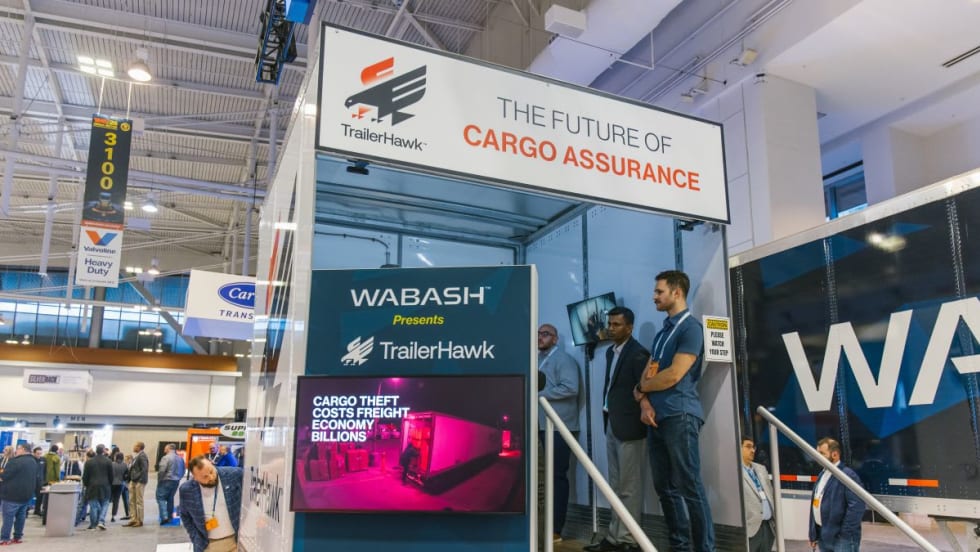
Wabash Teams Physical Security With Digital Tech For Better Cargo Visibility
The patent-pending cargo solution integrates a digitally connected cargo door and an intelligent locking system with the TrailerHawk.AI technology platform.
Read More →