




Top 5 Vehicle Maintenance Violations
Vehicle maintenance violations are a huge threat to a carrier's safety record. There are close to 200 separate violations on FMCSA's list of point-carrying infractions, and many carry ratings of 5 points or higher

Vehicle maintenance violations are a huge threat to a carrier's safety record. There are close to 200 separate violations on FMCSA's list of point-carrying infractions, and many carry ratings of 5 points or higher.
Obviously, some are more common than others, but for a roadside inspector, finding violations on a commercial vehicle is like shooting fish in a barrel. It depends on how diligent they are and how badly they want to write up a driver, said Annette Sandberg, former FMCSA administrator and now CEO of a safety consulting firm called TransSafe.
"Any inspector can pull over any truck and find a violation," she said. "It's big equipment that's used in a strenuous environment; things can jiggle loose, they break. If inspectors want to be picky, they will find a violation."
The Vehicle Maintenance BASIC is also one of the hardest areas for carriers to improve because of the frequency of the violations and relative ease at finding them. It's one where carriers can use all the help they can get.
Here's a list of the five most common vehicle maintenance violations discovered in roadside inspections:
Inoperative required lamps. Non-working headlamps, tail lamps and turn signals.
No or defective lighting. Missing or defective lighting such as retro-reflective striping or projecting lighting such as rotating beacons on oversize loads.
Inspection/repair and maintenance, parts and accessories. Defects discovered by an inspector but not noted on the driver vehicle inspection report (DVIR).
Tire tread depth less than 2/32 inch. Fleets normally take three tread depth measurements around a tire and average them out for tire wear analysis, but DOT inspectors can cite a tire with any single spot worn to less than 2/32, which could include flat-spotted areas.
Oil and/or grease leak. This one is self-explanatory and illustrative of the challenge that fleets have in keeping the Vehicle Maintenance BASIC clean.
There are also several brake violations on the Top 10 list. They are serious, and almost all brake violations are worth 10 points.
From the April/May 2012 issue of HDAJ
More Maintenance

Truck Drivers Need More Than Another Alert
Fleets have more visibility into truck health, safety events, and driver activity than ever. The next challenge is turning all that information into useful guidance for the person who has to decide what to do next.
Read More →
The Maintenance Checks Trucking Fleets Should Prioritize Before Fall Freight Picks Up
Making it through August isn’t the same as being ready for the next several months of operation. Find out what systems may have suffered from summer heat and need to be checked out before fall.
Read More →
What Three Fleets Are Doing Differently When Buying Truck Parts in 2026
With freight improving but costs still climbing, fleet maintenance executives explain how they're balancing price, quality, and supplier relationships.
Read More →
Paccar Recalls 2027 Trucks Built This Summer for Possible Electrical Problem
The nearly 6,000 Kenworth and Peterbilt trucks in the recall could potentially lose engine power, among other things.
Read More →
Will API PC-12 Oil Change Trucking Fleet Maintenance?
The new API PC-12 heavy-duty engine oil category reflects the changing demands of modern diesel engines. But fleets like Foodliner are looking to getting their own data before making decisions on adopting the new oils and questions such as extending oil drain intervals.
Read More →
Brake Safety Week to Focus on Drums and Rotors
Commercial vehicle inspectors are focusing on truck brakes during CVSA's Brake Safety Week, August 23-29.
Read More →
Possible Battery-Cable Fires Prompt Recall of 15,000+ International MV and HV Trucks
On the recalled vehicles, manufacturing variations can cause the battery interconnect cable to contact the auxiliary stud and hold down the bracket.
Read More →
Rush, MCT Team Up to Grow Refrigeration Service Network
The joint venture will operate MCT's network of Carrier Transicold dealerships and mobile service locations, with the companies promising greater service capacity and uptime for refrigerated fleets.
Read More →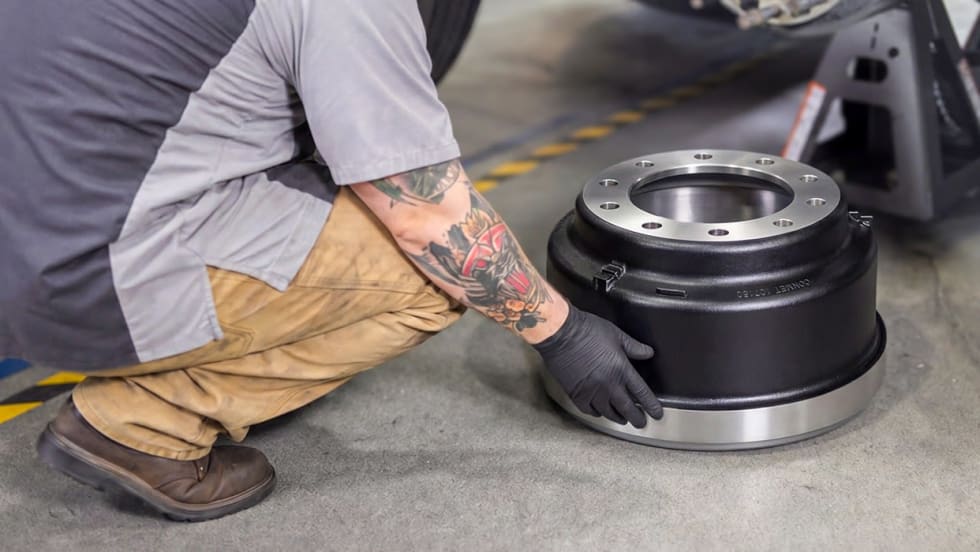
ConMet Expands Aftermarket Brake Drum Lineup With TruCast
A new heavy-duty truck brake drum option in the aftermarket gives customers more flexibility within the ConMet product family.
Read More →
Mack Expands Premium Service Contract Coverage to Medium-Duty MD
With a service contract, inspections, preventive maintenance and repairs can be handled in a single visit instead of multiple ones.
Read More →