





Traction is a funny thing: We know when we don't have enough of it, but can we quantify how much is enough? It's a question that arises when discussing fuel-efficient tires.
Traction vs. Fuel Economy?
Traction is a funny thing: We know when we don't have enough of it, but can we quantify how much is enough? It's a question that arises when discussing fuel-efficient tires
June 28, 2012
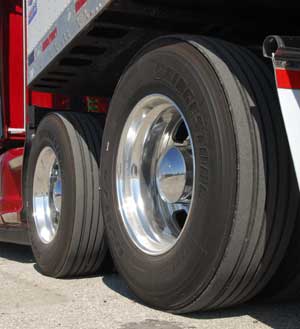
Are we giving up traction in order to lessen rolling resistance? The short answer is yes, but not to the degree some might imagine.
6 min to read
"More might be better, and less might be worse, but we don't know what's ideal," says Guy Walenga, Bridgestone's director of engineering, commercial products and technologies. "There is no 'normal' for traction, but anecdotal evidence says traction is not currently a problem."
All the tire experts consulted for this story agree that although the current generation of fuel-efficient tires may offer incrementally less traction than non-fuel-efficient tires, none suffer shortfalls in traction for their intended application. Maybe previous generations of truck tires offered more traction than we actually needed.
In bygone days when fuel wasn't quite so pricey, traction was an attractive attribute. Deep lug drive tires sold well, and drivers loved them. With lots of rubber on the tread face, tires lasted a long time, and fleets got the miles they wanted before removal.
However, as oil prices crept inexorably upward, concerns about fuel economy - and the cost of all that extra rubber on the tire - got engineers working on ways to improve tires' fuel efficiency by reducing rolling resistance. At various points in time, tire makers came up with shorter sidewalls to reduce energy losses caused by sidewall flex, stiffer tread rubber compounds to resist squirming and eventually different tread designs that included closed shoulders and combinations of ribs and lugs for a mix of traction and fuel efficiency.
More recently, with advances in design, testing and manufacturing capabilities, we've seen tires optimized for one attribute with only minimal sacrifices on other fronts. For long-haul customers, advanced tire designs have produced significant reductions in rolling resistance with no apparent compromise in safe operation.
"If rolling resistance targets continue to be driven down, there could come a point where traction becomes less than desirable," says Kevin Legge, project manager at Goodyear Tire & Rubber Company. "We're not there yet, and no tire company would let that happen, but there have been trade-offs in traction to improve rolling resistance."
If traction has in fact been reduced, it hasn't attracted much attention. Legge says the two largest truckload fleets in the country both use Goodyear's G305 18/32 drive tires across the entire fleet in 48 states, 365 days a year.
"They have been doing so for years, over the mountains, through the woods, up in Canada, everywhere," he says. "I'm not aware of what their accident rates are, but obviously it's nothing that stands out. We're not at any point in time where we have a safety issue. We're not sacrificing safety to get a fuel tire. It's just perception that's holding a lot of fleets back."
Selling drivers
Drivers are the first to notice a change in tires. Company drivers have little stake in a 2% or 3% gain in fuel economy, but they may feel the safe operation of the truck could be compromised by a more fuel-efficient tire.
Arkansas-based Maverick Transportation moved from traditional duals to wide-base singles several years ago. Mike Jeffress, vice president of maintenance, says drivers initially complained about poor traction. "I identified two of our more outspoken drivers and sent them to the Michelin plant to test the tires for themselves. When they came back, they were convinced that the wide-base tire was better on wet pavement."
It's understandable when comparing two tires visually that drivers might feel the one with the more aggressive-looking tread would offer more traction. What they may not be aware of are the tractive properties designed into the tire, such as compound, that complement the shallower tread.
Bridgestone's Walenga believes the owner-operator is the best barometer of a tire's fuel-saving potential compared to the perceived risk associated with its lower rolling resistance.
"They have some skin in the game," he notes. "They are paying for the fuel, and they are buying the tires. They are going to factor a lot more into their decision than perception."
The truth is, there are several ways of lowering a tire's rolling resistance that are not related to traction, or where the compromise is minimal.
A targeted approach
The traditional, blunt approach has been to use shallower tread and different rubber compounds. However, with today's design and manufacturing capabilities, tire makers are refining the shape of the sidewalls, making micro-improvements to tread patterns and paying a lot of attention to what goes on between the tire and the pavement.
"If you used only one element when trying to reduce rolling resistance, that one would be hugely compromised," says Rick Phillips, director of commercial sales at Yokohama Tire Corp. "With the technology available now, engineers are able to spread the impact over several elements. You get a much smaller trade-off over a lot of areas rather than one big substantial hit."
Pointing to the company's soon-to-be-released 709ZL drive tire, Phillips says it looks more like a rib tire than a lug tire, but a series of tightly spaced Z-shaped lugs arranged in a three-rib formation provide "astonishing" traction.
"We tested the tire in northern Michigan this past winter and found it had better snow traction than anything else we tested," he says. "One of the reasons we tested the tire was perception. We knew some would see it as a rib-type design. It's a good example of how you can be fooled by what appears to be a pretty non-aggressive tread design."
To illustrate the impact of compound engineering, Continental offers a tire with the exact same tread design but in two designations - one for mileage, the other for low rolling resistance.
"Users of our open-shoulder drive tires are finding all the parameters at acceptable levels, but we're working on improving the tread life with new compounds," says Roger Stansbie, Continental's director of commercial vehicle tire research and development. "When you start with a shallower tread, you're going to get fewer miles to take-off, but we think we can improve on the wear rates, and users will have a choice of higher mileage or lower rolling resistance in a SmartWay-certified tire."
Application-specific tires
Some regulations come with unintended consequences. Paul Crehan, Michelin's director of product marketing, warns that uninformed decisions could lead to some dissatisfaction in tire selection.
"The California SmartWay tire regulations and the new greenhouse gas regs could push users in an undesired direction," he says. "There are plenty of opportunities within those rules for intelligent spec'ing choices, but users will need to ask questions of their tire suppliers and do their homework to ensure they are getting the best tire for their intended application."
Looking forward, Yokohama's Phillips says tires could become very sensitive to inflation pressure. The idea is to optimize the footprint of the tire for traction and tread wear. That will require careful inflation management.
"We're looking very hard at the footprint of the tire, and if we can manage that contact patch exactly as we want it to be, we think it will do a lot for the performance of the tire," he says. "We have found most fleets run 100 psi in a drive tire, which is well overinflated for the maximum weight on tandem axle. That may seem to improve rolling resistance, but it actually distorts the footprint, which reduces traction and increases tire wear. If you run the tire at its design pressure, you run it the way it was designed to run, which gives you optimum traction, mileage and minimizes inflation-related irregular wear, so you get best performance over the life of the tire."
Subscribe to Our Newsletter
More Fuel Smarts
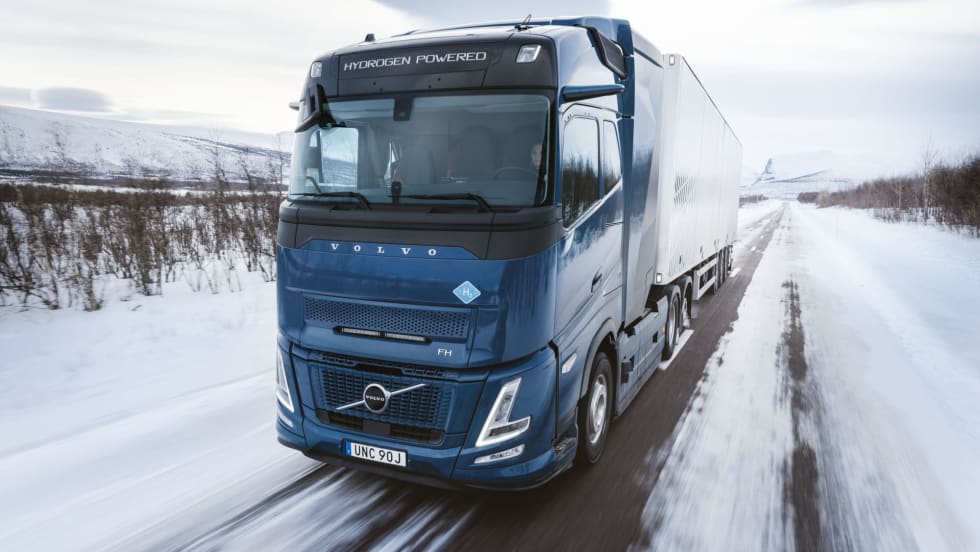
Volvo Testing Hydrogen-Fueled Internal Combustion Engines on Trucks in Europe
Hydrogen combustion engine trucks will be especially suitable over longer distances and in regions where there is limited charging infrastructure or time for recharging of battery-electric trucks, according to the company.
Read More →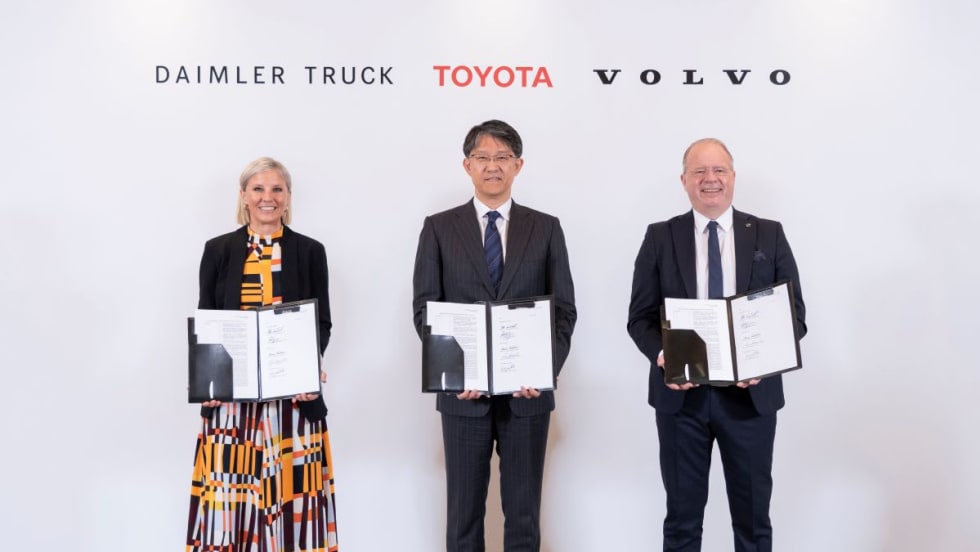
Toyota’s Entry Into Cellcentric Signals Push to Accelerate Hydrogen Truck Adoption
By joining Daimler Truck and Volvo, Toyota brings fuel cell expertise to a joint effort aimed at making hydrogen viable for heavy-duty transport.
Read More →
U.S. Diesel Prices Hit $5.40, Top $7 in California
Trucking operators are slowing speeds, cutting empty miles, and declining unprofitable freight as diesel costs continue to rise due to conflict in the Middle East.
Read More →
EPA Targets DEF Sensor Failures Behind Truck Derates
New guidance allows engine makers to replace problematic DEF sensors with NOx-based systems, aiming to reduce unnecessary derates and downtime caused by failures in the sensors designed to monitor diesel exhaust fluid on trucks.
Read More →
Heavy Duty Trucking is Searching for the Top Green Fleets of 2026
Is your company a leader in sustainability efforts among trucking fleets? If so, Heavy Duty Trucking's editors want to hear from you.
Read More →
What's Real in Advanced Truck Technology? ACT Expo's Erik Neandross Weighs In
Artificial intelligence, the software-defined vehicle, telematics, autonomous trucks, electric trucks and alternative fuels, and more in this HDT Talks Trucking interview
Read More →Why Diesel Is Climbing Fast—and What the Iran Conflict Has to Do With It
With global oil flows disrupted, U.S. diesel prices have topped $5 across every region, climbing sharply in the past few weeks.
Read More →
From Diesel Prices to Cyberattacks: How the Iran War Is Affecting Trucking
The impact of the Iran conflict extends beyond fuel costs, bringing more fraud and cybersecurity risks to the trucking industry.
Read More →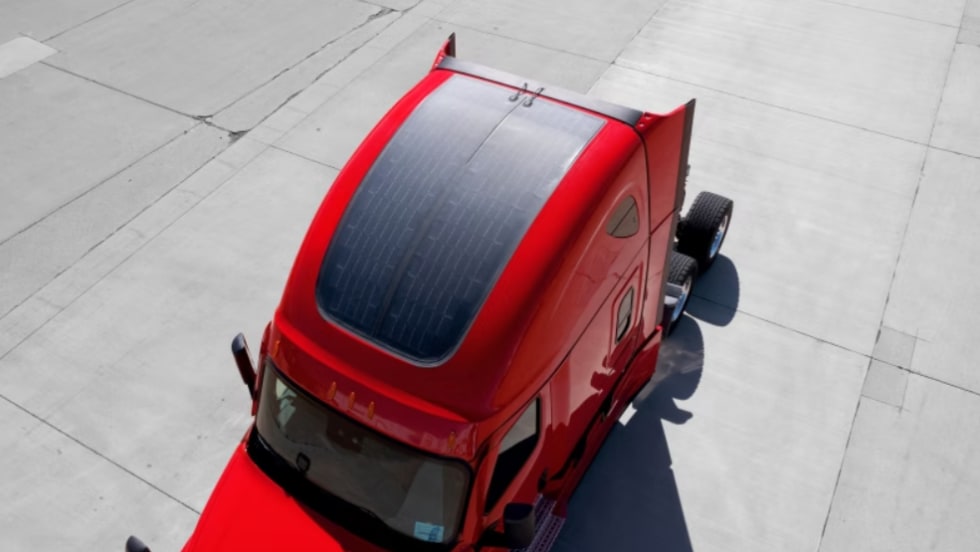
Vanair Introduces Solar, Battery Power Ecosystem for Class 8 Trucks
The company’s expanded EPEQ ecosystem includes flexible solar panels, lithium batteries, hydraulic power systems, and a portable fast charger for electric trucks.
Read More →
Run on Less “Messy Middle” Data Shows Multiple Paths for Truck Powertrains [Listen]
Listen as Mike Roeth of the North American Council for Freight Efficiency shares insights into battery-electric trucks, natural gas, biofuels, and clean diesel on this episode of HDT Talks Trucking.
Read More →