





The powertrain is a necessarily large part of the spec'ing exercise, and a great deal goes into the decision: anticipated lifecycle; annual miles; average horsepower per mile; vehicle weight; terrain and more.
Which Engine Displacement is Right for Your Regional Truck?
The powertrain is a necessarily large part of the spec'ing exercise, and a great deal goes into the decision: anticipated lifecycle; annual miles; average horsepower per mile; vehicle weight; terrain and more
March 20, 2012
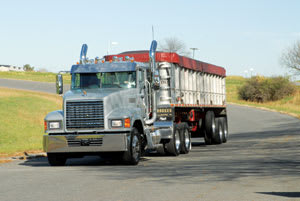
Engine choices are application specific. An 11-liter may save fuel, but you might need a 13-liter or bigger to get the job done.
3 min to read
With three popular displacements to choose from, the choices are broader then ever.
All of the engine makers now offer families of engines with up to three displacement offerings. Some have common (or similar) architecture; some have common parts, common service tools and common technician training.
In many ways, it makes sense to stay within the brand for the sake of commonality and lower support costs such as service tools, technician training and parts inventory.
Because day-cab configurations typically have a smaller hood envelope for better visibility and maneuverability, the smaller displacement engine is an obvious choice for the physically smaller vehicle. However, you won't give up much at all with the smaller powerplant.
"Our ISX12 is quite capable of 80,000 pounds, but if you think about the average horsepower per mile needed in a regional application versus a long-haul environment, the load factors and the duty cycles are quite different," points out Cummins' Lou Wenzler, technical support sales manager.
"Regional trucks are not cruising down an Interstate for six hours at a stretch. They are on and off the highway, driving on city streets and often are hauling loads that get progressively lighter throughout the day, or in the case of a tank operation, may be running empty close to half the time. It's not that regional loads are necessarily lighter, but the need for a large-displacement engine - think in terms of durability and high-mileage life cycles - just isn't there."
Trade cycles also drive the engine spec to a large extent. Generally speaking, today's 11-liter engine offerings produce between 325 and 450 horsepower (1,250-1,450 pounds-feet), while the 13-liter engines crank out 350 and 475 horsepower (1,400-1,750 pounds-feet), so ratings are not that far apart. Like their 15-liter cousins, 13-liter engines tend to be more robust than their smaller 11-liter counter parts.
T.J. Reed, director of product marketing at Freightliner Trucks, says, "Long-haul operators want the 15-liter engines for resale value, while the regional haulers are looking for lighter weight and better fuel economy."
Fleets that plan to keep engines in service for eight to 10 years would probably opt for a 13-liter block, while shorter trade cycles or fewer annual miles might demand only an 11-liter machine.
"Unless fleets have high power demands or particularly severe duty cycles, a typical regional truck has a lighter duty cycle and lower annual mileage, so we'd look to the smaller engines," says Ryder's Perry. "Knowing what you are asking of the engine going in, and how long you plan to keep it, will help you make a more appropriate spec'ing decision."
To read more about spec'ing for regional trucks, click here.
From the March 2012 issue of HDT
Subscribe to Our Newsletter
More Equipment
Hyundai Translead Bringing Trailer Production to U.S.
The new Hyundai Translead production sites will improve trailer and body delivery to customers by reducing lead times and leveraging a growing dealer network.
Read More →
HDT Honors the Best New Products of 2025 at TMC [Photos]
Heavy Duty Trucking's Top 20 Products awards recognize the best new products and technologies. Check out the award presentations at the 2026 Technology & Maintenance Council annual meeting.
Read More →
Sponsored•March 31, 2026
Detroit Engines: Trusted Performance, Built for What's Next
The Detroit® Gen 6 engine platform proves that real progress doesn’t require a complete redesign. Built on 20 years of trusted technology, these engines are designed for efficiency, stronger performance, and greater reliability than before. And they do it all while complying with 2027 EPA standards on every mile.
Read More →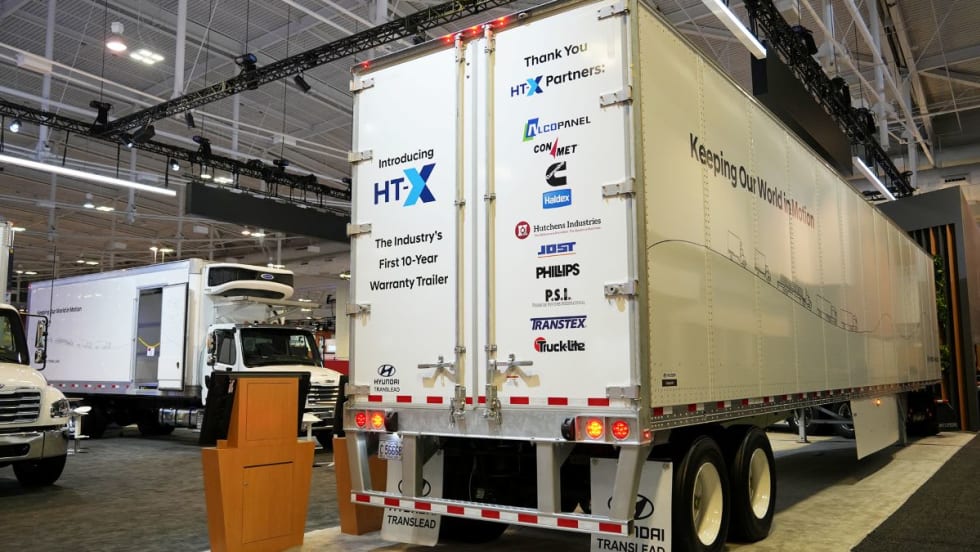
Hyundai Translead Expands Trailer Tech, Introduces Long-Life Dry Van, New Refrigerated Body
Smart safety systems, AI-powered visibility, a 10-year-warranty dry van, and a modular refrigerated body debuted at TMC.
Read More →
EPA Targets DEF Sensor Failures Behind Truck Derates
New guidance allows engine makers to replace problematic DEF sensors with NOx-based systems, aiming to reduce unnecessary derates and downtime caused by failures in the sensors designed to monitor diesel exhaust fluid on trucks.
Read More →
Heavy Duty Trucking is Searching for the Top Green Fleets of 2026
Is your company a leader in sustainability efforts among trucking fleets? If so, Heavy Duty Trucking's editors want to hear from you.
Read More →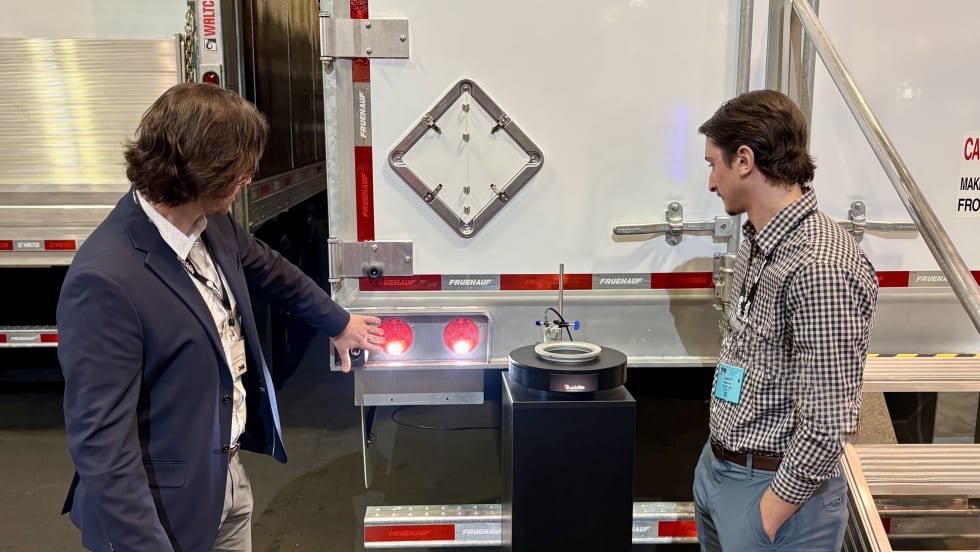
Clarience Technologies Expands Safety and Visibility Portfolio at TMC
From advanced connectivity to AI-powered cameras and next-gen fuel filtration, Clarience companies outlined a roadmap for safer, more connected trailers at TMC’s Annual Meeting.
Read More →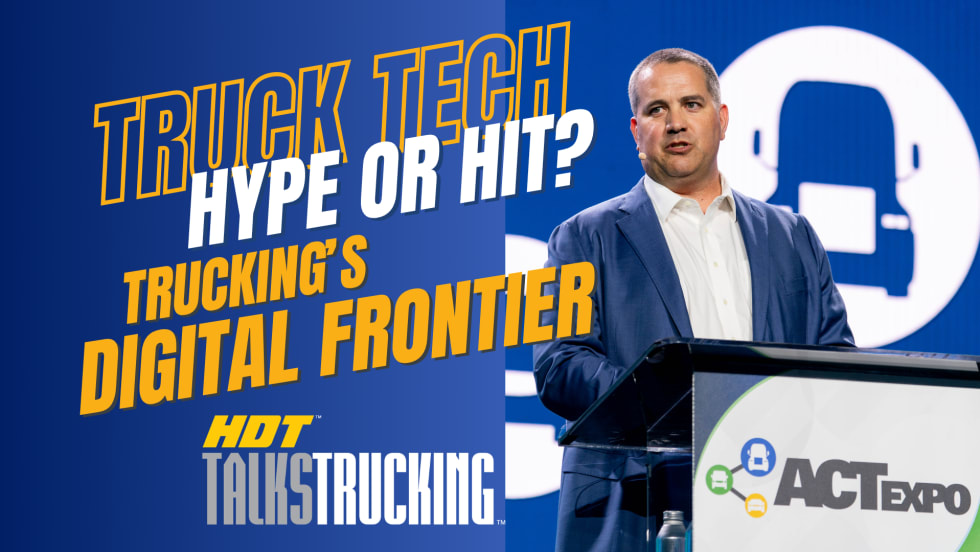
What's Real in Advanced Truck Technology? ACT Expo's Erik Neandross Weighs In
Artificial intelligence, the software-defined vehicle, telematics, autonomous trucks, electric trucks and alternative fuels, and more in this HDT Talks Trucking interview
Read More →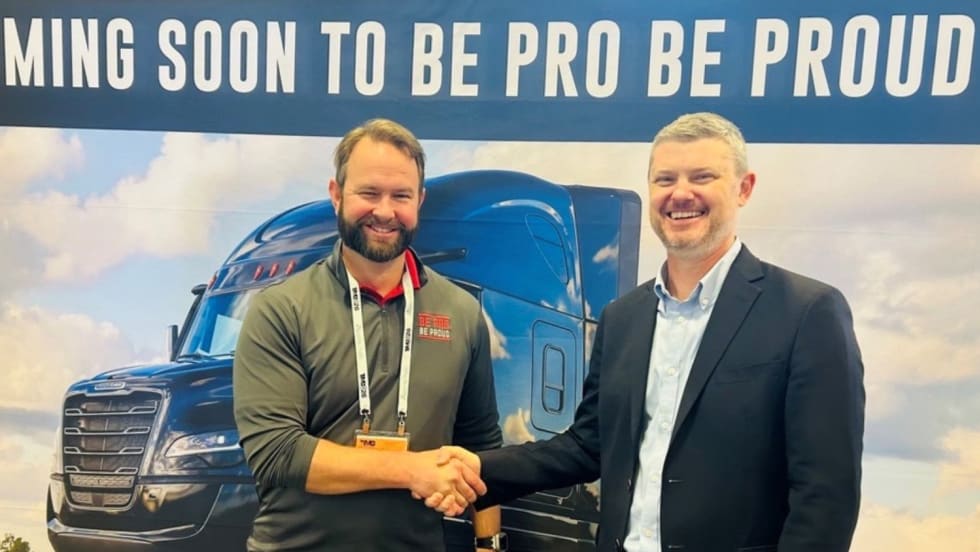
Freightliner Donates Fifth Generation Cascadias to Be Pro, Be Proud
Freightliner has donated three Cascadia trucks to support Be Pro, Be Proud, expanding mobile training efforts aimed at building interest in skilled trades careers.
Read More →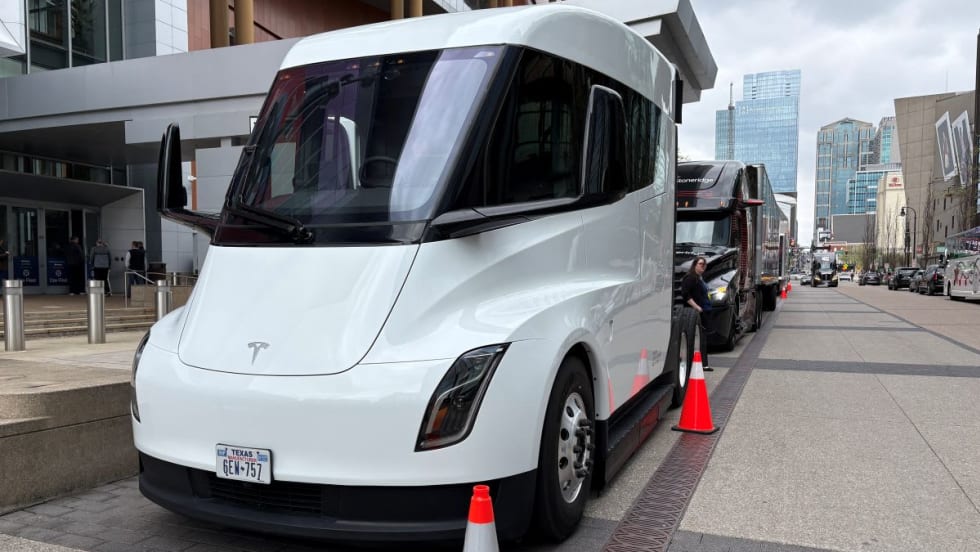
Technology & Maintenance Council 2026 Annual Meeting [Photos]
Couldn't make it to Nashville for TMC's 2026 annual meeting? Check out these images.
Read More →