





Use of natural gas to propel vehicles seems to be gaining momentum as various advocates continue their efforts to promote it, and manufacturers prepare more products that use the clean-burning fuel.
Goin' with Gas: Driving Natural Gas Trucks
Use of natural gas to propel vehicles seems to be gaining momentum as various advocates continue their efforts to promote it, and manufacturers prepare more products that use the clean-burning fuel
July 10, 2011
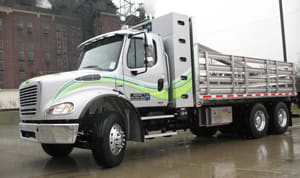
Freightliner M2-112 with an 8.9-liter Cummins Westport ISL-G
4 min to read
Natural gas makes sense because its current abundance has brought down prices - some call it cheap - and most gas comes from wells here in the U.S., lessening dependence on foreign oil. Drilling and production in heretofore hard-to-reach deposits promise 100 years or more of steady supplies, although there are environmental concerns. Also, many landfills have been tapped to capture methane gas given off by rotting garbage.
Natural gas is a fossil fuel that makes some greenhouse gas as it's burned, but less than that from liquid petroleum. Its energy density is less than diesel fuel, which is why it must be compressed for mobile use by pumping or liquefied through cryogenic chilling. Infrastructure is partly in place because pipelines run the length and width of the country, though they are far from being everywhere. Natural gas is also the feedstock for production of the majority of propane, more properly called liquefied petroleum gas or LPG.
In general, liquefied natural gas (LNG) seems the way to go in long-haul trucks and tractors, because when super-cooled it can be squeezed down to compact volumes. Fueling availability is limited, but is expanding as certain trucking companies work with suppliers to set up the expensive fueling stations.
Compressed natural gas (CNG) is more workable in locally operated trucks that have room for several tanks that can be replenished often, because the vehicles return regularly to a home base. Because cryogenics are not involved, fueling stations for CNG are relatively simple and reasonable in price.
Driving with CNG
CNG-fueled trucks were among the two dozen or so hybrid and alternative-fuel vehicles available for sampling at the National Truck Equipment Association's recent Green Truck Summit in Indianapolis. I drove two, a Freightliner M2-112 and an International WorkStar, both development trucks with flatbed bodies that can be weighted for demonstrations. Both have been displayed at shows, including NTEA's Work Truck Show that ran in conjunction with the summit and the group's annual meeting.
The M2-112 had an 8.9-liter Cummins Westport ISL-G, which is optional from Freightliner and other builders. The WorkStar had a 7.6-liter Phoenix engine developed by Emissions Solutions Inc. It's based on Navistar's MaxxForce DT but is not called a MaxxForce. Each makes less than legally allowable nitrous oxide and particulate exhaust emissions, and needs no credits from the Environmental Protection Agency. The Cummins Westport's larger displacement allows its ratings to be stronger: 250 to 320 horsepower and 660 to 1,000 pounds-feet. The Phoenix goes from 210 horsepower and 520 pounds-feet to 300 horsepower and 860 pounds-feet.
Because the engines burn so cleanly, they don't need diesel particulate filters or, in the case of the Cummins, selective catalytic reduction equipment. Thus their exhaust systems need just an oxidation catalyst and a muffler. This saves weight and cost, but that's more than offset by the natural gas fuel system and a stack of pressurized fuel tanks aboard the trucks.
The tanks are the priciest components, costing about $35,000, because they are pressure vessels built to stringent standards. Each truck has five "bottles" that store gas at up to 3,600 psi and hold the equivalent of about 75 gallons of diesel fuel. As shown in the photos, they take up roughly four times the space of that size diesel tank. The gas is regulated to below 200 psi for fuel handling and burning.
Both use spark ignition, so their compression ratios of 10.5 to 1 are far less than a straight diesel's. Thus they are quieter and smoother, something I noticed with each truck. Both engines ran well, with their electronic controls programmed for efficient and steady fuel delivery.
Power and torque is more peaky with natural gas than with diesel, so off-the-line performance might suffer. But compensation is achieved by use of an Allison automatic transmission in each truck. Its torque converter multiplies the twist available during off-the-line acceleration, and revs stay more steady in each of the transmission's six ratios. So both trucks moved briskly as I enjoyed their smoothness and quietness.
An Allison has other benefits, including ease of operation and cushioning of the driveline, which can justify its price premium over a manual gearbox. That an Allison is mandatory with a natural gas engine, however, adds somewhat to the upfront cost of buying one of these trucks, or any other that uses a similar powertrain.
Again, the biggest cost is for the CNG bottles or a cryogenic tank for LNG. Such a truck costs at least 50 percent more than one with a straight diesel, though government grants can offset much of the premium and lower fuel costs can provide a decent payback, proponents say.
I say they're neat to drive, and most drivers will probably agree once they're briefed on how a natural-gas truck operates and learn how to pump up its tanks. They'd literally "gas up" the truck and "hit the gas pedal" instead of the accelerator.
From the May 2011 issue of HDT.
Subscribe to Our Newsletter
More Fuel Smarts
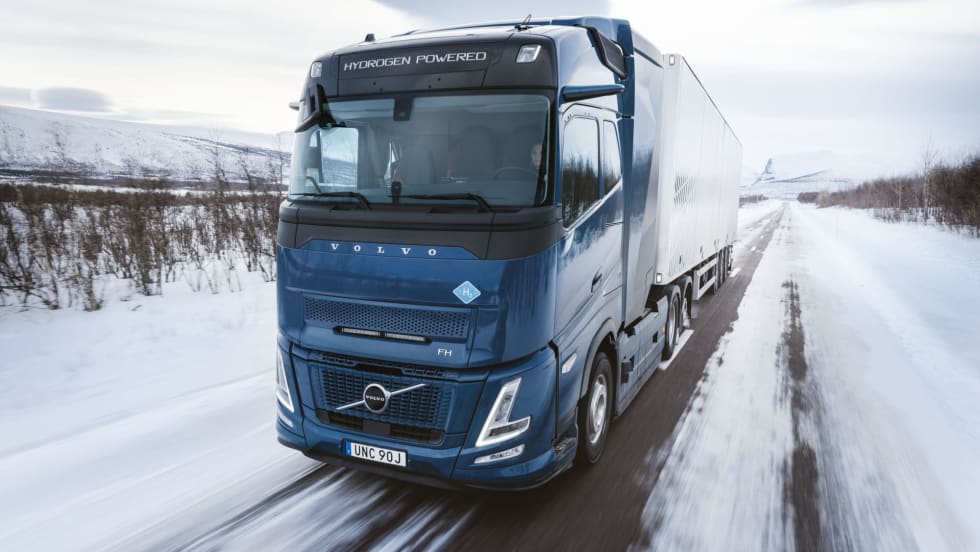
Volvo Testing Hydrogen-Fueled Internal Combustion Engines on Trucks in Europe
Hydrogen combustion engine trucks will be especially suitable over longer distances and in regions where there is limited charging infrastructure or time for recharging of battery-electric trucks, according to the company.
Read More →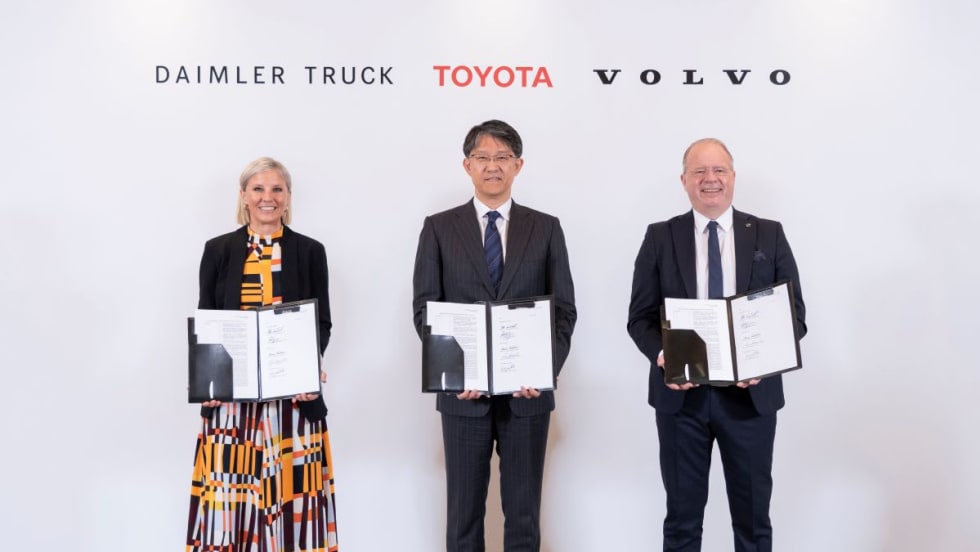
Toyota’s Entry Into Cellcentric Signals Push to Accelerate Hydrogen Truck Adoption
By joining Daimler Truck and Volvo, Toyota brings fuel cell expertise to a joint effort aimed at making hydrogen viable for heavy-duty transport.
Read More →
U.S. Diesel Prices Hit $5.40, Top $7 in California
Trucking operators are slowing speeds, cutting empty miles, and declining unprofitable freight as diesel costs continue to rise due to conflict in the Middle East.
Read More →
EPA Targets DEF Sensor Failures Behind Truck Derates
New guidance allows engine makers to replace problematic DEF sensors with NOx-based systems, aiming to reduce unnecessary derates and downtime caused by failures in the sensors designed to monitor diesel exhaust fluid on trucks.
Read More →
Heavy Duty Trucking is Searching for the Top Green Fleets of 2026
Is your company a leader in sustainability efforts among trucking fleets? If so, Heavy Duty Trucking's editors want to hear from you.
Read More →
What's Real in Advanced Truck Technology? ACT Expo's Erik Neandross Weighs In
Artificial intelligence, the software-defined vehicle, telematics, autonomous trucks, electric trucks and alternative fuels, and more in this HDT Talks Trucking interview
Read More →Why Diesel Is Climbing Fast—and What the Iran Conflict Has to Do With It
With global oil flows disrupted, U.S. diesel prices have topped $5 across every region, climbing sharply in the past few weeks.
Read More →
From Diesel Prices to Cyberattacks: How the Iran War Is Affecting Trucking
The impact of the Iran conflict extends beyond fuel costs, bringing more fraud and cybersecurity risks to the trucking industry.
Read More →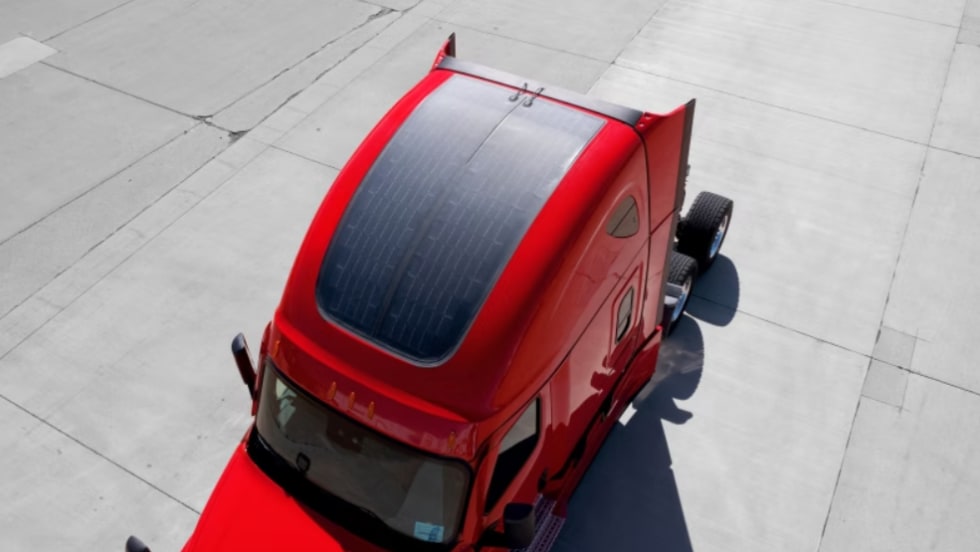
Vanair Introduces Solar, Battery Power Ecosystem for Class 8 Trucks
The company’s expanded EPEQ ecosystem includes flexible solar panels, lithium batteries, hydraulic power systems, and a portable fast charger for electric trucks.
Read More →
Run on Less “Messy Middle” Data Shows Multiple Paths for Truck Powertrains [Listen]
Listen as Mike Roeth of the North American Council for Freight Efficiency shares insights into battery-electric trucks, natural gas, biofuels, and clean diesel on this episode of HDT Talks Trucking.
Read More →