




Supply chains today face extraordinary levels of volatility, and companies are scrambling to manage risk that is unprecedented in scope, amplitude, and frequency. In the wake of the U.S. economic meltdown, no segment of the supply chain has remained untouched by volatility and risk.
One area that has been particularly buffeted by these forces is truck transportation. For shippers, the truck transportation picture is both unpredictable and newly constrained. Volatility means that capacity is no longer a given, especially for the mid- to small-sized companies that lack buying clout.
This article discusses how dedicated contract carriage (DCC) - specially the new "hybrid" forms of DCC-offers a much-needed option for managing this type of risk in the current transportation environment.
A flexible response to supply chain volatility
Traditionally, supply chains managed volatility as sequential, narrowly focused, discrete risk events. This model is not sufficiently effective to cope with, much less get ahead of, the level of volatility that is today's business reality.
Accordingly, a new risk management model for supply chains is emerging. This model, as we explain in the book I co-authored with SandorBoyson and Thomas M. Corsi, X-SCM: The New Science of X-treme Supply Chain Management(Taylor and Francis, 2010), replaces traditional economies of scale and scope with those based on a concept we call "contingent scale."
Contingent scale is the ability of the enterprise to rapidly size its assets and services up or down as needed to respond to extreme demand fluctuations. These resizing capabilities are executed through flexible contracts with external providers. The resulting contingent scale networks offer a tremendous competitive benefit: they enable companies to hedge financial risks and conserve cash. Today, contingent scale capability is a critical best practice in supply chain management-and, indeed, in business volatility management across the enterprise.
How does this concept apply to trucking services? To answer that question, we need to look at that sector's current dynamics.
Trouble in the trucking industry
Freight volume is returning to the trucking market. That's the good news.
The bad news is that during the recession, carrier capacity left the market at an unprecedented rate. Smaller trucking companies went out of business by the thousands, and the driver workforce contracted significantly. Large trucking firms downsized radically and got rid of idle equipment.
"When the economy went south," explains Dick Metzler, chief marketing officer for Greatwide Logistics Services, "there was no demand for capacity, so equipment was sold off to the economies that needed it. Unlike in previous recessions, where equipment was parked and then brought back into service, stateside assets went to places like Eastern Europe, China and South America. That old model of simply returning parked assets to service is much less available on demand. It will take some time to re-create capacity through manufacturing [new equipment]."
Although the revival in trucking volumes is a welcome sign that the economy is improving, it has a downside, as many shippers are learning. For one thing, says Metzler, "in more and more cases, there simply isn't enough capacity to satisfy demand. It is simple economics. Rates are bound to go up." For another, he continues, some shippers are finding that their business is no longer attractive to carriers. "Companies that re-bid their business when equipment was plentiful got fantastic rates," he says. "Unfortunately, carriers are now managing for yield, so those shippers with the low-rate contracts are finding that their carriers are beginning to seize better opportunities." The possibility that they won't be able to deliver to a customer is the risk shippers fear most, he adds.
Other developments in the works are likely to exacerbate the capacity shortage. For example, tougher emissions standards have pushed up the price of new tractors at a time when carriers can least afford it, and new federal safety regulations take effect next year that could make as much as 10 percent of the driver pool unemployable in the trucking industry. Other state and local regulations such as CARB make the challenge that much greater.
Risk management strategies: large vs. mid-sized companies
With so many aspects of truck transportation in flux, "the customer clearly needs more stable costs and reliable, effective capacity," says John Simone, Greatwide'spresident and chief operating officer. But how to achieve that when risk and volatility are so pervasive?
When it comes to risk management strategy, Simone says, customers fall into two camps. The first tends to be larger shippers that locked up rates and capacity commitments in anticipation of shortages. These companies also tend to have strong, in-house transportation management capabilities that include people, processes, and technology. So far, they have been less affected by volatility than other companies, he observes.
Bigger shippers, moreover, want to control all inbound and outbound freight to maximize their negotiating leverage and guarantee service, adds Simone. "This leaves a lot of tier one and other suppliers defenseless, because they no longer control their outbound freight to these large customers. Their transportation buying power and position is significantly eroded as a result."
The second group-the mid-market-includes companies that have fewer resources available to help them weather economic ups and downs. "They don't have the ability to invest $1 million in transportation management systems, and they certainly can't spend another $1 million a year to maintain them," Metzler notes. "They also do not typically have the ability or forethought to lock in future capacity at a compensatory rate structure."
In this milieu, mid-tier companies find themselves constantly challenged by the volatile trucking market. In many cases, this environment puts them at a competitive disadvantage vis-à-vis their larger competitors. Thus, they have two choices: Either they can make the big investment in people, process, and technology and lock in fixed capacity, just as their larger competitors do, or they can find a variable-cost solution that provides reliable, cost-effective access to capacity and transportation management resources.
Although significant investments might have been the obvious choice a few years ago, shippers find it difficult to justify such a big cash commitment under today's business conditions. "So many customers we work with are sitting on the fence regarding the investment end of supply chain infrastructure-anything they would have to capitalize to grow their business or make it more efficient," reports Metzler. "They're looking for ways to cover at least a portion of the supply chain from a capacity standpoint without having to break the bank. They want a risk-sharing solution."
Virtualized and hybrid dedicated contract carriage
For many shippers, traditional dedicated contract carriage, with third parties managing fleets that are exclusive to a particular customer, has been a cost-effective tool for reducing capacity-related risk. But times have changed, and a new approach is needed. "Dedicated contract carriage and private fleets are a large part of the overall trucking market, but it is tough to use unmodified versions of that as a substitute for shrinking one-way irregular route truckload service," Metzler explains.
Instead, shippers are looking to apply dedicated contract carriage in ways that make economic sense in a world where business conditions are constantly changing. With that in mind, Greatwide now provides what it calls "Virtual Private Fleet." The term "virtual" refers to the company's ability to utilize multiple fleets as if they were a single
Trucking Rebounds With New Approach Born Out of Economic Necessity
Supply chains today face extraordinary levels of volatility, and companies are scrambling to manage risk that is unprecedented in scope, amplitude, and frequency. In the wake of the U.S. economic meltdown, no segment of the supply chain has remained untouched by volatility and risk
More Fleet Management
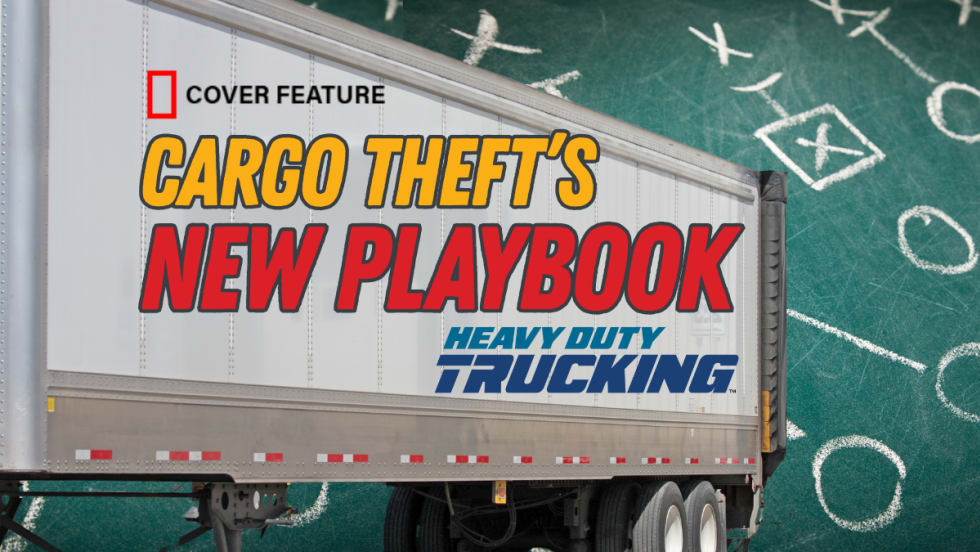
Cargo Theft’s New Playbook: Strategic Fraud, Double Brokering, and Cybercrime Hit Trucking
Cargo theft is evolving from regional smash-and-grab operations to sophisticated fraud schemes. Strategic theft now accounts for roughly a third of cargo crime, with incidents rising sharply in recent years. Here’s how the schemes work — and what fleets can do to protect themselves.
Read More →
HDT Honors the Best New Products of 2025 at TMC [Photos]
Heavy Duty Trucking's Top 20 Products awards recognize the best new products and technologies. Check out the award presentations at the 2026 Technology & Maintenance Council annual meeting.
Read More →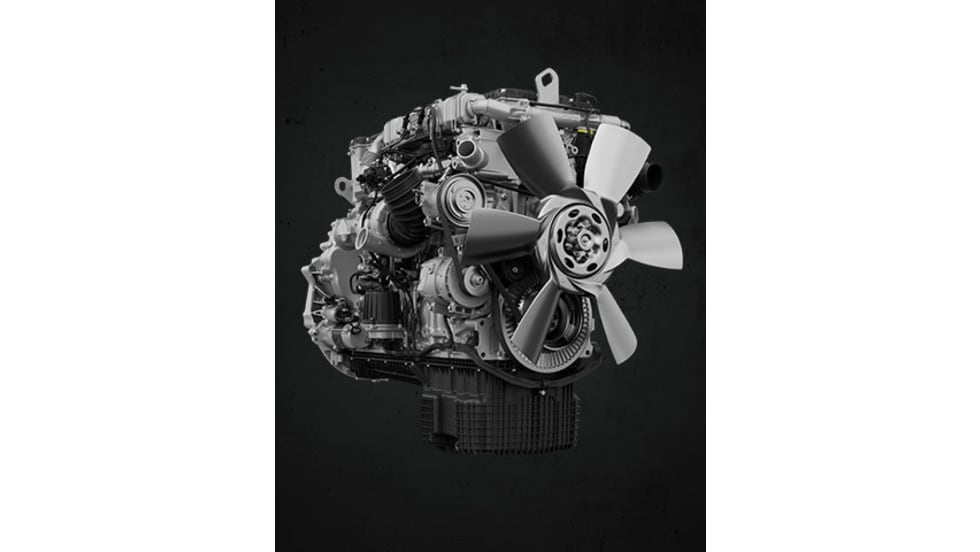
Detroit Engines: Trusted Performance, Built for What's Next
The Detroit® Gen 6 engine platform proves that real progress doesn’t require a complete redesign. Built on 20 years of trusted technology, these engines are designed for efficiency, stronger performance, and greater reliability than before. And they do it all while complying with 2027 EPA standards on every mile.
Read More →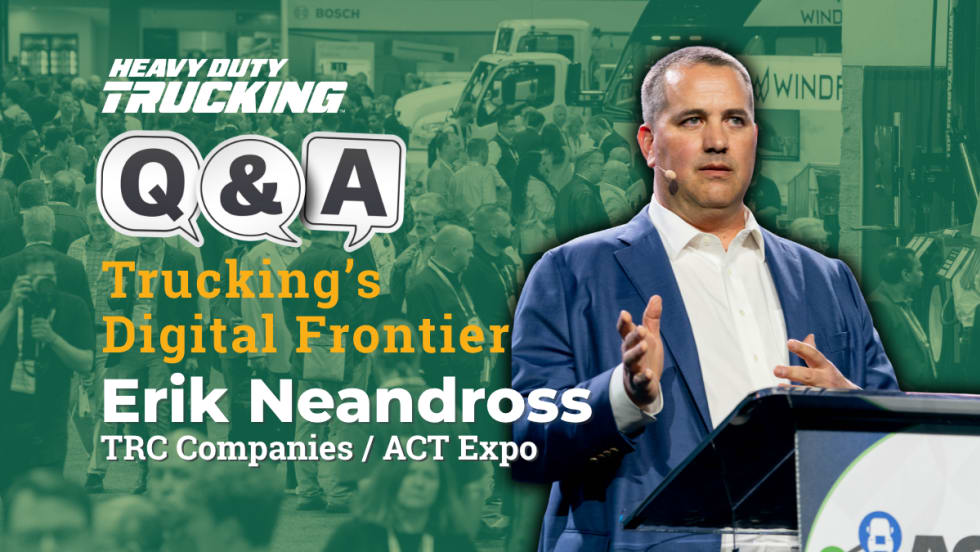
Q&A: What's Real in Advanced Truck Tech? ACT Expo's Erik Neandross Weighs In
The 2026 ACT Expo is focusing heavily on what organizer Erik Neandross calls trucking's digital frontier. This interview excerpt dives into artificial intelligence, zero-emission vehicles, and tips to make sense of it all.
Read More →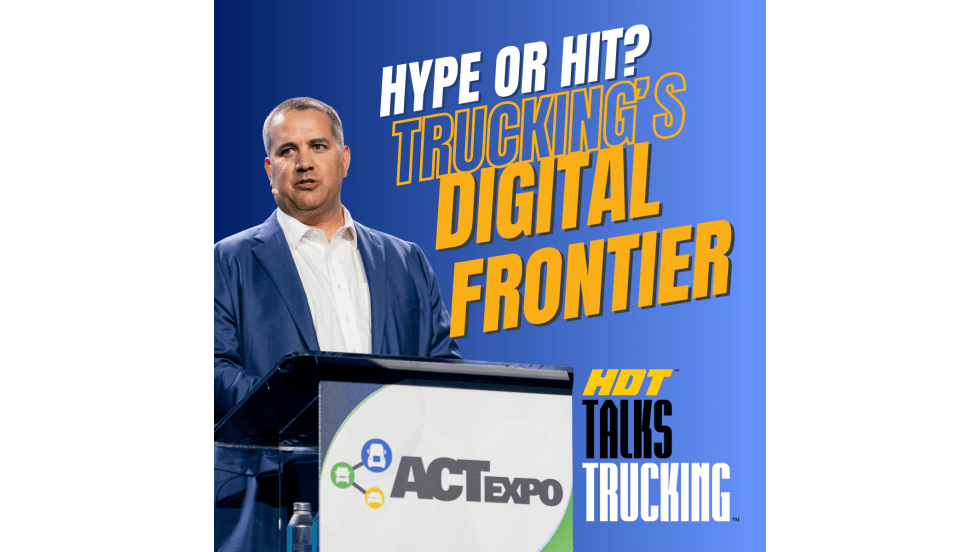
Trucking's Digital Frontier: AI, Connected Vehicles, Alternative Fuels and More
There's an amazing amount of new technology for trucking out there. For fleets, the challenge is figuring out what’s real, what’s hype, and what’s worth investing in.
Read More →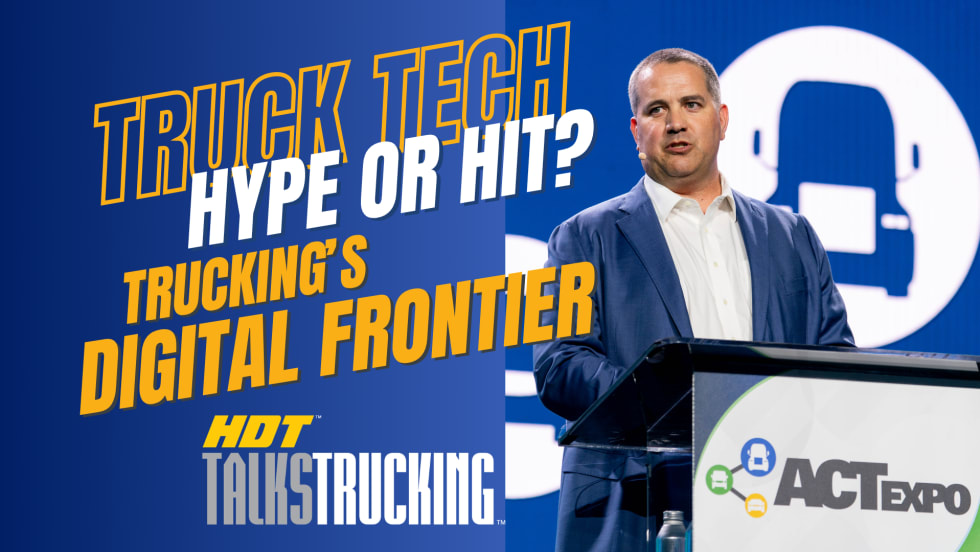
What's Real in Advanced Truck Technology? ACT Expo's Erik Neandross Weighs In
Artificial intelligence, the software-defined vehicle, telematics, autonomous trucks, electric trucks and alternative fuels, and more in this HDT Talks Trucking interview
Read More →
ACT: Trucking Volumes Rise, Capacity Tightens as Fuel Prices Cloud Outlook
ACT Research data shows volumes hitting a four-year high and supply-demand balance strengthening, but higher oil prices are undercutting tariff relief and tempering optimism.
Read More →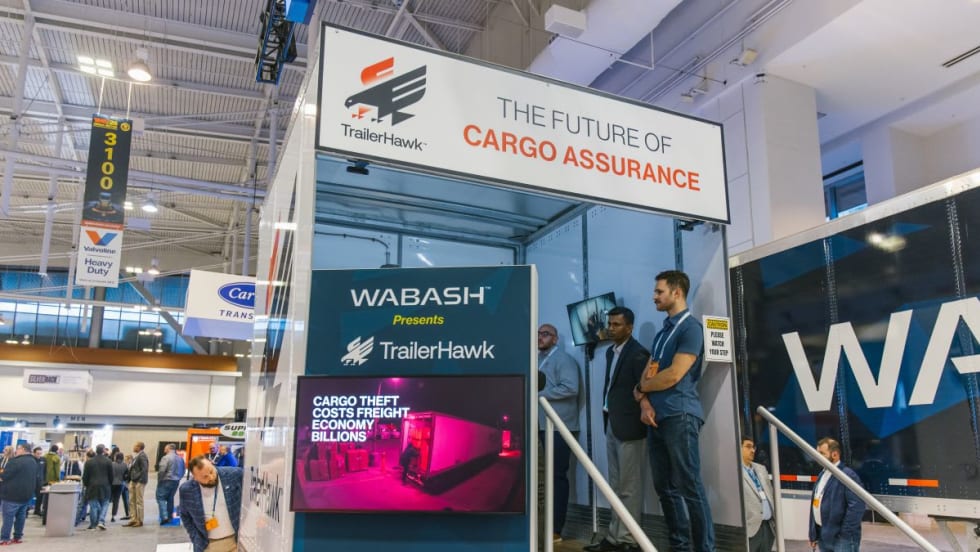
Wabash Teams Physical Security With Digital Tech For Better Cargo Visibility
The patent-pending cargo solution integrates a digitally connected cargo door and an intelligent locking system with the TrailerHawk.AI technology platform.
Read More →
From Diesel Prices to Cyberattacks: How the Iran War Is Affecting Trucking
The impact of the Iran conflict extends beyond fuel costs, bringing more fraud and cybersecurity risks to the trucking industry.
Read More →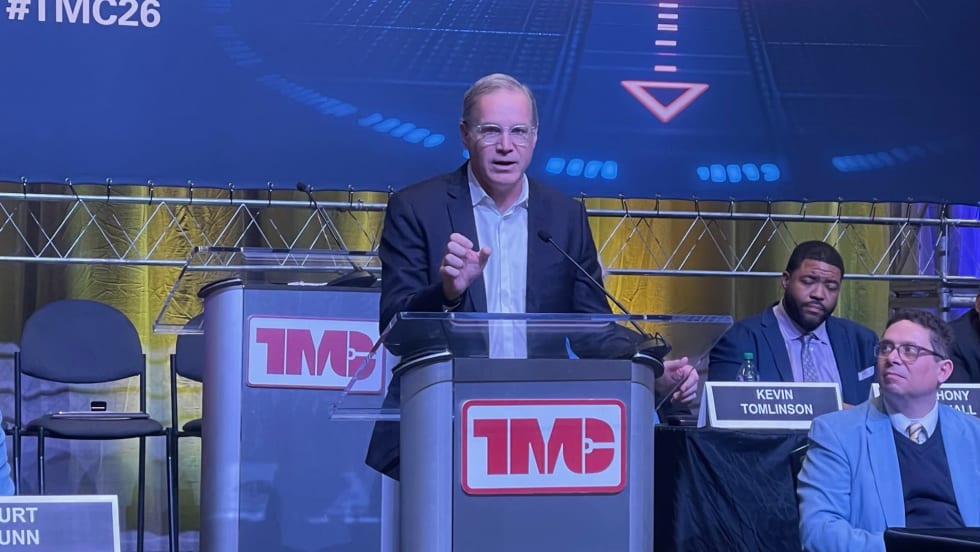
ATA’s Spear Warns Fuel Prices, Trade Policy, and Global Conflict Could Stall Trucking Recovery
Speaking at the TMC Annual Meeting in Nashville, ATA President Chris Spear said trucking faces mounting pressure from rising fuel prices, geopolitical instability, and uncertainty around trade policy.
Read More →