





Recent announcements illustrate the growing interest in natural gas engines for medium- and heavy-duty commercial trucks.
Oils For Natural Gas Engines
Recent announcements illustrate the growing interest in natural gas engines for medium- and heavy-duty commercial trucks
March 10, 2010
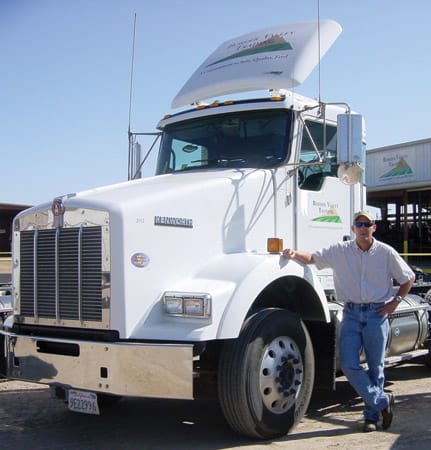
Border Valley Trading, a Brawley, Calif.-based alfalfa, sudan and klein grass hay producer and exporter, last year replaced its fleet of trucks with 15 liquefied natural gas-powered Kenworth T800s.
4 min to read
In January, UPS announced it was buying 245 new compressed-natural-gas delivery trucks. Late last year, Kenworth announced it was expanding its natural gas offering to its T800 short hood and W900S models. At the Technology and Maintenance Council meeting in Tampa last month, Navistar and Clean Air Power announced a deal to develop Navistar's MaxxForce 13 big-bore engine as a dual-fuel version to run on natural gas and clean diesel, which will initially target the regional haul tractor market with a goal of achieving a 400-mile range. Also at TMC, Shell Lubricants introduced an engine oil for use in natural gas engines.
Although Shell had previously offered an oil for stationary/off-highway natural gas engines in the U.S., and had an oil for natural-gas engines in other parts of the world, up until now, they felt the demand wasn't there for a natural-gas oil in this country. Until now.
Many local fleets, municipalities and public transit companies are using natural gas-powered vehicles because of their lower emissions. In addition, a number of truck manufacturers are now making natural gas fueled engines a factory option.
"Natural gas engines have been run here in the U.S. for a long time, but it seems to be a fairly rapidly moving trend going towards natural gas vehicles, especially in specific areas like the ports on the West Coast," explains Dan Arcy, OEM technical manager for Shell Global Solutions. "Seeing those changes that were coming, it just seemed opportune for us to introduce our T3 product."
The new Shell Rotella T3 NG oil is a 15W-40 oil that uses a combination of high-performance additives to adapt and protect under the range of pressures and temperatures found in CNG/LNG fueled engines.
There is no API standard for natural gas engines, but there are a couple of key specifications set up by engine manufacturers, including the Cummins CES 20074 and the Detroit Diesel 93k216. You want to make sure the oil you're using meets the standards of the engine brand you're using. One of the key differences is that natural gas engines have a specific limit on phosphorus to protect the catalyst. Phosphorus is part of the anti-wear additive package in engine oils. Another difference is that oxidation is less of a concern than in diesels, while nitration is a greater concern, so oils for these engines will be formulated with some different types of additives to protect against nitration vs. oxidation.
Natural gas engines run hotter in the combustion process, explains Mark Betner, heavy-duty lubricant manager for Citgo Petroleum, "so they tend to have a different impact on the oil and the tendency for the additives to produce ash, much like wood in a fireplace will product ash. You want to design a natural gas formula so it doesn't produce as much ash."
Unlike diesel, natural gas does not produce soot when it burns, explains Reginald Dias, director of commercial products for ConocoPhillips Lubricants, which offers products under the 76 and Triton brands that are used by major municipalities with natural gas engines in their fleets. The same property that makes natural gas attractive as a less-polluting fuel also means the oil has to be formulated differently.
"Unlike a diesel engine, where there is soot buildup, which thickens the oil, in a natural gas engine there is no soot thickening," Dias says. "So the oil has to be properly formulated, because you cannot bank on the thickening effect to offset any shear loss." (Shear issues can lead to oil consumption.)
Don't be tempted to use an oil designed for an off-highway/stationary natural gas engine, Arcy says. They typically don't have enough anti-wear additives to protect the valvetrain area in on-highway engines, where the oil typically sees higher pressures than the stationary engines.
Right now, natural gas engines in heavy-duty vehicles are primarily most attractive in applications where vehicles get back to a central fueling location each day. But down the road, who knows? Texas billionaire T. Boone Pickens is preaching the gospel of clean-burning, domestically produced natural gas for heavy-duty trucks, and recently said he believes legislation to spur investment in natural gas vehicles over diesel, which doubles a 2005 tax incentive, has enough support in the House and Senate to pass by the end of May.
"I know four years ago when we were talking about diesel exhaust fluid, everyone was horrified by the thought, saying there's no infrastructure," observes Citgo's Mark Betner. "And here we are today, we fully know that there's a DEF infrastructure. So to sit here and say natural gas is not cost effective in Class 8 trucks, it would be stupid to say there can't be possibilities for natural gas being a fuel source" because of lack of infrastructure.
From the March 2010 issue of Heavy Duty Trucking.
Subscribe to Our Newsletter
More Fuel Smarts
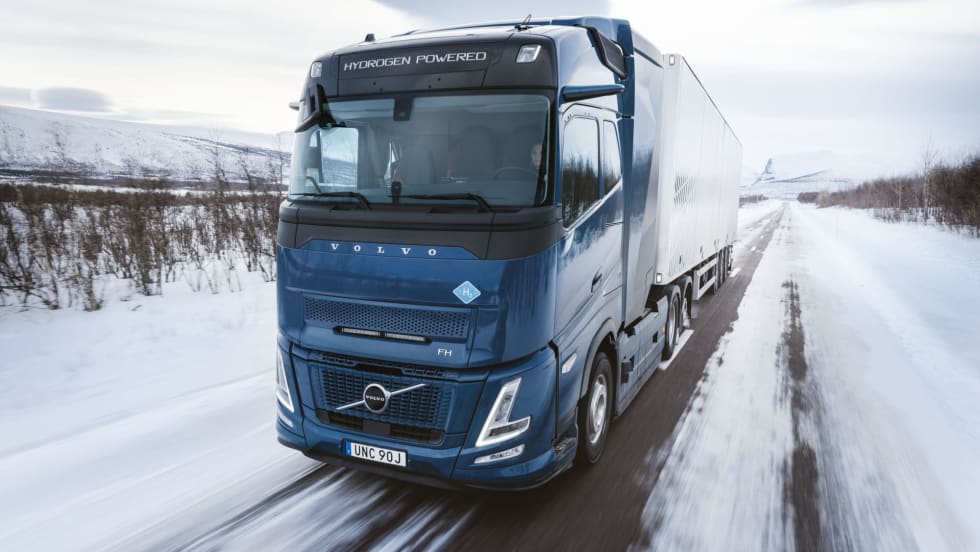
Volvo Testing Hydrogen-Fueled Internal Combustion Engines on Trucks in Europe
Hydrogen combustion engine trucks will be especially suitable over longer distances and in regions where there is limited charging infrastructure or time for recharging of battery-electric trucks, according to the company.
Read More →
Toyota’s Entry Into Cellcentric Signals Push to Accelerate Hydrogen Truck Adoption
By joining Daimler Truck and Volvo, Toyota brings fuel cell expertise to a joint effort aimed at making hydrogen viable for heavy-duty transport.
Read More →
U.S. Diesel Prices Hit $5.40, Top $7 in California
Trucking operators are slowing speeds, cutting empty miles, and declining unprofitable freight as diesel costs continue to rise due to conflict in the Middle East.
Read More →
EPA Targets DEF Sensor Failures Behind Truck Derates
New guidance allows engine makers to replace problematic DEF sensors with NOx-based systems, aiming to reduce unnecessary derates and downtime caused by failures in the sensors designed to monitor diesel exhaust fluid on trucks.
Read More →
Heavy Duty Trucking is Searching for the Top Green Fleets of 2026
Is your company a leader in sustainability efforts among trucking fleets? If so, Heavy Duty Trucking's editors want to hear from you.
Read More →
What's Real in Advanced Truck Technology? ACT Expo's Erik Neandross Weighs In
Artificial intelligence, the software-defined vehicle, telematics, autonomous trucks, electric trucks and alternative fuels, and more in this HDT Talks Trucking interview
Read More →Why Diesel Is Climbing Fast—and What the Iran Conflict Has to Do With It
With global oil flows disrupted, U.S. diesel prices have topped $5 across every region, climbing sharply in the past few weeks.
Read More →
From Diesel Prices to Cyberattacks: How the Iran War Is Affecting Trucking
The impact of the Iran conflict extends beyond fuel costs, bringing more fraud and cybersecurity risks to the trucking industry.
Read More →
Vanair Introduces Solar, Battery Power Ecosystem for Class 8 Trucks
The company’s expanded EPEQ ecosystem includes flexible solar panels, lithium batteries, hydraulic power systems, and a portable fast charger for electric trucks.
Read More →
Run on Less “Messy Middle” Data Shows Multiple Paths for Truck Powertrains [Listen]
Listen as Mike Roeth of the North American Council for Freight Efficiency shares insights into battery-electric trucks, natural gas, biofuels, and clean diesel on this episode of HDT Talks Trucking.
Read More →