




Engine of Opportunity
There have been an unprecedented number of changes and new technologies over the last few years as engine manufacturers struggled to meet the mandates of the Environmental Protection Agency's emission regulation
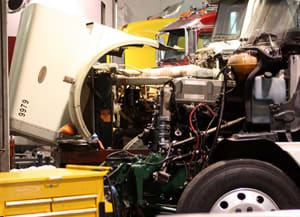
Opportunities abound in fixing gremlins on engines from previous emissions mandates. (Photo by STF)
There have been an unprecedented number of changes and new technologies over the last few years as engine manufacturers struggled to meet the mandates of the Environmental Protection Agency's emission regulation.
It's all been in a good cause - who can argue with cleaner air? - but it has not been without its difficulties.
Most of these have been kept in house and fixed under warranties as problems with cooled exhaust gas recirculation systems, turbochargers, diesel particulate filters and other aftertreatment devices have been kept as quiet as possible while solutions are sought and in-production fixes are instituted.
But there have undoubtedly been issues, and will continue to be, as trucks with engines meeting the October 2002 and now 2007 emissions regulations move into second and third ownership, and repairs shift from the dealer channel to the independent service aftermarket.
Those challenges now become opportunities for the independent channel.
The Big Issues
According to technicians, maintenance managers and service managers, different engines have different issues.
Cummins engines have had troubles with the EGR valves, as can be seen by the different locations with each generation of the ISX. In the earliest EGR engines, the valve was located on the hot side of the engine. For 2007 it moved to the opposite side of the engine, but by all accounts this has not eliminated all problems with the valve. So for 2010 there is a complete redesign of the way the valve works.
(On one occasion, early in the evolution of EGR on the Cummins 15-liter, we had a fleet service manager tell us that they had great success in dispensing with the EGR valves altogether and running the engines without the backflow of exhaust. This of course, is not how the system was designed to work, and they were running out of emissions compliance. But as this fleet manager told us, at least they were running.)
The ISX has also had turbocharger issues of late, reported a senior diesel mechanic with a large dealership group. The problem is with the sliding member within the turbo sticking, possibly due to coking of oil that gets by the seal. Since this turbo is also used on Volvo, Mack and Detroit Diesel DD 13 and 15 engines, this may start to appear on them, too.
In the last days of the Mack E7, the turbochargers were the weak point in an engine that had heretofore enjoyed a great reliability record. One fleet manager we talked to reported a mileage-to-failure rate of 17 miles on a truck that had just been delivered. One of the Mack engineers even commented at one point that the E7 was taken one generation too far in its development and that the variable-geometry turbocharger was a major issue. Mack eventually addressed the problem with a total redesign of the turbo on behalf of its supplier.
The switch to the Mack version of the Volvo D12, D13 and D16 engines has put those issues well behind the Bulldog, but there are other engines that are seeing failures of turbos right now, including the complex Caterpillar series-turbocharged engines.
One mechanic we interviewed said the rear turbo - the low pressure compressor - is an ongoing issue and that he and his colleagues were getting really good at swinging on a replacement turbo. Another commented that a failure in the low-pressure turbo can cascade on to the high-pressure turbo, making for an extensive repair.
Aftertreatment and more
Other big Cat issues are downstream of the turbo and ever since 2007 have seen trucks in for repairs to the aftertreatment system, particularly the combustion chamber - the R head - that backs up the low-pressure turbo. Coking of the poppet valve, spark plug issues and other combustion problems have bedeviled the '07 Cat engines. There have even been recalls for engines where the down-pipe from the combustion chamber actually cracks and allows flame to escape. Other issues with the aftertreatment system involve supporting straps for downstream components that fail.
On various message boards, individuals return often to the topic of poor performance and rough running of the C15. The general consensus is that this model is particularly sensitive to fuel filters - anything not genuine Caterpillar will likely starve the engine of fuel. And at a recent meeting of the American Trucking Associations' Technology and Maintenance Council, a bogus Cat fuel filter was displayed. It was a full-blown counterfeit from offshore complete with Cat logo and part number. So beware: Filter suppliers for C15 fuel filters should be vetted.
A particular problem with the 3126, which is appearing on C7 and C9 engines with the HEUI and HEP fuel systems, is degeneration of the high-pressure pump, which pushes metal down into the fuel rail and on to jam up the injectors.
Those new engines for Mack seem to be doing the job well. A search for recalls, campaigns and chat rooms turned up no significant issues for Mack, nor for Volvo. Under the valve covers the engines are basically the same, with the numbers MP6, MP7 and MP10 for Macks representing the displacements in hundreds of cubic inches where the D12, D13 and D16 of the Volvos are displacements in liters. These engines appear to have had a relatively untroubled launch.
But the earlier Volvo VE D12, an altogether different engine, had its share of issues with the introduction of EGR. It used an exhaust pulse generator to pump the exhaust gas into the inlet manifold against the turbocharger pressure, dispensing with the complexity of the variable geometry turbocharger that was such a trial for sister company Mack. However, there have been failures of this dual flow EGR cooler that is part of the earlier Volvo EGR system. Similarly there have also been EGR valve problems judging from field reports.
Detroit solutions
Detroit's DD13 and DD15 would appear to have had as nearly a faultless launch as any new engine. But there appear to be issues with the Series 60 that saw the end of production with the launch of the 2010 engines. One problem that has been reported is accelerated ring and liner wear on the rear cylinders on EGR engines. The symptom is a rapid rise in the use of engine oil that means a lot of add-oil on this normally dry engine.
There is a hardware solution that Series 60 owners might like to consider from Sanco Filters that places an EGR filter in the crossover pipe from the EGR valve to the inlet manifold. This filter can be used to good effect on any EGR engine with a crossover pipe to assure longevity at a relatively low price.
Other Series 60 issues have to do with injector tubes letting fuel and coolant mingle. The solution is a Reliabilt reman head from Detroit Diesel.
Various web threads exist on fuel pump, sensor and ECM problems. The ECM connectors are a possible source for rough running and misfiring. One suggestion is to disconnect the connectors and look for corrosion of the pins. Cleaning everything and using a dielectric grease is a suggested cure.
Another cure for rough running may be replacement of the TRS and SRS sensors that measure the engine timing and piston position. They are located behind and below the air compressor. They may be on the point of failing yet still not throw a fault code.
MBE4000 Detroits are showing up with piston-ring failures. One service manager says this is likely caused by air-locking in the fuel system during a filter change, followed by excessive use of ether to get the engine running, which takes out the rings. EGR coolers can be an issue on these and the smaller MBE900 engines.
Other opportunities
The Cummins B Series has an electric lift pump mounted on the engine that is subject to failure, giving a low fuel pressure code. Cummins has a remote lift-pump kit to take it off the engine, and this is a major opportunity for all B series powered vehicles, be they truck, schoolbus, RV or even Dodge Ram pi
More Aftermarket

AUCTION OF EQUITY INTEREST IN HEAVY HAUL TRUCKING COMPANY!!
Mark your calendar: June 30, 2026 (10:00 a.m. PDT). MagnaTrans, LLC, a California limited liability company doing business as Magna Transportation Group is going to auction! Bid on a 37.5% ownership interest in this Rancho Cucamonga-based heavy haul and over-dimensional trucking company operating across California, Oregon, and Arizona. The equity interest will be sold to the highest bidder or bidders under Article 9 of the Uniform Commercial Code at 10:00 a.m. PDT.
Read More →
Phillips Opens High-Tech Distribution Center for Faster Parts Delivery
Phillips Industries’ new Cincinnati-area distribution center is now shipping aftermarket trucking parts nationwide, aiming to speed up delivery times for customers.
Read More →
Volvo to Sponsor America’s Road Team for 2025
Volvo Trucks announced that it is extending its exclusive sponsorship of America’s Road Team for 2025.
Read More →
Webb to Start Taking Orders for UltraSet Pre-Adjusted Wheel Hubs
Webb, which recently acquired the Stemco Trifecta pre-adjusted hub program, will soon start taking orders for its replacement pre-assembled hub, the UltraSet.
Read More →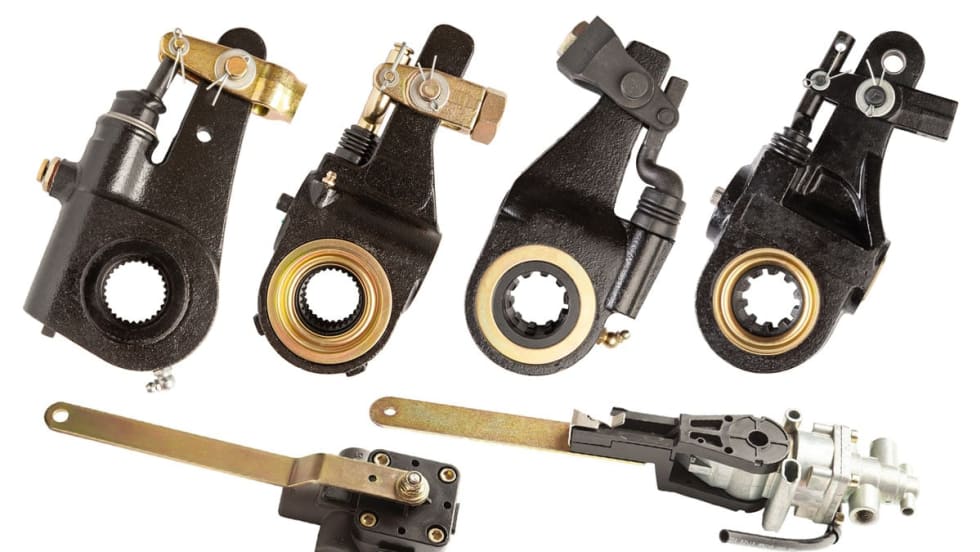
All-Makes Automatic Brake Adjusters, Ride Height Control Valves from Midland
SAF-Holland has added automatic brake adjusters and ride height control valves to its Midland All-Makes Program.
Read More →
ZF Aftermarket Expands [pro]Academy Training
ZF Aftermarket said it is expanding its ZF [pro]Academy training and will be adding 40 new modules this year.
Read More →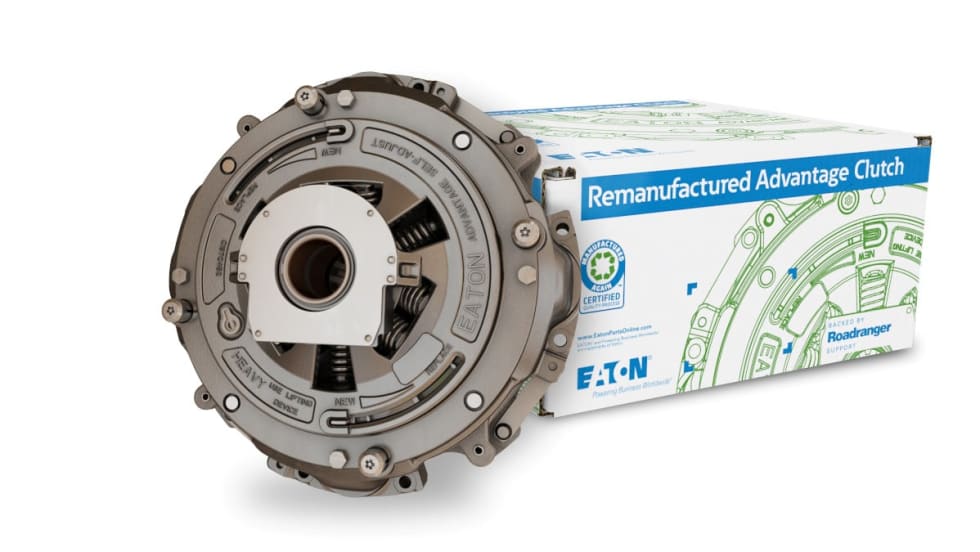
Eaton Adds Remanufactured Advantage Line of Clutches
Eaton has added its Advantage clutches to its remanufactured product line. The clutches feature a unique strap drive intermediate plate designed to allow customers to choose the latest OE specification
Read More →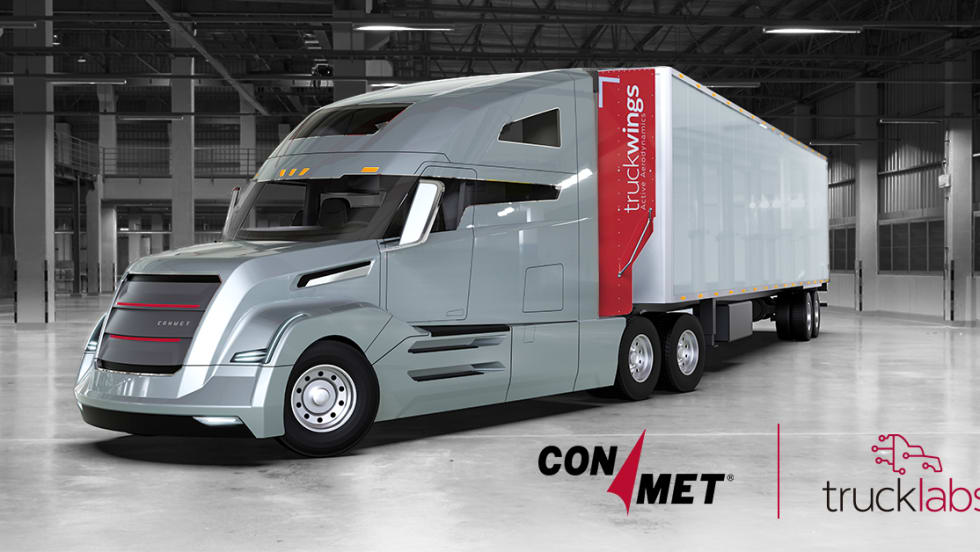
ConMet Acquires TruckLabs, the Creator of TruckWings
Commercial truck and trailer parts provider ConMet acquired TruckLabs, the company that created TruckWings, an aerodynamic device that attaches to truck cabs and deploys to close the gap between truck and trailer. TruckLabs now operates as a subsidiary of ConMet.
Read More →
Diesel Laptops Releases Fault-Code-to-Part-Number Tool
Diesel Laptops said its Truck Fault Codes allows users to input a fault code and immediately identify and order the parts needed to complete repair work.
Read More →
Heavy Duty Parts and Labor Costs Dropped in Q2
A benchmarking report from TMC and Decisiv reveals good news for fleets as heavy-duty parts and labor costs dropped in the second quarter of 2023.
Read More →